From the book KSA, My Life, My Music (2006)
By mid – 1974, the father and son relationship which presumably existed between me and Chief Abioro became frayed. Soon, it took the complexion of a messy divorce case in which every linen, dirty or otherwise, was brought out to the world to see. The nature of the rift was contractual. The cause? A demand that my royalty be upped.
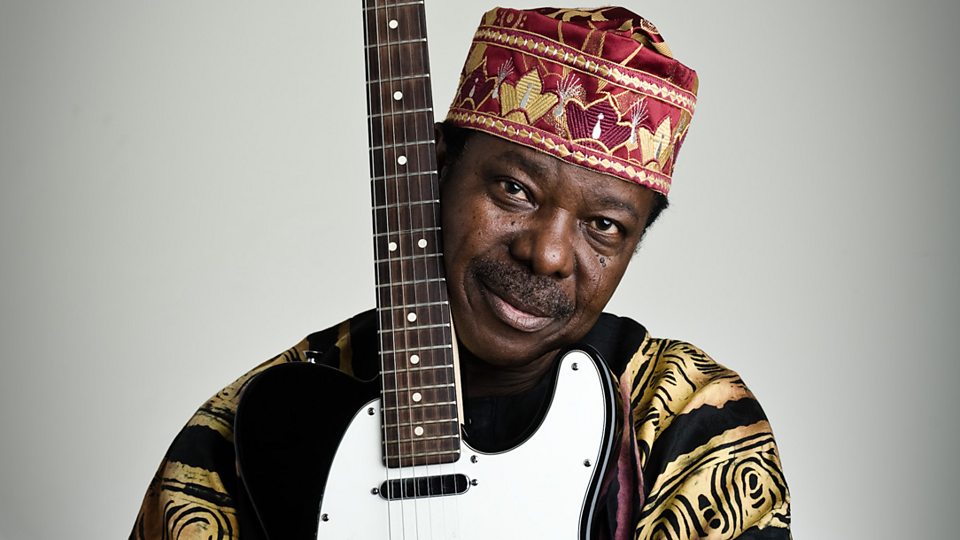
I was nearing the end of my second contract with African Songs Limited, which signed against wise counsel in 1971. The agreement almost did not get signed, given the circumstances at the time. I had just returned from playing tour in London, on which the band was almost stranded because there was no assistance from our recording company. Back home, I told Chief Abioro that I wanted out of African Songs Limited. Fortunately, I got the backing of Mr. Segun Ogundele and Chief Lekan Salami. The latter was a member of the board of African Songs Limited. The two men insisted that I should not renew the contract, but Abioro convinced me to renew it for another five years and I did. This caused a 12 year rift between me and Mr. Ogundele . Also at that time, Chief Abioro had removed Chief Salami from the board, but Salami did not know.
I decided to demand a rise in royalty payment because I believed I deserved more. My contract stated that I would be paid 20 kobo on each record, but I was actually paid 15 kobo. My contemporaries were earning a lot more in their various recording companies.
Chief Ebenezer Obey, for example, was earning as high as 70 kobo on each record. I was not the only one who wanted a raise in the African Songs stable. Other artistes also considered the disparity too great. We met and decided to discuss it with Chief Abioro. During our discussions, we told Abioro that even if he could not match 70 kobo being paid by other companies, he should raise it to 50 kobo. That way, we reasoned, the various bands would be better remunerated as well as motivated.
But Chief Abioro would have none of that. He referred us to the contract we signed. We, however, explained that our demands had nothing to do with the contractual agreements but more to do a quest for adequate compensation. Still, no dice. We were advised to get his friends to speak with him. Among those we approached were Prince Okunade Sijuade, Chief Adeleke Osijinrin, Joseph of Ogo Oluwa Kitan Records, the Late Lekan Salami, Ebenzer Obey, Chief TOS Benson and Chief Alowonle.
Despite the intervention of these eminent people, Chief Abioro remained adamant. Instead, he offered another five year contract, he would not release any record of mine during the one year remaining on my contract; he would not record my album and he would not market my works. He also added that if I had any financial difficulty, he would not offer any assistance. The threat failed to melt my resolve to demand what I believed I was worth. Given the dreadlock, I decided to release a record, EKILO FO’OMODE with Decca and released it on another label. The album was recorded in Nigeria but taken to London for remixing. I had thought that immediately the record was released, I would take a copy to Chief Abioro for marketing. What I planned to demand from him was that I should be paid one naira on each record.

Of course, I knew he would reject my demand, but I believed it would compel him to make me an offer better than the miserly one I had at the time. I chose not disclose my plan to him because I wanted to surprise him and prove that there was no big deal about making records. It did not turn out way, as I rather than Chief Abioro , ended with a surprise – an unpleasant one. Chief Abioro got a copy before it was released. I suspected that sample was stolen, as the record arrived, and given to him by a friend who was the clearing agent.
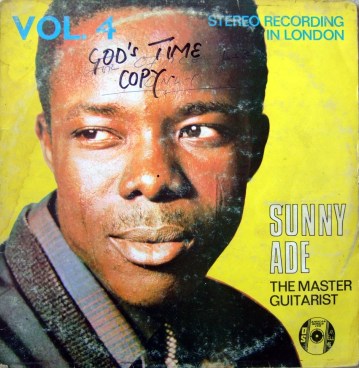
More surprises awaited me. In the evening, I was handed a court order which prohibited the sale of the record. The same evening, I established Sunny Alade Records. From there, the matter got worse. African Songs did not bother to invite me for a discussion before dragging me, my band and Alhaji M.Ola Kazeem who marketed the album to court. I hired Chief Gani Fawehinmi as my lawyer. In court, Fawehinmi requested that the judge should compel Chief Abioro to produce the statement of African Songs Limited accounts over the last three years. I also told the court that my royalty ought to be 20 kobo for each album, but I was getting 15 kobo. The court asked for the reason.
:format(jpeg):mode_rgb():quality(90)/discogs-images/R-2957702-1422884213-4168.jpeg.jpg)
When the accountant of African Songs was asked to explain, he said the arrangement was in existence before he joined the organization. When the court asked Chief Abioro to explain the reason for the deduction, he said the money deducted was spent on promotion and advertisement of works. Again, he asked if the term applied to only me; if there was a contract to that effect and with whom? Abioro said there was a contract with Rod Publicity, the advertising agent to African Songs. I recorded a song for Rod Publicity because I believed that Chief Abioro would like the record but I was not paid anything for it. The court demanded that the contract be produced. it was produced and it read; To promote all artistes of African Records Songs Limited, including the Managing Director Chief Abioro. After this, the court asked Abioro where is Sunny Ade in the contract?

