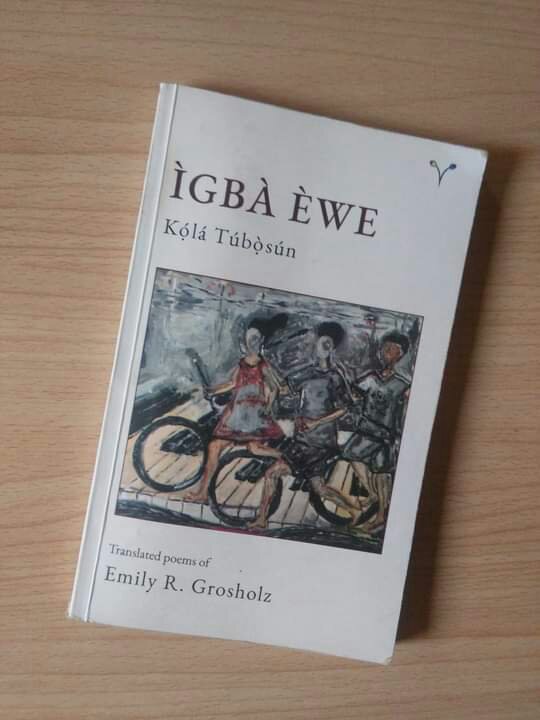
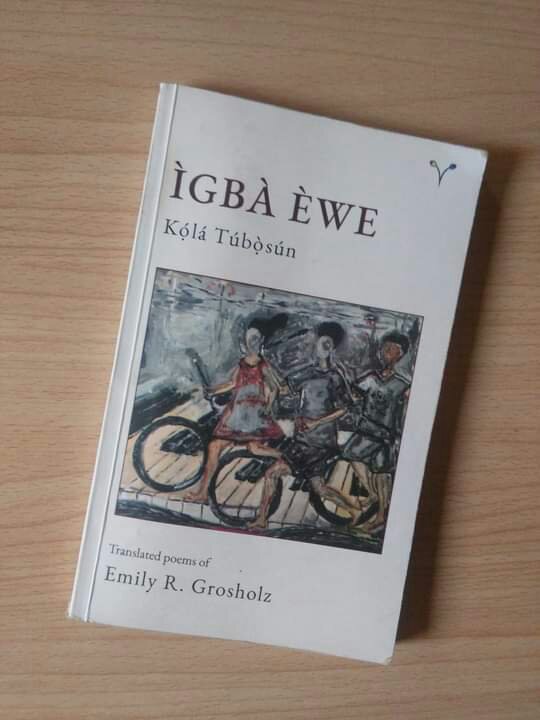
The title of this review is taking from Professor Ngugi Wa Thiong’o’s blurb for Kola Tunbosun’s new collection of translational poetry collection. The erudite scholar and writer could not have been wrong in his submission on what a well translated creative piece should be; this of course, is what Kola Tubosun attempted to achieve in translating Emily Grosholz’s collection of English poem titled, Childhood.
Kola Tunbosun’s Yoruba version aptly titled, Ìgbà Èwe strives to keep in focus the themes of their original English version. Of course, the major preoccupations of this collection are the fantasies or obsessions of a mother as her children traverse different phases of life- from pregnancy to birth, appreciation of the changing landscape and different weathers of Pennsylvania to the nostalgic fear of what dissolution that will come in later years when her children are no longer parts of her surrounding beauties. Ìgbà Èwe therefore becomes a common language for two mutually exclusive works of poetry- Childhood and Ìgbà Èwe- to the extent that Kola Tunbosun does not only translate the former, the latter also becomes like a dictionary with which those that understand Yoruba language can comfortable navigate the difference in worldviews and other linguistic obstructions that would have made Grosholz’s Childhood an adult affair.
It is all kudos to Kola Tunbosun that in trying to do justice to the themes of these English poems, he becomes a Yoruba language neologist, creating new vocabulary for his mother tongue. Ẹ̀gbọ̀n yìnyín (fluffy white ice), ìrìdídì (frozen snow) and òkè oníyìnyín (glacial hills) are some of his creations. Mirinmirin, in the poem Ìwárí Òjò and not birinbirin is yet a good example of the translator’s coinage. In keeping fate with the themes of the parent poems, Kola Tunbosun do a word-for-word translation of Childhood, hence, sacrificing the dual possibilities of having this translation standing independent of its source and not just being a transformational mutation of Grosholz’s poems in Yoruba language. For we doubt if there is any Yoruba reader of Ìgbà Èwe that can understand the depth of the collection without repeated recourse to the English version. Perhaps, this is the sort of infidelity that makes literal translators?
Consequently, readers whose definition of poetry is limited to rhyme, rhythm and solely figurative use of words will be greatly disappointed because there are not much of these; not even enjambments across stanzas in the translated version of this collection. There had not been much of them in the English version to start with. Hence, despite that many of Grosholz’s poems in Childhood read like prosaic-poems, full meaning of her lines have not really been helped with the absence of these poetic devices. Even Kola Tunbosun acknowledges Emily Grosholz’s assistance in unveiling meanings in the acknowledgements page of this collection.
Surely, there are so many things to interrogate in this book. Besides the faithfulness of the poet-translator and very few typographic errors (such as the following words: àgbákalẹ̀ not àgbkalè in Professor Àrìnpé Adéjùmọ’s blurb̀; òkun not ọ̀kun in Ọ̀sẹ̀ Mẹ́rìndílógójì, also spelt Mẹ́rìndílọ́gọ́jì by printer’s devil; and sókè not sókẹ̀ in Láàárín Okunkun…) is the total packaging of the book. A major shortcoming in the publication of Yoruba creative works is their poor packaging. Ìgbà Èwe beats this; the collection comes with the added value of having relevant artistic impressions that capture the aesthetic as well as the didactic intents of many of the poems; hence making Kola Tunbosun a gold standard for others in the business of sustainability and revitalization of creative and written Yoruba language.
There are many lines that will delight different readers of this collection; one of mine is a line in the first poem of the collection (‘Alone, but poets need their auditor…’) that I love so much because it predicted what should follow any creative work; more so, poetry where condensed words and not verbiage is the popular currency and in a work of translation where it is almost impossible for vital linguistic elements not to be lost in translation.
@Ari-Ajia Olanrewaju
20072021

