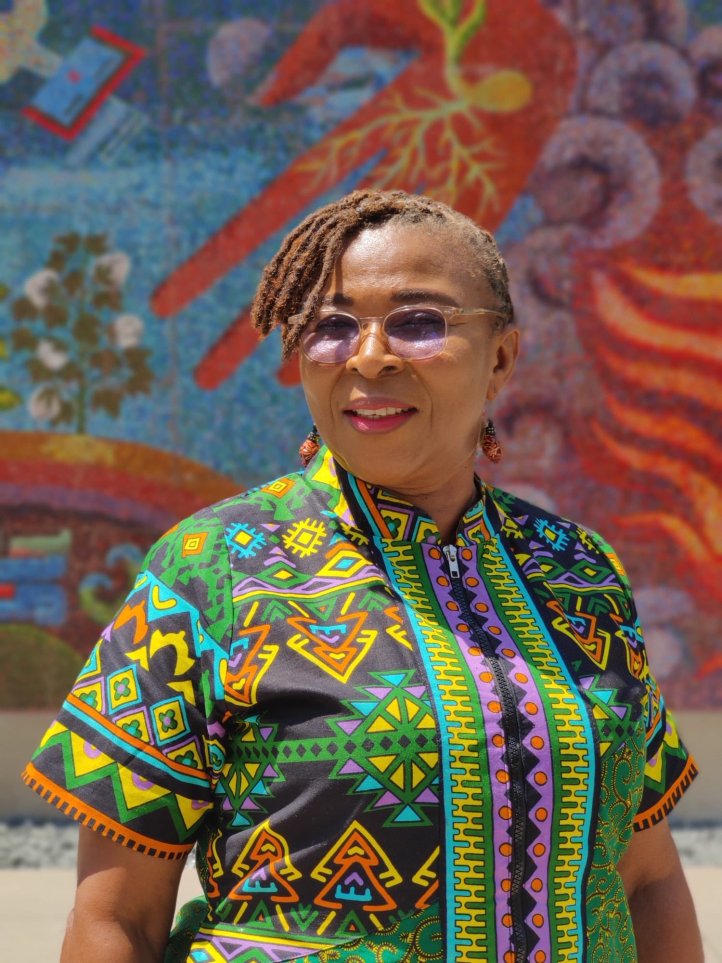
On our Cover edition, we join Dr. Ngozi Akande as she celebrates her 60th birthday with a powerful solo exhibition titled “My Life in Colours.” Artist and cultural advocate Dr. Ngozi Akande opens up about her personal and artistic journey. In this candid conversation with iBAND Magazine, she reflects on six decades of resilience, colour, cultural pride, and creative evolution. Her story is not just about art but about survival, vision, and inspiring the next generation of Nigerian women artists.
Congratulations on your 60th birthday and this incredible solo exhibition! What inspired the title “My Life in Colours “?
“My Life in Colours” is about me, who I am, what I have experienced, and how I express myself artistically. I love painting with vibrant colours, and truly, my life has been a beautiful journey filled with colour.
My Life in Colours” is about me, who I am, what I have experienced, and how I express myself artistically
Looking back over six decades, how has your journey as a woman and artist shaped your creative expression?
It hasn’t been easy, but I’m thankful. I lost my mother the same day I got into Ahmadu Bello University, ABU, Zaria. That pain shaped my resilience. I became focused and determined. My work often reflects this strength and courage. I have also mentored many who are now successful artists.
My work often reflects this strength and courage. I have also mentored many who are now successful artists.
What role has Nigerian culture and your heritage played in the evolution of your artistic style?
Nigerian culture is central to my work. With over 27 years in the culture sector, it’s naturally part of my artistic identity.
How has your use of colour, form, and subject changed over time?
In the early years, I painted herders, cows, and northern landscapes. When I joined the civil service in 1997, I moved to abstract and mixed media due to time constraints. The Bruce Onobrakpeya Workshop in 2018 was a turning point for my style, though my love for bright colours never changed.
The Bruce Onobrakpeya Workshop in 2018 was a turning point for my style,
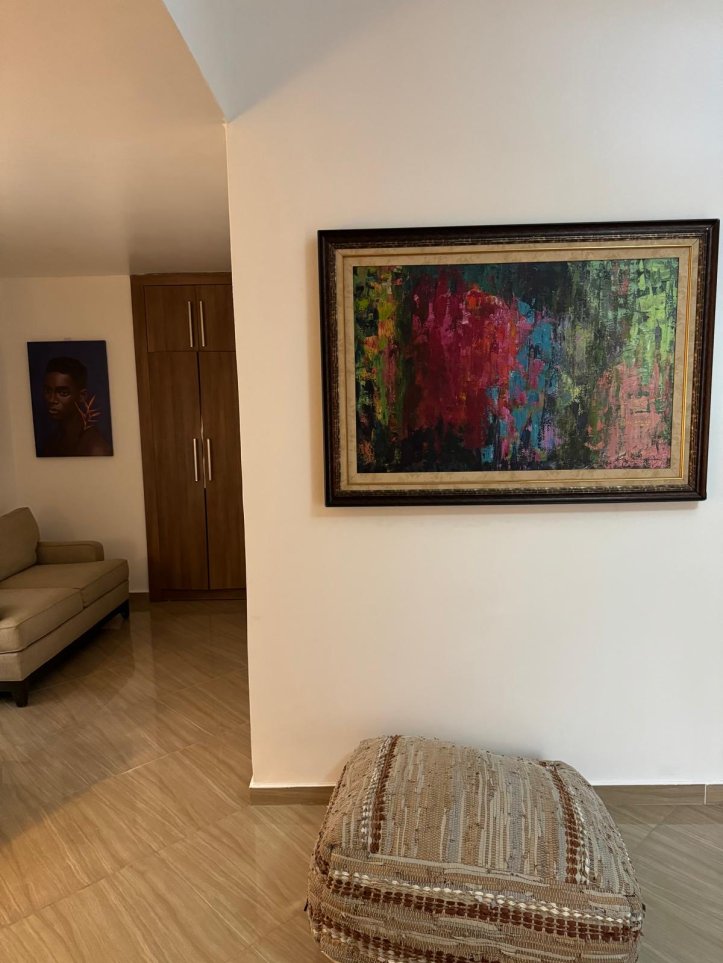
This exhibition is a reflection. Are there pieces that mark major moments in your life?
Absolutely. Life First Food was used by World Health Organsation as a campaign poster in Nigerian health clinics for over 10 years. My Culture, My Heritage marked the United Nation’s 75th anniversary. Nostalgia, though stolen, reminded me of my U.S. travels and the impact of the COVID-19 pandemic.
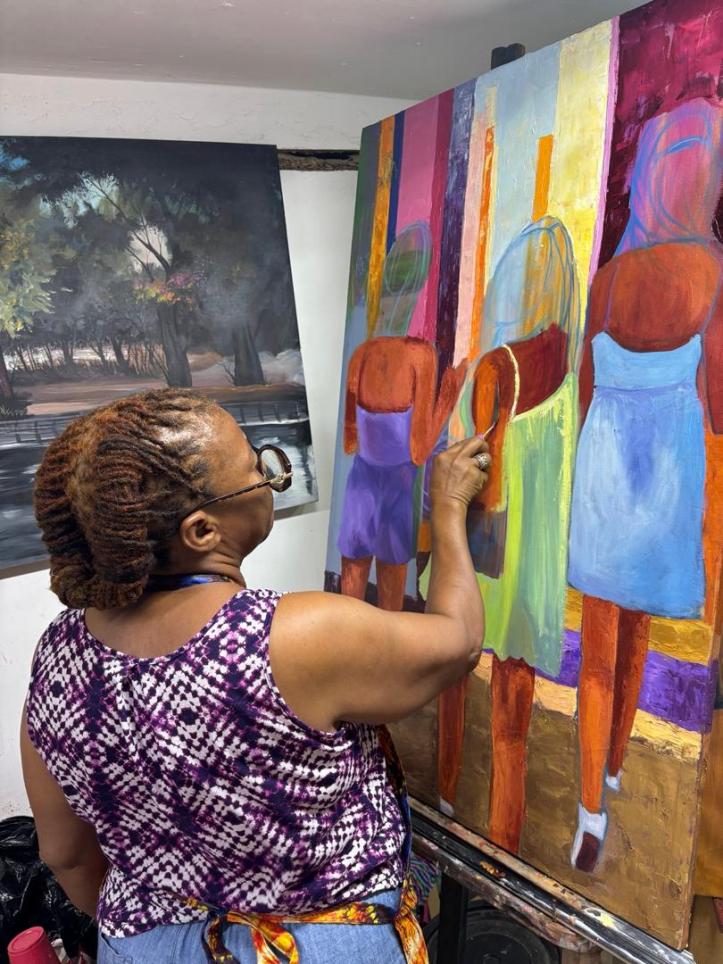
What challenges have you faced as a female artist in Nigeria, and how did you overcome them?
It’s been tough. I led the Female Artists Association of Nigeria in several roles. Many disliked the opportunities I gave women with workshops abroad, scholarships, and more. Some admitted trying to bring me down, but I stayed focused and never gave up.
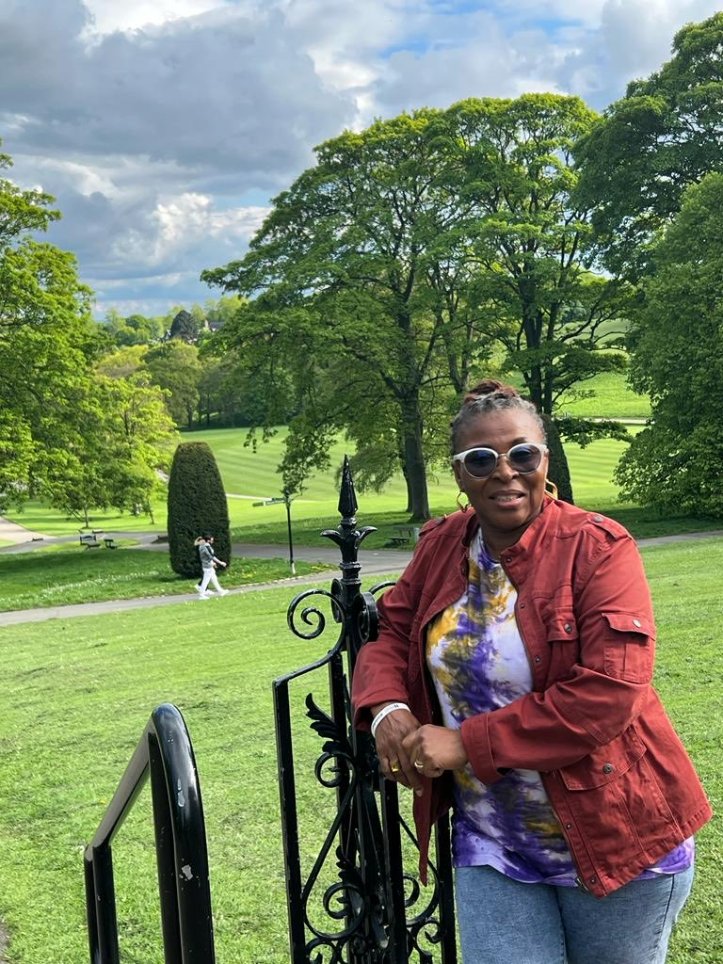
Do you see your art as storytelling or documentation? Whose stories are you telling?
Yes, my work tells stories of resilience, cultural preservation, gender equity, and advocacy against violence.
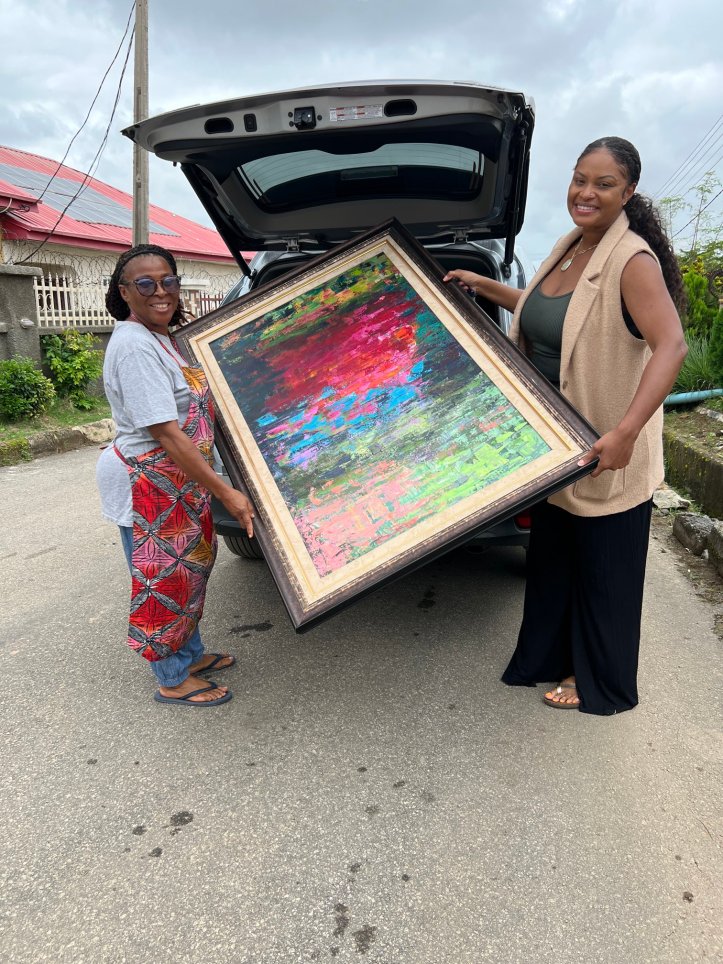
How do you hope younger Nigerian women artists see your work and legacy?
They admire how I balanced family, work, and education even earning a Ph.D. They love my colour choices and appreciate the exposure and encouragement I gave them.
Looking back, what has surprised you most about your journey?
I still wonder how I did it. I once took a bank loan to help female artists exhibit in Dubai. WHO and the UN selected my work for major campaigns. These milestones still amaze me.
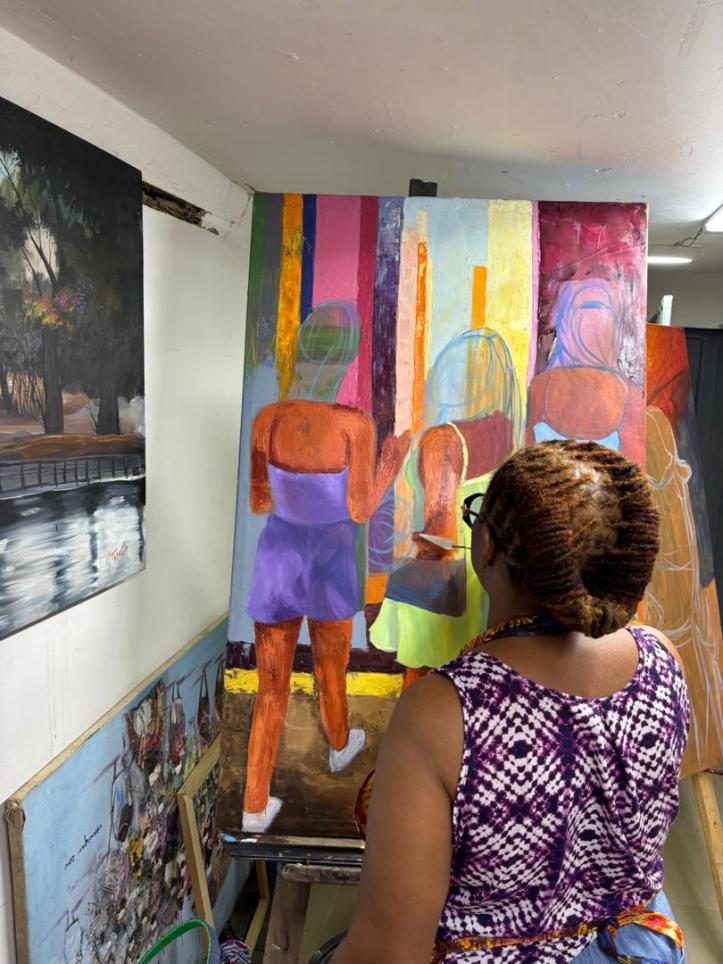
What dreams or directions are you envisioning for the future?
I want to create more works that reflect my ideals. I also want to support creative children, those with raw talent, because they are the future of Nigerian art.
By iBAND Editorial Team
Lagos, Nigeria
Photographs courtesy of Dr. Ngozi Akande archives

