
From collecting clay by a village stream in Jos to becoming the inaugural winner of the ScAN Young Sculptors Competition, Daniel Ellias Mbamalu is building a creative identity driven by curiosity, experimentation and an unending desire to discover what sculpture can become. In this Friday edition of Don’t Keep Your Art in the Finger!, Daniel takes us beyond doubts and into a world of possibilities as he opens up about his beginnings, creative influences, artistic experiments and the journey of becoming a sculptor with a vision of his own. His story is one of discovery, courage and the determination to keep creating.
Words Ireho Aito | Don’t Keep Your Art in the Finger! Photographs courtesy Daniel Ellias Mbamalu
Who else would not enjoy a Bongos Ikwue classic on a laptop playlist, especially with the driver behind the wheels joining in, just as the crew members were being serenaded by the Idoma music legend with one of his evergreen numbers, ‘Something Good’? Before long, everyone was chanting along: “Only last night I had a dream. Something good is gonna happen to me!”
After that memorable song, which rocked music lovers in the 80s, more numbers kept us company as we appreciated the beauty of Lagos at night with nostalgic feelings while crossing the Third Mainland Bridge in a rock steady speed.
It was the perfect soundtrack for a story about possibilities as inspiration started flowing in the night about how to carve out Daniel’s story. The rhythms were perfect enough to feel on keyboards.
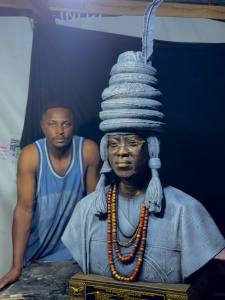
Long before Daniel Ellias Mbamalu became the first overall winner of the ScAN Young Sculptors Competition, a young boy in Jos was already discovering the joy of making things. His childhood was filled with drawing, painting, cutting stencils, constructing objects from cartons and, most importantly, modelling clay he collected himself. It was an instinctive creative adventure, one that would eventually shape his professional journey as a sculptor.
“I grew up in Jos, Plateau State, in a small family. Looking back, I would say my creative journey started long before I understood what art truly meant or imagined that it could become my profession,” Daniel opens up in his response.
Everyone has childhood memories that offer a glimpse into who they eventually become, and he was no different. For him, those early years in Jos were filled with curiosity, imagination and a natural desire to create. As a child, he was drawn to making things with his hands. He enjoyed drawing, painting, cutting stencils and recreating anything that caught his interest. He remembers spending time drawing illustrations from Bible storybooks, as well as random pictures he found in newspapers and fashion magazines.
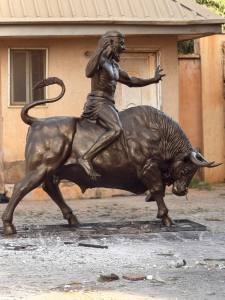
But his curiosity went beyond paper and pencils. One of the activities he enjoyed most was modelling with clay. Sometimes, he would walk quite a distance to the stream just to gather clay, which he took home and used to create whatever his imagination could come up with. He also enjoyed constructing things with cartons from his mother’s shop. It was almost as though he could never leave an ordinary material in its original form; he always wanted to transform it into something else.
That creative instinct did not go unnoticed at home. His father saw something familiar in the young Daniel, particularly because his grandfather, Mbamalu, was a well-known carver in their village. His mother, meanwhile, offered her own support and encouragement.
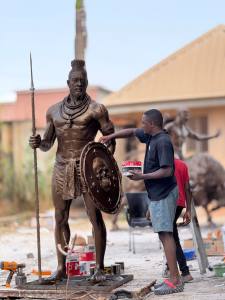
“Interestingly, my father was among the first to recognise that this was more than just childhood play. My grandfather, Mbamalu, was a well-known carver in my village, and when my father began noticing similar creative instincts in me, he saw a connection. That gave him even more reason to support my artistic interests and encourage me to pursue the path,” Daniel notes. “My mother was equally supportive, in her own way. She stood by me physically and spiritually, constantly encouraging me and keeping me in her prayers.”
“When I look back today, I realise that the foundation of the sculptor I have become was already being laid in those childhood experiences. I didn’t have sophisticated tools or materials, but I had curiosity, imagination, and an overwhelming desire to create. In many ways, that little boy who travelled to the stream to collect clay is still very much a part of the artist I am today.”
The journey from childhood creativity to professional sculpture would take a more definite direction at Ahmadu Bello University, Zaria, where Daniel studied Fine Arts. Painting was initially his first love, but his exposure to sculpture gradually opened up a world that he found increasingly exciting. Working with materials, exploring three-dimensional forms and discovering the freedom of sculptural expression would eventually become the language through which he chose to express himself.
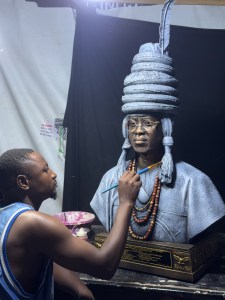
“My journey into sculpture was largely driven by curiosity, personal determination, and a constant desire to learn. Much of what I know today has come from deliberately pushing myself, studying the works of great artists, observing their techniques, and constantly seeking ways to improve my craft,” he says with much appreciation to the masters that opened the doors for his generation.
“I think the defining moment came when I gained admission to study Fine Arts at the prestigious Ahmadu Bello University, Zaria. That was where my love for sculpture truly began to take shape. Interestingly, painting was initially my first love. However, as I became more exposed to sculpture during my studies, I started discovering the enormous possibilities it offered. I was fascinated by its versatility, the different materials one could experiment with, and the freedom to transform almost any idea into a physical form,” he reveals with gladness.
He also recalls, “I have always been someone who enjoys exploring new things, challenging myself, and pushing creative boundaries. Sculpture provided that opportunity. It allowed me to think beyond the two-dimensional surface of a canvas and engage with space, form, texture, structure, and materials in ways that continually excite me. Eventually, I realised that sculpture was more than just an artistic discipline I was studying; it was becoming the language through which I could best express my imagination.”
At ABU Zaria, the young artist found himself in an environment where talent could be developed, ideas challenged and creative thinking strengthened. It was an important period in his development, giving him a broader understanding of sculpture beyond the act of producing objects. He quickly says, “my years at Ahmadu Bello University, Zaria, were fundamental to the artist I have become today. I would say the university gave me more than an academic qualification; it gave me a deeper understanding of art, discipline, creative thinking, and the possibilities that exist within sculpture.
Though he still insists being naturally gifted was an added trust for me to excel. “Before gaining admission, I already had a natural passion for creating things, but my time at ABU exposed me to a much broader understanding of what sculpture could be. It challenged me to think beyond simply making objects and encouraged me to understand form, structure, space, materials, concepts, and the stories that artworks can communicate.
“Technically, those years helped me develop my modelling skills, understand different sculptural processes, experiment with materials, and appreciate the importance of research and conceptual development. More importantly, I learned that sculpture is not limited to traditional approaches; it is a constantly evolving field that allows room for innovation and personal expression.”
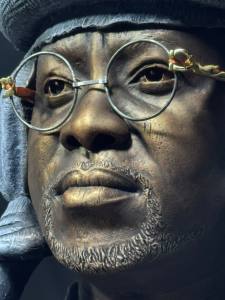
Daniel acknowledges that his development went beyond personal effort, recognising the contributions of lecturers and individuals whose knowledge, guidance and experience helped shape his understanding of art. He particularly recalls Professors Kenneth Okolo and Jerry Buhari, alongside the late Dr. Kefas Danjuma, as academic figures who deepened his appreciation of the discipline.
He also acknowledges his senior colleagues, Mr. Gershion Paul, Mr. Moses Bariki and Mr. Tisloh Dung, whose presence, experience and artistic contributions became part of his learning journey.
Beyond the classroom, he considers one of the greatest gifts of Ahmadu Bello University to be the exposure it provided. It taught him to observe, ask questions, challenge existing ideas and appreciate the different ways artists approach their practice. More importantly, he came to understand that becoming a good artist requires more than talent; it demands consistency, patience, curiosity, sacrifice and, above all, a willingness to keep learning.
We decided to enquire about what Daniel’s artistic identity look like today? From his response, it is not one that is easily confined to a particular material, style or subject. His practice draws from human experiences, cultural heritage, history and the realities of society. The human figure, portraiture and the stories of people and communities remain important, but his creative interests also extend to functional sculpture and the relationship between sculpture, architecture and design.
“I would describe my artistic identity as one that is constantly evolving, experimental, and deeply connected to storytelling. I see myself as a contemporary sculptor who enjoys pushing the boundaries of traditional sculpture while exploring new possibilities in form, materials, functionality, and artistic expression,” he says.
“My work is largely inspired by life, human experiences, culture, history, and the realities of the society around me. I am particularly fascinated by the human figure, portraiture, cultural heritage, and narratives that communicate strength, identity, resilience, and the human spirit. I believe sculpture has the power to preserve memories, communicate emotions, celebrate achievements, and tell stories that words sometimes cannot fully express,” he concludes.
One thing that defines his practice is the willingness to experiment. He says he doesn’t like restricting himself to one approach or material. Rather, he enjoys exploring different dimensions of sculpture, from realistic portrait sculptures and monumental works to functional sculptures that merge art with architecture and interior design. For Daniel, the possibilities are endless. He is interested in creating works that are not only visually compelling but can also interact with their environment and serve practical purposes.
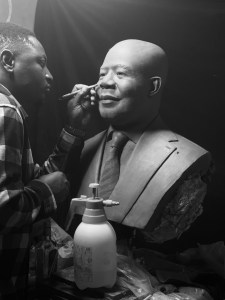
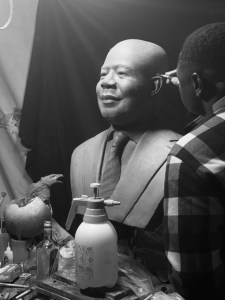
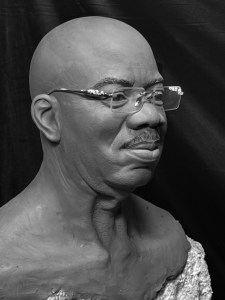
His material exploration is equally diverse, with clay, fibreglass, resin, plaster, metal and other contemporary sculptural materials forming part of his practice. He enjoys modelling, mould-making, casting, fabrication and experimenting with surface treatments and finishes.
“In terms of materials, I find myself working extensively with clay, fibreglass, resin, plaster, metal, and other contemporary sculptural materials. I particularly enjoy modelling, mould-making, casting, fabrication, and experimenting with different surface treatments and finishes. I also enjoy exploring bronze-inspired finishes, polished metallic surfaces, and other treatments that give my works distinct character and presence.”
For Daniel, however, the process does not end with the choice of materials or the techniques involved. What matters most is the possibility of transformation and the meaning that emerges from bringing an idea into physical form.
“Ultimately, I believe my artistic language is about exploration and transformation. I enjoy taking an idea, a story, an emotion, or even an ordinary material and transforming it into something meaningful and tangible. Art is a lifelong conversation, and sculpture is the language through which I have chosen to have that conversation with the world.”
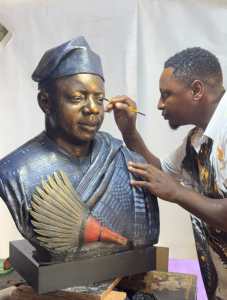
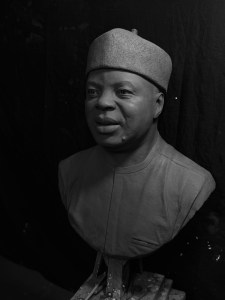
That conversation found an interesting expression in “Possibilities,” his portrait sculpture of Professor Yemi Osinbajo, former Vice President of the Federal Republic of Nigeria. The work was his entry into the inaugural ScAN Young Sculptors Competition, where he would eventually emerge as the overall winner.
The choice of Osinbajo was informed by his admiration for the former Vice President and the ideas he associates with national development and Nigeria’s potential. “The work I submitted was a portrait sculpture of Professor Yemi Osinbajo, the former Vice President of the Federal Republic of Nigeria, which I titled ‘POSSIBILITIES.’”
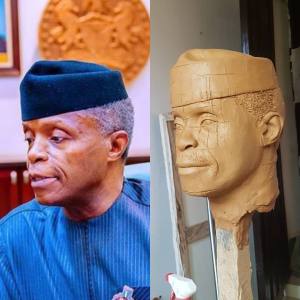
Daniel also explains how he was inspired to do the work, “the inspiration behind the work came from my admiration for his personality and the ideas he represents. I have always admired his disposition towards national development and his expressed desire to see Nigeria grow and realise its enormous potential. The title, “Possibilities,” was very intentional. I wanted the work to communicate something beyond the physical representation of a personality. To me, possibilities speak about hope, potential, vision, and the belief that there is always room for growth and transformation. I believe Nigeria is a country with enormous possibilities, and I wanted that thought to find expression through my sculpture.”
Daniel Ellias believes portraiture goes beyond the likeness of a subject. It is also about communicating the personality, character and ideas that make the subject meaningful to the artist and the viewer. “POSSIBILITIES” was therefore not merely a portrait exercise, but an artistic interpretation of an idea that extends beyond the individual represented.
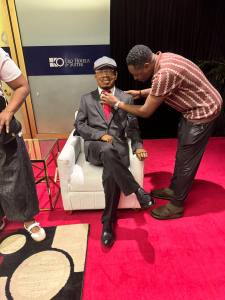
The inaugural ScAN Young Sculptors Competition attracted more than 100 entries, with 64 works from 37 applicants shortlisted for consideration. Against that competitive backdrop, Daniel’s emergence as the overall winner was a moment he did not anticipate.
“Regarding the competition, I honestly didn’t go in expecting to emerge as the overall winner. I simply wanted to present a work that reflected my artistic ability, creative thinking, and personal interpretation of an idea. Considering the number of entries and the calibre of artists who participated, winning was both an exciting surprise and a deeply humbling experience,” he says with that winner’s enthusiasm.
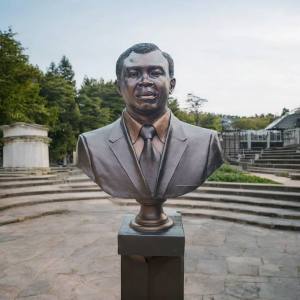
“Winning this inaugural edition of the ScAN Young Sculptors Competition means a great deal to me. It is an encouragement to keep exploring, taking creative risks, and contributing to the growth of contemporary sculpture in Nigeria.”
Recognition at this level is an important moment in the career of an emerging sculptor. It offers visibility, encouragement and the opportunity to connect with a wider art community. For Daniel, however, the award is not the final destination. He sees it as the beginning of another chapter.
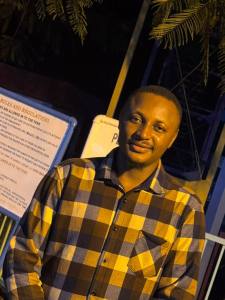
“Becoming the first overall winner of the inaugural ScAN Young Sculptors Competition is a deeply fulfilling milestone. Beyond the cash prize and plaque, I see this recognition as a platform for growth, greater visibility, collaborations and more ambitious projects. I also hope to contribute to the development of younger artists through mentorship and knowledge sharing. Ultimately, I see this award not as the peak of my journey, but as the beginning of a much bigger chapter.”
It is an ambition that sits alongside the realities of working as a sculptor in Nigeria. While the country’s creative environment continues to produce talented artists, the cost of materials, studio facilities and production can make the pursuit of sculpture particularly demanding. Exhibition opportunities, patronage and institutional support remain important concerns for emerging practitioners.
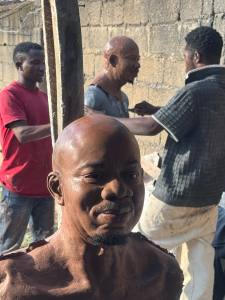
“One of my greatest challenges as a sculptor in Nigeria is limited access to resources, funding, affordable materials and well-equipped studio facilities. There are also limited exhibition opportunities and patronage for emerging sculptors. I would love to see greater investment in the visual arts through grants, accessible studios, exhibitions, residencies and mentorship programmes. Nigeria has enormous sculptural talent, but what emerging artists need is an enabling environment where their creativity can thrive and become economically sustainable.”
His thoughts are a reminder that the development of sculpture in Nigeria is not only about the talent of individual artists. It also depends on the availability of opportunities, infrastructure, patronage and a wider appreciation of what sculptural practice contributes to our cultural landscape.
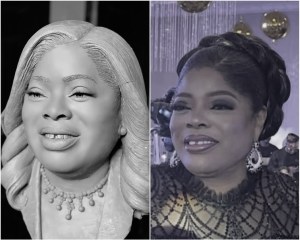
And what next for Daniel Ellias Mbamalu? The inaugural winner is already thinking beyond the competition. His ambitions include more monumental works, ambitious portraiture, functional sculpture, collaborations, new materials and technologies, and a stronger international presence.
“I believe collectors, galleries and the wider art community should expect an artist who is constantly evolving, experimenting and pushing creative boundaries. My ambition is to create works that go beyond aesthetics to tell stories, preserve cultural identity, challenge perceptions and leave lasting impressions. I am exploring more ambitious projects in portraiture, monumental sculpture and the integration of sculpture with architecture and functional design. I also hope to expand internationally, collaborate with established artists, create public artworks, explore new technologies and materials, and build a lasting artistic legacy through my practice and Masterpiece Artelier.”
Masterpiece Artelier forms part of his creative vision, but Daniel is also keen to speak to the next generation of sculptors who may be starting their journeys with little more than curiosity, imagination and a desire to create.
“My advice to younger sculptors is simple, to believe in your creative instincts, remain curious, and never stop learning. Don’t be afraid to experiment or make mistakes. Develop your skills, study the works of great artists, and be patient with your journey. Most importantly, don’t spend your entire career trying to imitate someone else. Find your own voice and have the courage to develop it. I am still learning, still exploring, and still discovering what is possible through sculpture. For me, the journey has only just begun.”
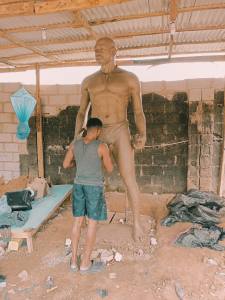
His words leave us with a sense of a journey still unfolding. And as Daniel speaks of learning, exploring and discovering what is possible through sculpture, our own journey through Lagos is drawing to a close.
By the time we arrive on the Mainland, Ikeja precisely, hunger has begun to make its own demands. Bongos Ikwue’s “Still Searching” is playing, and the title of the song suddenly feels appropriate. We are searching for food to satisfy our hunger, while, elsewhere in his creative world, Daniel Ellias Mbamalu continues his own search for new ideas, new materials and fresh possibilities in sculpture. Different journeys, but both driven by a desire for something more.
iBAND Magazine, Celebrating Visual Art from the Original.
Africa | Visual Art | Lifestyle | Culture

