

After 23 years of teaching art at Lagoon School Lagos, Edna Abugewa Wyse-Ekenimoh is finally stepping into the spotlight she has long reserved for others. For more than two decades, she shaped young hands and inspired teenage imaginations, guiding hundreds of students through the quiet discipline of line, colour, texture, and form. Yet throughout those years spent nurturing budding talent, her own artistic voice was patient, evolving, and deeply felt as continued to weave itself quietly in the background. Now, with her solo exhibition entitled Metamorphic Weave: The Alchemy of Fiber & Pigment, Edna emerges with a body of work that does more than showcase skill but tells the story of a woman reclaiming her creative centre.
Words Ireho Aito | Don’t Keep Your Art in the Finger! Photographs Edna Ekenimoh archives, Ireho Aito
On the quiet outskirts of Ogun State sits a neighbourhood where nature still refuses to retreat. Mustapha Estate, though dotted now with modern homes and new families, remains wrapped in the gentle hush of its mangrove like forest. The air is crisp, the trees tall, and the landscape still whispers stories of the ecosystem that thrived here long before the first building rose.
In this serene pocket of countryside life, monkeys continue to be part of the neighbourhood’s everyday charm. Edna Ekenimoh confirmed the monkeys move gracefully through the treetops, appearing at unexpected moments to lift the spirit and soul of the community. Residents have grown to see them not as intruders but as playful neighbours, sometimes mischievous, always fascinating. Their quick visits, pranks, and eager hunts for food left carelessly on balconies or open bins add a sprinkle of wild innocence to the estate’s calm rhythm.
It’s a rare kind of harmony for the residents within the estate. It has evolved into a place where modern living meets untamed nature, and where the presence of these creatures reminds everyone that tranquillity is not just about silence, but also about coexistence. Mustapha Estate remains a serene escape with quiet, green, and still beautifully alive.
“When we were trying to set up this place, the monkeys were still in their large numbers,” recounts Edna Ekenimoh. The memories were funny. “They would come into the buildings and mess up the ceilings, it was one period that could tear one apart,” she captures the event of the time.

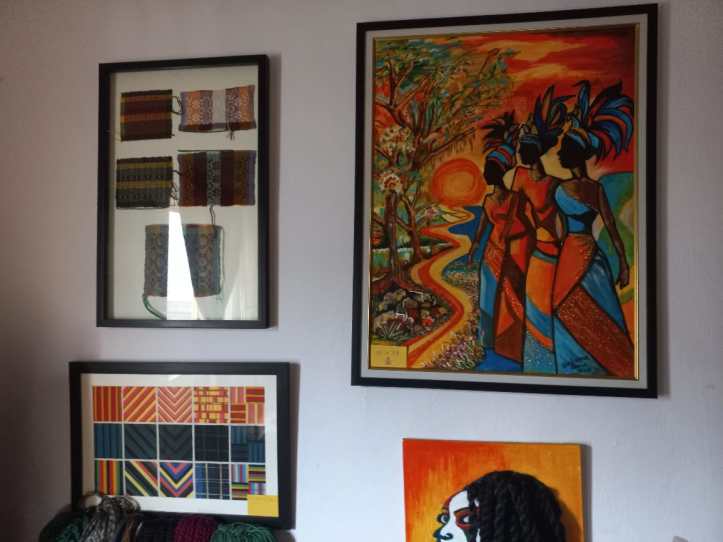
However, the morning light gently filtered into Edna Ekenimoh’s cosy apartment on the outskirts of Ogun State, at Mustapha estate in Magboro, touching every corner with a soft glow that seemed to honour the memories arranged lovingly around the room. Her living room was a quiet narrative, a beautiful and modern setting, spiced with vintage gramophone and kettle like jug to serve guests in the house that she collected from her father, arranged on the center table. Notably is the heirlooms whispering stories of a richly layered past. It was here, enveloped by history and warmth, that our conversation began about her forthcoming exhibition.
Honestly, a peep into her apartment is a sure confirmation that an artist who knows her onions lives here. Sculptural works at well curated end of the apartment giving the living a life of its own. Edna explains each of the work with ease of a curator who sees from behind to predict outcomes. In that exceptional space one continues to admire the Ikom monolith, Haķuna Matata, Swahili meaning of ‘don’t worry’ somewhere on the floor.

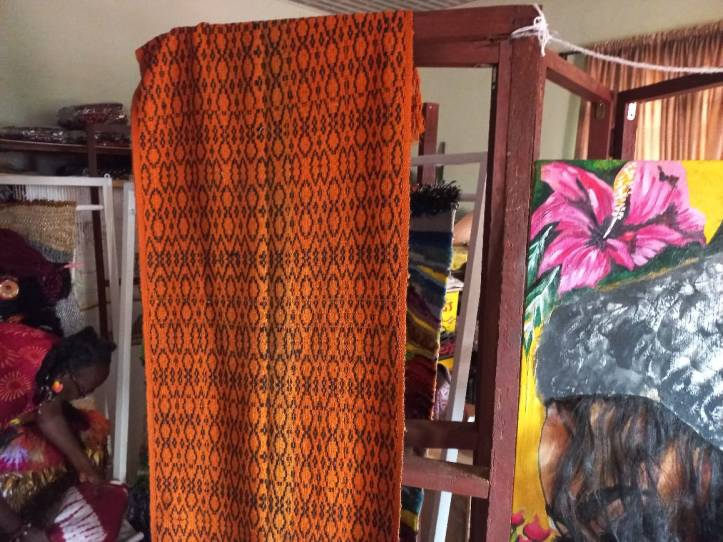
She even artistically demonstrated how the kettle is filled and served. While orchestrated the traditional lantern with the flow of a teacher that she is. It was very impactful to learn.
“My father was Itshekiri, just like his father,” she said, her voice carrying both pride and nostalgia.
“Both my father and grandfather worked at John Holt. They were fine men, highly disciplined and industrious. My mother, on the other hand, was Sierra-Leonean. She was a force of nature.”
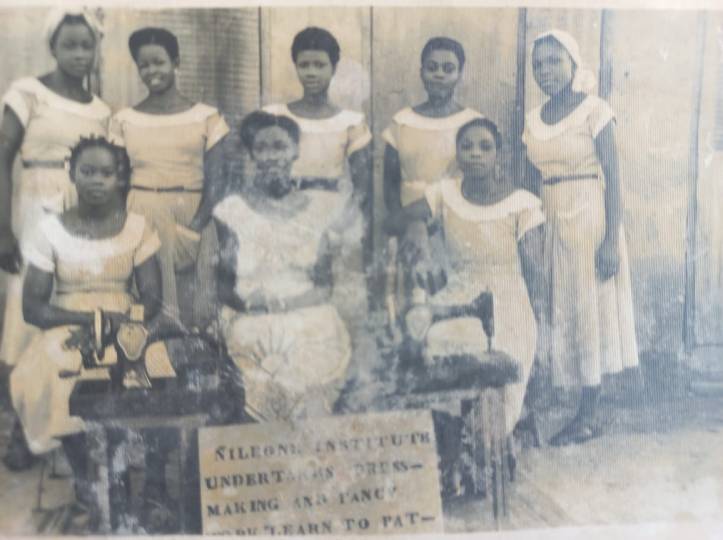
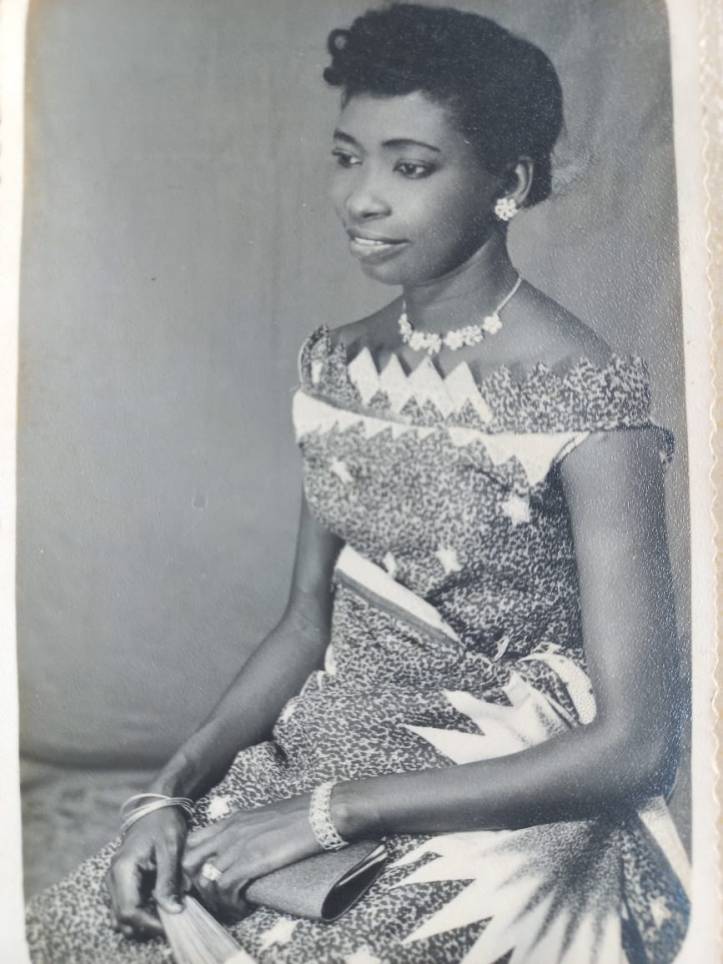
I watched as she reached for neatly preserved photographs from her archive, the picture already soft at the edges. She held it up with a kind of reverence and the middle class life was prominent with the array of fashionable personalities in the photographs. At the back of the pictures, one could read the photographer’s company name, Blessed Photo Service, Robert Road, Warri.
She chuckled lightly, the sound drifting into the room like a forgotten melody.
Oh, my mother? She was everything,” she recalls joyfully. “ My mother was a fashion designer, a baker, a mortician managing funeral services, a highly skilled woman who never sat still. She was also very influential in the Warri Women’s Tennis Club. Honestly, she lived three lives in one body.”
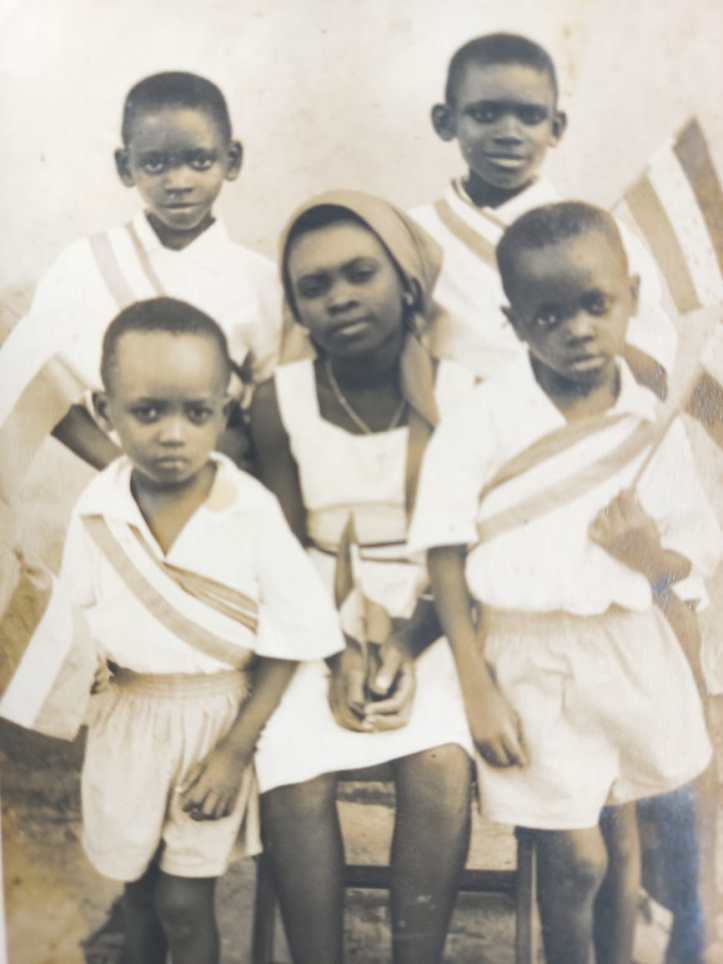
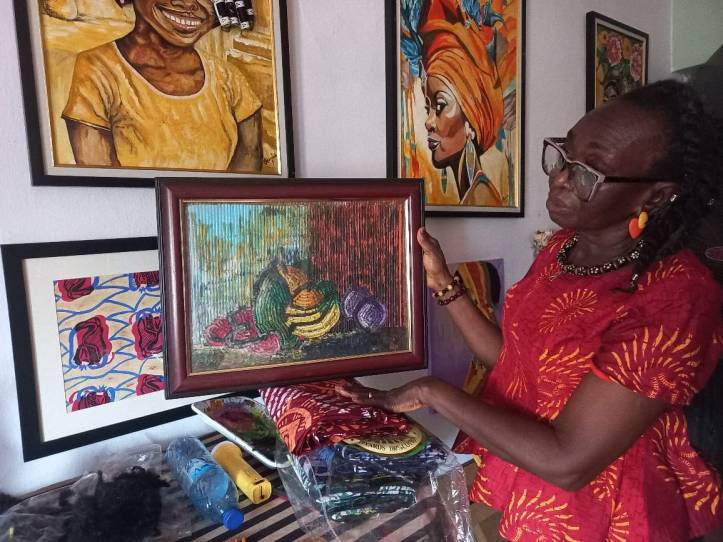
Her father was as gifted as her mother. Most of the furniture in the house was done by Edna’s father. What a creative family.
Edna Ekenimoh was born and grew up in Warri. She first of all, attended Anglican Girls Grammar School, Ughelli for a year before moving to Federal Government Girls College, Kano. “Warri is home. I started secondary school in 1972 at Anglican Girls Grammar School, Ughelli and spent only one year. My parents wanted me in one of the new Federal Government Colleges that were opening then, so off to FGGC Kano I went.”
Edna is a bit of polyglot. She speaks some Hausa, Creole from Sierra Leone, Yoruba and her native Itshekiri language. She is all formed.
Her older brother, then in the Nigeria Army, saw how talented Edna was in the arts, quickly drew her closer, and advised her to pursue a degree in the arts since the talent was enormous. For her not to waste time, she was asked to choose the famous School of Art and Design, Federal Polytechnic Auchi which was against her wish. Edna wanted a university instead due to the societal norm at the time.
She may have started with General Art at Auchi Polytechnic for her OND, but the dream of a university degree never left her. After completing her first phase of study, she returned to Auchi, intent on taking the next step toward that aspiration.
Edna Ekenimoh started her HND at Auchi but couldn’t cope at a time when she later gained admission to the prestigious Ahmadu Bello University in Zaria, Kaduna State. “I gained admission to Ahmadu Bello University to study Industrial Design. At the same time, Auchi offered me HND. I tried juggling both for a while at Auchi It was too much, so I chose ABU,” She laughed softly.
She was later convinced by one of her amiable lecturers, who was also the head of department at the time, Mr. Adejumo, who presented her with several university options to consider. He advised her not to let ambition distract her, but instead to make thoughtful choices and explore the positive side of every decision. His counsel became a powerful tonic for Edna, lifting her spirit and strengthening her resolve. It was this guidance that inspired her to remain at ABU and bring her HND journey at Auchi Polytechnic to a close.
“I was determined to make a first class. I worked hard day and night. But then a carryover in Art Education appeared from nowhere. I was shocked! I smelt a rat somewhere” She couldn’t believe what happened.
Edna met her husband, Moses Ekenimoh, during her university years. He was a postgraduate Master’s student at the time. He was calm, brilliant, and famously focused. Moses, like many others who knew her academic strength, was stunned when Edna’s final result was released. For both of them, it felt surreal.
“That moment shook the entire campus,” Edna recalls. She remains convinced that her missing out on a First Class was politically motivated. Yet, with grace and quiet resilience, she graduated with a strong Second Class Upper, choosing to look ahead rather than dwell on what could have been.
After completing her studies at ABU and her National Youth Service, life took a new and beautiful turn, marriage came in. Edna became Mrs. Ekenimoh and moved to Ilaro to join her husband, who was then lecturing at the Federal Polytechnic.
Ilaro, a peaceful and almost sleepy town, offered Edna the space to reinvent herself. She embraced her creative side, sewing clothes for students and residents, slowly building a reputation for stylish, well-tailored outfits. Her days were full, balancing her small but growing clientele with family life and, eventually, a new job at the Polytechnic’s Registrar’s office.
Meanwhile, Moses continued to rise steadily in academia, becoming Head of the Department of Building Engineering. Not long after, new opportunities called, and the young couple, now with a baby in their arms, packed their bags and relocated to Lagos, ready for the next chapter of their journey.
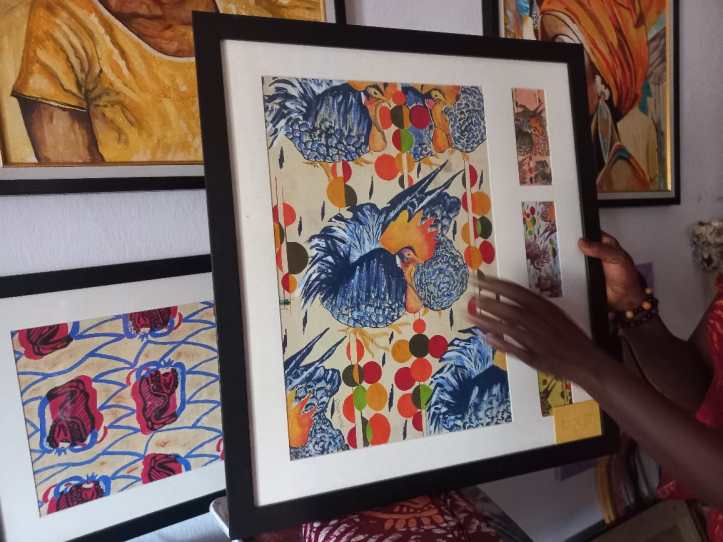
Teaching, for Edna, has always felt like destiny, an instinctive calling that followed her wherever life took her. When the family settled in Lagos, she embraced the role of a stay-at-home mother for a while, pouring her energy into raising her young child. But Edna was never one to sit still.
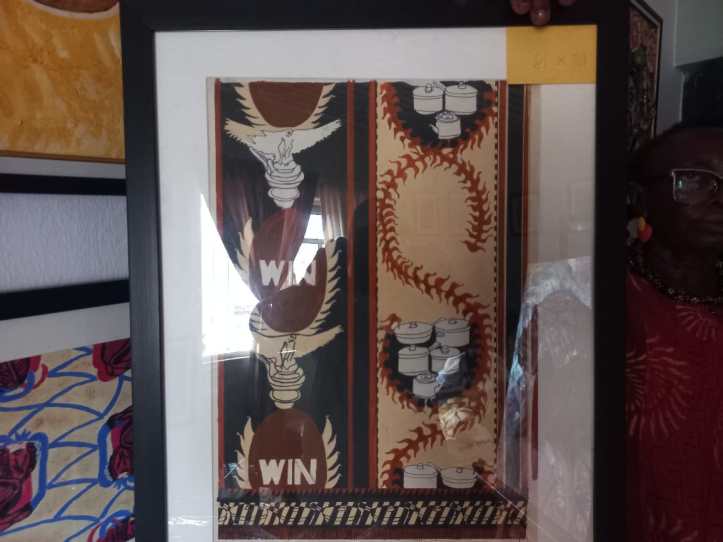
To keep her entrepreneurial spirit alive, she ventured into small-scale trading. “I used to travel to Cotonou in Benin Republic to buy and sell,” she recalls with the unmistakable excitement that lights up her storytelling. The business kept her active, connected, and fulfilled.
Yet, even as she explored trading, her passion for shaping young minds remained unshaken. “While staying with my brother who was in the military, I found myself teaching the officers’ children during their holidays,” she says. It was natural, almost effortless proof that no matter the city or circumstance, teaching was woven into the fabric of her life. She got a job at Lagoon Schools and for 23 years she shaped the lives of many young ones and building lasting legacy in their lives.
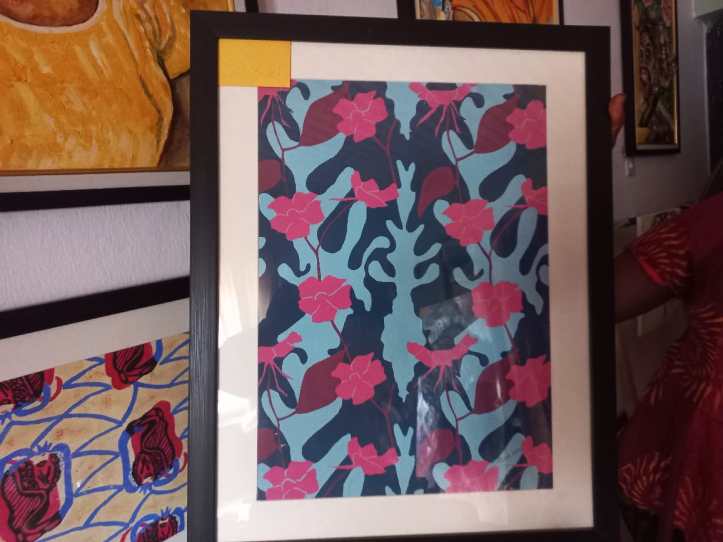
At the moment, Edna’s home is alive with warm company. Chugo, one of her former students from Lagoon, is currently visiting and lending a helping hand as preparations for the exhibition intensify. Now a Law student at Nnamdi Azikiwe University, Awka, Chugo speaks with deep affection about the woman who helped shape her teenage years.
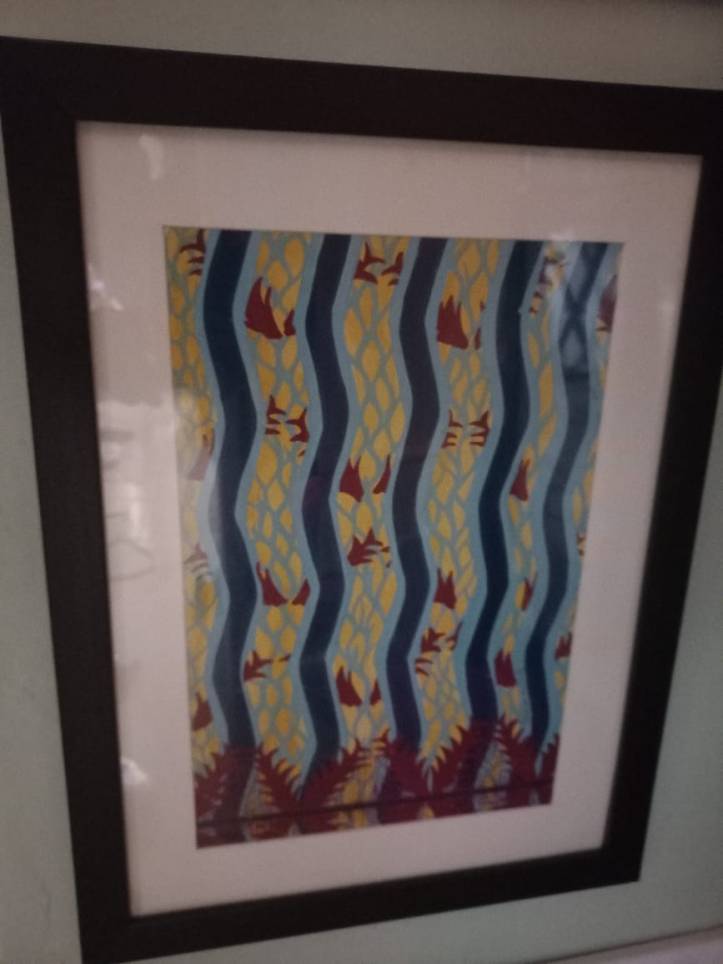
As they move around the apartment, sorting materials, reviewing plans, sharing light moments, Chugo offers heartfelt testimonies about Edna’s impact on the students of Lagoon, an all-girls school where Edna’s Art classes were legendary. Her former teacher’s creativity, discipline, and personality left imprints that still guide them today.
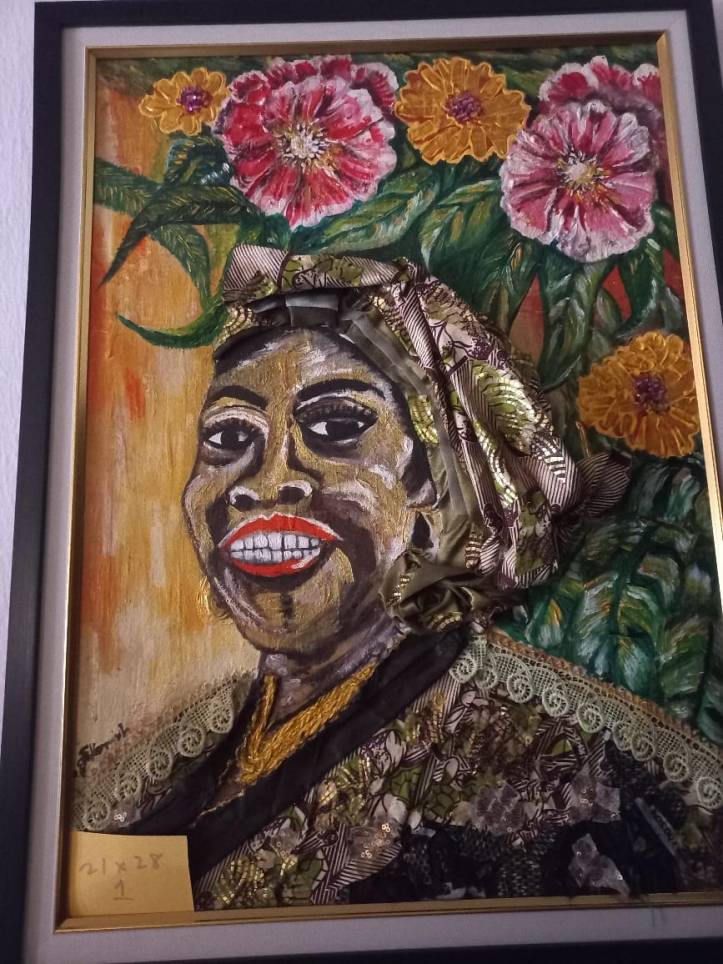
A short documentary that will be screened at the exhibition captures these sentiments beautifully. In one of the scenes, Edna’s former students would be recounting experiences that have stayed with them into adulthood. Chugo even plays a preview clip from one alumna who recorded an exciting tribute, celebrating the teacher who taught her to dream boldly.
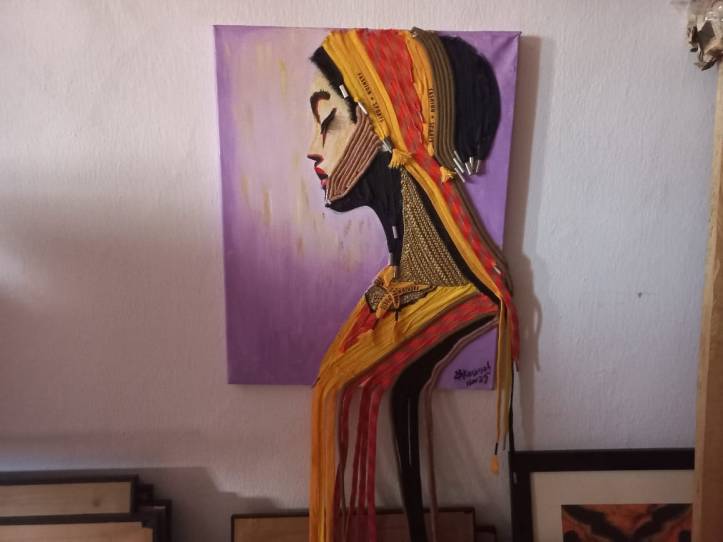
In their memories, Edna remains unmistakable, her colourful, maverick hairstyles, her love for fashion, and her unwavering insistence on excellence. She was more than an Art teacher to them, she was a force, a mentor, and a standard-bearer of success. For the records, Edna Ekenimoh is a professional teacher as she also did a post – graduate program in Education as mandated and all the certifications required.
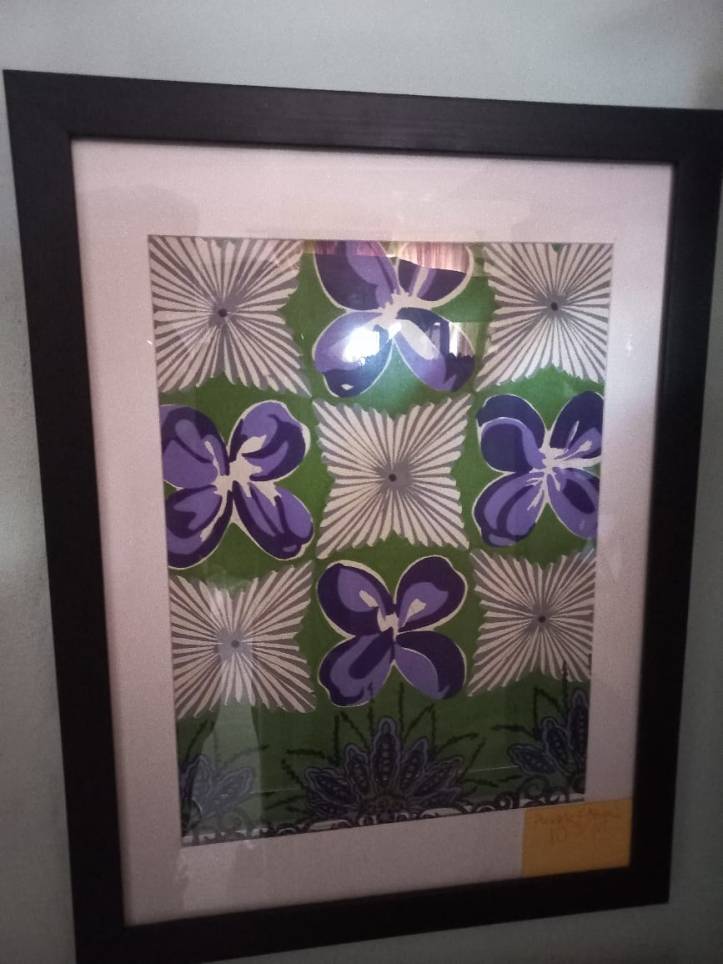
“While at Lagoon teaching, I never focussed on myself but on the students to excel as mandated by the school to build excellence in them,” Edna remarks while feeling fulfilled on that part. She was taking them out for various competitions and they won prizes for the school. “I made them to think outside the box when the themes were received,” she confirms.

The Metamorphosis
Retirement from classroom teaching did not mark an end for Edna Ekenimoh, instead it sparked a transition, a rebirth. From that shift emerged “Metamorphic Weave,” the artistic movement that now defines this new chapter of her life.
“The first thing that came to me was to look for a venue for my solo exhibition,” she says with a bright, animated calm that fills the room. “I knew that once I secured a venue, the rest would be history. The better part of the work would have been done.”
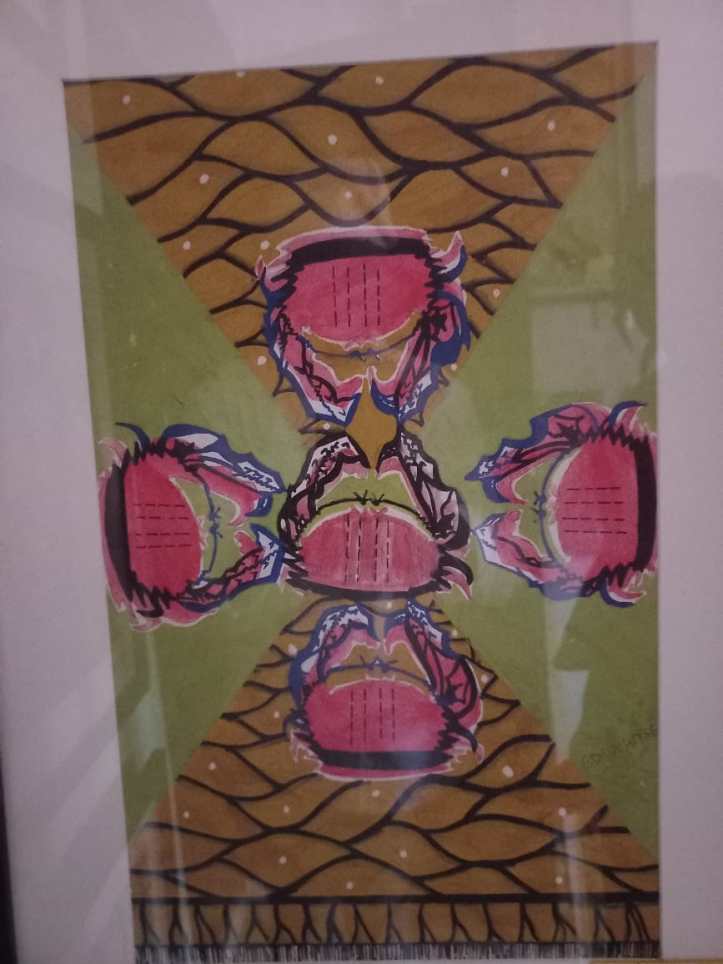
As though the universe was waiting for her next bold step, doors opened. Edna secured the prestigious National Museum, Onikan, Lagos, a space widely respected for hosting some of the country’s finest cultural and artistic showcases. For her, it felt like destiny aligning with her, an affirmation that she was stepping into the phase she was meant to embrace all along.
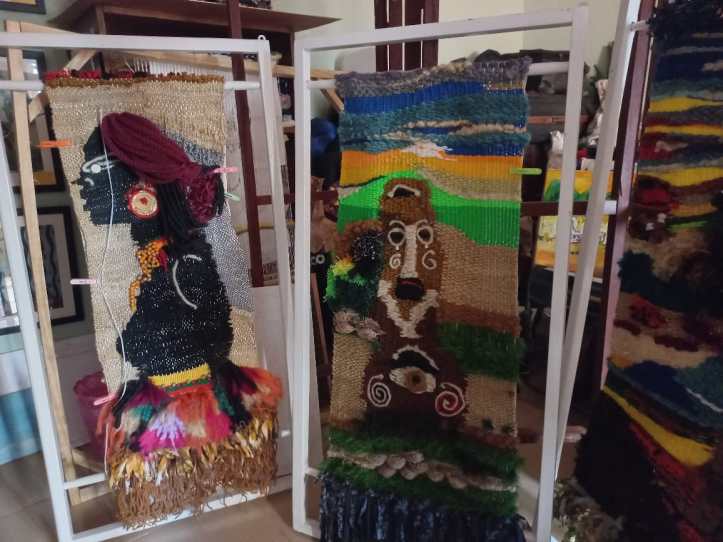
The Room of Many Colours Weaving Her Metamorphosis
After 23 years of teaching art at Lagoon School Lagos, Edna Abugewa Wyse-Ekenimoh is finally stepping into the spotlight she has long reserved for others. Now, with her solo exhibition Metamorphic Weave: The Alchemy of Fiber & Pigment, Edna emerges with a body of work that does more than showcase skill but the story of a woman reclaiming her creative centre. “My husband was deeply concerned about the way I worked day and night once I secured the venue,” Edna admits with a laugh. “He would stand at the door of my private studio in the middle of the night and ask, ‘This your exhibition, no be December?’ — just to remind me to slow down.”
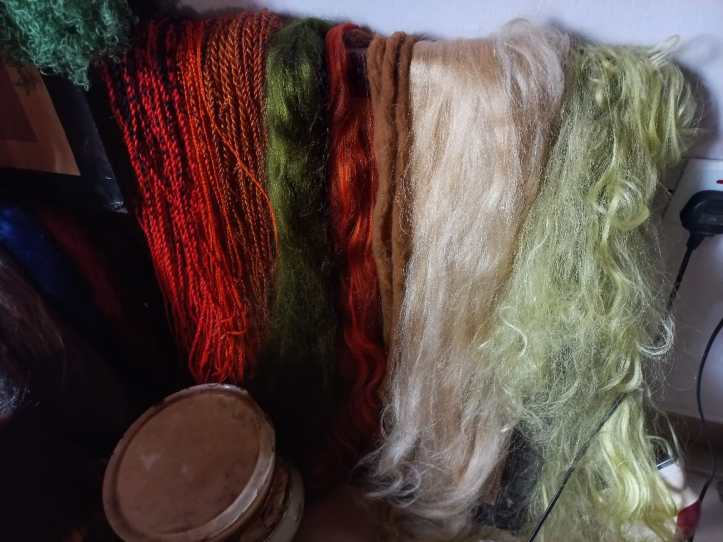
After years of working round the clock as a teacher, mother, mentor, and tapestry artist, she has reached a point where her work deserves a dedicated stage. Metamorphic Weave is her artistic declaration, this is culmination of lived experience, silent labour, and the evolution that time allows.

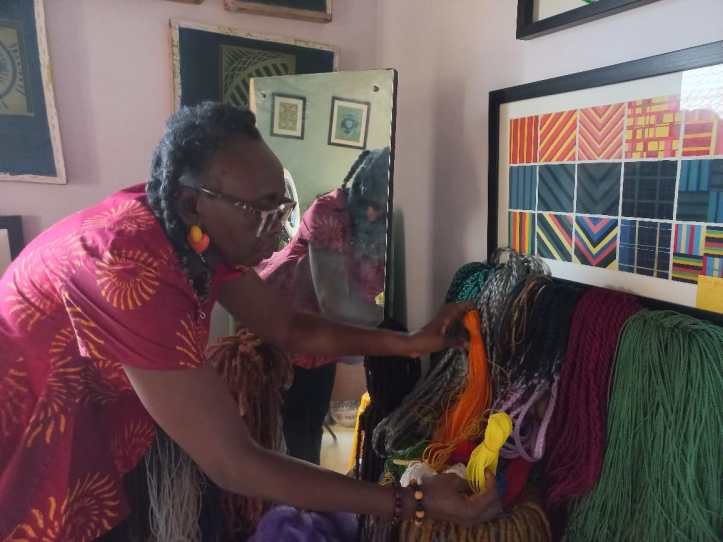
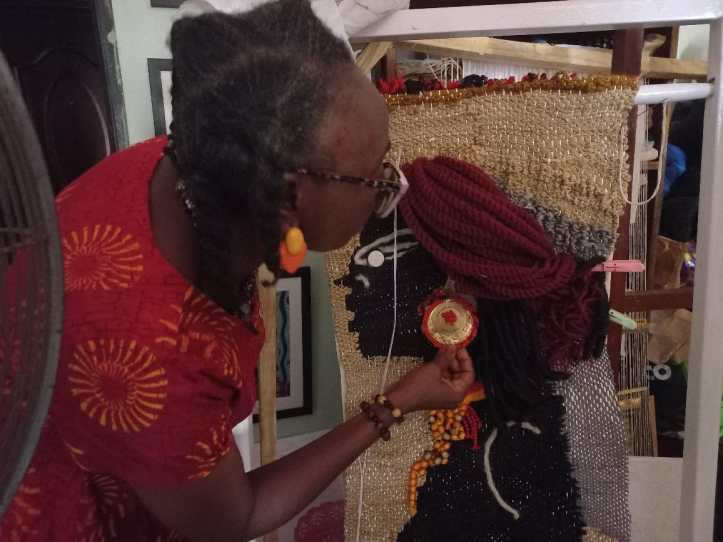
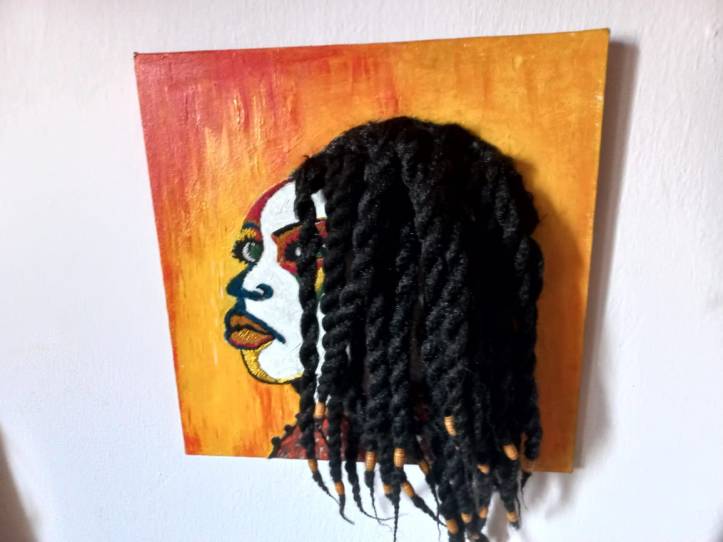
As the significance of the exhibition unfolds, it becomes clear that its importance is layered. First, the exhibition acknowledges the intense discipline she has poured into her craft. Fiber art is slow, meditative work. Each tapestry is built thread by thread, often over weeks, and sometimes months. Edna’s diligence often carried out during long nights after grading papers and preparing lessons has mature her technique into something unmistakably personal. Her pieces hold the weight of time and the clarity of intention. “I found myself at Aswani Market, hunting for wood to work with,” she says. “Then I stumbled on hair attachments in all kinds of colours and I was completely lost for words.” The discovery sparked a new wave of experimentation, pushing her to rethink her creative approach to the exhibition. “At ABU, the tapestry medium I knew was wood,” she notes. “But this time, I needed to explore.”
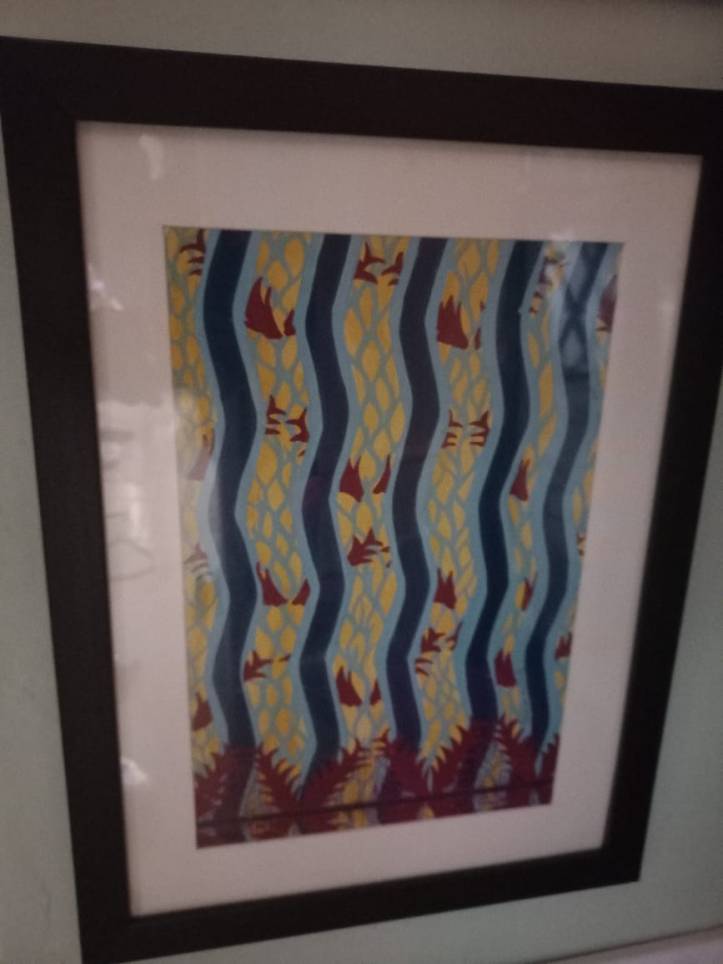
And she did explore, because beyond the discipline lies a deeper shift, one that speaks to identity. The exhibition is marking her transition from being solely a teacher to becoming the artist she has always been but rarely foregrounded. Metamorphic Weave becomes a symbolic rebirth as a metamorphosis of identity and artistic purpose, captured in the very medium of fiber, colour, and form.
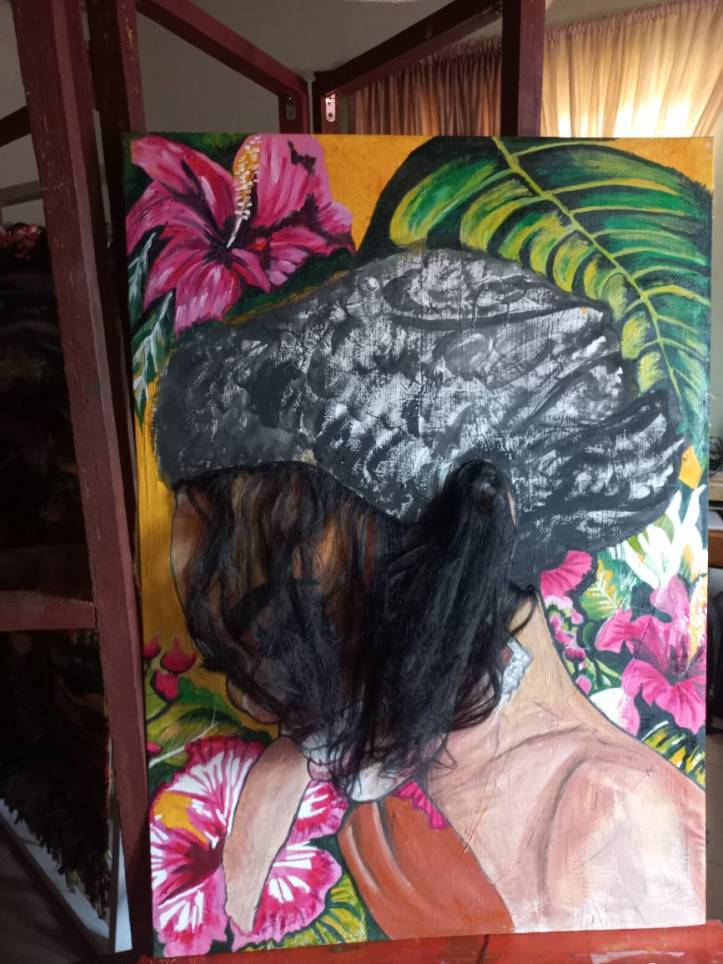
This transformation also carries weight for the broader Nigerian art ecosystem. Her show is coming out as a significant contribution to Nigeria’s contemporary fiber-art landscape. In a country where painting and sculpture dominate the mainstream conversation, tapestry and textile art often sit on the fringes. Edna’s work is reminding us that woven art carries a distinct language which is tactile, organic, and deeply rooted in tradition, yet capable of contemporary sophistication. Her exploration of pigment and fiber challenges the boundaries of textile expression, bringing a refreshing voice into the Nigerian art scene.
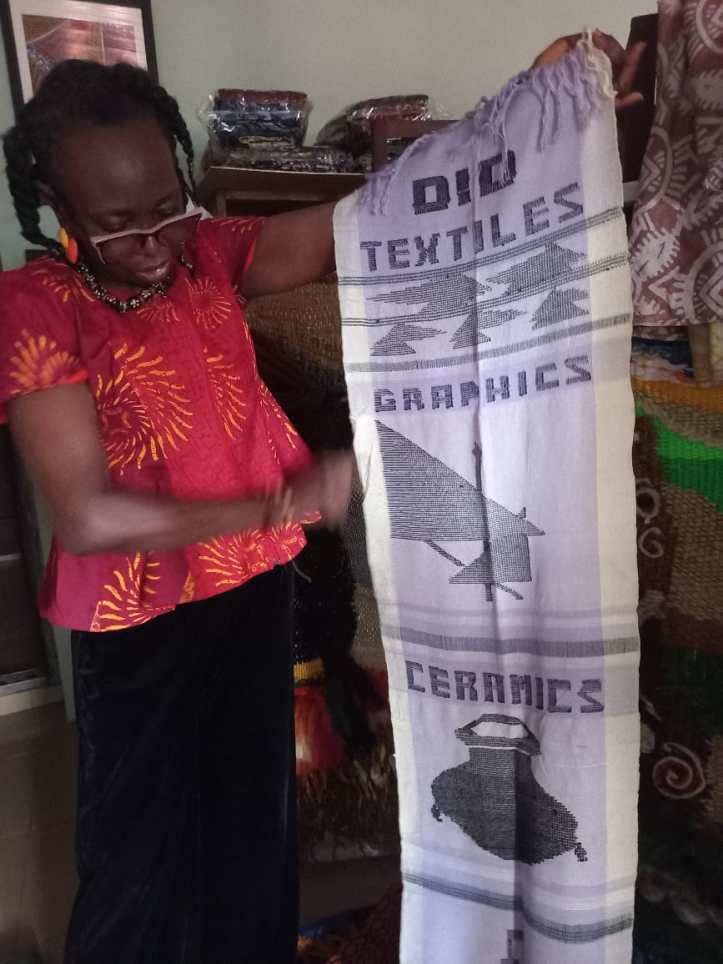
Equally important is the intimate dimension of the exhibition, the stories her work is finally allowed to tell. Edna Ekenimoh’s exhibition offers the public a window into the emotional, spiritual, and personal narratives behind her work. Unlike many visual artists whose processes are quickly visible, tapestry makers reveal their stories slowly. The layers of thread, colour transitions, textures, knots, and weaves all carry gestures that speak to patience, introspection, and resilience.
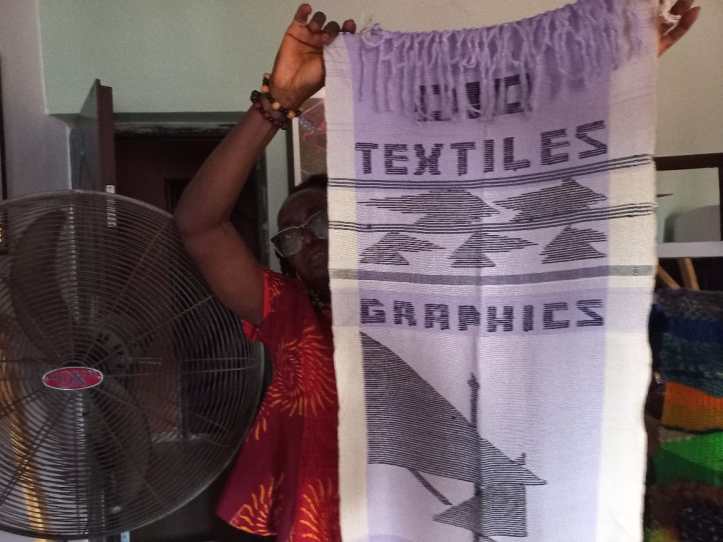
For Edna, each piece is a reflection of her journey. Each piece reveals the transitions, the triumphs, the exhaustion, the rebirths, and the quiet determination that has shaped her life. This is her first opportunity to share those stories without interruption.
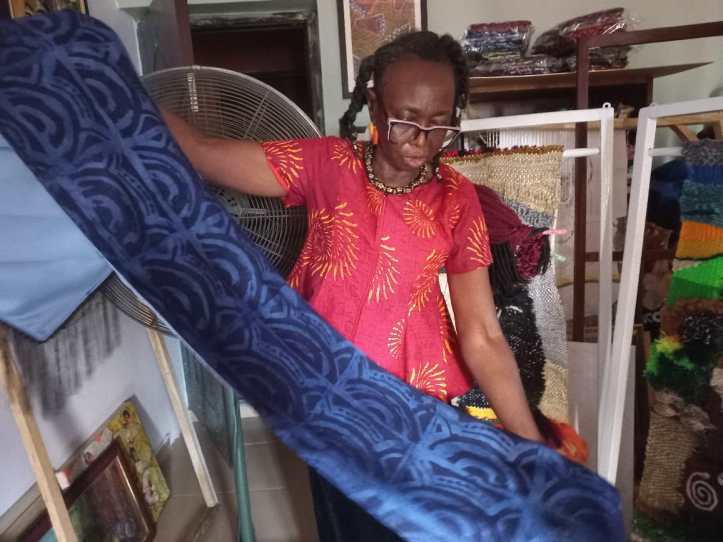
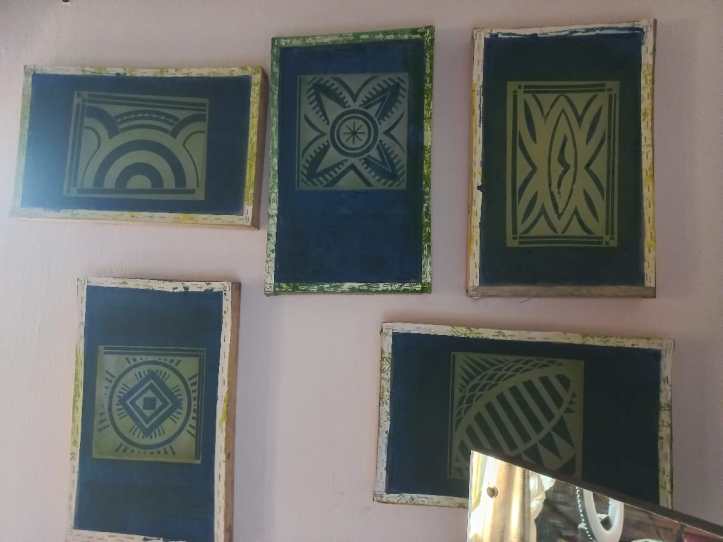
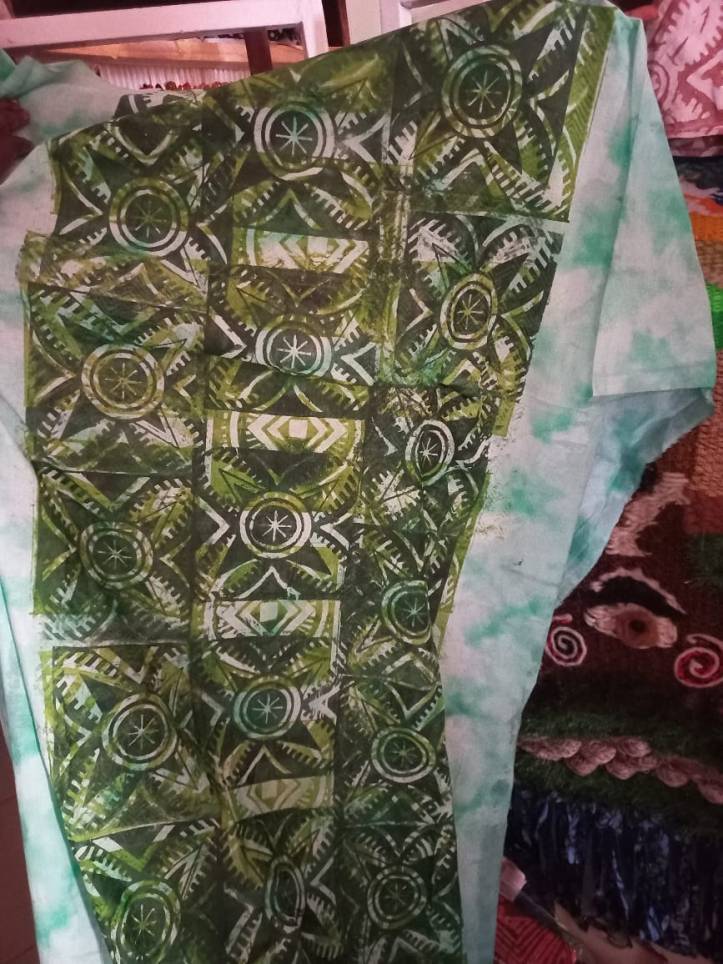
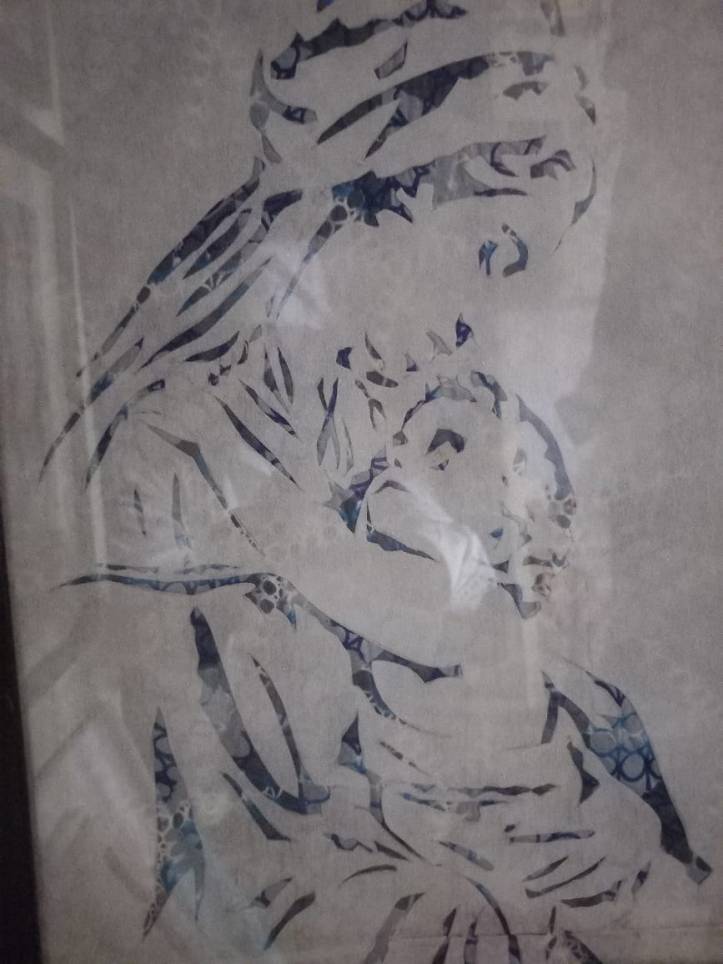
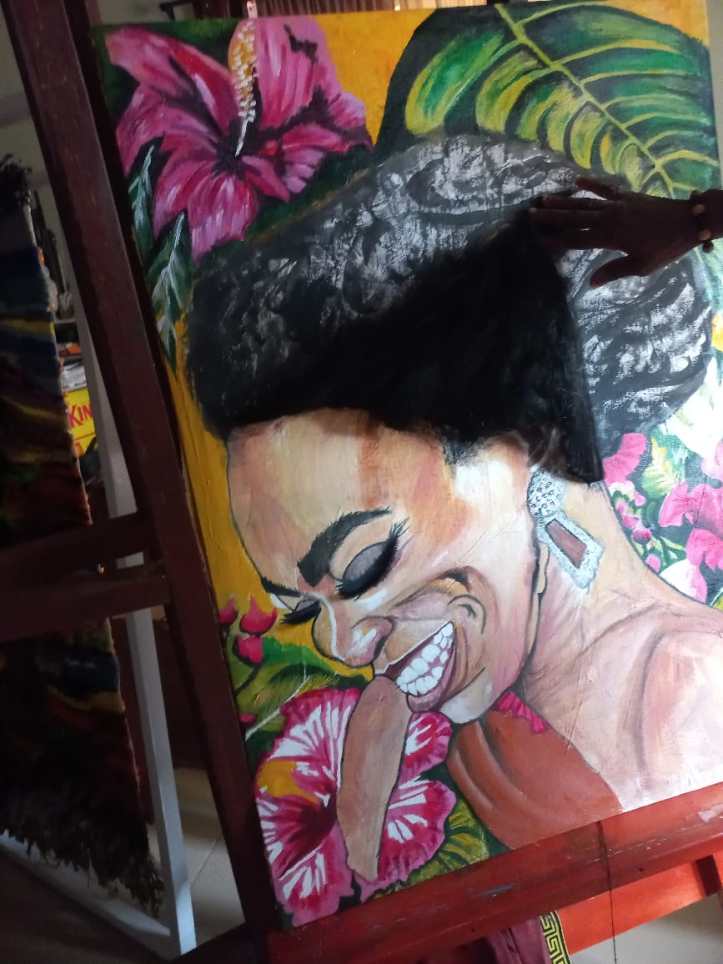
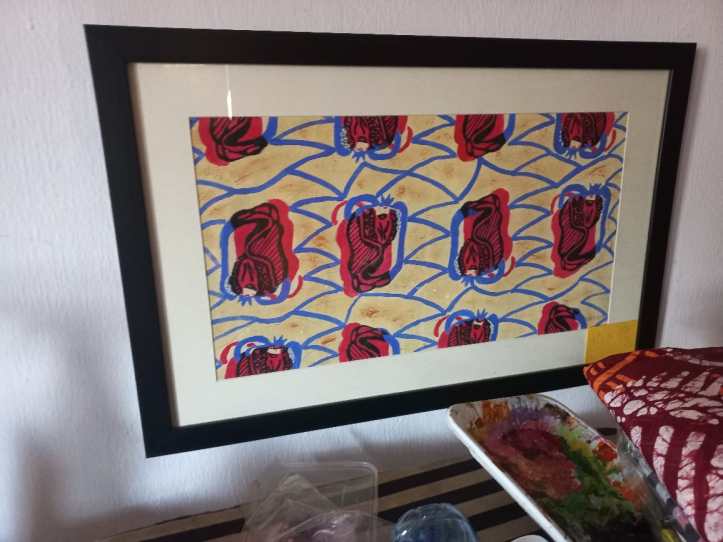
From these centrepieces, the exhibition expands into deeper experimentation. Another highlight is her exploration of what she calls “the alchemy of fiber and pigment.” Here, she pushes the boundaries of traditional tapestry by integrating unconventional materials, baobab wood cut, subtle dye work, medals and mixed-fiber layering. The result is a dynamic interplay of colour and texture that stimulates both eye and touch.
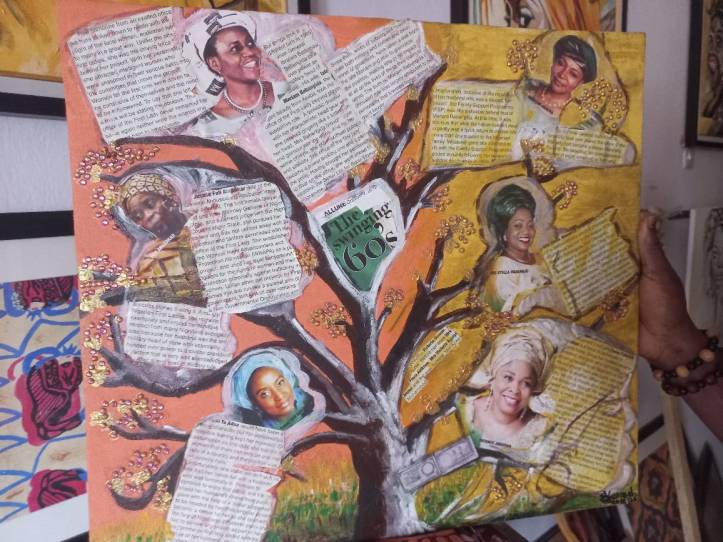
In addition to her explorations with fiber, Edna has incorporated both creative and literal texts into some of her works, including pieces inspired by Nigerian First Ladies, drawn from her collection of magazines that highlighted women’s emancipation. These tapestries blend visual texture with written expression, showcasing her artistic versatility while engaging thoughtfully with contemporary cultural and political narratives.
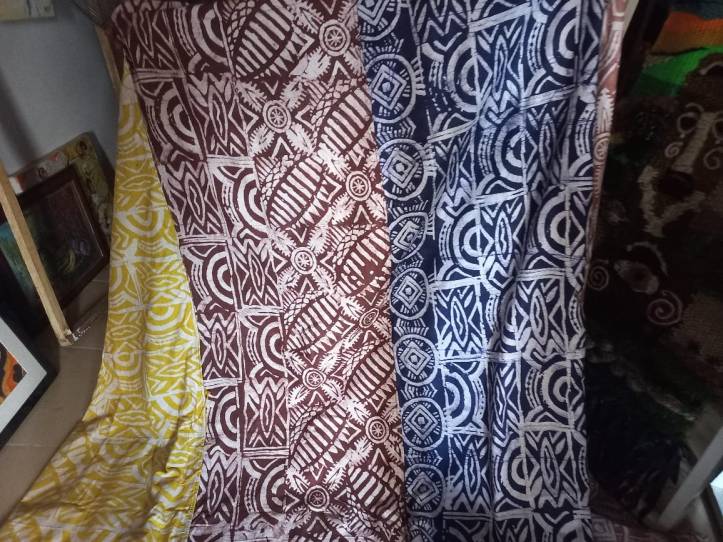
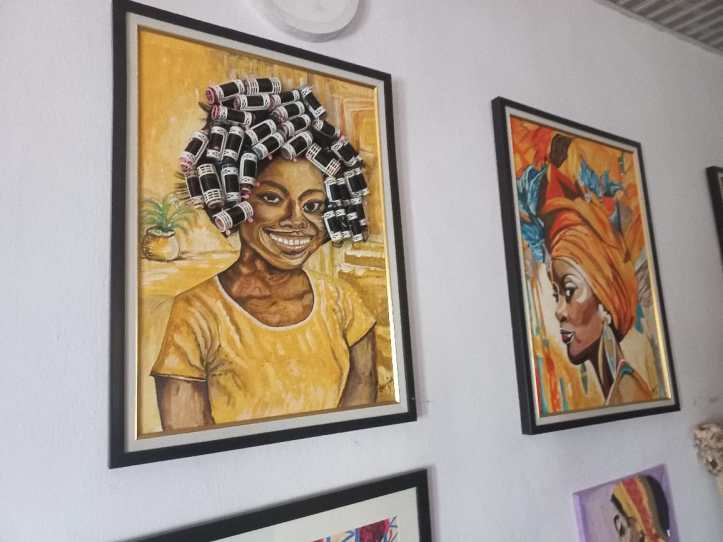
Yet even amidst innovation, Edna remains grounded in the world that shaped her. Some works pay tribute to her long teaching career. These tapestries draw inspiration from her students, the classroom energy, and the personal philosophies she developed while shaping young artists. They serve as gentle acknowledgements of the impact that teaching has had on her identity and the inspiration she has drawn from her students’ unfiltered creativity.

Her courage to scale up her practice adds yet another impressive dimension. The exhibition will also features several large-scale weaves that command space with their dramatic gradients, powerful contrasts, and immersive textures. These pieces represent some of her most ambitious work, challenging the physical demands of tapestry-making while showcasing her mastery of scale and composition.
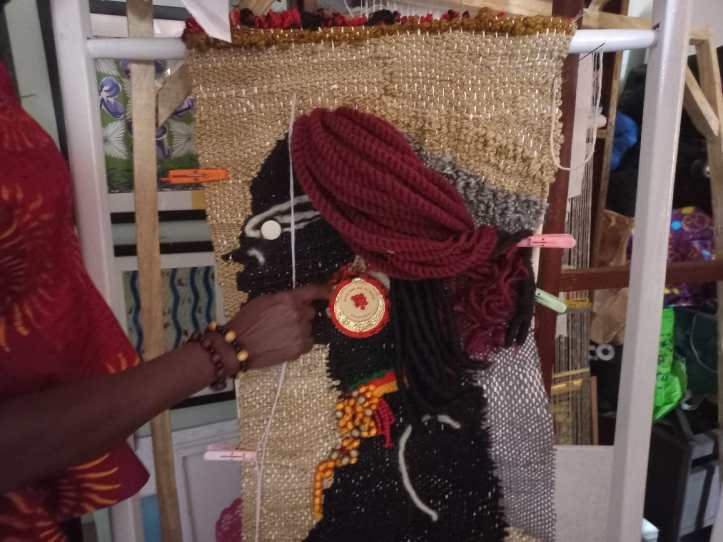
To deepen this experience, Edna opens the door to her creative process. Finally, visitors will appreciate glimpses into her weaving process through displayed tools and completed works, that leaves imagination. Edna offers audiences an opportunity to witness the patience and precision that define her craft. It is here that the magic of tapestry truly reveals itself the slow transformation of loose fibers into something purposeful, expressive, and whole.
Metamorphic Weave: The Alchemy of Fiber & Pigment exhibition opens on the 13th of September 2025 at the National Museum Onikan, Lagos.


Quintessential Edna! May your colours shine bright
LikeLike
Thank you so much
LikeLike
Thank you for your salutary editions. Edna Ekenimoh has been a very interesting explanation.
Sent from Yahoo Mail for iPad
LikeLike
Thank you so much
LikeLike