
At 42 Awolokun Street, Gbagada, Lagos, Àsà Heritage Africa Art Space opened its doors with a clear focus on African heritage, creating a place where culture, art and history can meet in meaningful conversation.
Words Ireho Aito | Don’t Keep Your Art in the Finger! Photographs credit : Solodynamics
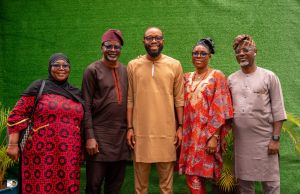
On Friday, July 31, 2026, Àsà Heritage Africa Foundation opened the doors of its new art space, Àsà Heritage Africa Art Space, situated at 42 Awolokun Street, Gbagada, Lagos, welcoming guests into a setting designed to bring together African art, heritage, creativity, knowledge and community. At the centre of the initiative is Dr. Oluwatoyin Zainab Sogbesan, the architect, cultural historian, art and heritage specialist and museologist whose work has consistently examined the relationship between objects, memory, identity and the way African stories are presented.
For patrons and enthusiasts, the opening feels like a natural extension of a journey they have followed through Sogbesan’s work.
Earlier this year, iBAND Magazine featured her three-year project, Èrè Ìbejì: Memory, Spirit, and Continuity in Yoruba Culture, a deeply researched exploration of the sacred twin figures of Yoruba culture. The project questioned the way Èrè Ìbejì have sometimes been reduced in international museum catalogues to descriptions such as “male wooden figure” and “female wooden figure”, stripping them of their names, histories, spiritual meanings and relationships with families. Sogbesan’s research, which took her from museum collections to communities and palace spaces in Oyo, sought to restore those meanings.
That concern with context is central to her broader practice. Sogbesan has a doctorate in Culture, Policy and Management from City University London and is the founder of Àsà Heritage Africa Foundation, an organisation focused on heritage identification, documentation and preservation. She has also worked across museum and cultural heritage platforms, with her professional interests strongly rooted in ensuring that African cultural objects are properly understood from African perspectives.
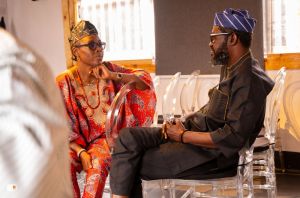
The new art space therefore does not arrive as an isolated project. It is another physical expression of an idea that has appeared repeatedly in her work: preservation is not only about keeping objects safe; it is also about keeping their stories, meanings and relationships alive.
This is particularly important in Lagos, a city where contemporary creativity is constantly reshaping the cultural landscape. Yet there remains a need for spaces where visual art can sit comfortably beside heritage, research, conversation and community learning.
Àsà Heritage Africa Art Space appears designed with that wider role in mind.
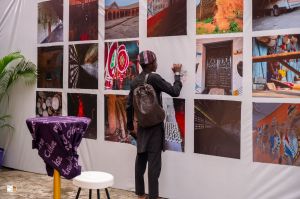
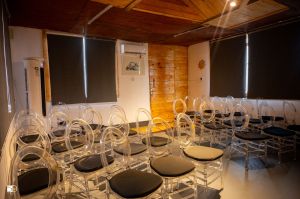
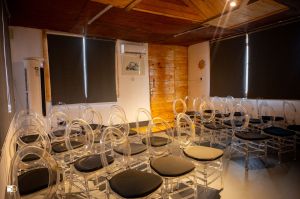
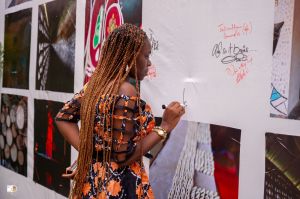
The photographs from the opening reveal an intimate environment. One area provides a clean exhibition setting, while another is arranged for gatherings, presentations, screenings and conversations. The space is neither presented solely as a conventional gallery nor as a museum. Instead, it suggests a flexible cultural environment where different forms of engagement can take place.
That flexibility is significant because Sogbesan’s work has rarely stayed within one disciplinary boundary.
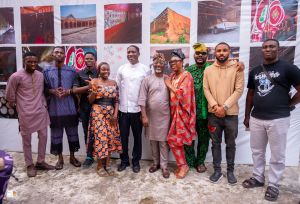
Her background in architecture, cultural history and museology creates a particular understanding of heritage not as something frozen behind glass, but as knowledge that can continue to interact with contemporary life.
This approach was visible in her work at the Lagos Pop-Up Museum, where her Èrè Ìbejì project combined exhibition, documentary film and video installation.
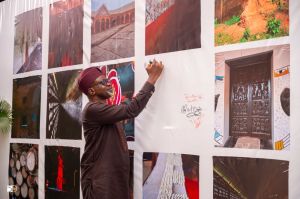
iBAND Magazine described the project as more than an exhibition because it brought questions of naming, cultural memory, spirituality and representation into public conversation. The experience also revealed Sogbesan’s concern about younger Nigerians becoming increasingly disconnected from aspects of their cultural inheritance.
Heritage, in that sense, needs places where younger people can encounter it without feeling that they have entered a distant past.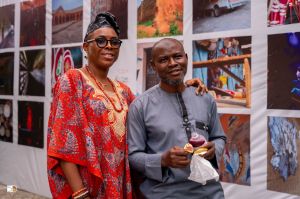
This is where the new Gbagada space could become especially interesting.
It places the conversation around African art and heritage within an everyday urban environment, potentially bringing cultural experiences closer to audiences who may not routinely visit conventional art institutions.
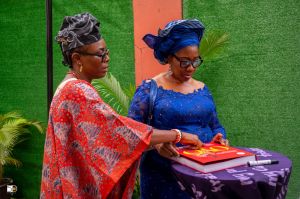
The foundation’s invitation captured the spirit of the opening in four simple words: “Come and experience. Come discover. Come connect. Come celebrate.”
Those words describe more than an opening-day invitation. They point towards the kind of cultural relationship the space hopes to encourage.
iBAND Magazine, Celebrating Visual Art from the Original.
Africa | Visual Art | Lifestyle | Culture

