By Ireho Aito for iBAND Magazine
London in August has rarely felt this alive. Since its opening on the 21st, ‘The Carnivalesque – Body, Mind & Spirit’ has transformed the city into a living, breathing festival of colours, rhythms, and ancestral memory. Spearheaded by the Nigeria Art Society UK (NASUK), the exhibition is more than a showcase of art and for the records, it is a Nigerian and global conversation on heritage, resistance, and creativity that stretches across continents. Writes Ireho Aito
Here are five talking points that define this unforgettable gathering of vision, voice, and vitality –
NASUK: Giving Nigerian Artists a Stronger Voice in the UK At The Carnivalesque,
For many Nigerian artists living and working in the United Kingdom, the journey can be as complex as their art, especially through balancing cultural identity, visibility, and survival in a competitive creative industry. This is where the Nigeria Art Society United Kingdom (NASUK) has become a lifeline, and its impact is quietly reshaping the landscape for African artists abroad.
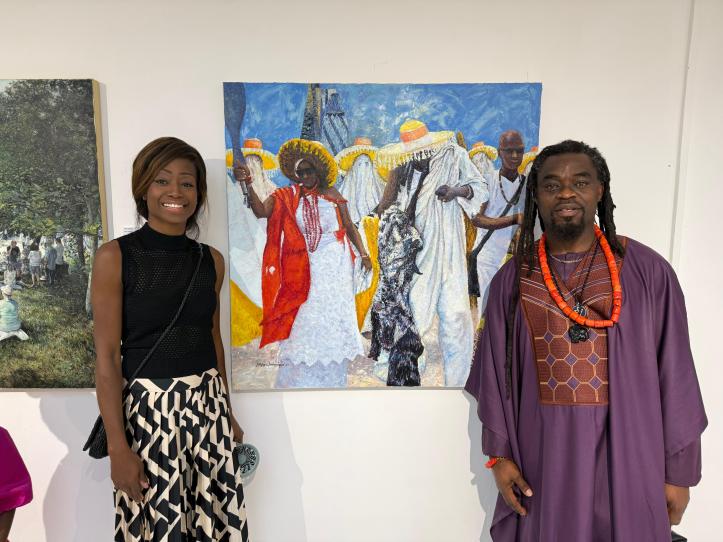
Through exhibitions like Waves of Change: Artistic Journeys from Nigeria to Britain, highlighted in iBAND Magazine, NASUK has created a stage where diaspora artists can present their stories not as footnotes but as central narratives. It is a platform that celebrates their resilience while opening doors to new audiences, collectors, and institutions that might otherwise overlook them.
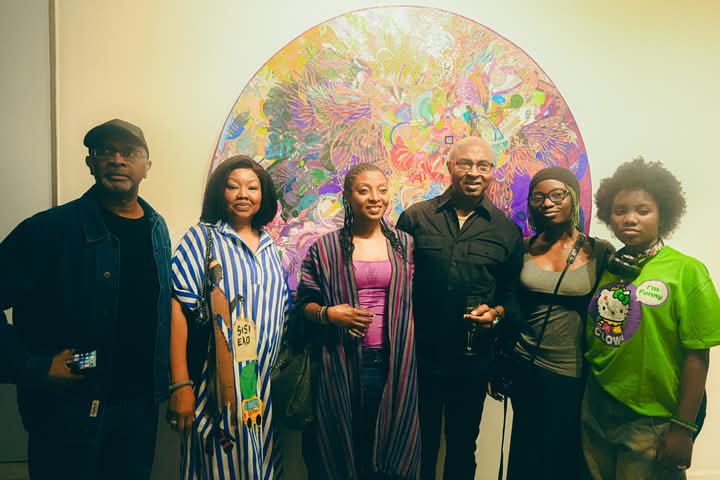
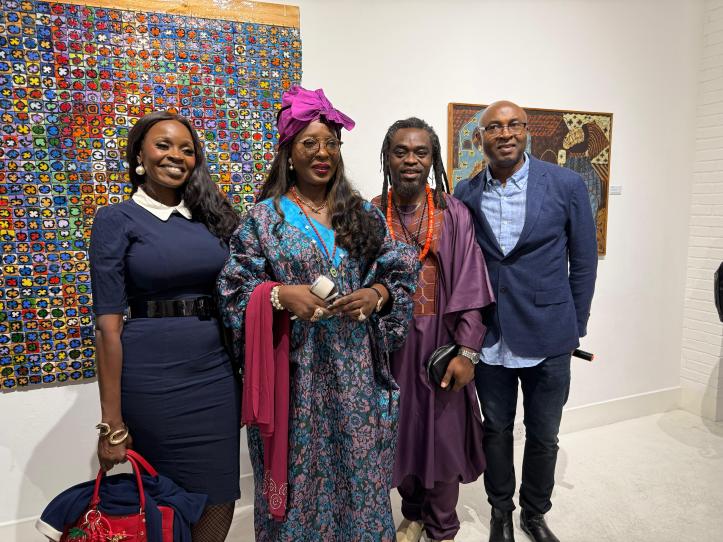
And now again, at The Carnivalesque – Body, Mind & Spirit’ NASUK amplifies their voices, ensuring that their art is not only seen but contextualized within both Nigerian heritage and British society.
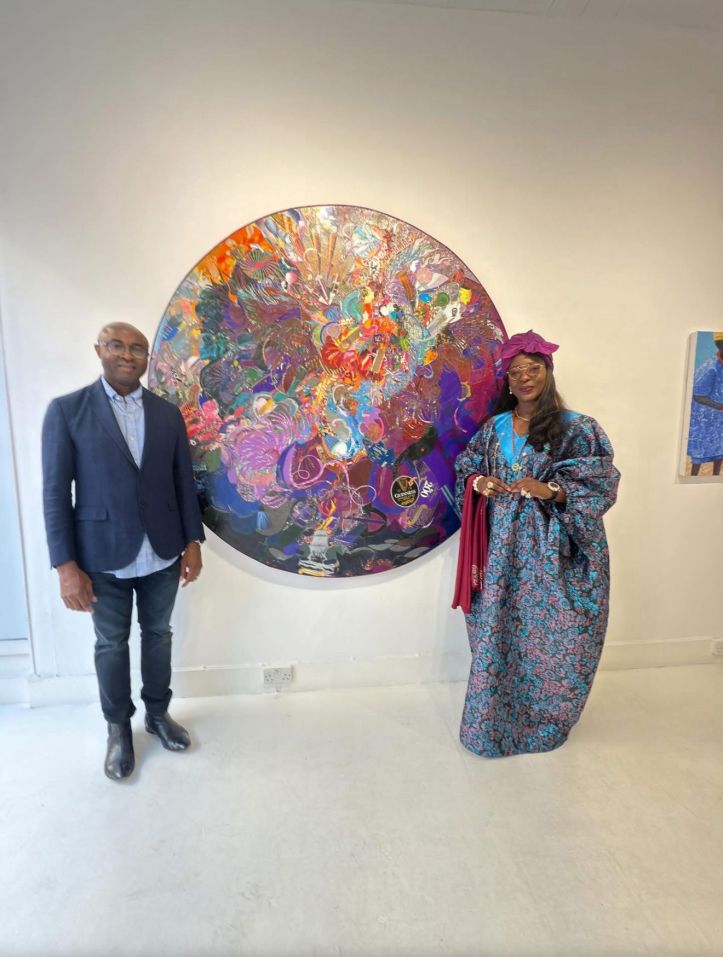
The Society’s impact goes further. It has become a mentor network, a cultural anchor, and a bridge between two worlds. Younger artists entering the UK scene find strength in knowing that they are part of a lineage, supported by peers who understand their struggles. For established names, NASUK is a reminder that their work contributes to a collective story of endurance, transformation, and pride.
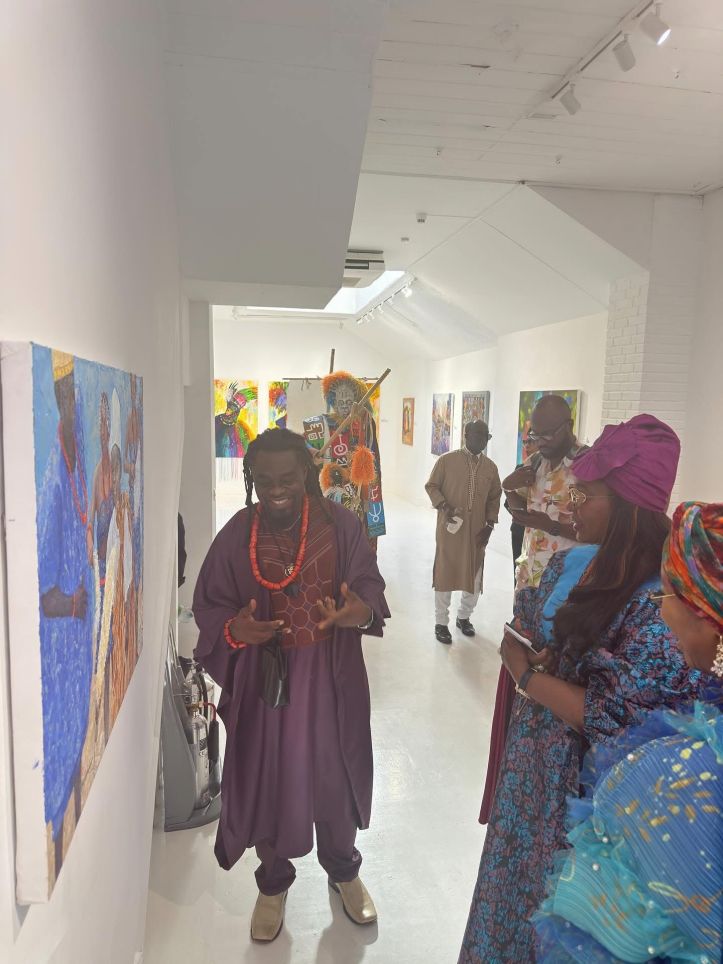
In a city like London, where competition is fierce and the art world can be isolating, NASUK has carved out a space where Nigerian creativity thrives on its own terms. Its impact is not just measured in exhibitions, but in the confidence and solidarity it gives to artists the sound proof that, together, they can turn displacement into belonging and resilience into influence.
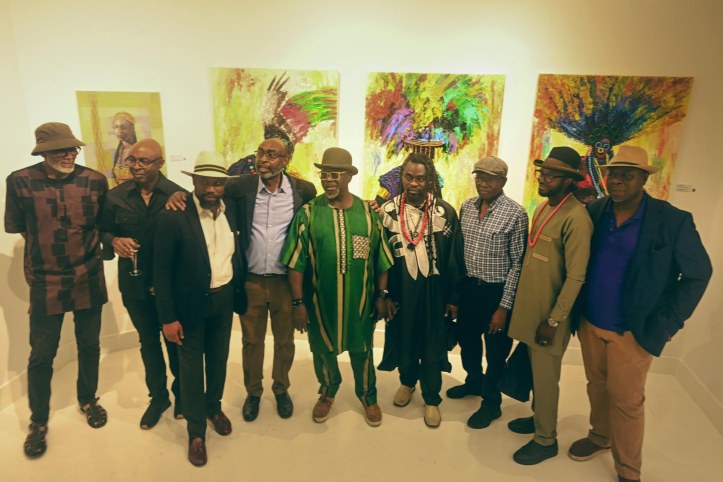
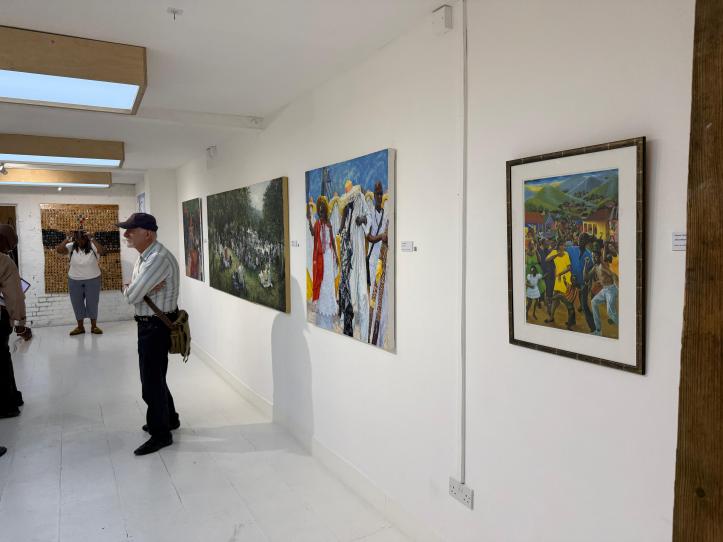
The exhibition itself is a treasure trove of Nigerian artistry harnessed over time. Works by celebrated figures such as Dr. Hassan Aliyu, whose practice often bridges history and modern identity, and Lara Ige-Jacks, known for her evocative narratives, stand alongside the bold expressions of Chike Azuonye and Dotun Adegbite. Titus Agbara brings a masterful sense of colour, while Imoesi Imhonigie and Toni Ndikanwu infuse their canvases with layered cultural memory. Obi Okigbo lends a distinctive poetic voice, complemented by the reflective visions of Raymond Soko and the textured explorations of Mike Echekoba. Dr. Ade Ogundimu contributes a thoughtful dimension, while invited artist Oliver Enwonwu represents a living continuation of Nigeria’s artistic legacy.
In harmony, their works converse with the timeless presence of the late greats Chinwe Roy and Uzo Egonu. Together, these artists weave stories of identity, diaspora, spirituality, and renewal that remind us that Nigerian creativity is both an act of remembrance and a bold reimagining of the future.
The Power of Ancestral Voices
From sculptures that whisper Yoruba myths to paintings that echo masquerade chants, the exhibition drums with ancestral voices. Fowokan’s sculptures and Lekan Babalola’s Egungun performance proved that masquerade is not costume but spirit in motion. Each work was a reminder that Nigerian and diasporic creativity is not about nostalgia but carrying the ancestors forward into the now.
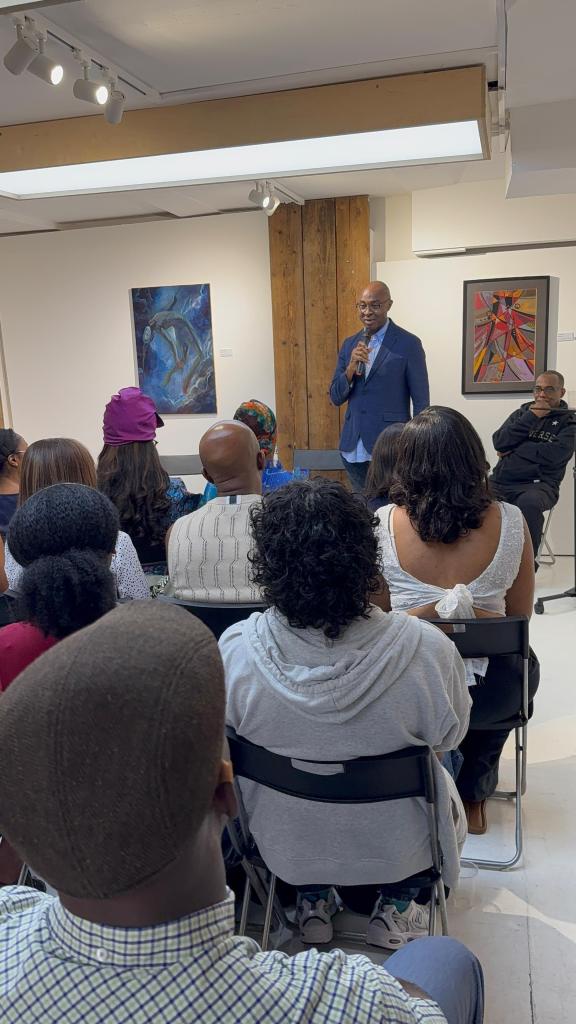
Literature Joins the Parade
“Back then, there were almost no Nigerian or West African books translated into German. My English was very poor at the time, and even now I still struggle. Whenever I try to read a book I brought from Lagos, I often need a translation beside me.” – Selma Etareri, the Sweden artist.
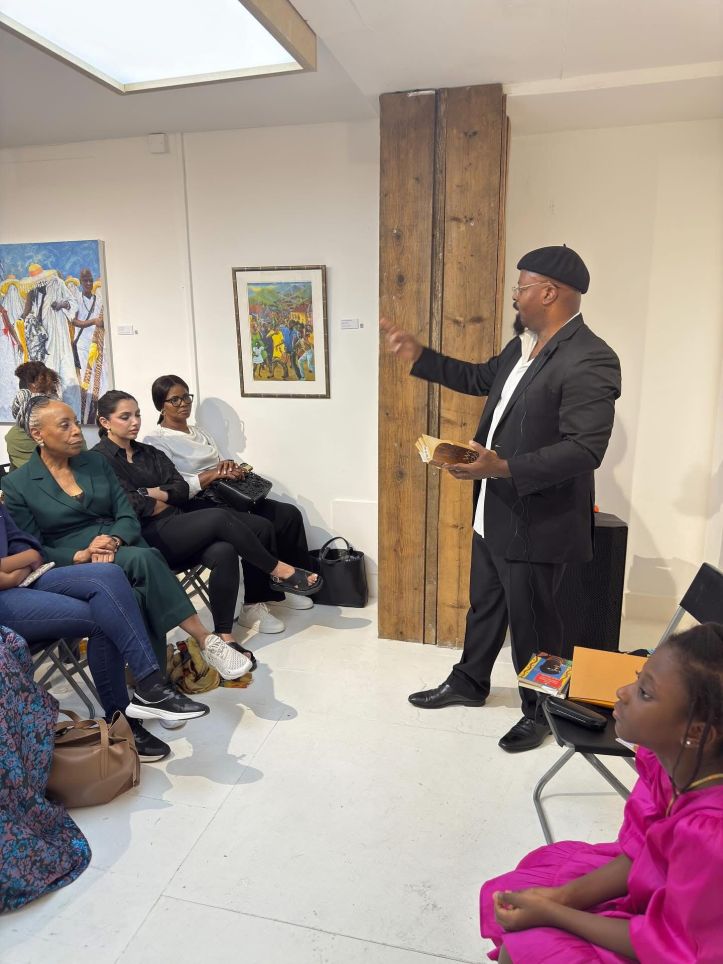
One of the most electrifying moments came when Sir Ben Okri took the stage. His poetry blended seamlessly with the exhibition’s themes, reading both from his work and that of Christopher Okigbo. Okri’s presence proved that The Carnivalesque – Body, Mind & Spirit’ is not limited to dance or painting but also in words, and language that resists silence and imagines new worlds.
Cross-Continental Collaborations
The exhibition flourished in dialogue. Whether it was Trinidadian cultural thinker Rubadiri Victor exchanging insights with UK-based Alexander D Great, or percussionist Eugene Skeef creating rhythm with Moroccan carnival pioneer Kamal El-Alaoui, every collaboration stretched the cultural event across geographies. It was proof that Nigerian creativity doesn’t exist in isolation but thrives in cross-cultural communion.
Art as Resistance, Art as Prayer
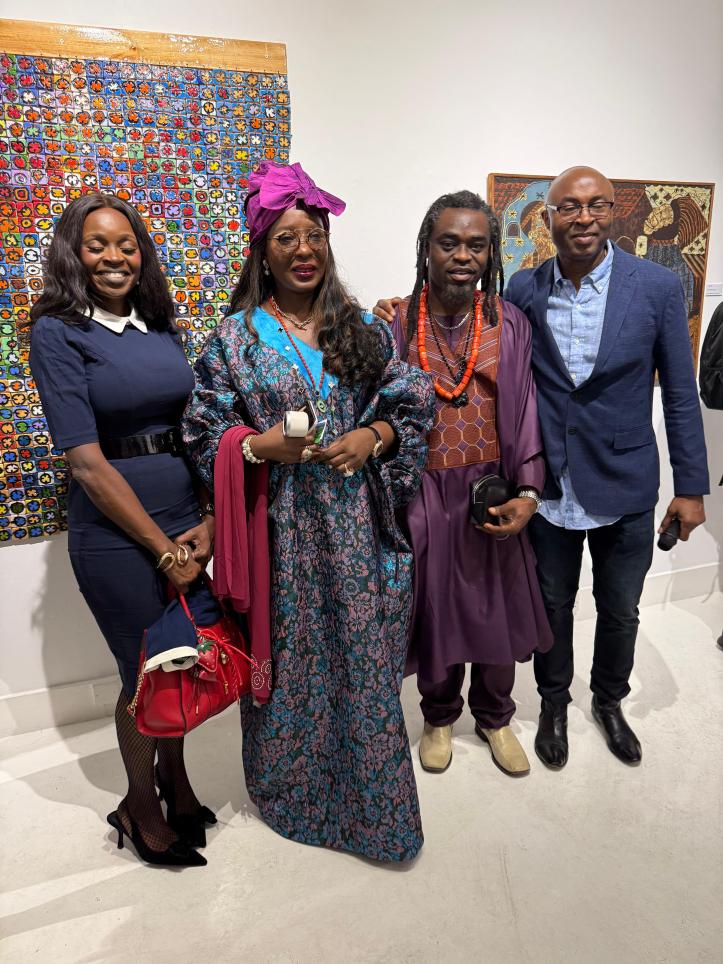
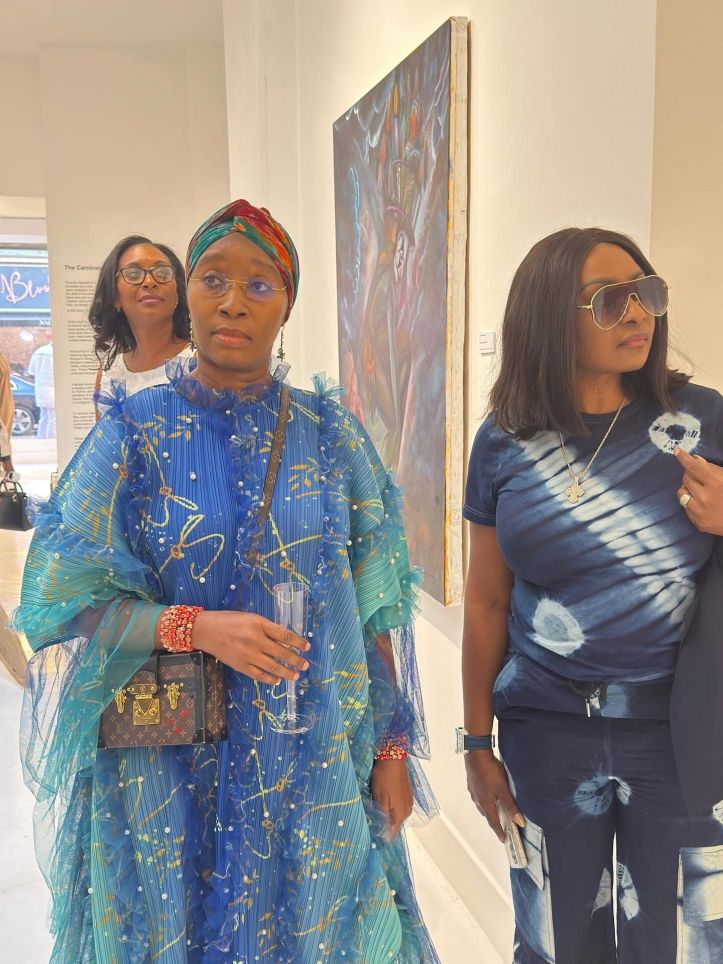
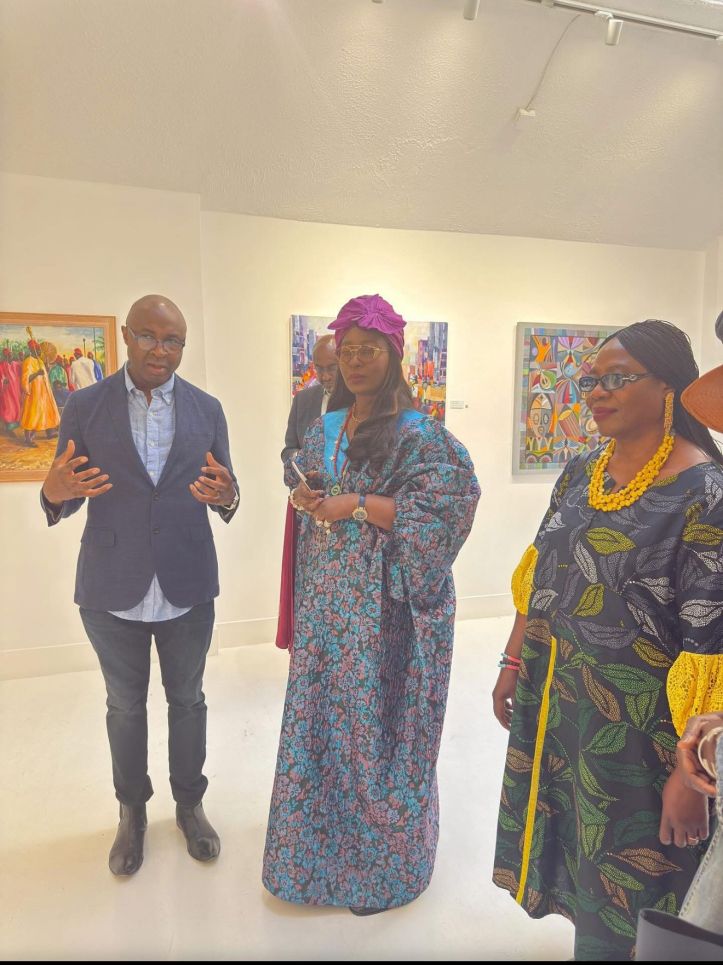
The turn out for The Carnivalesque – Body, Mind & Spirit’ was highly commendable. Home away from home was turned into a new home at The Carnivalesque – Body, Mind & Spirit. Dignitaries and the reaction of enthusiast globally affirmed that art is a resistance and a form of prayer. Those present at the event at one time or the other, such as, The First Lady of Kwara State Amb. Prof. Olufolake AbdulRazaq who also gave a soul lifting speech at the event, serenading African culture and tradition. She serenaded the audience about festivals such as ‘Isese’ that has just received a holiday of its own in the South West part of Nigeria. Also, one of the Queens from Ile – Ife, Ooni of Ife who graced the event in her royal presence and cultural influence showing her support by her motherhood role and her symbolic position as a custodian of Yoruba and African traditions.
Selma Etareri, a Swede and well travelled artist who has visited Nigeria to participate at the concluded Harmattan Workshop at Agbarha Otor in Delta State early this year, gave her full appraisal of The Carnivalesque – Body, Mind & Spirit after reading about the event in iBAND Magazine edition of the event. In her words, “I miss Nigeria.”
Former past president and secretary Board of Trustees, Female Artists’ Association of Nigeria and a leading figure in Nigeria visual art space also a cultural advocate using her art as an advocacy for women rights and empowerment was elated about The Carnivalesque – Body, Mind & Spirit and made alluring remarks, “ What a wonderful outing. I am very proud of the organisers. I trust Hassan my class mate at Ahmadu Bello University, ABU, they are doing great in the UK and making Nigeria proud.
More Than an Exhibition
The Carnivalesque – Body, Mind & Spirit has proved not to be just a cultural programme with the way the event has turned out to be, it is a manifesto enriched in colours, sounds, and performances.
It have confirmed a point that Nigerian and diasporic artists are not just participating in global art conversations rather they are shaping them. And in London this August, Carnivalesque has been reborn not just as celebration, but as body, mind, and spirit in harmony.
Words/Ireho Aito/Don’t Keep Your Art in the Finger/ Photographs courtesy Imoesi Imhonigie. Event photographs/Photography/ Lewis Patrick and PeiPei (Cecile)

