In the ancient artistic soul of Osogbo, in Osun State, where folklore still breathes through paint and canvas, a recent reflection by Godfrey Williams Okorodus opened a deeper conversation on his Facebook page about legacy, authorship, and the silent hands behind some of Africa’s most celebrated masterpieces.
Reflections Godfrey Williams – Okorodus. Words Ireho Aito | Don’t Keep Your Art in the Finger! Artworks credit: Femi Aro, Images and Photographs courtesy Godfrey Williams – Okorodus
For many within the African art community, Okorodus is more than a collector of stories and paintings. He is a Nigerian-born visual artist, humanitarian campaigner, and founder of Gallery Labalaba in Antwerp, a cultural space he established over two decades ago to promote African art from an African perspective.
His journey from the energetic streets of Ajegunle and FESTAC Town in Lagos to becoming a respected gallery owner in Belgium has long reflected resilience and artistic conviction. As he once told iBAND Magazine, “Most of the galleries who declined my request to show my works have long closed shop.”
Yet it was during a recent visit to Osogbo that another layer of artistic truth revealed itself to him.
“During my last visit to Oshogbo, Osun State, Nigeria, I acquired some paintings of an artist who was one of the assistants of the late artist Chief Oyewale Olaniyi popularly known as Twin 7-7,” Okorodus reflected.
The artist in question was Femi Aro, once an assistant to the legendary Chief Oyewale Olaniyi Twin Seven-Seven, whose surreal visual language and spiritual symbolism transformed him into one of Nigeria’s most globally recognised artists.
For Okorodus, however, the encounter was not merely about collecting paintings. It became a meditation on the complicated legacy of studio practice in African art.
“He had a lot of artists who trained under him and invariably as the artist achieved world renown he left most of production of his paintings to be done by his assistants and he signed them,” he observed.
The statement carries weight because it touches a reality rarely discussed openly in the art world. Across generations, many successful artists relied on assistants who mastered their techniques, motifs, and visual rhythms so deeply that distinguishing the works later became almost impossible.
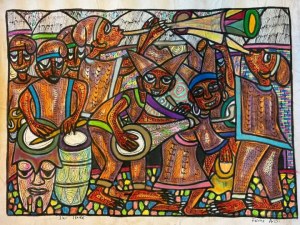
“A lot of artists do this and I think this will affect their art and reputation after they are gone,” Okorodus added.
The Osogbo school itself was built on mentorship, apprenticeship, and creative communal exchange. Yet according to the Belgium-based gallery owner, that same system sometimes creates a marketplace flooded with imitations after the master’s passing.
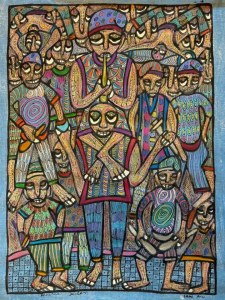
“What happens is that the assistants they use would have been so proficient in the style that it’s difficult to distinguish their works from that of their mentor,” he explained. “So when such artists are gone a lot of copies of their art style floods the market.”
He pointed specifically to the enduring confusion surrounding works associated with both Twin Seven-Seven and Rufus Ogundele.
“Rufus Ogundele and Twin 7-7 copies abound and in most cases it takes an expert eye to know what is what,” he noted.
But perhaps the most powerful part of his reflection was not criticism — it was advocacy.
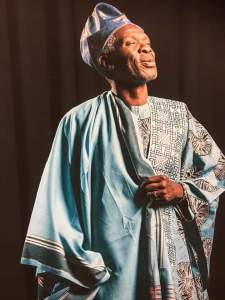
Okorodus, who has spent years championing authenticity in African art while running Gallery Labalaba under the philosophy of “African art by Africans,” believes younger artists deserve visibility for their own labour and creative contribution.
“I always tell such artists to always sign their names on the works they make instead of signing the name of the artist whose style they are using,” he stated.
The words resonate beyond Osogbo. They speak directly to a changing African art market now attracting global collectors, auction houses, and international institutions increasingly concerned with provenance and authenticity.
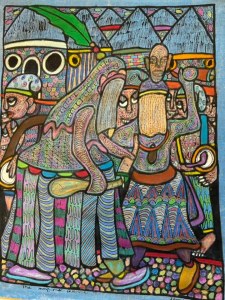
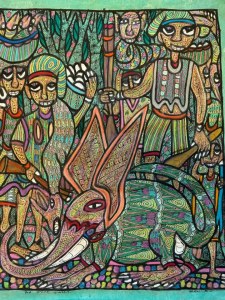
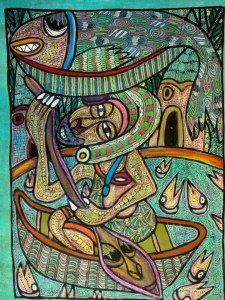
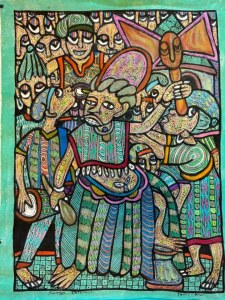
The paintings he acquired from Femi Aro, all rendered in pen, ink, and acrylic on canvas, became more than artworks. They became symbols of inherited tradition searching for individual identity.
For a man who built his life around artistic independence, humanitarian advocacy, and cultural preservation, the reflection feels deeply personal. This is the same Okorodus whose exhibitions and campaigns against Female Genital Mutilation have travelled through Europe, including presentations linked to human rights initiatives in Geneva and beyond.
And perhaps that is why his words linger.
In the crowded corridors of art history, where masters become myths and signatures become currency, Godfrey Williams Okorodus is asking a simple but urgent question from everyone and the queßtion is, when the brush changes hands, whose story is truly being told?
iBAND Magazine, Celebrating Visual Arts from the Original.
Africa | Visual Art | Lifestyle | Culture

