

Our Cover edition this week is not merely about an artist. It is about memory, gratitude and the quiet influence of a man who changed the way many Nigerians looked at art. Before social media became the loud marketplace it is today, before every artist became their own broadcaster, there was Joe Musa, the painter, sculptor, curator, broadcaster, administrator and cultural advocate who understood that art deserved a place in everyday conversation.
Words: Ireho Aito | Don’t Keep Your Art in the Finger! Photographs Google. Artworks credit Chief Joe Musa. Artworks provided by Chief Joe Musa
For me, this is more than a profile. It is a reflection, one written not only from observation, but from experience, admiration and the privilege of having witnessed part of Joe Musa’s remarkable journey.
There are people whose influence can only be measured by the lives they quietly transformed. Joe Musa belongs to that rare company.
“Joe, you need to see her. This girl is on fire!”
Those words were scribbled on Nollywood icon and public relations consultant Richard Mofe-Damijo’s complimentary card, lying casually on Joe Musa’s desk at the Artwatch Africa office on Oyedele Oguniyi Street in Anthony Village, Lagos. It was an invitation to attend an exhibition organised by RMD’s WhiteWater Limited for a promising young Nigerian artist. RMD was then at the height of his public relations career, and everyone wanted his endorsement. Yet, the invitation itself said something even greater. It showed the respect Joe Musa had earned within Nigeria’s creative establishment.
Anthony Village was no ordinary neighbourhood. It was home to remarkable personalities whose conversations often shaped industries. There was Prince Jide Adeniyi of the Poatson Group, whose legendary Poatson Musical Jamboree helped define Nigeria’s entertainment culture. He was Artwatch Africa immediate neighbour whose business nuggets were sure elderly wisdom from a connoisseur who has seen it all.
Residing at Anthony was marketing communications strategist Charles. O. Tudor, founder of Adstrat, sports broadcaster Deji Omotoyinbo, the indefatigable Bisi Olatilo, and Prince Tony Momoh, one of Nigeria’s finest journalists, lawyers, authors and public intellectuals. To walk those streets was to encounter excellence in different forms. Joe Musa also fit in naturally into that environment.
Long before television embraced lifestyle programming, there existed a generation of broadcasting personalities who brought elegance, intelligence and charisma to the screen. Uncle Sonny Irabor of “SIL” fame from radio to television had already become a household name. Bisi Olatilo Show with Uncle Bisi Olatilo had built one of the country’s most successful television brands. They were broadcast giants.
Then emerged an equally debonair painter whose confidence, diction and command of language caught the attention of Channels Television founder John Momoh. The station needed a fresh face to relaunch Arthouse, its arts magazine programme. It needed someone who could make paintings speak and performances breathe.
John Momoh found that voice in Joe Musa.
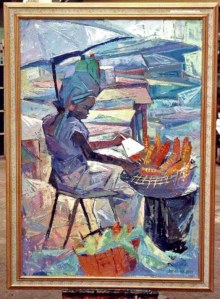
Medium : Oil on Canvas
Year – 2001
Corn Seller in the collection of Dr. Kudo Eresia – Eke
Artwork courtesy Chief Joe Musa
“I was on the field doing my work when I was approached to present Arthouse,” Joe once told Chiagozie Okolo and me during one of our Monday motivation sessions.
The rest became television history.
Once Joe Musa became the face of Arthouse, everyone wanted to appear on the programme. Musicians, writers, actors, artists, collectors, curators and gallery owners understood that the show had become the country’s most influential arts platform. Around the same period, Goge Africa, hosted by Nneka and Isaac Moses, was also redefining cultural broadcasting. Together, they proved that Nigerian audiences had an appetite for culture when it was presented with intelligence and style.
Joe did not merely present Arthouse. He became Arthouse.
His language sparkled with metaphors. His interviews carried warmth without sacrificing depth. He had an extraordinary ability to make artists or culture advocates comfortable enough to reveal not only their works but also their humanity. Watching him felt less like watching television and more like entering a conversation.
Yet broadcasting was only one chapter.
Before television, Joe Musa had already established himself with a First Class degree from Ahmadu Bello University in Zaria and has been a full-time artist after returning from the United States. He painted, exhibited and built a successful artistic career. He also wrote extensively, including his influential Artpreneur column, which became one of the most respected art commentaries of the 1990s. It belonged in the same league as Dele Momodu’s celebrated Pendulum for readers who valued thoughtful writing.
Working with Joe meant living inside a library.
Artwatch Africa office was filled with books, journals and international art magazines. Joe had read virtually all of them. He constantly reminded us that reading was the greatest preparation for meeting extraordinary people. Every visitor became a lesson. He would quietly ask, “Did you know who just left?” Before anyone could answer, he would smile.
“That was Bisade Ologunde… Lagbaja.”
I eventually left with just few books as well courtesy of the big boss. Though I stole a Time Magazine special edition for the century documenting who is who from the last century. The Time special edition was later stolen by a family friend that came visiting but never returned it again.
It was impossible not to be inspired. The office became a meeting point for artists, musicians, collectors, academics and cultural thinkers. Every day felt like a masterclass.
Ironically, my own journey with Joe Musa began with an email.
I had watched him on television and admired the confidence with which he spoke about Nigerian art. I wrote asking if I could join his team. His reply was simple.
“Thanks, Ireho, for following my sail. You can come over…”
He included his office address.
That email quietly changed the direction of my professional life.
Sharing the encounter with my two older siblings Dele and Ofure, both encouraged me to rock into it. Then, Ofure now a professor, has pushed me in with Joseph Yakubu as a Research Assistant for his NGO firm.
Artwatch Africa, the new program by Joe, included a proposed magazine by the same title, had assembled an exceptional editorial team. Distinguished journalists such as Ekpo Udo-Udoma and Tony Okuyeme brought enormous experience to the publication, while Joe himself continued to inspire everyone around him. When the programme later debuted on AIT, it reached audiences across Nigeria, carrying stories of artists into homes that might otherwise never have encountered them.
Then came public service.
Joe Musa’s appointment as Director-General of the National Gallery of Art between 2006 and 2010 placed him at the centre of Nigeria’s visual arts administration. Many considered his tenure one of the institution’s most energetic periods.
He launched ARESUVA, that is the African Regional Summit and Exhibition on Visual Arts which became a major continental gathering for artists, scholars, curators and policymakers. Joe introduced ARTEXPO Nigeria to strengthen the art market. Through the Nigerian Visual Arts World Tour, he projected Nigerian creativity beyond the country’s borders by expanding national competitions for young artists, encouraged tertiary institutions to build permanent art collections, increased professional workshops and publications, and championed the vision of a permanent National Gallery building.
Most importantly, he helped artists understand that institutions could become partners rather than distant government offices.
Many stakeholders admitted that Chief Joe Musa was for the first time in a while the right man for the job.
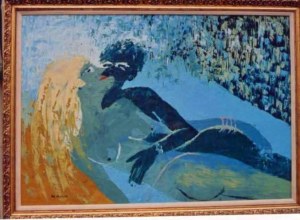
Size 3ft x 4ft
Medium : Oil on Canvas
Year 1990
‘Lovers’ is in the collection of Casimir Maduafokwa
Artwork courtesy Chief Joe Musa
Even while serving as Director-General, Joe remained an artist. He continued to exhibit, encouraging fellow artists not to become comfortable but to keep creating, travelling and engaging the world.
Today, Joe Musa lives in the United States, where he continues to write, mentor and advocate for African art. He is also preparing to launch a YouTube platform that promises to continue the conversations he began decades ago on television.
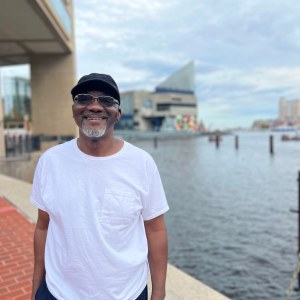
The last time we met was at the University of Lagos. He had returned to complete the doctoral programme he had earlier left unfinished.
“Many of my friends have completed theirs,” he told me with his familiar smile. “Keke Ogungbe and others have done theirs too. I decided to come back and finish this unfinished business.”
That sentence has remained with me ever since.
It reminded me that growth has no deadline and that unfinished dreams deserve another chance.
There is no way you encounter him and you won’t end up becoming a collector. He shared this with me while we were together on campus brainstorming on fresh ideas,
“All my in – laws are collectors,” he admitted with pride for educating them on the power of art collection.
Joe berated artists who decided to sell cheap just to belong so fast. “I sell my work in premium rate,” he said. “I am that patient to sell but not in a hurry,” he concluded while encouraging us to go for lunch.
When I think of Joe Musa today, I do not simply remember a broadcaster, journalist or an administrator. I remember the man who made visual art glamorous without making it superficial.
He convinced artists that their work deserved visibility. He encouraged them to sell their art without selling their souls. He constantly reminded them never to hide their paintings under the bed because art only fulfils its purpose when it is seen.
Perhaps that is his greatest legacy.
He taught a generation that art is not merely something to create. It is something to live, to share and to believe in.
As for our conversation at the University of Lagos, perhaps that story deserves another journey.
For now, let us simply keep sailing with Joe, the man who altered the Loop.
iBAND Magazine, Celebrating Visual Arts from the Original.
Africa | Visual Art | Lifestyle | Culture


Wow…. weldone Sir… nice read.
LikeLike