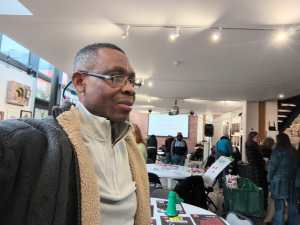
Throughout his artistic voyage, Yusuf Seidu Okus has consistently treated art as a tool for healing, conversation and social change. Whether addressing housing crises, environmental decay or the stigma around mental illness, his works are designed to provoke empathy and spark public dialogue rather than simply decorate walls. At Arty – Folks intiative in Coventry, Okus interventions was well appreciated.
Words Ireho Aito | Don’t Keep Your Art in the Finger! Photographs courtesy Yusuf Seidu Okus
For so many African communities, we all know that conversations around mental health still arrive in whispers and stigma.
In fact, it has been made to be part of life where communities live with such people experiencing mental health conditions and communities also see such degeneration as normal.
Here in Africa, people speak about stress, exhaustion, anxiety, loneliness and emotional burnout, yet few spaces truly invite healing, not to talk of through creativity.
But when we check across the world however, innovators and artists are increasingly stepping into that gap, apart from medical professionals, transforming studios, galleries and workshops into places of emotional connection and restoration.
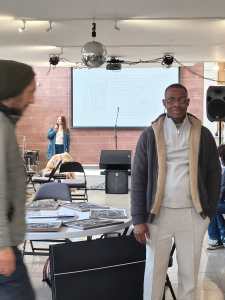
One of such creative interventions emerged in Coventry, where artist and facilitator Yusuf Seidu Okus participated in a thoughtful initiative organised by Arty-Folks. Significantly, the workshop marked the first creative programme he facilitated after arriving in the United Kingdom, making the event both professionally and personally symbolic.
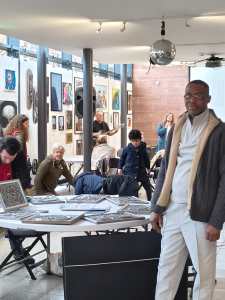
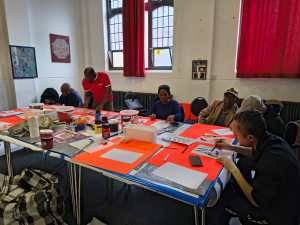
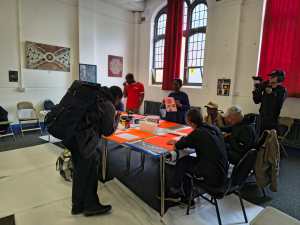
The event, an Aluminium Metal Foil Workshop held at the LTB Showrooms on November 14, 2023, became more than an ordinary artistic gathering. It reflected how contemporary art can function beyond aesthetics and enter the deeper territory of wellness, community and human expression.
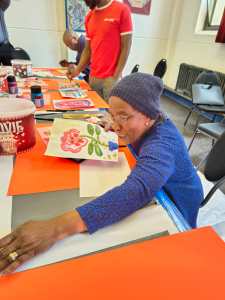
This workshop formed part of a series of free artist-led programmes that commenced during World Mental Health Day in October 2023. While many institutions discuss mental health in formal settings, creative workshops such as this offer something more intimate. They create environments where participants are free to explore emotions through texture, colour, experimentation and conversation.
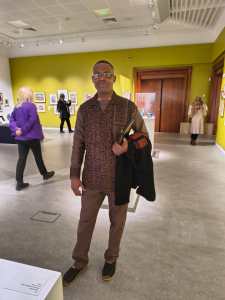
Yet behind Yusuf Seidu Okus’ confidence with aluminium and metal foil techniques lies a much longer artistic journey shaped by years of learning, experimentation and mentorship across West Africa.
Long before the Coventry workshop, he had already immersed himself in repoussé practices through numerous paid workshops and studio encounters. Among the most influential figures in that journey was Professor Peju Layiwola, whose studio became an important learning space for him. Yusuf recalls spending nearly two weeks in her studio during an intensive workshop experience where he not only refined his understanding of aluminium metal foil repoussé but also acquired specialised tools that would later support his own practice.
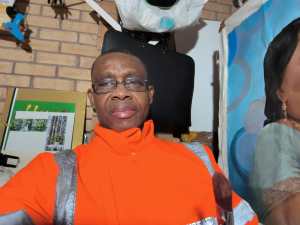
“Spending nearly two weeks in Professor Peju Layiwola’s studio during her paid workshops was more than technical training for me. It was an encounter with discipline, history and the quiet dignity of craftsmanship. Even the repoussé tools I bought there still carry memories of a space where art was treated not just as expression, but as serious cultural labour.”
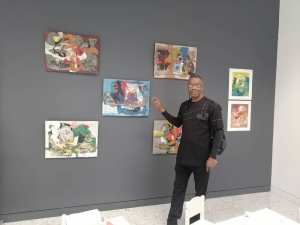
His earliest encounter with metal foil techniques however dates back even further to the early 1990s during his National Diploma years at Auchi Polytechnic. It was during that period that a close friend and colleague, Peter Ayi Kpade, introduced him to copper foil experimentation in Aneho, Togo. That informal artistic exchange in 1994 would become one of the foundational moments that quietly shaped his relationship with metal-based artistic processes.
What later appeared in Coventry as a calm and accessible public workshop was therefore rooted in decades of artistic encounters, technical learning and cross-cultural creative exchange.
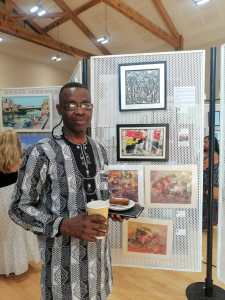
For lifestyle audiences across Africa, this growing relationship between art and wellbeing is especially important. The continent is filled with excellent artistic traditions, from textile making and mural painting to sculpture, performance and mixed media practices.
Still, many people still see art only as decoration or luxury. What workshops like the one facilitated by Yusuf Seidu Okus reveal is that art can also become medicine for the spirit.
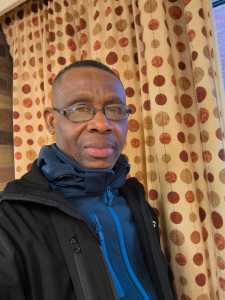
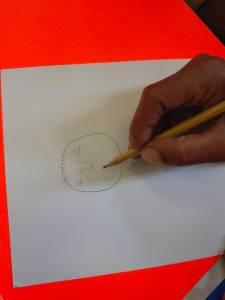
Inside the workshop space at LTB Showrooms, the use of aluminium metal foil introduced participants to unconventional creativity where materials often overlooked in everyday life became tools for imagination. The reflective surfaces, folds and textures encouraged participants to think differently about ordinary objects while also reconnecting with their own sense of play and curiosity.
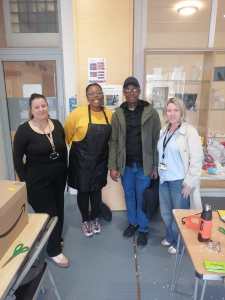
That process matters deeply in a modern world increasingly shaped by pressure and speed. Creativity slows people down and invites attention. It allows participants to focus not on perfection but on process. In that environment, artistic expression becomes less about producing masterpieces and more about rediscovering the freedom to create.
Across African cities today, conversations around wellness are evolving. Younger generations are embracing mindfulness, therapy, cultural expression and holistic living. Galleries, creative hubs and artist collectives are also responding by building spaces that merge culture with emotional wellbeing. The Arty-Folks initiative stands within that wider global movement where art is no longer confined to elite spaces but becomes accessible to communities through free public engagement.
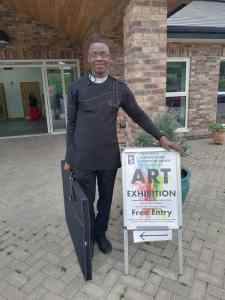
Nigerian born Yusuf Seidu Okus represents the kind of contemporary creative practitioner whose role extends beyond producing artworks. Beyond facilitating the Arty-Folks session, he also later served as a model for a drawing class organised within the same venue, which further deepening his creative engagement with the artistic community in Coventry.
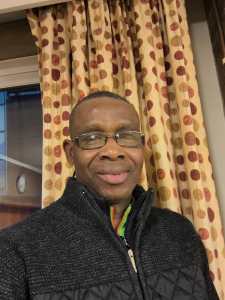
The workshop was an experience that reflected the fluid nature of artistic practice where the artist can move seamlessly between creator, facilitator, subject and collaborator. The modern artist is increasingly becoming a facilitator, educator, mentor and community builder and by leading workshops, artists help participants discover confidence in their own voices while also strengthening social connection.
There is also something profoundly democratic about artist-led workshops. People do not need advanced training or expensive materials to participate. Creativity becomes open to everyone. In societies where many people often feel unheard or disconnected, these collective artistic experiences quietly rebuild human interaction.
For Africa’s expanding creative economy, such initiatives offer an important lesson. The future of art on the continent may not depend solely on exhibitions, auctions or commercial success. It may also rest in the ability of artists and organisations to create meaningful social experiences that improve everyday life.
As lifestyle culture continues to evolve across the continent, the intersection of art, wellness and community engagement will likely become even more significant. Programmes like the Arty-Folks workshop facilitated by Arty Folks, a charity organisation with facilitator in the person of Yusuf Seidu Okus demonstrate that creativity still possesses one of humanity’s oldest powers the ability to heal, connect and transform.
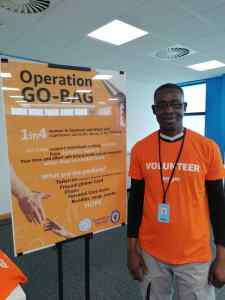
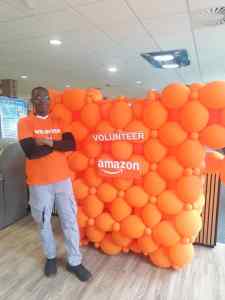
Beyond the studio, exhibition spaces and workshops, Yusuf Seidu Okus has also remained active in community volunteering initiatives, including engagements with BHX4 Amazon, while currently participating in another civic programme with Coventry City Council. In many ways, his commitment to service mirrors the same patience, collaboration and human connection that continue to shape his artistic journey.
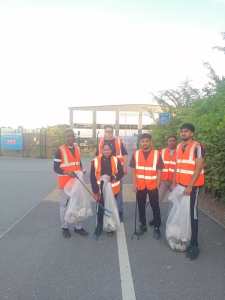
“Volunteering taught me that art is also service. The same patience, listening and human connection I bring into my creative practice are the same values I carry into community work.”

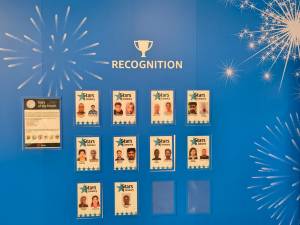
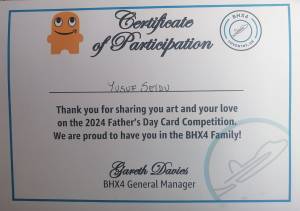
And Okus has received several art prizes and commendations, alongside special recognition at BHX4 Amazon, where he currently works.
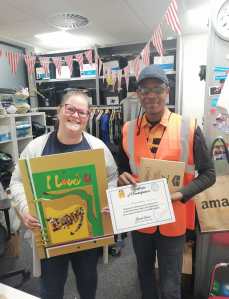
For Yusuf Seidu Okus, those experiences seem to flow naturally into the philosophy behind his practice. The artist, volunteer and community participant are not separate identities, but connected parts of the same journey shaped by empathy, patience and shared human experience.
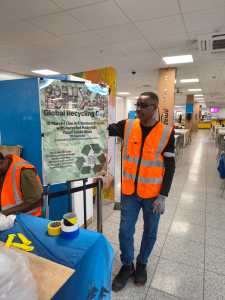
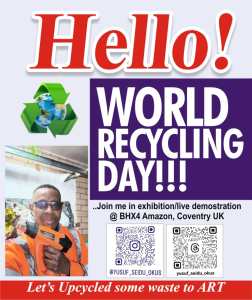
Among the major highlights of Yusuf Seidu Okus’s recent creative engagements were his workshops and exhibitions at Herbert Art Gallery and Museum, alongside a series of environmentally conscious art interventions that connected creativity with public awareness. Central to these engagements was a live plastic upcycling demonstration and exhibition held at BHX4 Amazon Coventry during Global Recycling Day, where discarded materials were transformed into artistic expressions carrying messages about sustainability, reuse and environmental responsibility.
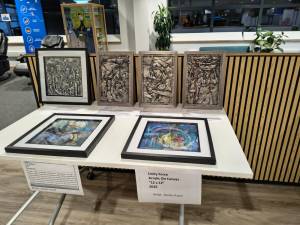
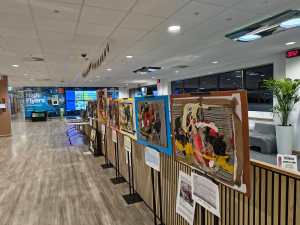
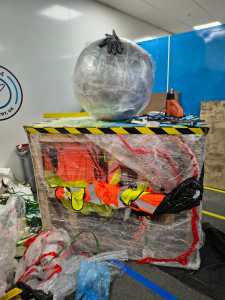
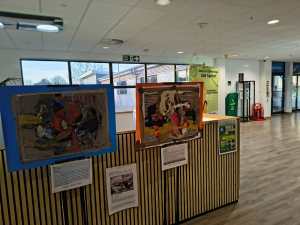
The artist also participated in workshops and exhibitions during the recently concluded Earth Month programme themed “Mental Ecology,” a reflective initiative exploring the relationship between the environment, mental health and creativity.
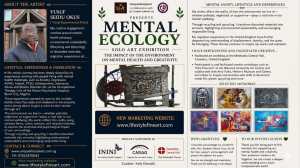

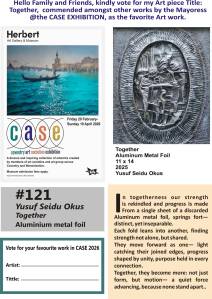
Through these engagements, Yusuf Seidu Okus continues to position art not merely as visual experience, but as a social conversation capable of drawing attention to emotional wellbeing, ecological consciousness and the unseen connections between people and their surroundings.
In the end, art is not always about what hangs on the wall. Sometimes, it is about what quietly changes within the people who gather around it.
You can visit Yusuf Seidu Okus on his websites
http://www.uniquelifestyleart.com.ng
http://www.lifestylefineart.com
iBAND Magazine, Celebrating Visual Arts from the Original.
Africa | Visual Art | Lifestyle | Culture

