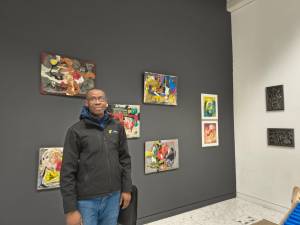
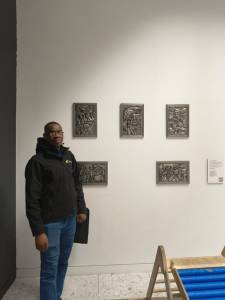
Before the exhibitions, the commendations and the growing international visibility, Yusuf Seidu Okus was already telling stories with materials that many people ignored. Torn sacks, crushed aluminium, discarded plastics and weathered textures became more than studio leftovers in his hands. Rather, they became witnesses to memory, survival and the fragile state of human emotion. His artistic voyage has unfolded quietly but intensely, moving through hospital therapy rooms, Nigerian art workshops, migrant realities in the United Kingdom and conversations around mental health, identity and healing. What makes his journey compelling is not only where the art has travelled, but the emotional weight it continues to carry wherever it appears.
Words Ireho Aito | Don’t Keep Your Art in the Finger! Photographs Courtesy Yusuf Seidu Okus Archives. Artworks courtesy Yusuf Seidu Okus Archives. Photos from the 2nd workshop session @The Herbert Gallery and Museum courtesy Yusuf Seidu Okus Archives
In a world that is constantly demanding answers from young people carrying difficult histories, sometimes the most powerful response is not another question. Sometimes, it is a table filled with discarded materials, a room without judgement, and the freedom to create something new from what others once ignored.
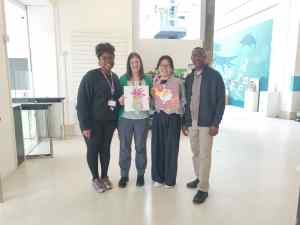
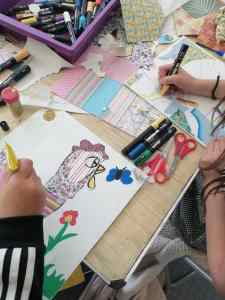
This is the kind of space artist Yusuf Seidu Okus helped build during a recent collaborative programme between the Herbert Art Gallery and Museum and Warwickshire Virtual School.
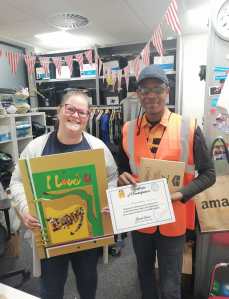
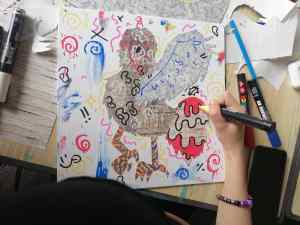
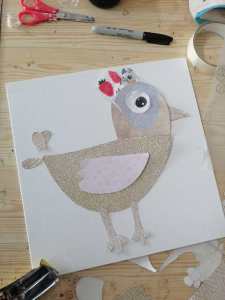
The project was designed for Unaccompanied Asylum-Seeking Children, these are young people navigating unfamiliar countries, with uncertain futures and the emotional weight of displacement. But rather than approaching them through rigid therapy or formal interviews, the programme turned to art, conversation and shared experiences.
And at the centre of its earliest sessions was Nigerian artist Okus.
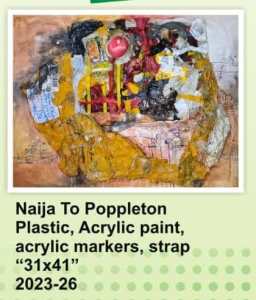
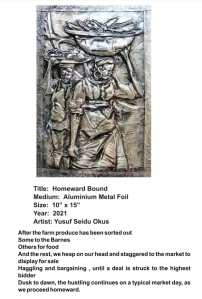
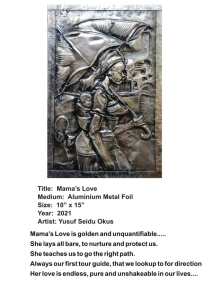
Yusuf Seidu Okus is known for his use of repurposed materials and his long-standing interest in art for mental wellbeing. Okus brought something deeply human into the room. His workshops were not about perfection or technical mastery. They were about exploration and possibility. It dovetailed into discovering that broken or abandoned things could still carry beauty and meaning.
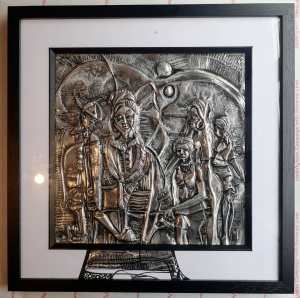
But some people or enthusiasts may not know that, that philosophy did not begin in Britain for this great talent who decided to go the path people creatives feared to travel.
For the uninitiated, long before his growing international engagements, Okus’ artistic foundation was already taking shape in Nigeria, particularly through Federal Polytechnic Auchi and the legendary Bruce Onobrakpeya Foundation and the renowned Harmattan Workshop at Agbarha-Otor where he was a participant and a distinguished one.
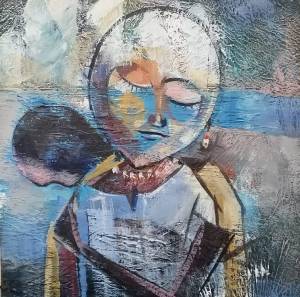
For many Nigerian artists, the Harmattan Workshop is more than an annual gathering. It is a living classroom where generations meet through experimentation, mentorship and rigorous studio practice. Founded in 1998 by the iconic Nigerian artist Professor Bruce Onobrakpeya, the workshop has shaped countless contemporary African artists.
Okus remains one of those deeply influenced by its atmosphere.
Reflecting on his 2015 experience at Agbarha-Otor on his Facebook page, he described the workshop as a place of reunion, discipline and artistic freedom. He spoke warmly about early morning drawing sessions, the culture of experimentation across painting, printmaking, sculpture and textiles, and the quiet but profound mentorship of Prof. Bruce Onobrakpeya himself.
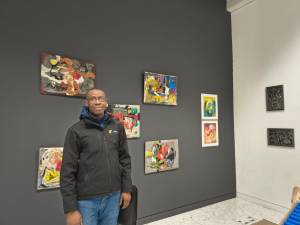
There, among coconut fibre experiments, communal discussions and long hours of studio work, Okus artistic language began evolving from representation into semi-abstraction and abstraction. More importantly, his growing interest in mental health advocacy also deepened during that period while working at the Occupational Therapy Unit of the Federal Neuro-Psychiatric Hospital in Benin City, Edo State.
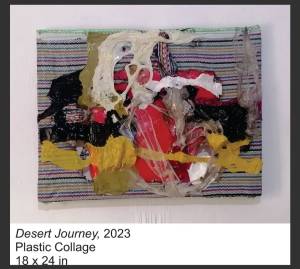
His educational journey equally reflects this long relationship between art and healing. Growing up in Sapele, Okus attended Okotie Eboh Grammar School, where his artistic interests were encouraged despite the era’s pressure toward more conventional professions. According to iBAND Magazine’s earlier profile on the artist, his father personally appealed to the school authorities to ensure Fine Art remained part of his academic path.
That early support would later become transformative for an artist whose exhibitions and workshops span cities and institutions connected to United Kingdom, South Africa, United Arab Emirates, Morocco and Mauritius, including appearances at Oxford International Art Fair, World Art Dubai and Arkane Africa.

Today, whether in Nigeria or the United Kingdom, Yusuf Seidu Okus continues to approach art less as performance and more as emotional connection.
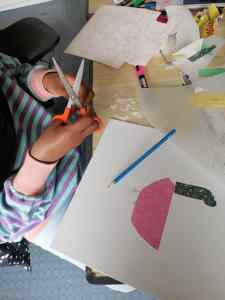
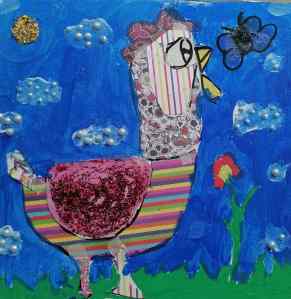
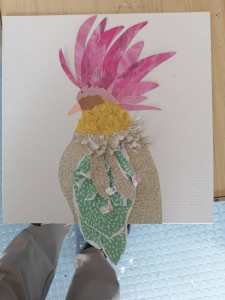
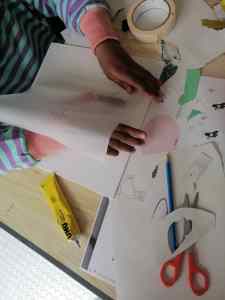
The sessions at the Herbert Art Gallery and Museum were intentionally relaxed and accessible. Young people could attend without pressure. They did not need previous artistic experience. They did not even need to attend every session. Each workshop stood on its own, allowing participants to enter comfortably at any point.
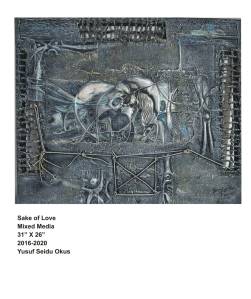
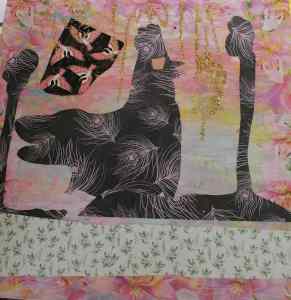
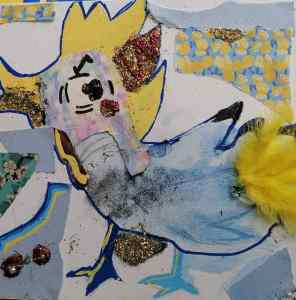
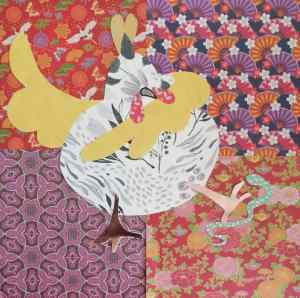
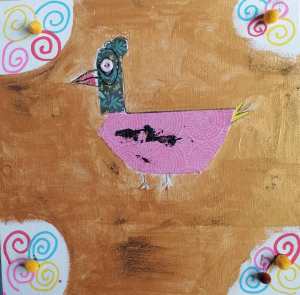
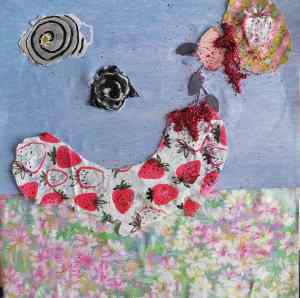
Instead of expensive materials or intimidating structures, Okus introduced the idea of repurposing. Everyday objects became tools for imagination while scraps became sculpture. Leftover materials became stories.
There is something profoundly hopeful about watching a young person transform discarded items into art. This suggests that identity itself can be rebuilt and difficult experiences do not have to define the future forever.
For the organisers, this approach was intentional.
The programme was created as an action research project to understand how museums and galleries could become more inclusive and emotionally supportive spaces for vulnerable young people. The focus was not simply art education but for social wellbeing.
And the question is could creative participation help these young people form friendships, trust others and feel connected to their community?
The answer, slowly and quietly, appeared to be yes.
One of the most revealing discoveries from the project was that the workshops themselves became the biggest attraction. The organisers initially worried about transport costs, food and incentives. Yet many participants were willing to walk to the sessions. Others appreciated simple bus tickets and light refreshments, but what truly mattered was the atmosphere created inside the room.
The experience itself was enough. That says something important about the role of art today.
In many conversations about migration, asylum and youth support, attention often centres on policies, statistics and systems. Far less attention is given to emotional belonging which is the simple but powerful need to feel seen, heard and welcomed.
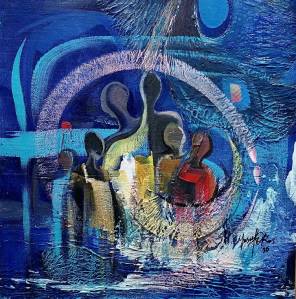
Yusuf Seidu Okus workshops operated within that quieter emotional space, by encouraging collaboration and imagination, the sessions created opportunities for social bonding between young people who may otherwise feel isolated. Conversations emerged naturally while creating while shared laughter replaced awkward silence. Art became a bridge between strangers.
Importantly, the project also explored sustainability. The organisers recognised that while professional artists like Okus are valuable, long-term community programming must also be realistic and adaptable. Some sessions were facilitated directly by museum staff, ensuring the work could continue beyond a single project or funding cycle.
What emerged was not merely a temporary workshop series, but the beginning of a growing relationship between institutions committed to care, inclusion and community engagement.
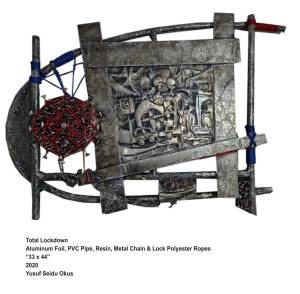
For Okus, whose practice often centres around healing and accessibility, the project reflects a larger truth about contemporary art. Art does not always need pristine white walls or elite audiences to matter. Sometimes its greatest power appears in community rooms, among vulnerable young people searching for stability and expression.
Sometimes art is not simply something to admire, it can also be shelter sometimes.
And in those quiet moments of making, rebuilding and imagining, Yusuf Seidu Okus reminds us that creativity can still offer something many people desperately need and that is, dignity, connection and hope.
Read and check more about Yusuf Seidu Okus on his website
https://www.lifestylefineart.com
iBAND Magazine, Celebrating Visual Arts from the Original.
Africa | Visual Art | Lifestyle | Culture

