Apart from beeing part of Christian worahip compositions, some of his songs are still very much with us, as they have become iconic compositions. Many of them have made great impact coming out as music scores and signature tunes and interludes for television, radio and film
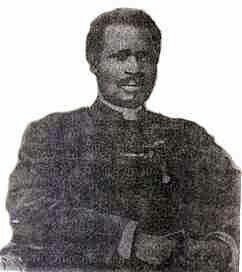
J. J. Ransome-Kuti, was the granfather of Fela Kuti and Wole Soyinka and the first recording artist will always remain a saint to remember among African music pantheons
Josiah Jesse Ransome-Kuti was one of the greatest men to have ever lived in Africa and whose achievements are widely known but remained uncelebrated within.
Yet, beyond the shores of Africa, J.J. Ransome Kuti is a musical behemoth. Africa’s pride and a purveyor of good music.
Apart from being the first gospel musician in Nigeria, and one of the earliest in Africa discovered with the help of invasion of the famous whiteman’s religion Christianity, he also became a clergyman and held the political office of a District Judge.
Josiah Jesse Ransome-Kuti was of Egba origin in the present day Ogun State. He was born on the 1st of June, 1855 in Igbein, Abeokuta, Ogun State, Nigeria to Likoye Kuti and Anne Ekidan Efupiye. His father Likoye, was a traditionalist while his mother was an early convert to Christianity.
The young Josiah was influenced by his mother’s belief despite opposition from his father. He got baptized at the age of 4 and at aged 9, he began to attend the Church Missionary Society (CMS) in Abeokuta. In 1871, he relocated to Lagos to continue his studies at CMS Training Institute. After completing his education, Josiah went back to Abeokuta and took up a teaching job at St. Peter’s school in Ake. Three years later, he was back in Lagos and started teaching music at CMS Girls’ School. There, he met, fell in love and got married to Bertha Olubi at the age of 26.
He remained a staunch member of Anglican Church and was appointed as a Catechist in 1891.
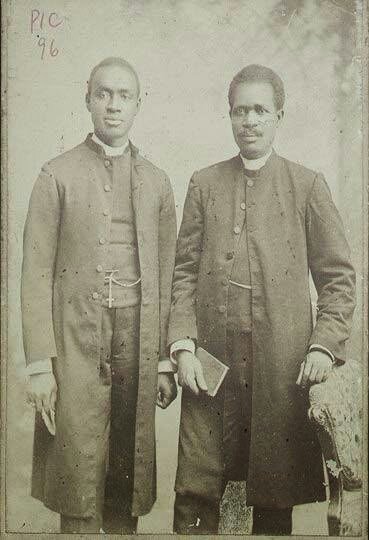
He became a deacon in 1895 and was later ordained a priest in 1897.
Due to his intelligence and brilliance, he was appointed a district Judge in Egba district. Jesse commanded so much respect from his people because he was just and fair during his tenure as a District Judge.
Josiah Jesse Ransome-Kuti was a music behemoth. He was a master class playing the piano for the church as an organist and a talented composer. His music attracted many pagans in Abeokuta and converted them to Christian faith.
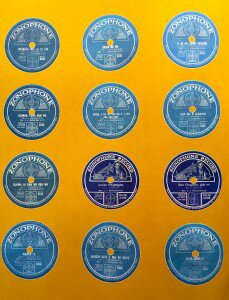
In the year 1922, Jesse travelled to London for Church Missionary Society Exhibition. While there, he composed, sang and recorded 43 songs that were released on double-side zonophone discs by the Gramophone Company. Apart from beeing part of Christian worahip compositiins, some of his songs are still very much with us, as they have become iconic compositions. Many of them have made great impact coming out as music scores and signature tunes and interludes for television, radio and film such as Nigeria’s popular news channel known as Channels TV well-known signature and interlude tune Ise Oluwa kole baje – “ko le baje o, ko le baje o, ise Oluwa… ” (it can’t be destroyed it can’t be destroyed, the work of the Lord…). The popular school tune in Nigerian schools, E je k’omode ko wa song eje k’omode k’owa o, eje k’omode k’owa o…jojolo, omo kekere jojolo awon l’ore Eledumare, eje k’omode k’owa” (Let the children come, let the children come… tender, tender little children are the friends of God, let the children come)
We should not forget that the Egba tribe of Ogun State had had their anthem that reached a global appeal in composition and rendition before Nigeria’s amalgation and that transition to independence that brought our first National Anthem.
The Egba Anthem is a melody to savour everytime. “Lori oke ati petele, igbe lagbe bimi si o…( uphill and down the plain, there I was born…).
Jesse Josiah Ransome Kuti also translated many Anglican (English) hymns to Yoruba. He was nicknamed the Singing Minister by the Europeans.
He fathered 9 children. One of them, his son, Reverend Isreal Oludotun Ransome-Kuti, was the first president of Nigeria Union of Teachers’. Oludotun married the famous Funmilayo Ransome-Kuti who was a female activist and parliamentarian.
She was the first woman in Nigeria to drive a car. Funmilayo led the famous Egba Women’s riot of the 1940s, leading a sizeable number of fellow women to challenge the taxation policy of the era that was unfavorable to the women.
One of their children was Fela Anikulapo Kuti, the popular Afrobeat musician. Who spearheaded the new African beat that’s now a standard bearer among Africa’s rich genres of music.
J. J. Ransome-Kuti was also the father of Eniola Soyinka, the mother of Nobel Laurette Wole Soyinka.
He died aged 75 years in1930.
Research/Nigeria Historical facts, wikipedia, Vicki brennan @blog.uvm. edu, dacb.org/ reedited /Ireho Aito/ Ransome-Kuti archives /Google

