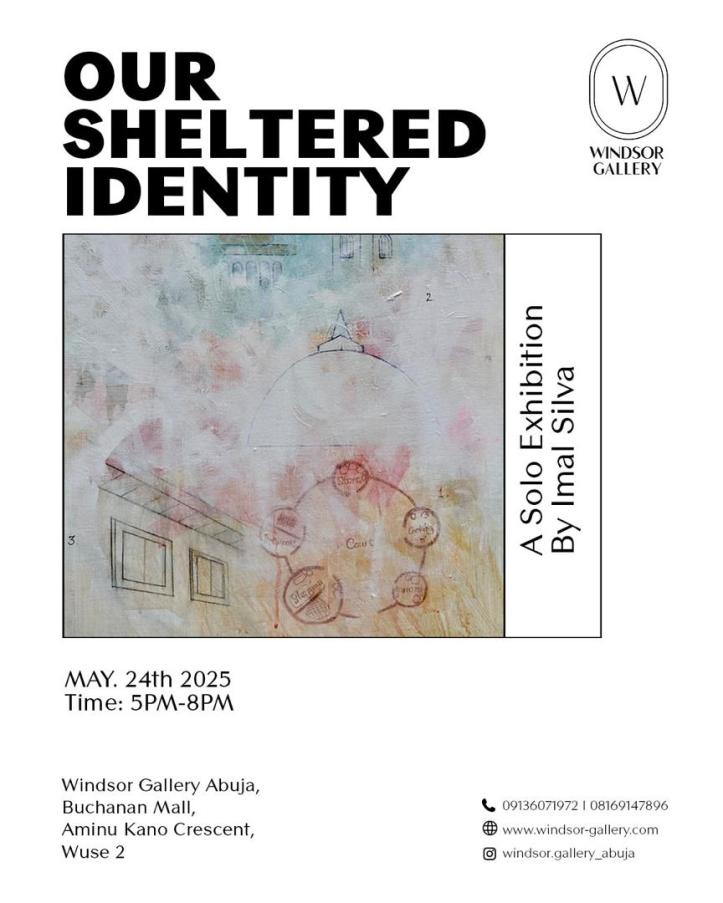
Imal Silva, is a well-known artist famous for his abstract style, held a solo exhibition titled “Our Sheltered Identity” at Windsor Gallery in Abuja. Through this powerful exhibition, he takes us on a journey back to our roots — our modest and often overlooked beginnings. The essence of our shelters and how they influence our lives.
The show was so impactful and deeply expressive that it makes Imal Silva worthy ambassador of contemporary visual arts not only in Nigeria but Africa as a whole. We have to prepare the proudly Nigerian product as our Cover feature on our Friday edition of the magazine. Writes Ireho Aito.
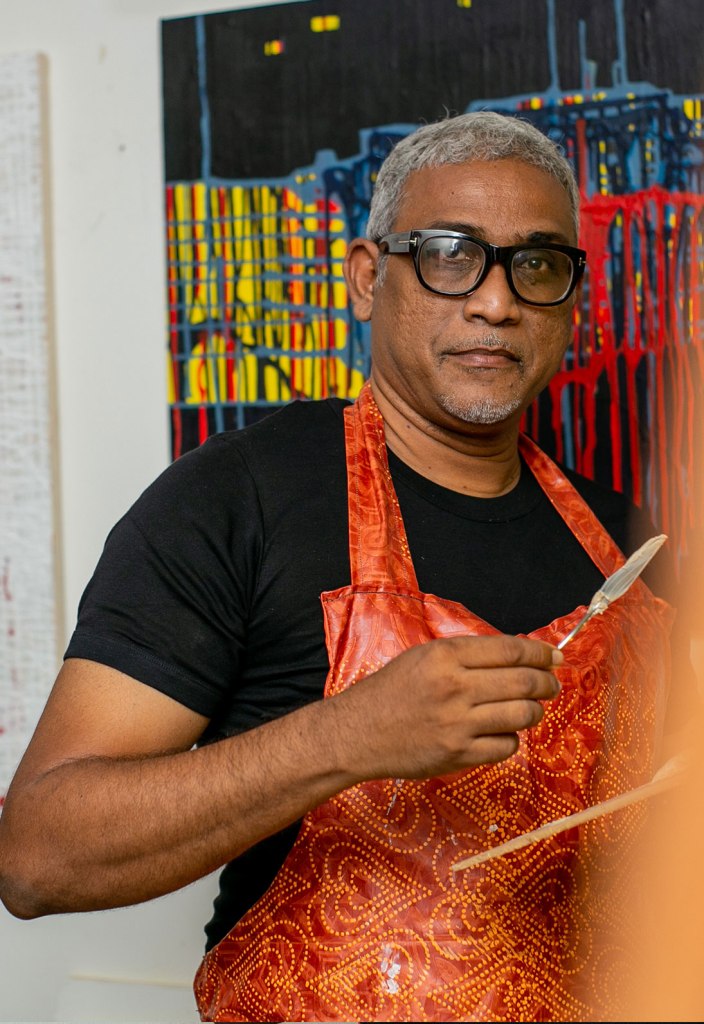
At the exhibition, he didn’t just display art, he delivered something unforgettable, like a perfect performance or a ‘masterstroke,’ leaving a strong impression on everyone who experienced it.
Each time I look at Imal Silva, one striking resemblance is the famed Bollywood veteran, Amitabh Bachchan who was part of our childhood with show stopping Indian films. Though in my time we never heard or knew of the industry name as Bollywood, instead we were just addicted to a three hour long array of Indian movies on our Friday nights.
Our culture back then was for the older ones to have the main chairs in the crowded living room for themselves while the younger ones would spread themselves on the rug and carpets if there was or just on bare floor while the black and white television set in a box stood either on its own legs or on another table, sometimes on radio box too.
Nupe Street in Mokola on Saturdays was always a beehive of narration and interpretation of the scenes by neighbourhood residents, old and young that captured those actions from the Indian films. Our homes, houses and apartments back then were not design for heavy visitors. Therefore, Nupe Street in Mokola is appropriate end for movie reviews by residents to gather and critique.
Many houses on the street were Brazilian modelled architecture simply known as ‘Face Me, I Face You’ or ‘Face Me, I Slap You.’ In such apartments, you readily find all manner of residents. Rooms are designed to face one another. One striking thing, is the affordability for the low income earners but the buildings are built by rich people, sometimes, they are also part of the inhabitants of the buildings.
In most cases when the buildings are storeys, the owners of the buildings known as Landlords and their families occupy upstairs, leaving on the upper part with other tenants or solely occupied the upstairs. Occupying upstairs as Landlords was a status symbol and an identity as the owner of the property which commanded street credibility and respect.
On Nupe Street, you could easily hear the direction of your neighbours prayers or their prayer pattern. Sometimes the enchantment dictate the mood of the prayer warrior which somehow gave out clues on what is happening within the compound. It was not uncommon to hear residents in such buildings praying against evil attacks coming from fellow residents
While some were pious about their religious affinity, others did not care. They were the noisy neighbours, especially potential bachelors who would come out with their newly bought stereo and new album copies of Fela Anikulapo Kuti or notable Juju and Highlife musicians to serenade the compound. The volume of the stereo sound system were always at high and immeasurable decibel, thereby making a whole lot of sounds on the already crowded street.
Yet, other residents would be seen dancing or singing along the new songs. Children were always lured with goodies to create new dance steps to the noisy tunes. This was always a familiar culture and not strange about the way we lived on Nupe Street situated at Mokola in Ibadan.
While growing up on that particular street, in the 70s, the end of the civil war brought back old neighbours and new faces to the street. The ‘No Victor, No Vanquished’ mantra of General Yakubu Gowon, the head of state at the time and the federal side, brought back positive reflections and camaraderie among Nigerians to embrace one another again.
Therefore, Nupe Street in Mokola was like a mini – nation with virtually every ethnic group being ably represented. This unification of ethnic groups on a street also brought about differences in ways of life, relationships, culinary, fashion, education, societal mix and structural identity.
Ethnic realities started to set in again. Some groups such as the northerners and middle belts are known to live in colonies. And the emergence of ‘Sabo’ down Mokola hill and ‘Ebira’ colonies were typical examples of identification and types of shelters they built.
Very close by Nupe Street is the new ultra modern Cultural Centre where art and culture meets. This beautiful structure was designed by an architect with extraordinary personality, Professor Demas Nwoko. Ibadan’s Cultural Center, designed was intended to showcase the city and potentially host some foreign visitors during FESTAC ’77, though it was not a primary venue. Right in our presence, we, the neighbourhood kids would wheel our abandoned and condemned motor tyres to the construction site to see what was being built on Mokola hilltop. It was so fascinating to behold.
It was a fascinating experience in 2025 to see Sri Lankan born but Nigerian bred Imal Silva’s show stopping exhibition – “Our Sheltered Identity.”
For the records, Imal didn’t just fall from the sky and announced himself. Rather, he came with roots deep in the warm, culture-soaked soil of Sri Lanka. It has become imperative to picture a place that was shaped by the Dutch, brushed by the Portuguese, and shadowed by the British, making it a cocktail of cultures. That is where his story began.
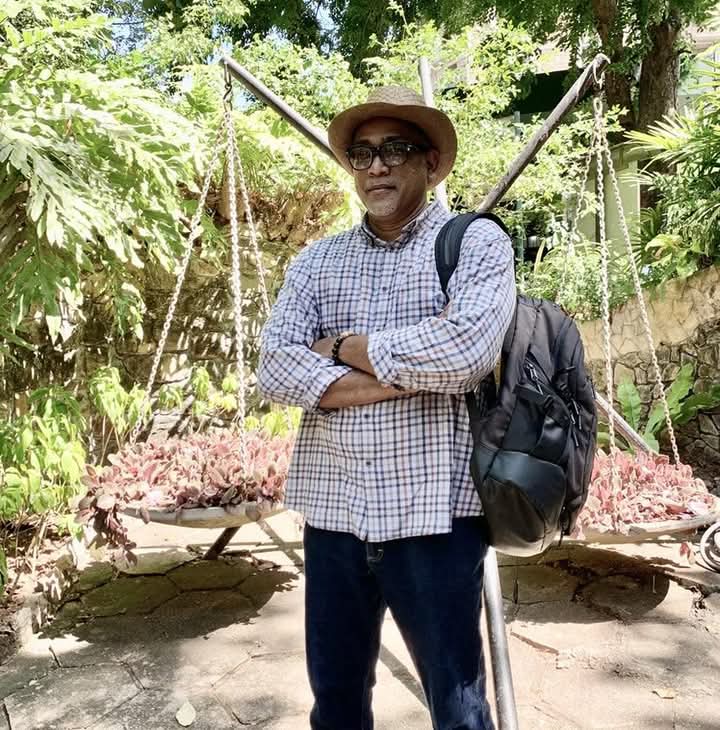
He was born into a unique heritage, and a background of forward thinking personalities. He relocated to Nigeria when he was still a growing child.
Definitely for a child, Nigeria will surely be a whole different rhythm. And as a kid figuring out two worlds, Imal had one constant mirror to reflect upon which happened to be his mother. She was a powerhouse of a woman, a teacher, missionary, dream-builder. His mother handed him books, beliefs, and boldness. Imal’s mum was his first guide.
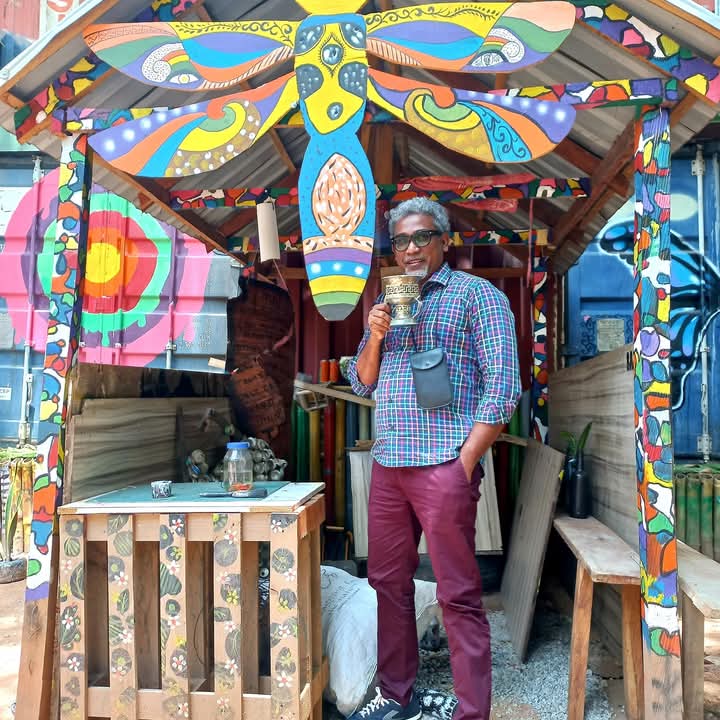
They landed in Ife-Odan, a small town tucked away near Oyo in today’s Osun State. No skyscrapers nor Jakande – like estates. No sign of Banana Island or Lekki. No big city lights, except just real people with real values. That’s where Imal learned to be himself. In such environments, some values would always be constant; honesty, hardwork, eat well and have contentment. These values do shape the way we live, how we live and where we live.
With his mum cheering him on and teaching him life, like it was a subject in school, Imal grew. And that spark of learning never left him.
From village life to the polished classrooms of the International School and the mighty University of Ibadan, he carried his mother’s lessons like a backpack full of gold.
Today, Imal Silva is an avant garde artist. He is not just your typical studio tied artist, Imal has weaved PR, architecture, diplomacy and communication expertise into visual art.
From his last exhibition, “Ode to Existence” to “Our Sheltered Identity” Imal Silva’s creative uniqueness is unrivalled. He is the typical industry machine with quality and appropriate tools to screw dream nuts into wheel of success. Just like his graceful mum, Imal is also a varsity teacher in the nation’s capital. And that’s how you go from Sri Lankan soil to Nigerian soul with family, faith, and a bit of flair. He engages the public and enthusiasts on series of ‘Art Talk’ which he organises frequently changing the way we view and appreciate visual art exhibitions.
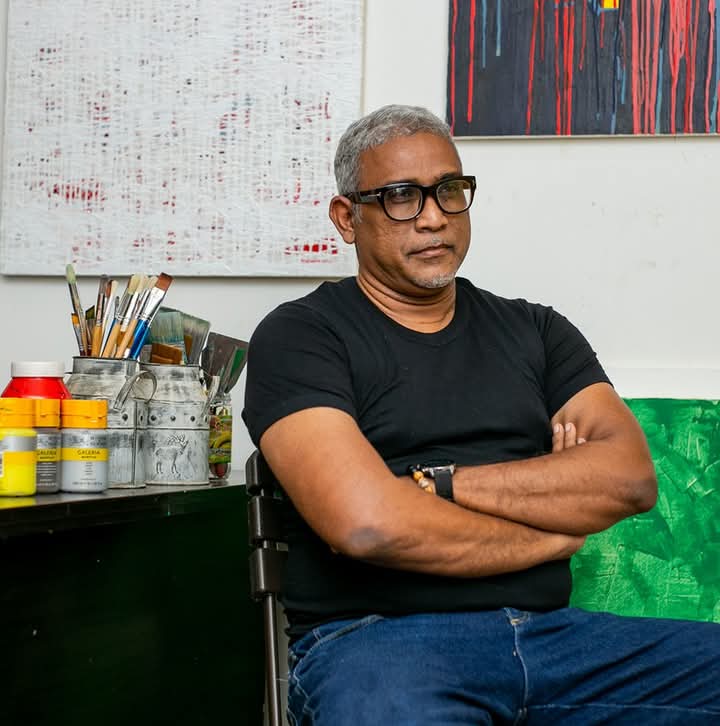
“Our Sheltered Identity” is like a retrospection of where we are coming from, to our destination. Our shelters and environments shape our destinies in so many ways.
While growing up on Nupe Street, we got introduced very quickly to street life and street rage. Children could be seen very early in the morning, washing, cleaning, playing and praying at such period. In fact, children could witness a street rage where a couple decided to wash their dirty linen in public. Police visits was a common occurrence because of some nefarious lifestyles within the community. Guess what the experience was always like when there was downpour, the street would be turned to a playing ground for the kids in the rain. Children on Nupe Street knew the sound of water.
It was not uncommon to see children in the morning having their daily routine of early morning baths in the open, as the bathrooms are mostly reserved for the older ones which required long queues to access. Everyday, children lined up on the edge of Nupe Street drainages to brush their mouths. It is yet another life but full of contentment.
Nupe Street residents were mostly civil servants, traders and many low income earners. The other side of Queen Elizabeth road had Eleyele government reserved area for the once in abundance. It is a neighbourhood for the middle class populated by senior civil servants and business men. The children from the other side of the divide were always well – heeled kids with chaperons at their beck and call. They hardly come out except when you ran into them at church activities.
Unlike children from Nupe Street, our parents found jobs at the University of Ibadan to fend for the family. A whole lot of Nupe Street residents seek employment opportunities in the citadel.
Across the road on Queen Elizabeth Road was the popular Catholic Church known as Saint Gabriel’s which also had a school. Apart from worshipping in the church and schooling for children, the school premises were frequently used for ethnic based society meetings popularly known in Yoruba parlance as ‘parapo’ meaning gathering. Different ethnic groups would come for their weekly, monthly or yearly meetings with fanfare at the end of the meeting or ending in a fistfight.
Abuja based Imal Silva creates and paints like a documentary auteur, who first of all, invest in researching and sharing his storyboard with his fellow producers. His inner self evolves on each project he embarks on. Such creativity comes deep from his soul and one could see Imal’s expression on each work which makes him a visual art connoisseur.
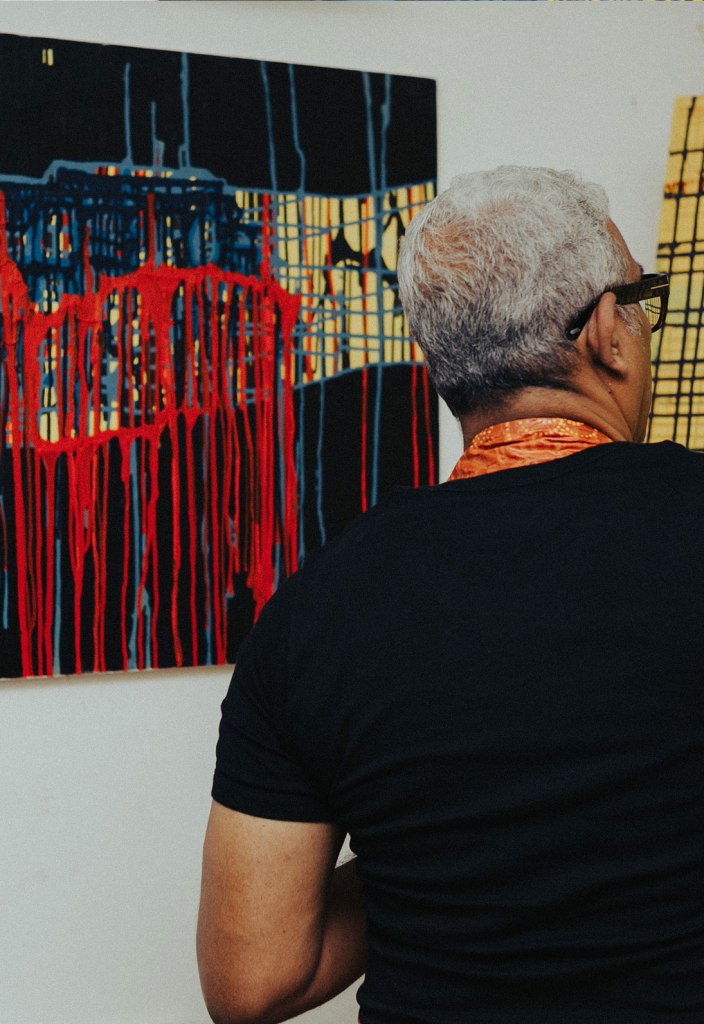
Imal’s exhibition “Our Sheltered Identity” is more than paint on canvas. It’s a conversation. A look into how our environments from cramped rooms to elite estates shape who we become.
The ruggedly handsome artist doesn’t just paint, instead he documents. Each artwork is a slice of life, an emotion frozen in time. He has the gait and personality of a film star interpreting his role on camera, Imal invites viewers to feel the scenes through his painting journey.
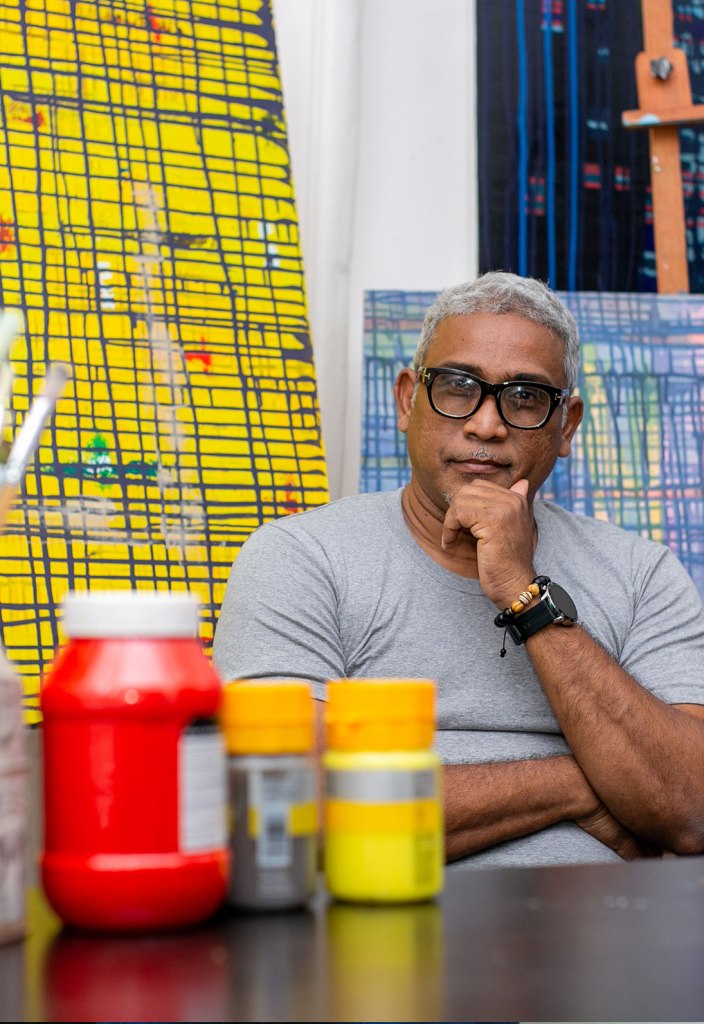
“Our Sheltered Identity” series by Imal Silva, created between 2024 and 2025, features a compelling blend of Mixed Technique on canvas and Acrylic on canvas, showcasing the artist’s signature abstract style. In this thought-provoking collection, Imal explores themes of identity, memory, and cultural evolution through works like Night Pulse; Detty December, he captures the chaotic rhythm of end-of-year festivities, while Work Life Balance and Calculated Whimsy reveal the modern tension between structure and spontaneity. Pieces like The Order of Beauty and Structure in Transition interrogate shifting ideals and changing social frameworks. What the Water Knew speaks to us directly, echoing through Aesthetics of Belonging and The Architecture of Becoming, where Silva explores how we evolve within and around cultural heritage. With Building from Within and Sanctuaries We Build, the artist brings it all home, thereby challenging viewers to reflect on the invisible shelters of identity we construct for survival, comfort, and self-definition. Together, the series is a powerful meditation on the personal and collective shelters we carry.
And what a story it is. His work reminds us of our shared past, our humble beginnings, and our ever-evolving identity. Whether in Mokola, Ibadan or at an art gallery in Abuja, the message is clear, our shelters, our streets, our struggles, and our triumphs all form a part of who we are.
Imal’s journey is proof that art doesn’t need to shout to be heard. It simply needs to speak from the soul. And in “Our Sheltered Identity” exhibition at Windsor Gallery in Abuja, he did just that by capturing the noise, the silence, the beauty, and the scars of life from the impact of our shelters.
“Our Sheltered Identity” a solo exhibition by Imal Silva was held at Windsor Gallery, Abuja opened May 24th 2025
Words/Ireho Aito/Don’t Keep Your Art in the Finger!/ Artwork/Photographs/Imal Silva archives/library

