Is he not Badiu’s son? Jelili Atiku was about twelve years old when he overheard this conversation as he was walking through the lounge. A conversation between the man he had called his father all along and a friend of the family. And what a turning point for Jelili and he went on a soul searching mission to know more about his father with an iconic performance art that was breathtaking in contemporary art history
Araferaku: Jelili Atiku’s Transformative Artistry and Search for Identity”
Jelili Atiku’s journey into the world of performance art is as unique as it is captivating. At the tender age of twelve, he stumbled upon a conversation that would change his life forever. It was a conversation between the man he had always known as his father and a family friend, discussing the mysterious identity of his true parentage.
Intrigued by this revelation, Jelili didn’t merely muse about his own existence; instead, he channeled his energy into unraveling the mystery surrounding his father. Despite receiving little concrete support from those familiar with the story, a group of benevolent individuals who believed Jelili deserved to know his true identity joined him in his quest.
Years later, Jelili Atiku orchestrated a commanding burial performance for the father he had never met. This colorful and fitting funeral, a global showcase of Nigerian-born performance artistry, left onlookers in awe. It was a pivotal moment in the life of a man who had discovered his true heritage.
The funeral took the form of an exhibition at the renowned Center for Contemporary Art (CCA) in Lagos, where Jelili Atiku’s iconic performance art series, “Bio-Feedback: Araferaku,” was unveiled. The first part of this series, “Letter to Bami,” saw Jelili assume the role of a young boy attempting to uncover the whereabouts of his elusive father.
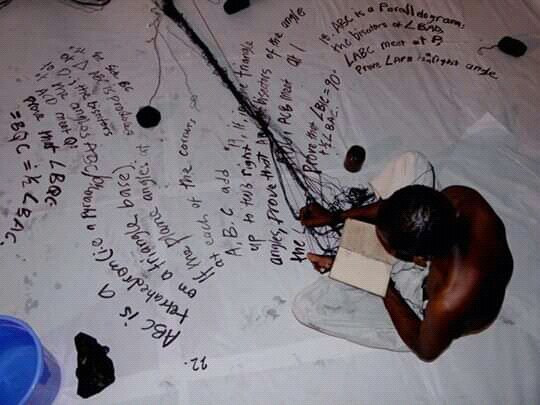
Commissioned as part of “The Progress for Love” initiative, the two-part performance piece, “Araferaku” (2013), delves deep into the emotional realm of a son mourning a father who passed away seven months before his birth. The performance spans three days, with the first part being a marathon meditation lasting forty-four hours. Jelili Atiku immerses himself in this solitude, surrounded by fading photographs of his father, invoking the presence of an absent figure. Only his mother is allowed to briefly share in this profound experience, creating a nearly transcendental trilogy. The second part of the performance blurs the lines between reality and fiction, simulating a traditional Yoruba burial ceremony as an attempt to find closure through the public expression of universal emotions.
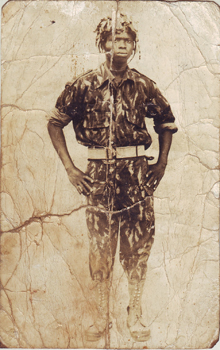
The significance of this artistry extends beyond the stage, as “Araferaku” became a communal experience. Ejigbo community members, including Jelili Atiku’s kinsmen and neighbors who had witnessed the life and death of his soldier and war veteran father, enthusiastically participated in the final burial rite of Badiu.
Jelili Atiku’s artistry not only captivates but also transcends boundaries, inviting us to ponder the complexities of identity and the transformative power of performance. His journey from a curious boy to a renowned performance artist is a testament to the indomitable human spirit’s quest for truth and self-discovery.
Words by Ireho Aito/Don’t Keep Your Art in the Finger!

