Biodun Omolayo, a Nigerian born artist and prominent figure in the art world in Africa and beyond, has navigated a remarkable journey spanning three decades. Starting as a banker, he embarked on a transformational path, transitioning into the realm of fine art. In an exclusive interview, he delves into his driving force, the significance of integrity in art business, and the pivotal role of education. Omolayo’s career, marked by faith and mentorship, explores the profound impact of spirituality in his artistic endeavors. He also discusses the art world’s evolution in the age of technology and reflects on his recent exhibition, “The Storm is Over,” a testament to resilience and divine grace. He shares his moments with Ireho Aito in Lagos.
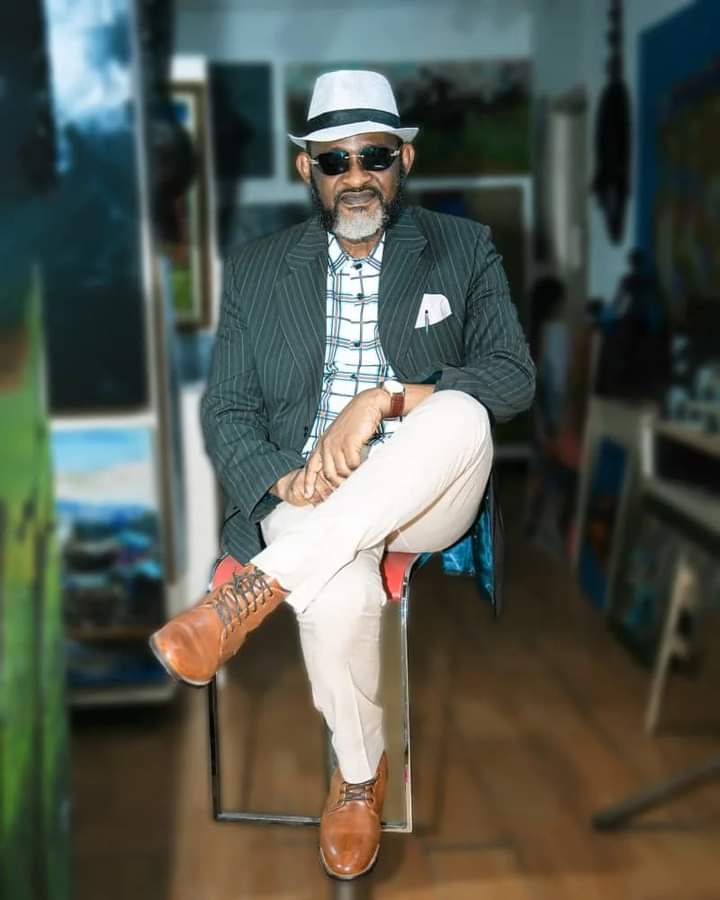
Over the past three decades, Biodun Omolayo’s art journey has encompassed various facets, from creating and selling art to educating aspiring artists and navigating the complexities of the art business. Can you share the driving force behind your enduring passion for the arts?
I’ve been driven by a profound passion for the arts, coupled with the desire to elevate the visual art profession and demonstrate that it can be as dignified and rewarding as any other field when approached professionally. This commitment led me to return to the Yaba College of Technology, where I obtained an OND in General Art and HND in Graphics Design after resigning from the banking sector in 1992.
From your personal experience, how would you define integrity in the art business?
Integrity in the art business, much like in any other endeavor, entails unwavering honesty, where your words are your bond, your actions consistently reflect good faith, and the interests of all parties involved are genuinely considered. As an artist, it means creating artwork professionally, using quality materials, and ensuring durability, offering collectors true value for their investments. As an art dealer or gallery operator, it involves honoring financial agreements and communicating openly if any deviations are necessary.
You transitioned from the financial sector to the art sector, where your contributions have become well-known. Would you follow the same career path if you were to start over today?
My response is twofold. In similar circumstances, I would embark on the same journey, as it was driven by my passion and circumstances at the time. However, without some of the challenges I faced, I would have pursued a formal education in Visual Art, aiming for multiple degrees in the field, perhaps even becoming a Professor of Art. I’d also consider obtaining another degree in Finance and Business Management, given my love for teaching and acquiring knowledge.
Did your educational background in the financial sector ease the transition into running a company in the art sector?
Absolutely, education plays a vital role. While talent is essential, combining it with proper education is the path to realizing one’s full potential. My initial degree in Performing Art, although not my first choice, prepared me well for managing people and working effectively as part of a team. It even earned me an NYSC State Honors Award in the past. Additionally, my banking experience and subsequent professional training equipped me with valuable skills for running a successful art business. Continuous self-education, including studying Harvard Business School materials, remains integral to my growth.
If you were to classify your career into stages, which stage do you find yourself in currently?
Categorizing my career into distinct stages can be complex, as one phase often evolves seamlessly into another. Nonetheless, I’d categorize my career into three periods:
a) Early years of training and employment while finding my footing.
b) The stage of setting up my business, akin to an airplane taxiing before takeoff.
c) The current phase, where my business is well-established and stable but requires expansion. I aim to scale it to the point where it can operate independently, allowing me to take a step back while it continues to thrive.
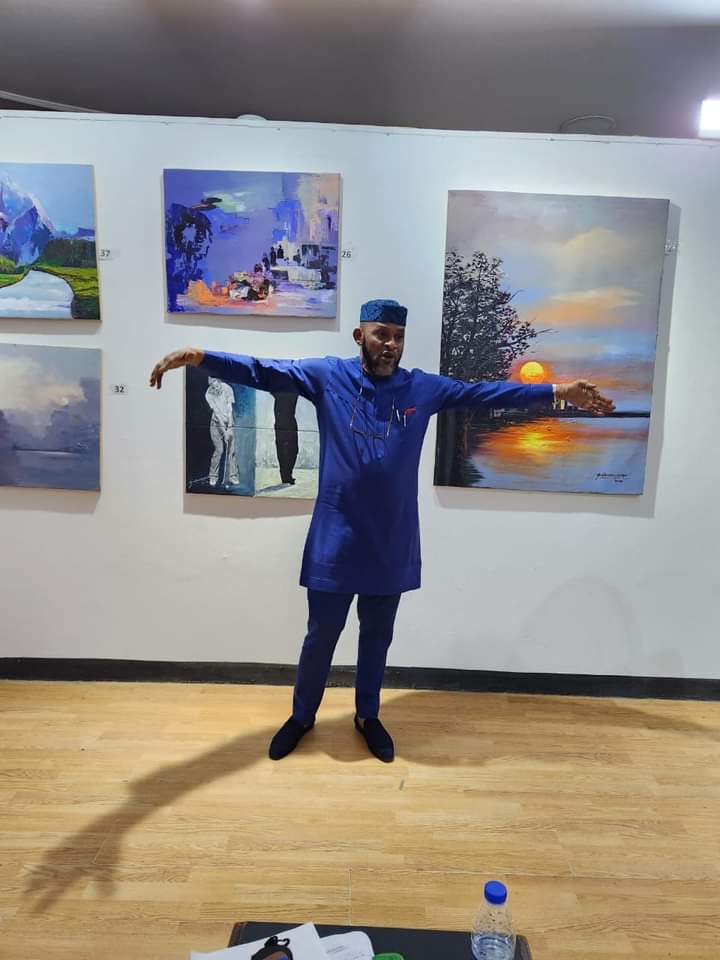
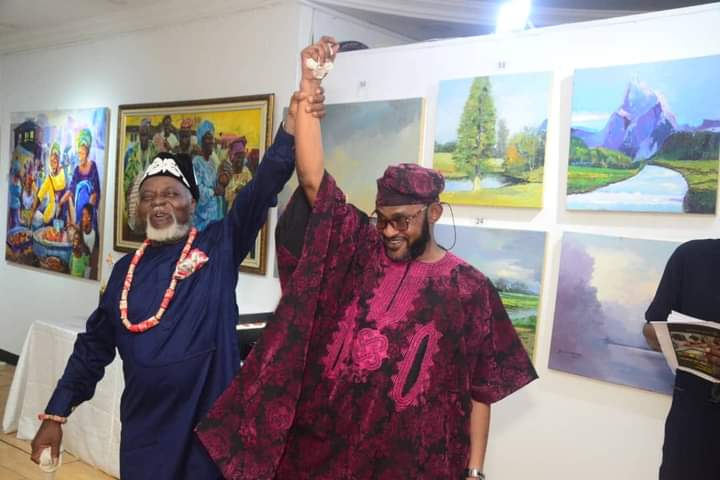
“The Storm is Over” is a significant exhibition for you. What inspired you to create this exhibition?
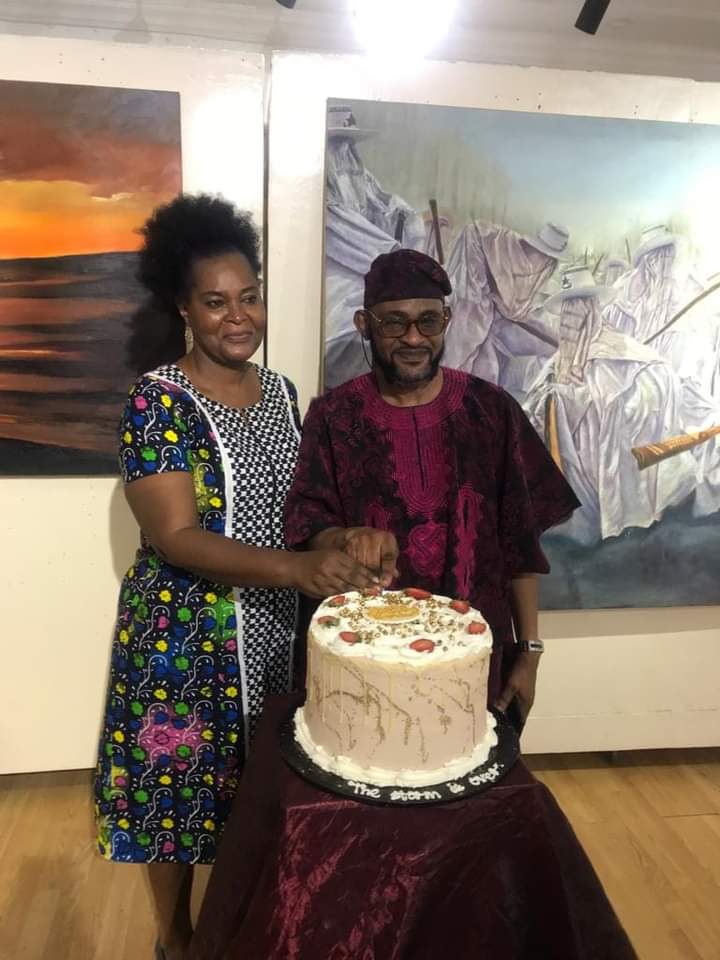
“The Storm is Over” is not just an exhibition but a personal reflection and prophetic declaration. It draws inspiration from the biblical theme of storms passing and clearer skies ahead. It symbolizes the end of various global, local, and personal storms, including challenges like COVID-19 and economic downturns. After such storms, one gains clarity, focus, peace, and tranquility. Faith and spirituality are integral to my exhibitions, and this one was no exception.
How many works did you showcase in “The Storm is Over,” and what significance did each piece hold for you?
I exhibited a total of 60 paintings, each of profound significance to me. Every piece carried a prophetic message and represented a personal journey through life’s storms, both global and personal. These works were more than just art; they were expressions of faith and declarations of triumph over adversity.
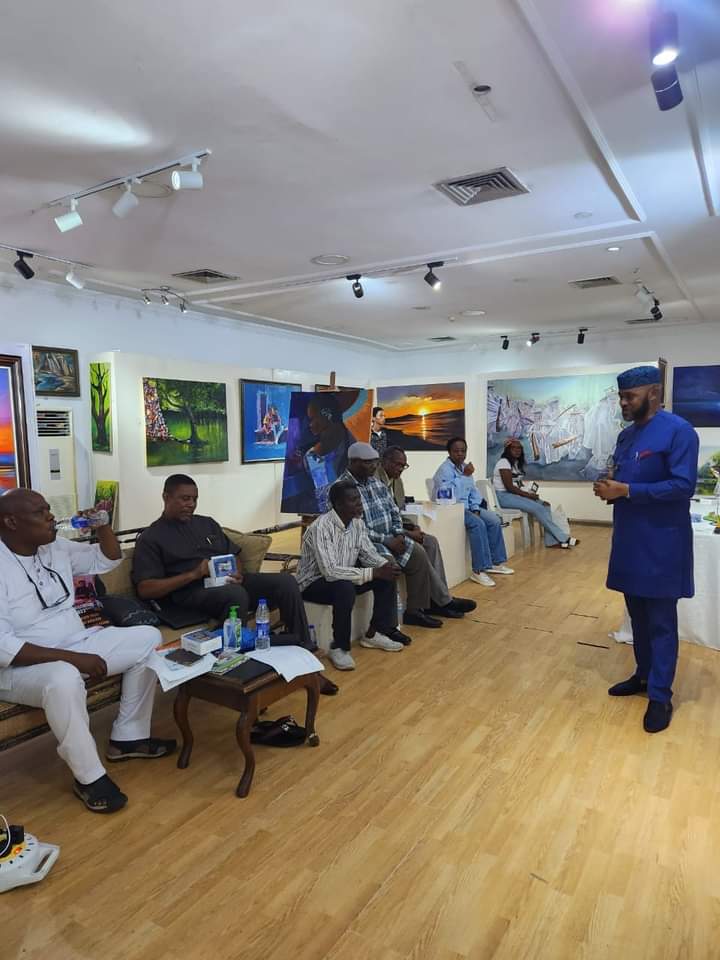
You have been a mentor to many emerging talents in various fields. What drives your commitment to mentoring, and do you believe there’s anything more significant than having a mindset of goodwill?
My commitment to mentoring stems from a sense of gratitude for the grace and opportunities I’ve received. I firmly believe that much is expected from those who have been blessed abundantly. My mentoring programs, such as the Young At Art Children & Teenagers Creative Workshop, are my way of leaving a lasting legacy in the field of Visual Art and education. There’s immense fulfillment in imparting knowledge and guidance to the next generation.
How have you adapted your business in the post-COVID era, and what lessons have you learned from this challenging period?
The COVID-19 pandemic prompted a reevaluation and reprogramming of my business strategies, spanning Visual Art, Training, Creative Workshops, and Fashion. While the lockdown presented challenges, it also offered opportunities for reflection, creativity, and completing unfinished projects. One notable outcome was the “Abandoned Project Completed” series. This period taught me the importance of adaptability and the blessings that can arise from adversity.
Spirituality appears to be a fundamental aspect of your life and career. How does your faith influence your artistic endeavors and drive?
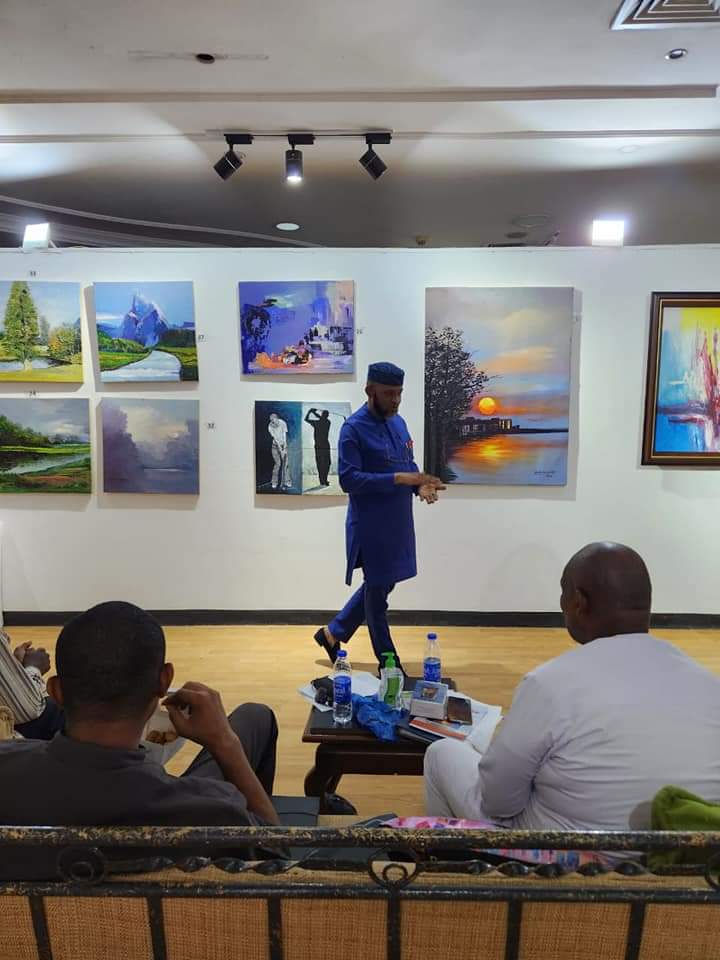
As a Christian and a man of faith, spirituality is at the core of my identity as a Visual Artist. It serves as a wellspring of inspiration, guidance, and unwavering strength. Most of my artworks bear religious undertones and reflect my spiritual journey. My faith plays a pivotal role in my creations, propelling me forward even in challenging times.
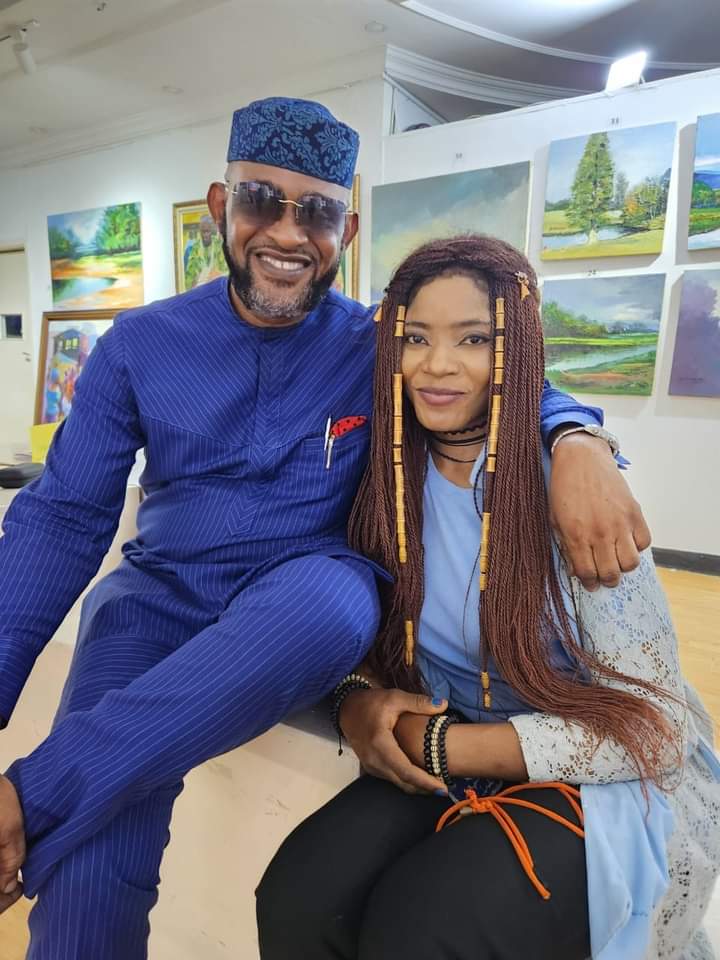
You’ve mentored many young artists who embrace technology in their work. How do you approach mentoring these emerging artists who utilize technology in their art?
Mentoring emerging artists who harness technology involves collaboration with tech-savvy facilitators. Recognizing that I don’t have all the answers, I enlist the expertise of individuals well-versed in technology to join me in guiding these young talents. This approach ensures comprehensive mentoring and equips them with the skills needed to excel in the modern art landscape.
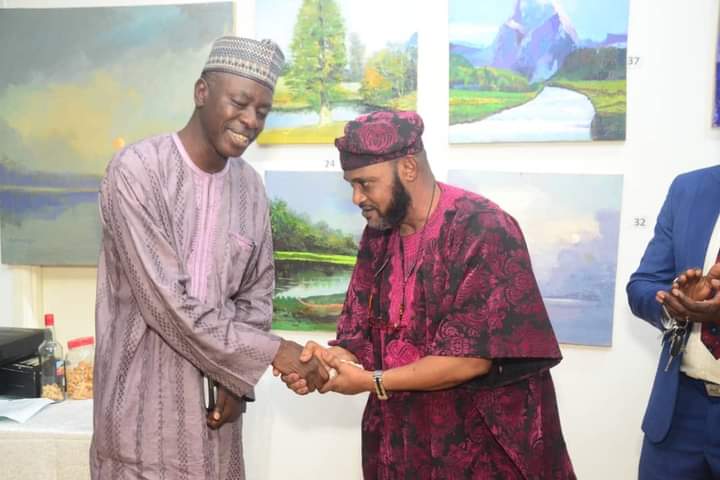
Social media has become a potent tool for art marketing. Some argue that it has also led to the sale of substandard art to collectors. What’s your perspective on this issue?
Social media undeniably empowers art marketing, but it’s not inherently responsible for the sale of substandard art. Well-informed collectors and investors are less likely to fall victim to such sales. Those who lack “Art Collection Education” may be at risk. I encourage aspiring and established collectors to seek knowledge from resources like “COLLECTING ART” by Professor Fabian Ajuogwu (SAN) and Jess Castillote, ensuring they make informed decisions.
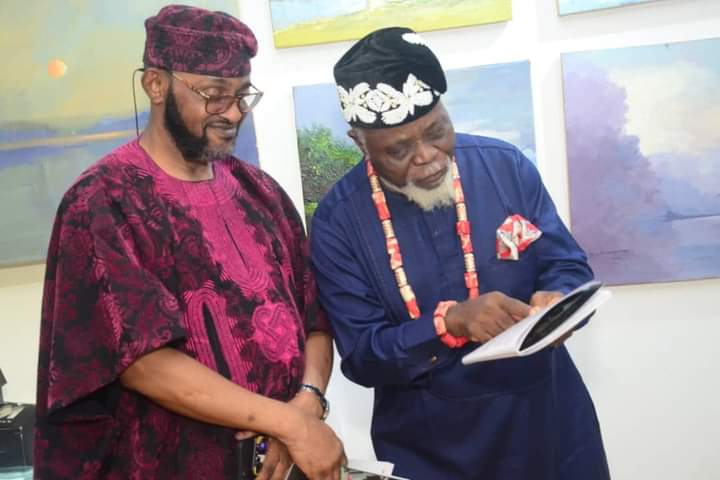
Could you share some highlights and insights from your exhibition, “The Storm is Over,” and how it came to fruition?
“The Storm is Over” was a celebration of God’s grace in my life as I approached my 60th birthday. It was preceded by profound reflections on the word of God, prayer, and divine inspiration. The exhibition’s theme emerged from a period of personal and global challenges, signifying the end of turbulent times. Notably, the event also served as a tool for evangelism, where my role as the Chapter President of the Onikan Creative Chapter of the Full Gospel Business Fellowship in Lagos, Nigeria.
Interview /Ireho Aito/Pictures/ Biodun Omolayo’s Archives
Don’t Keep Your Art in the Finger!
Send a message

