Born in the vibrant suburb of Mushin, Lagos, during the mid-60s, Ato Arinze embodies the creative spirit pulsating through Nigeria’s cultural hub. Known for birthing diverse artistic talents, Mushin echoes with music, entertainment, and a thriving art scene.
Born in the vibrant suburb of Mushin, Lagos, during the mid-60s, Ato Arinze embodies the creative spirit pulsating through Nigeria’s cultural hub. Known for birthing diverse artistic talents, Mushin echoes with music, entertainment, and a thriving art scene.
Ato’s artistic prowess shines in the realm of Portrait Sculptures and Statues, displaying remarkable expertise in figural sculpting. His artistic journey commenced at Afolabi Primary Institute and Zixton Secondary School before culminating in diplomas from Federal Polytechnic Oko and Yaba College of Technology. Since 1991, he’s devoted himself to the craft, excelling as a studio artist specializing in Sculpture and Pottery.
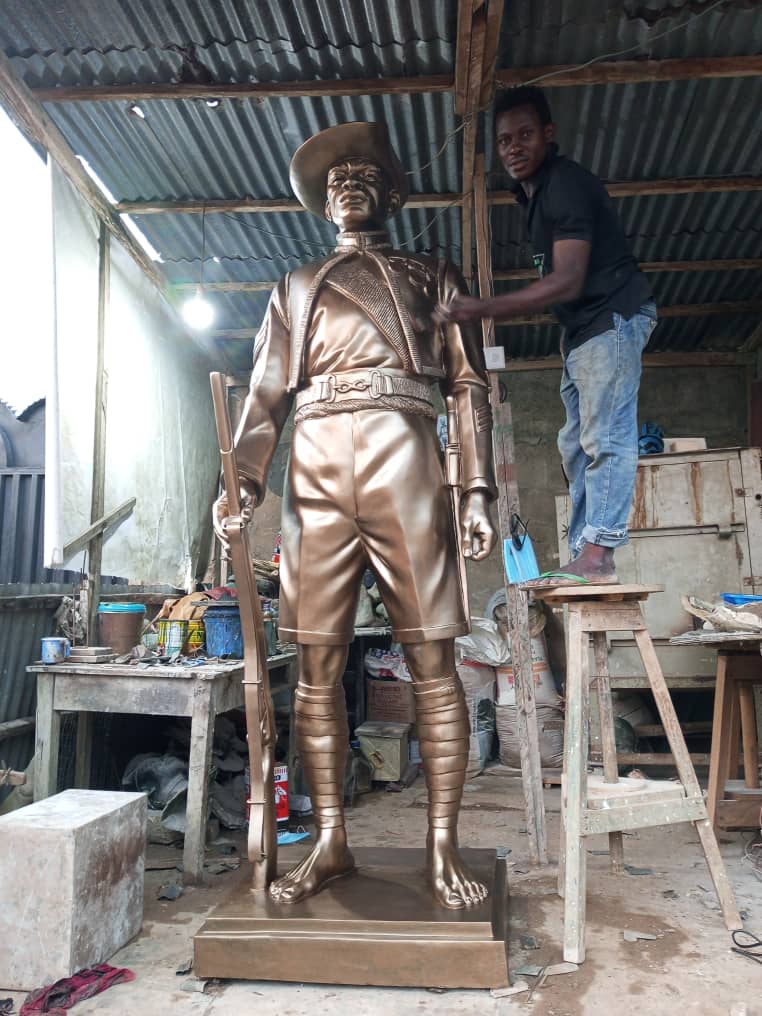
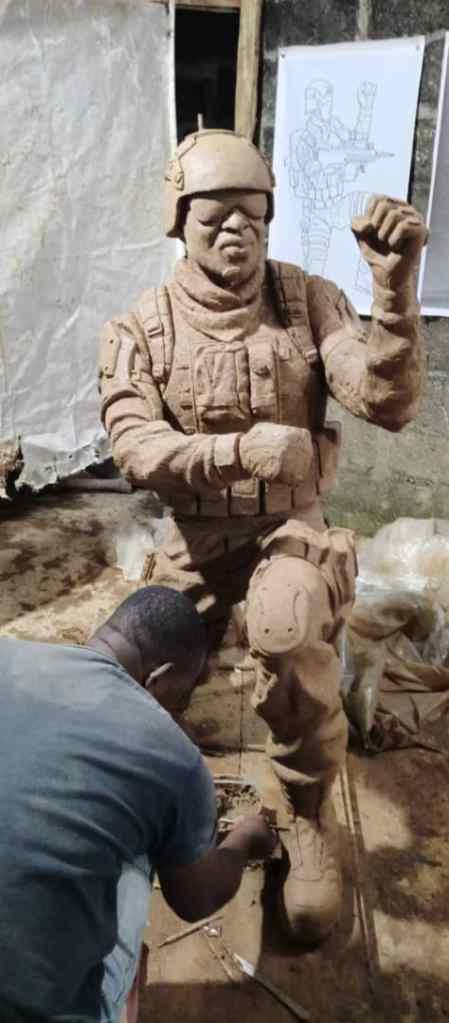
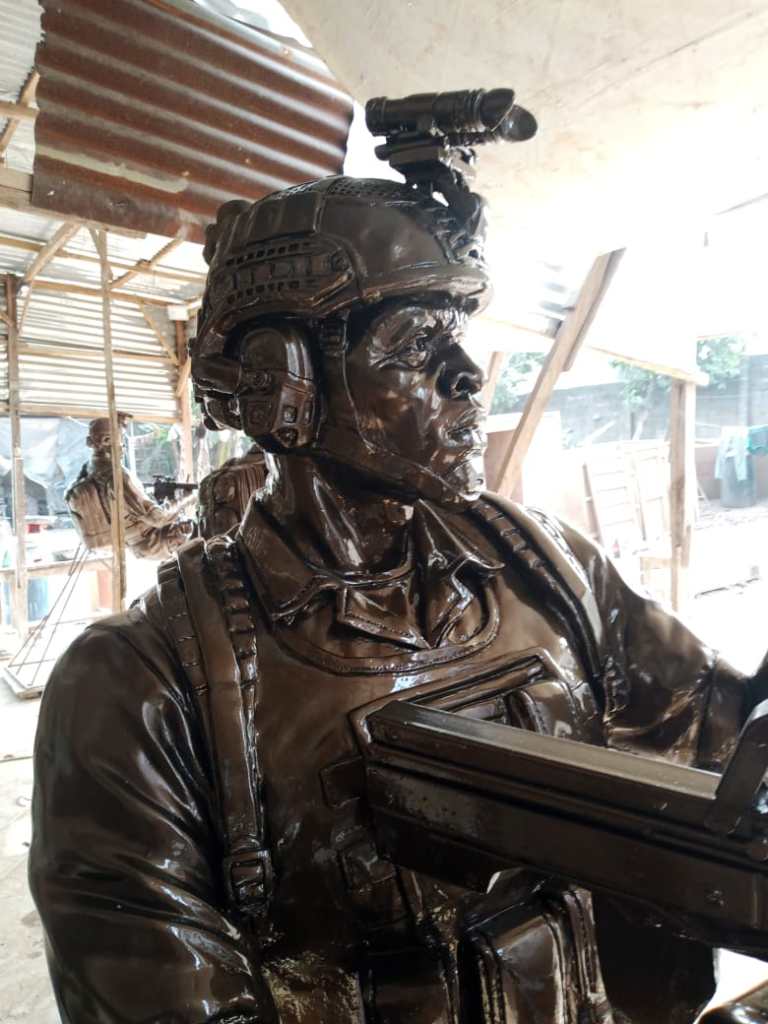
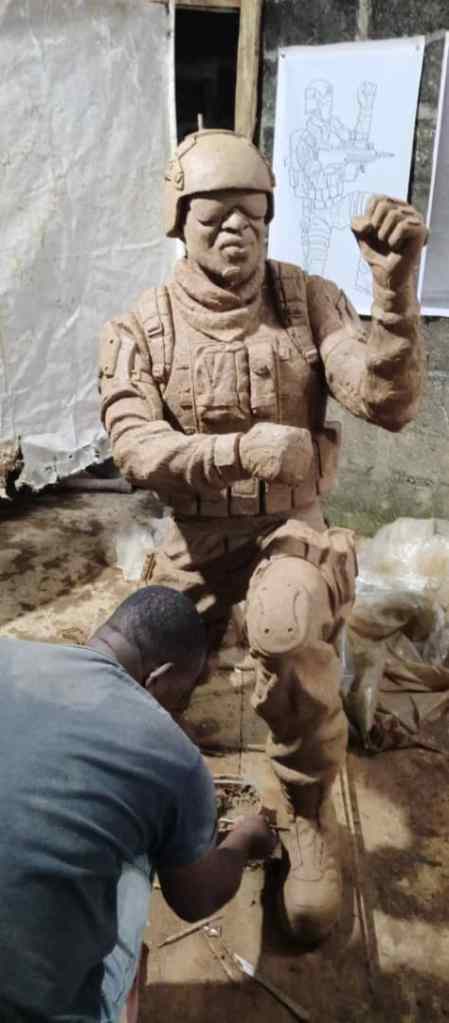
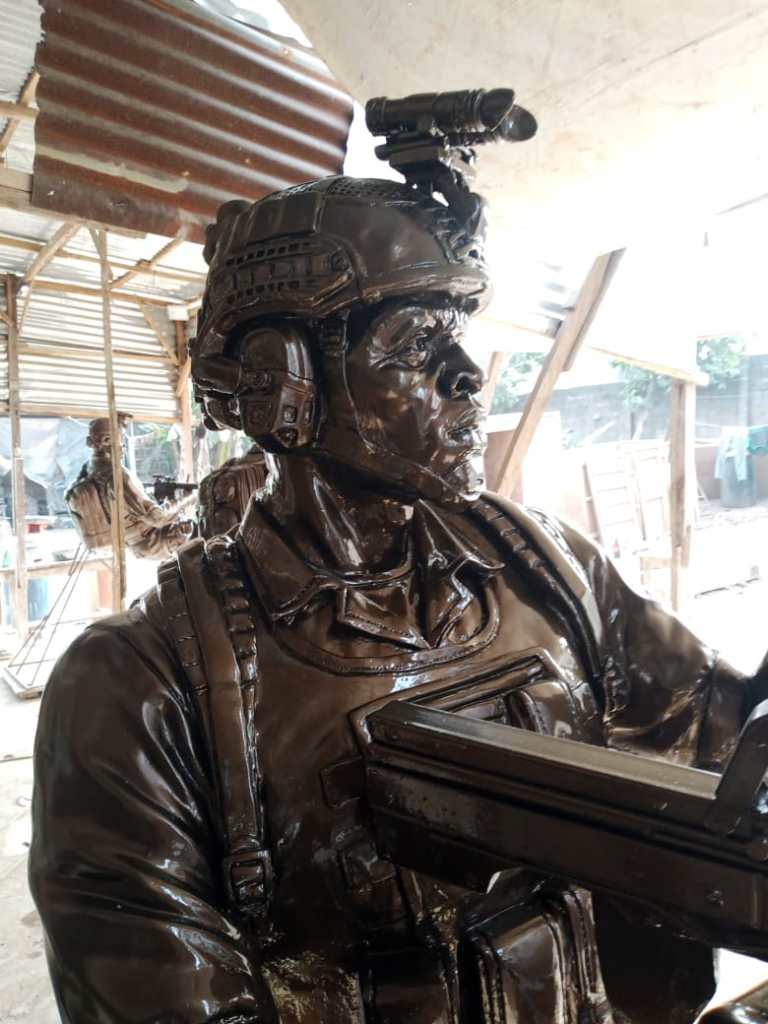
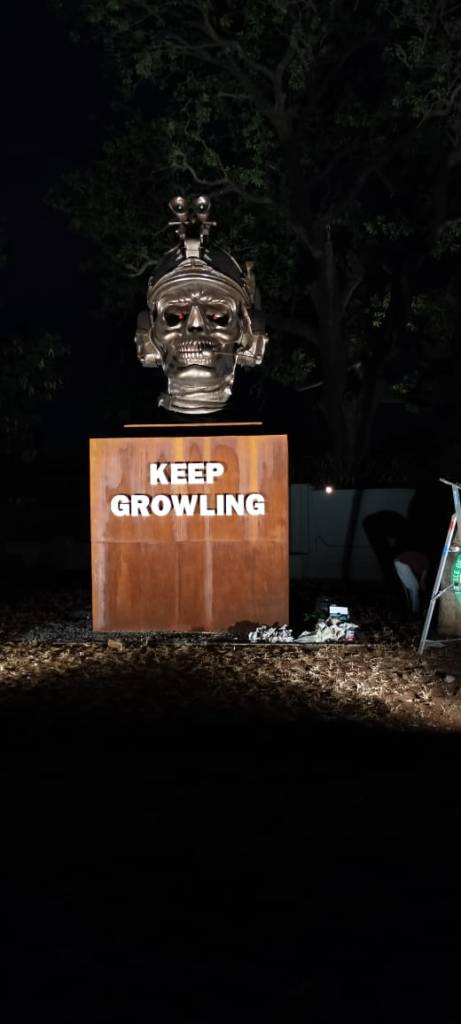
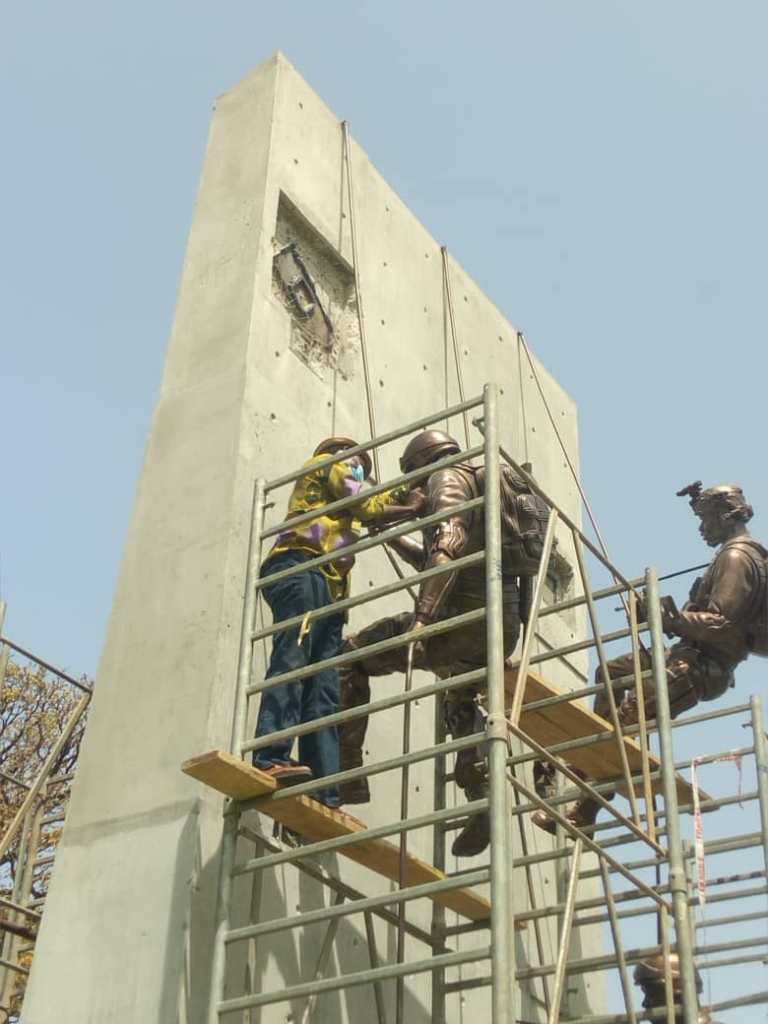
His artistic footprint extends globally through exhibitions, showcasing his talent on both local and international platforms. Noteworthy among his portfolio are prestigious commissions such as the collaborative creation of Dr. Nnamdi Azikiwe’s Bust and recent public sculptures like The Sentry, Keep Growling, and The Combat Soldiers in Abuja. Recognition for his artistic excellence includes accolades like the Solidra Award, Society of Nigerian Artists Distinguished Artist Award, and the Arttruh award for Pottery/Ceramics Art in 2022 and 2023.
Amidst these achievements, Ato Arinze proudly joins the esteemed Guild of Professional Fine Artists of Nigeria, solidifying his place as an influential figure in the ever-evolving art world.
In an exclusive interview with Ireho Aito of iBAND Magazine, Ato shares insights into his artistic journey and the vibrant art scene thriving in Lagos.
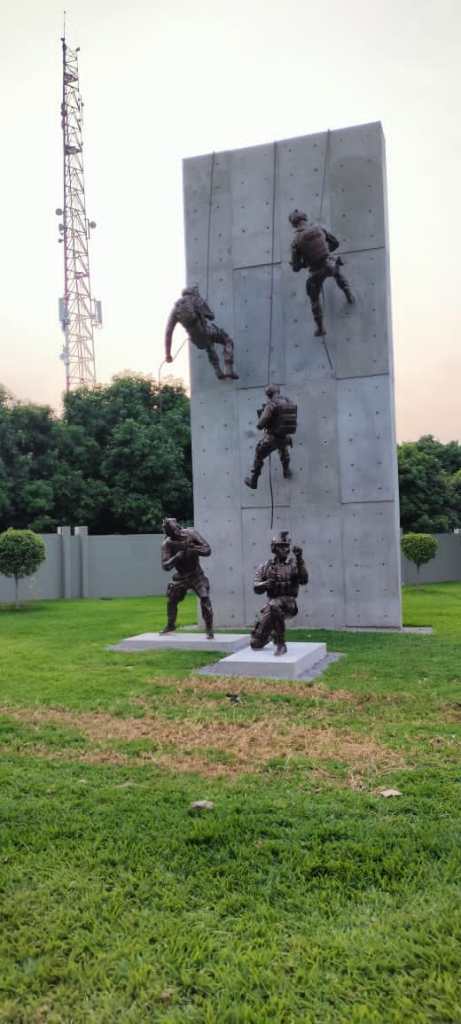
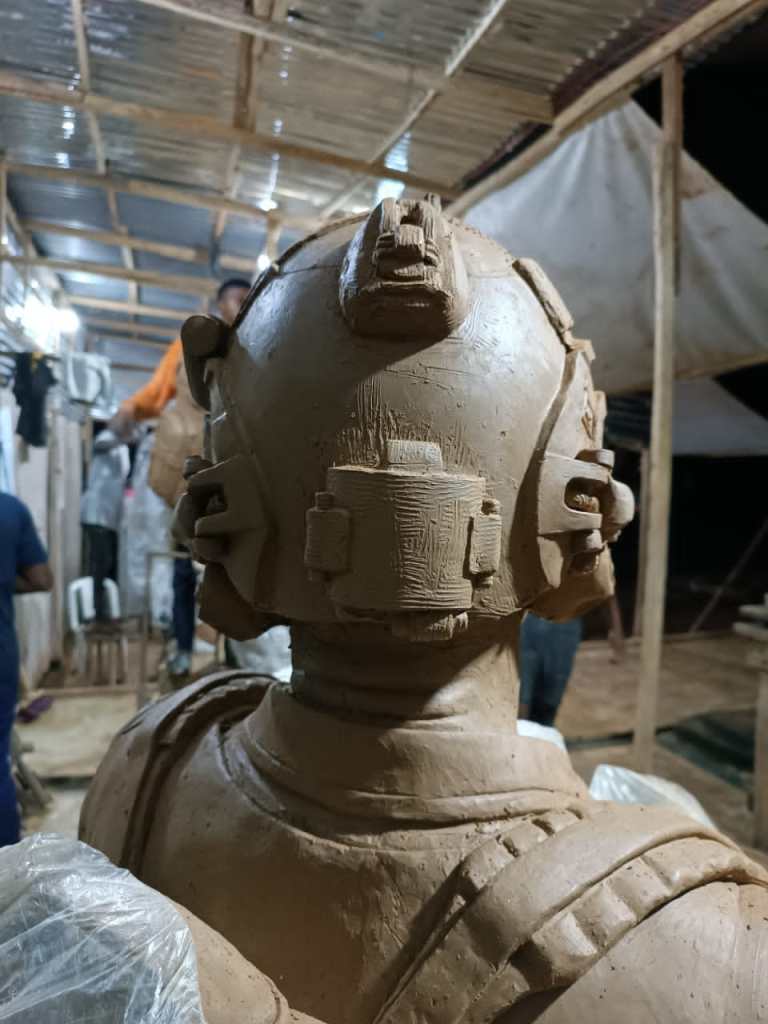
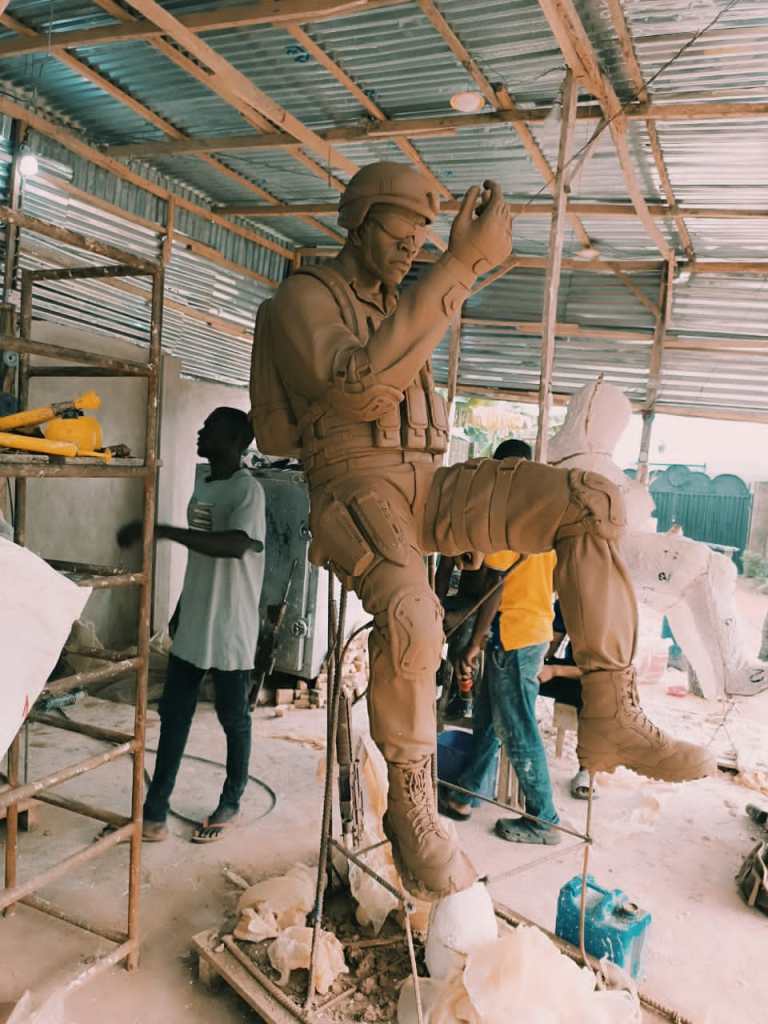
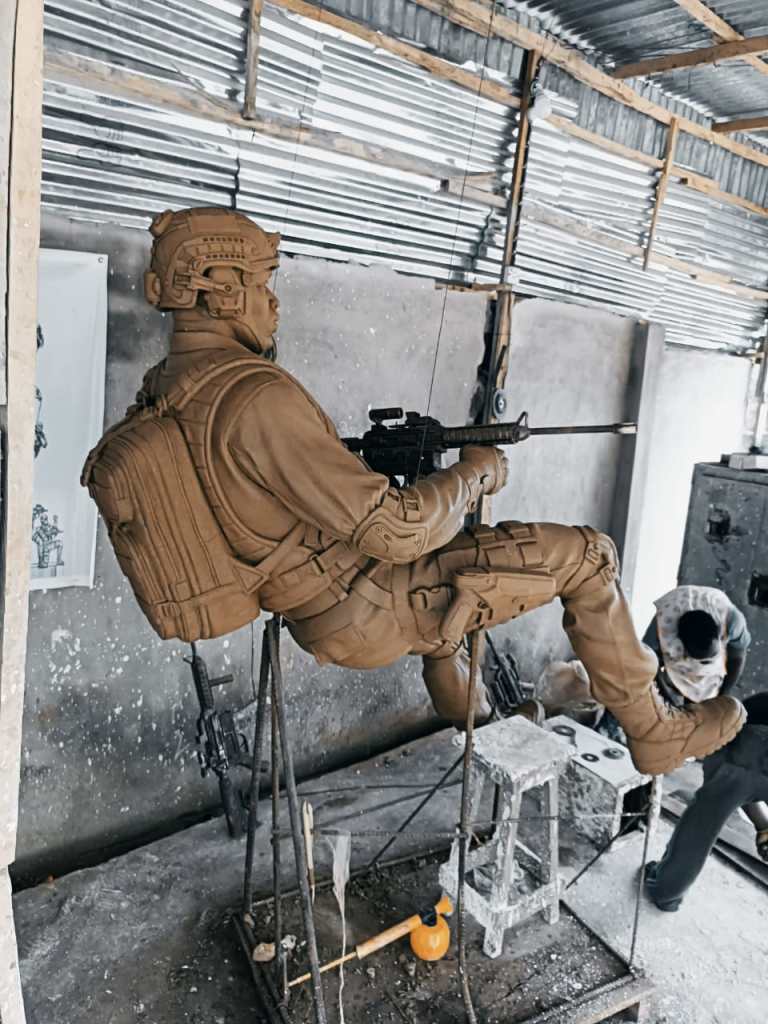
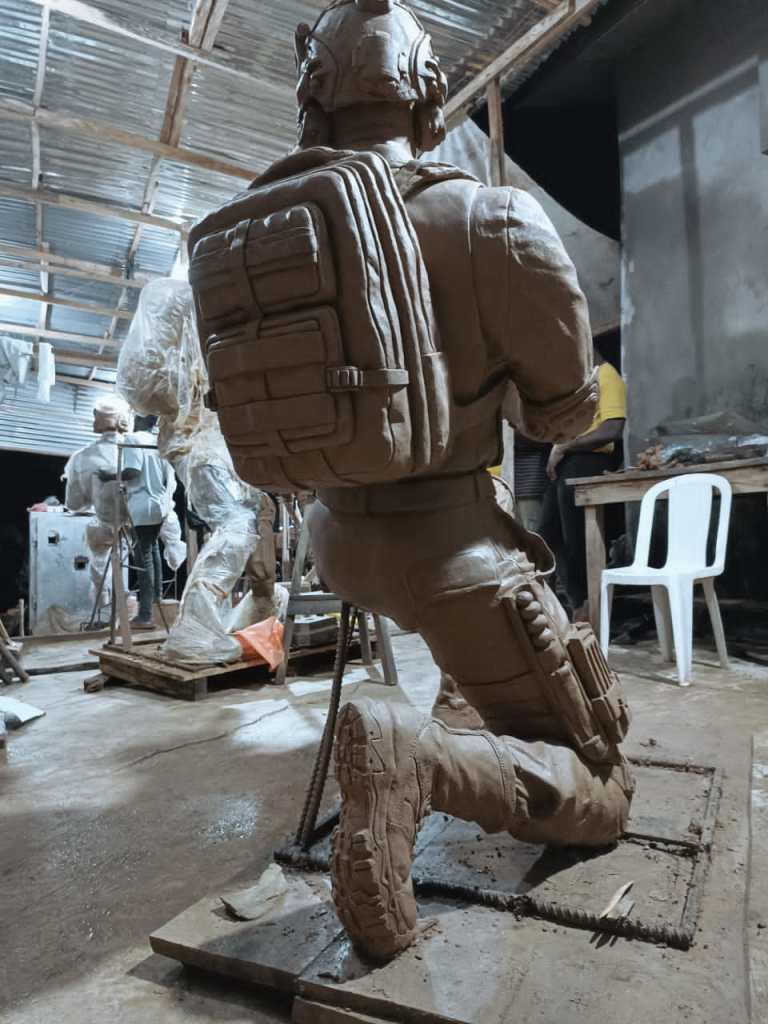
The Combating Soldiers ganered a lot of reactions. Tell us more about inspiration behind the project and your target?
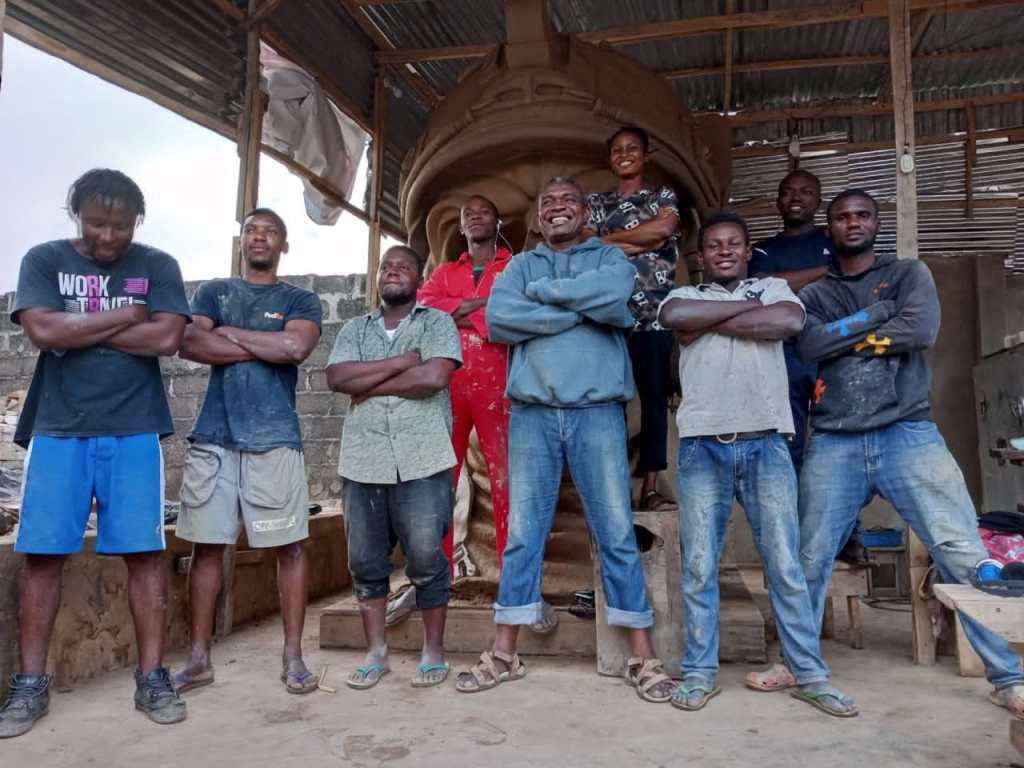
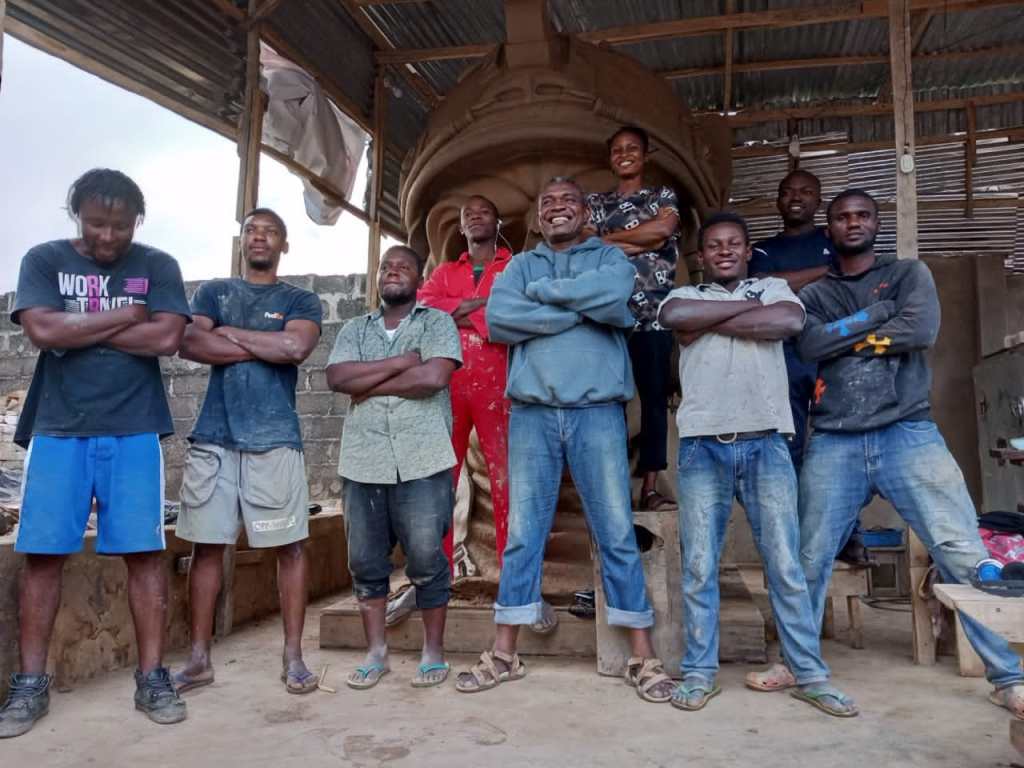
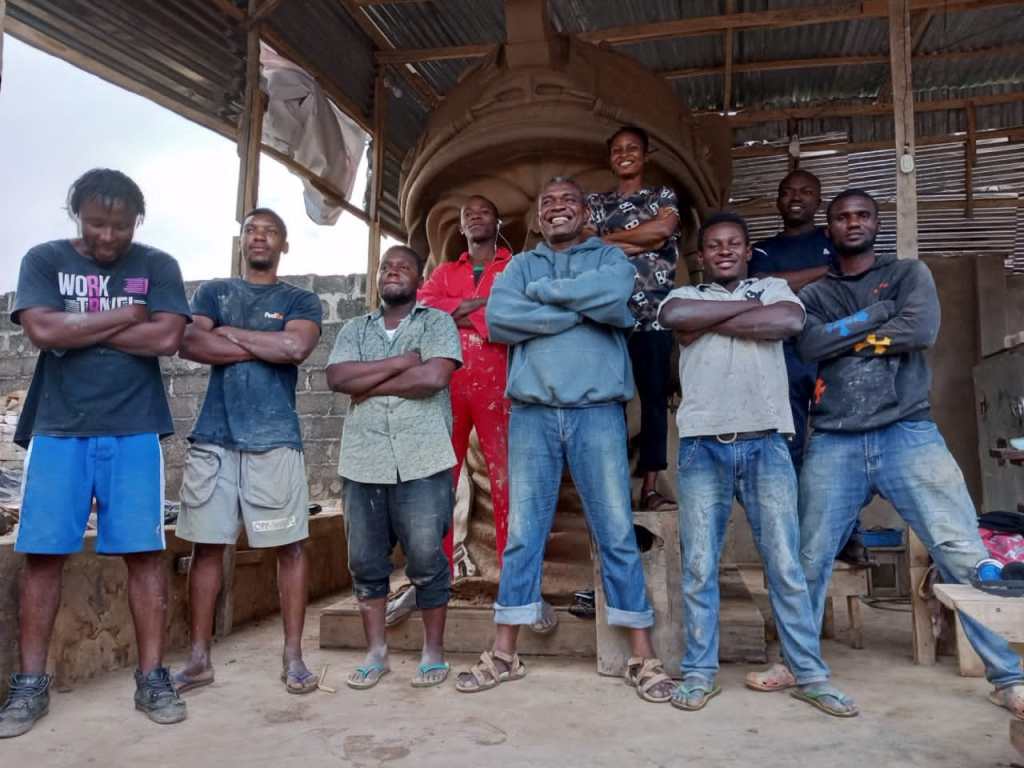
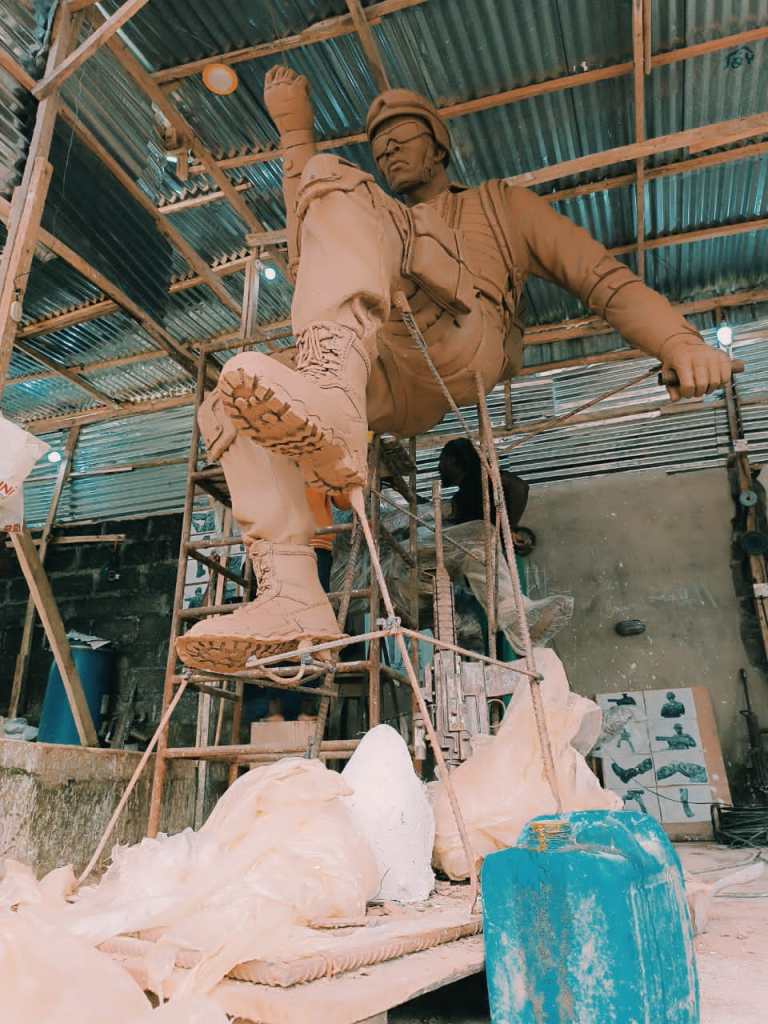
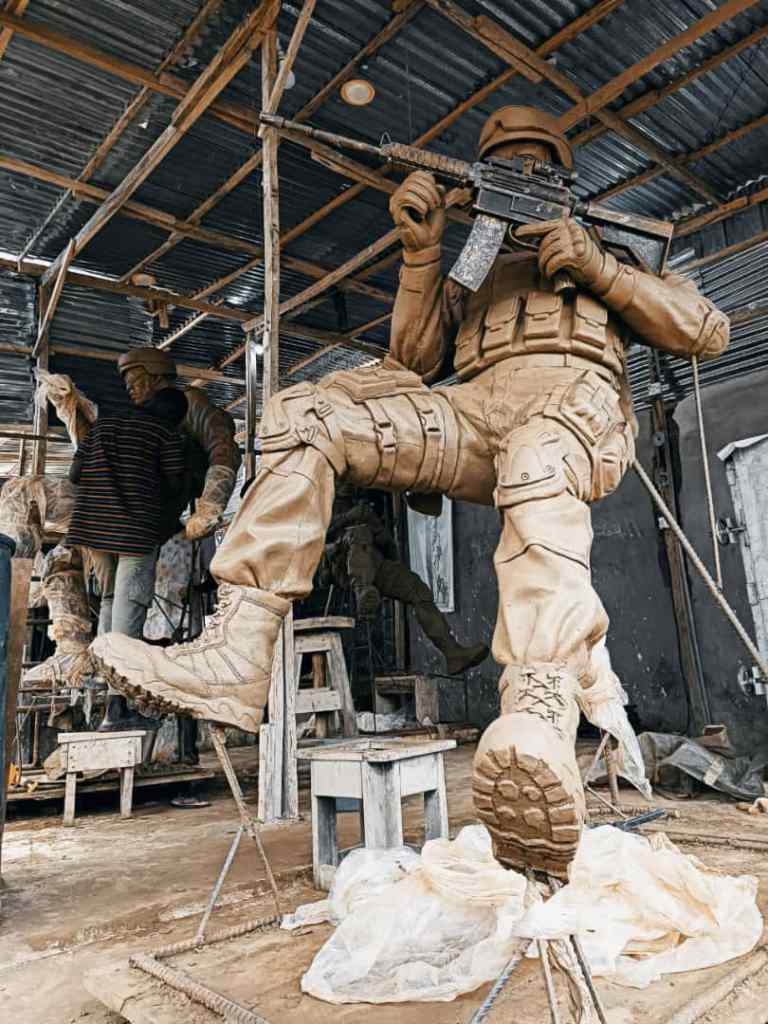
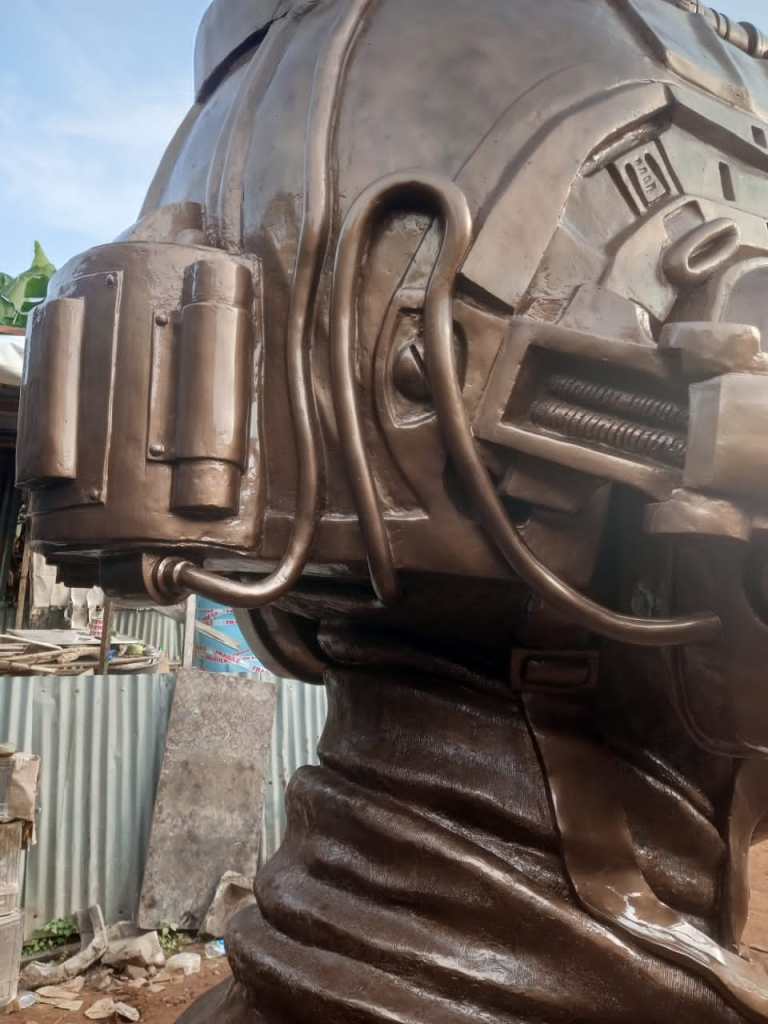
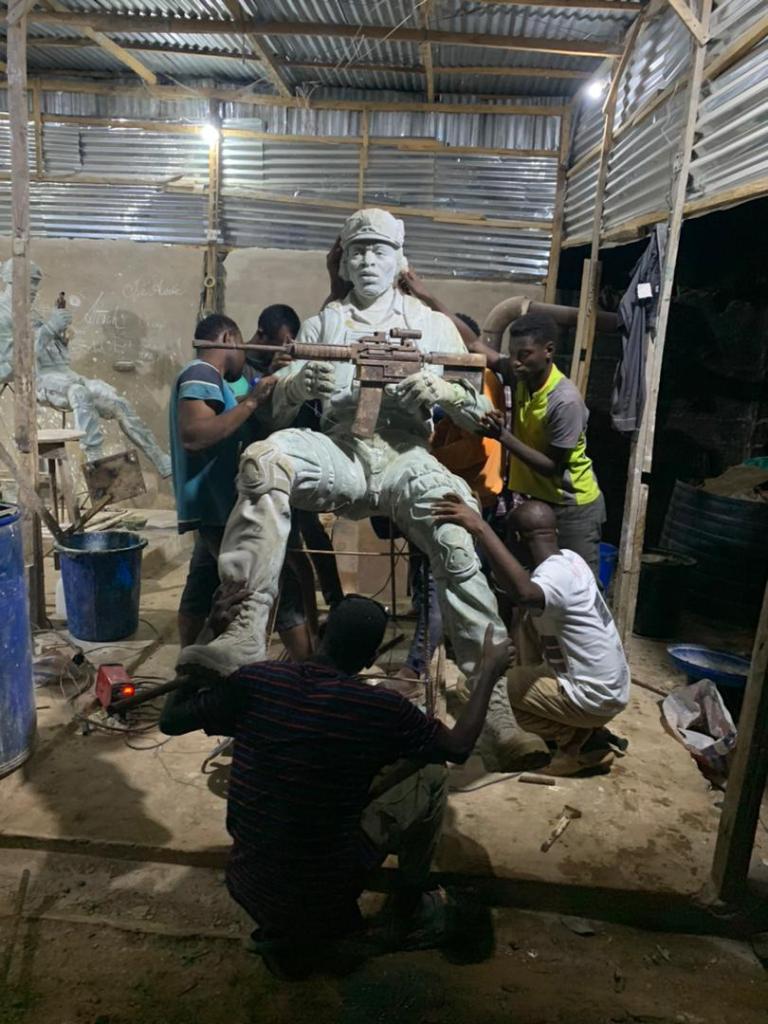
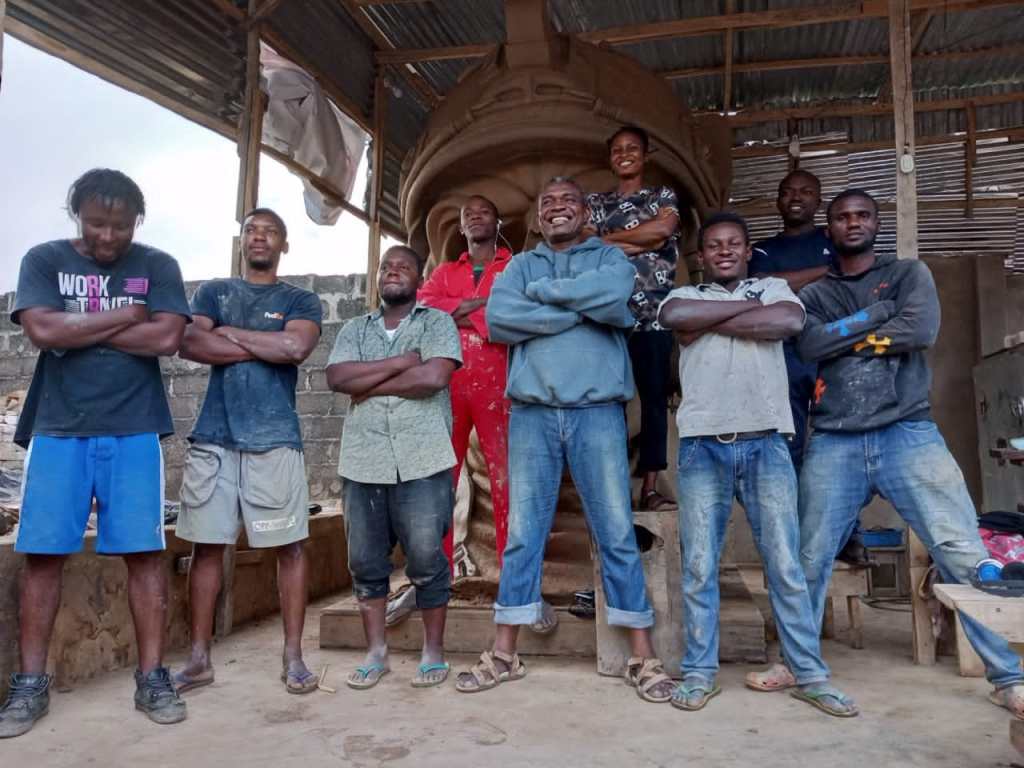
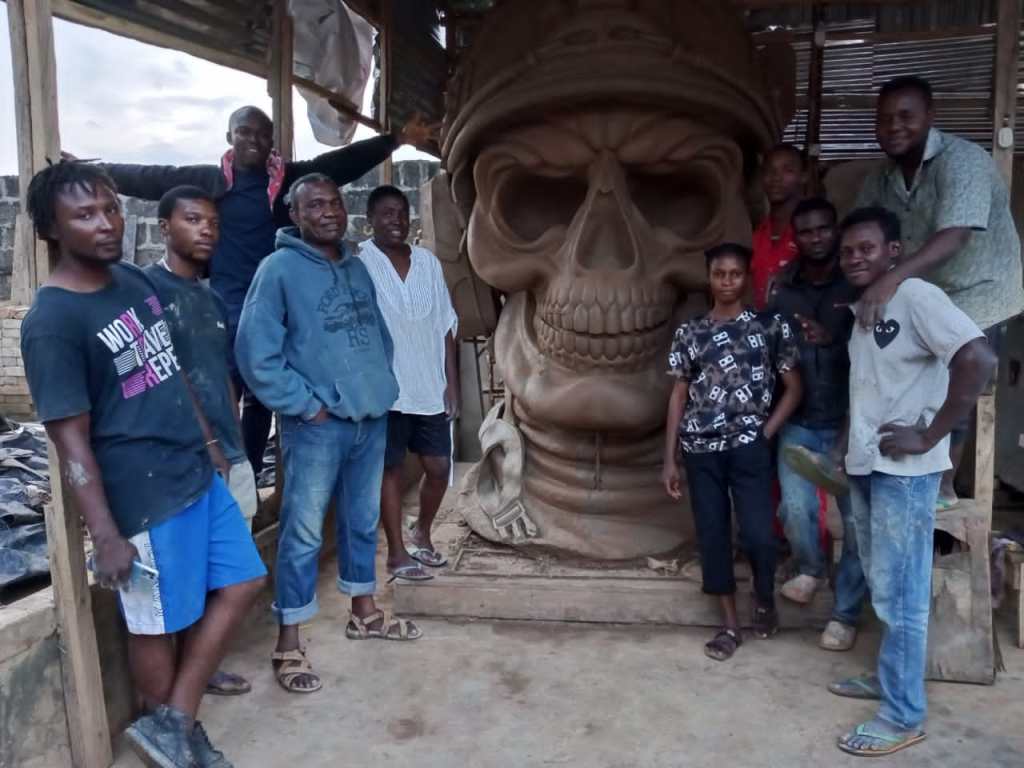
The project stemmed from the National Security Adviser Office in Abuja, albeit indirectly commissioned through a fellow artist. Due to the urgent timeline of two months, I enlisted the help of 22 young sculptors to assist in its completion, successfully meeting the deadline. Working on the project was immensely enjoyable and provided numerous learning opportunities. Everyone involved, including the clients, was pleased with the outcome.



Many people still don’t know that you are among the pioneers of art movement on the continent using the social media space to connect. Tell the world about Artzero?
Artzero was established in 2004 by a collective of artists in Lagos. Initially comprising 8 artists, the group expanded to include 4 more members. Our inaugural exhibition took place at the French Cultural Center in Ikoyi, showcasing drawings. Our primary goal was to forge a space where young, burgeoning artists could connect, network, and display their creations.
In 2006, we launched “Art on the Mainland,” a successful exhibition that ran for three consecutive years. Although we took a hiatus thereafter, we transitioned our operations to capitalize on the burgeoning realm of social media, specifically Facebook. This marked the inception of our presence as Artzero on the platform.
Visual art as you see it in the present Nigeria space, would you say, we are at the right pedestal?
We’re progressing in various areas, but there’s room for improvement. If artists unite and create platforms to promote their own work, we can elevate our impact. While external organizers contribute, empowering ourselves to manage our artistic endeavors could significantly enhance our lives as artists.
What the five requisite skills or attributes I need to have to become a good sculptor?
In addition to honing sculpting techniques, cultivating a positive life attitude, seeking mentorship, building a library of relevant books, networking, and fostering strong communication skills are essential aspects to excel in this craft.
In addition to honing sculpting techniques, cultivating a positive life attitude, seeking mentorship, building a library of relevant books, networking, and fostering strong communication skills are essential aspects to excel in this craft.
I received invaluable advice from the esteemed Prof. Abayoni Barber: “Keep drawing, keep reading, and never cease creating sculptures.”
I received invaluable advice from the esteemed Prof. Abayoni Barber: “Keep drawing, keep reading, and never cease creating sculptures.”
You have seen visual arts movements rise and fall. At a time conceptualism became the order of the day which was unsustainable. What are we doing right or wrongly and do we channel the right route?
Art movements aren’t everlasting. The Vortist movement in Britain, during Henry Moore’s time, lasted merely a year. Typically, art movements span at most a decade. Unfortunately, in Nigeria and across Africa, we struggle to establish sustainable movements. External influences, especially from the Western world, largely control our activities. Monetary factors heavily dictate the direction most artists take.
Many art graduates still run into paid employment where money is more important than passion. Do you think passion can drive in success and money and how?
Merely having passion isn’t enough for success in the art world. To resist the lure of conventional employment, young artists should begin their studio journey as craftspeople. Over time, they can evolve into passionate painters or sculptors, eventually reaching a state of compassion. It’s at this point that genuine creativity emerges, enabling the fearless pursuit of art without concerns about scarcity.
What are the gains, benefits and position of Artzero today?
The results speak for themselves: 80% of current Artzero members remain actively engaged in their artistic pursuits, prominently showcasing their work on the walls of galleries in Lagos. Many of these artists, initially starting as young talents, utilized the platform to foster significant growth in their art lives and careers.
[. Did you achieve your target with such platform?
Absolutely, we achieved a 100% success rate. Furthermore, we’re actively striving to revive all our exhibitions to cultivate a new generation of artists among the vibrant pool of young talent in the country today.
Ato Arinze and mentoring move together. You mentor people in so many ways. Who are your mentors and why did you choose them?
When the student is prepared, a master will emerge. As the student nears readiness, the master will fade away,” echoes the wisdom of an ancient Zen Master. Mentors transiently accompany one’s development; at each stage, a mentor awaits, attracted through one’s dedicated efforts. I’ve been fortunate to have several mentors throughout my journey—from my first art teacher, Mr. John, when I was just 8 years old, to mentors during my schooling, including my ceramics lecturer, Mr. Chike Ebebe at Federal Polytechnic Oko, Anambra State. Along the way, individuals like Mr. Olisa Nwadiogbu, Mr. Emma Mbanefo during my Industrial training, Mr. Olu Amoda during my HND years at Yaba College Of Technology, Yaba, Lagos, and most significantly, Prof. Abayomi Barber, who steered me toward the path I tread today.
When the student is prepared, a master will emerge. As the student nears readiness, the master will fade away,” echoes the wisdom of an ancient Zen Master.
[Tell us more about career highlights, exhibitions and art business of Ato Arinze?
My artworks reside in numerous private and public collections. Over the past six years, I’ve completed over a dozen portrait sculpture commissions. Additionally, I’ve actively engaged in significant exhibitions and contributed six major public sculptures across the country.
My artworks reside in numerous private and public collections. Over the past six years, I’ve completed over a dozen portrait sculpture commissions. Additionally, I’ve actively engaged in significant exhibitions and contributed six major public sculptures across the country.
. A lot of people have been yearning for documentaries from the visual arts sector which are unavailable. People only get to read from schools curriculum and libraries about art masters and countless exhibtions but no visual representation, unlike our film and music industry. What do you think can be done to address this?
It’s crucial for all stakeholders to understand the importance of reinvesting in the arts. While profits are substantial, there’s a noticeable lack of reinvestment back into the profession
Interview/Ireho Aito/Don’t Keep Your Art in the Finger!/Images/Ato Arinze’s archives