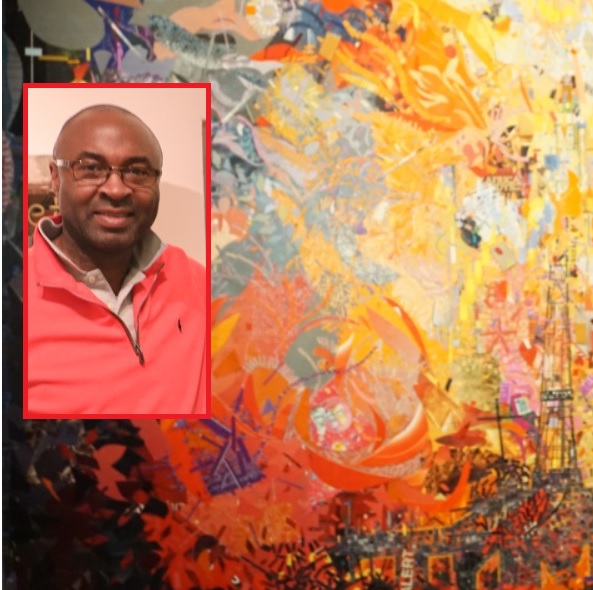
Hassan Aliyu is a survivalist of many wars. From birth struggles by immigrant parents, the Biafra memories and career choices in the midst of life survival, the artist paints and creates unending happiness to protect his precious and commanding legacy. Writes Ireho Aito
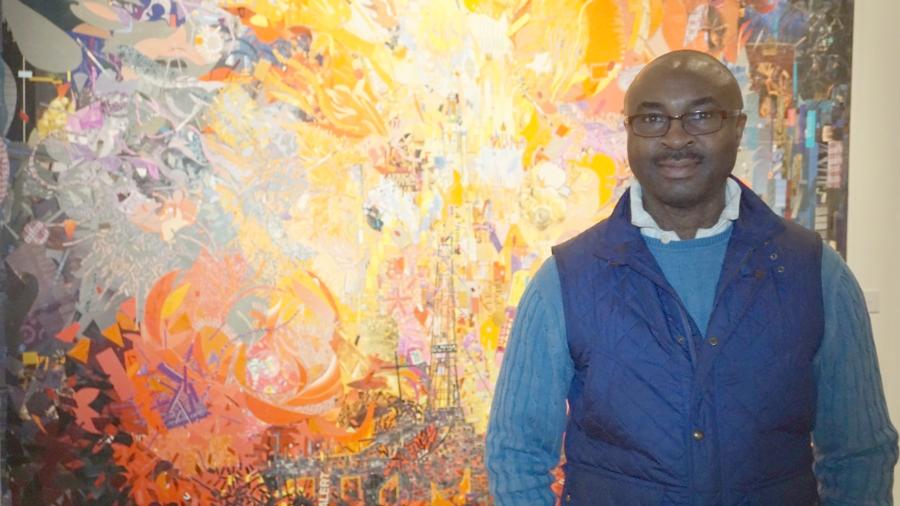
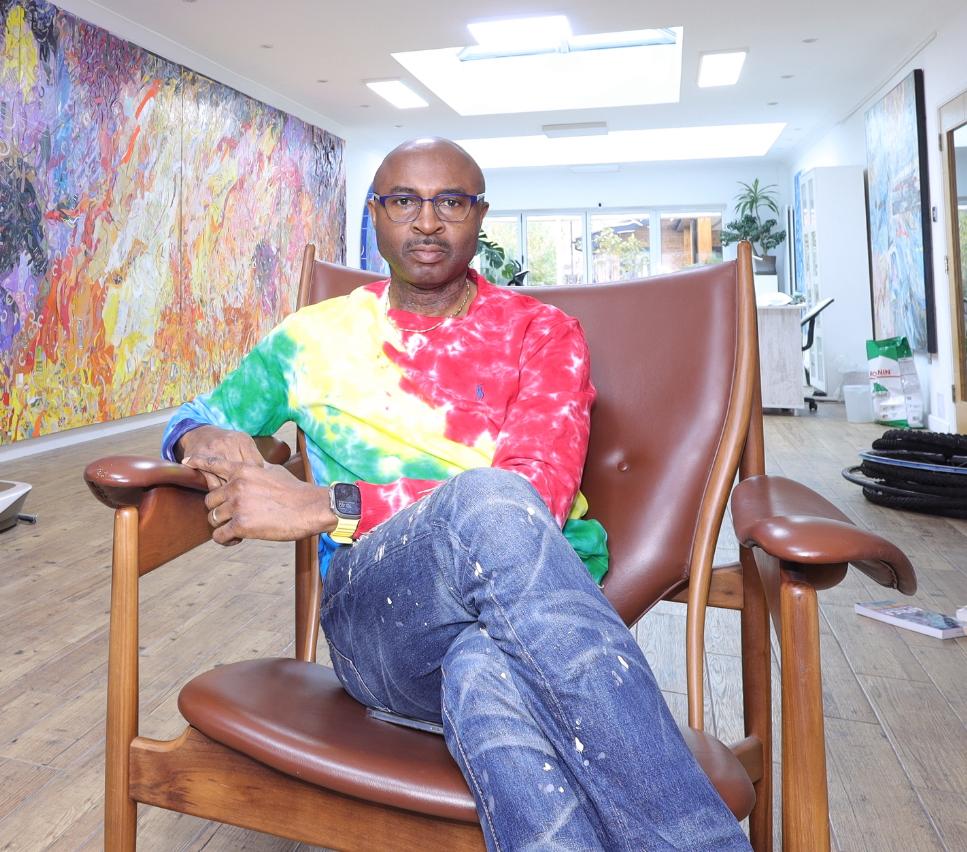
I quickly got his voice note on my WhatsApp with his British accent kind of introduction, after having an awesome moment with Imoesi Imhonigie on iBAND Magazine, super captain and art inspiring societal change leader, Hassan Aliyu, obliged to have an interview. A beautiful story, sometimes coming from a man who climbed the Trojan wall from birth to succeed.
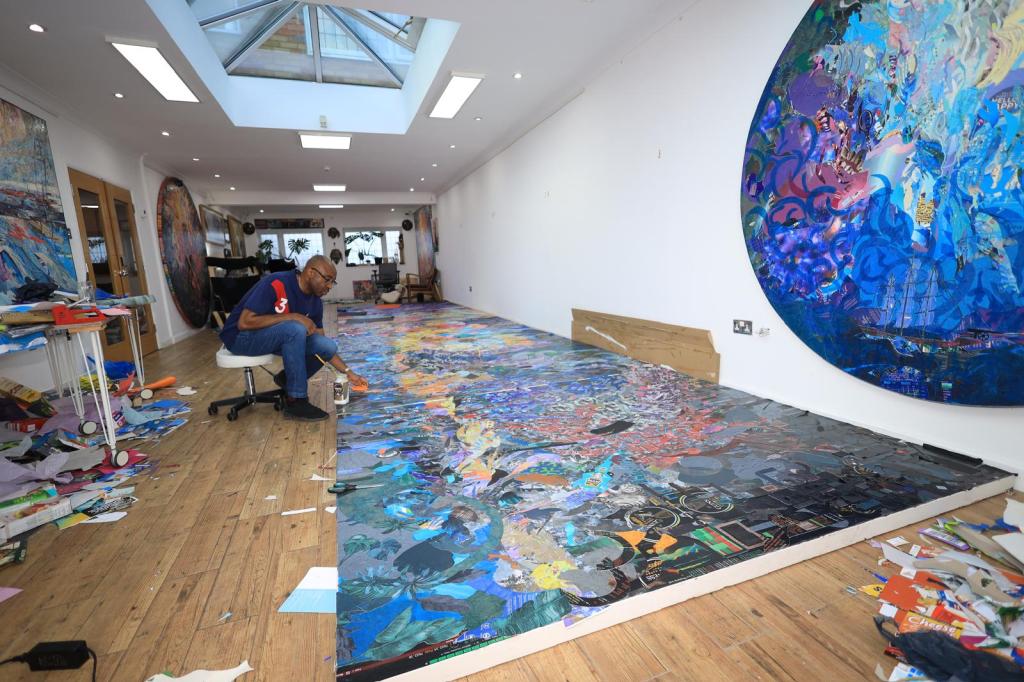
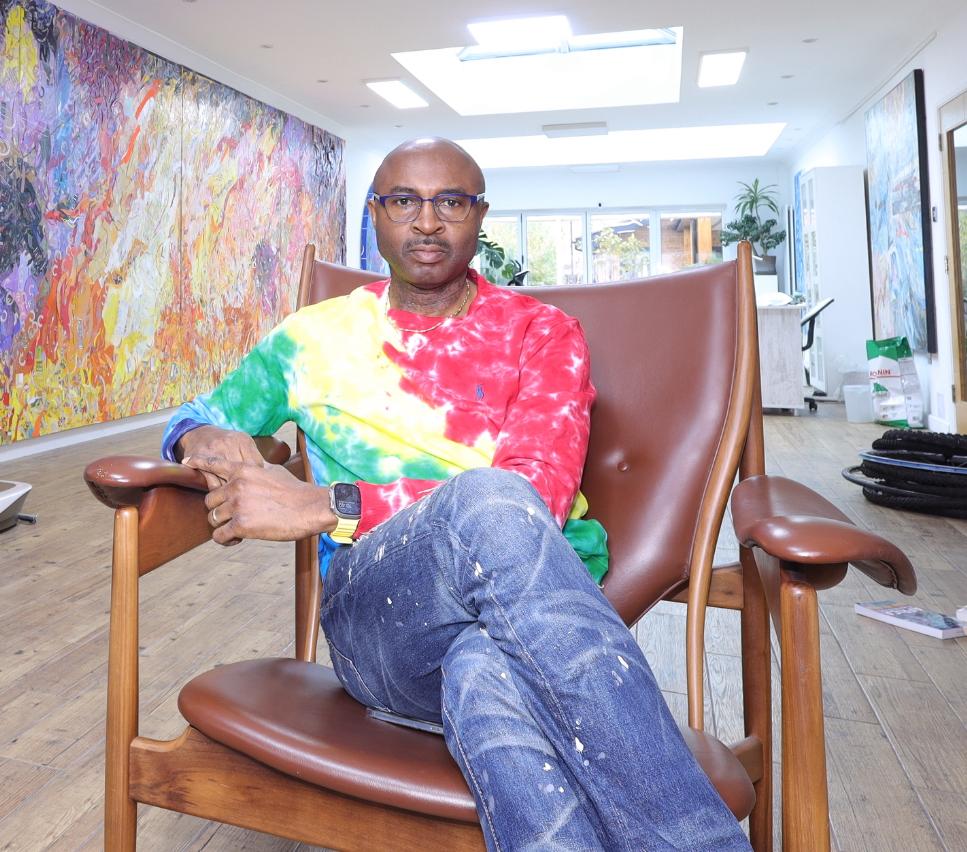
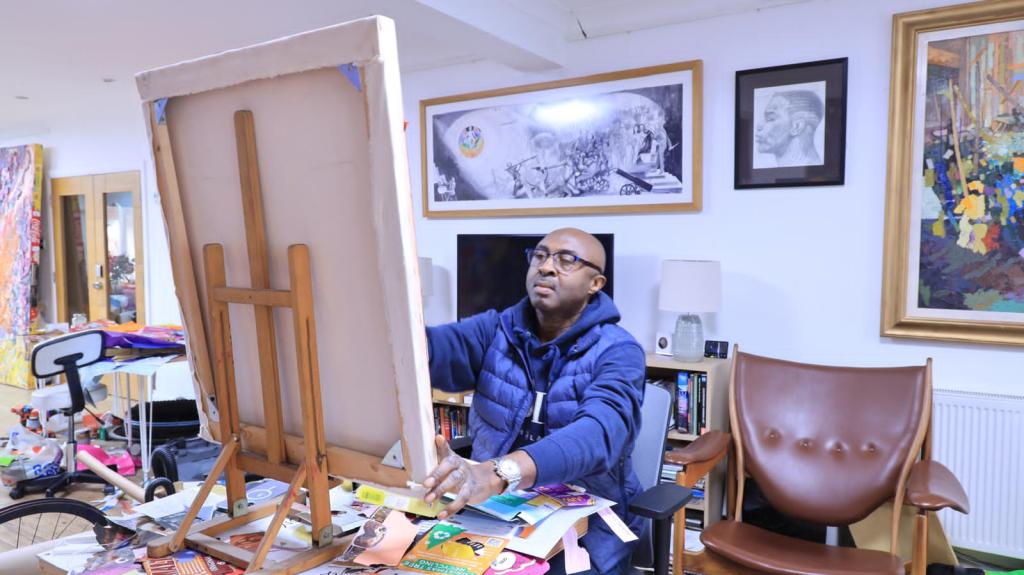
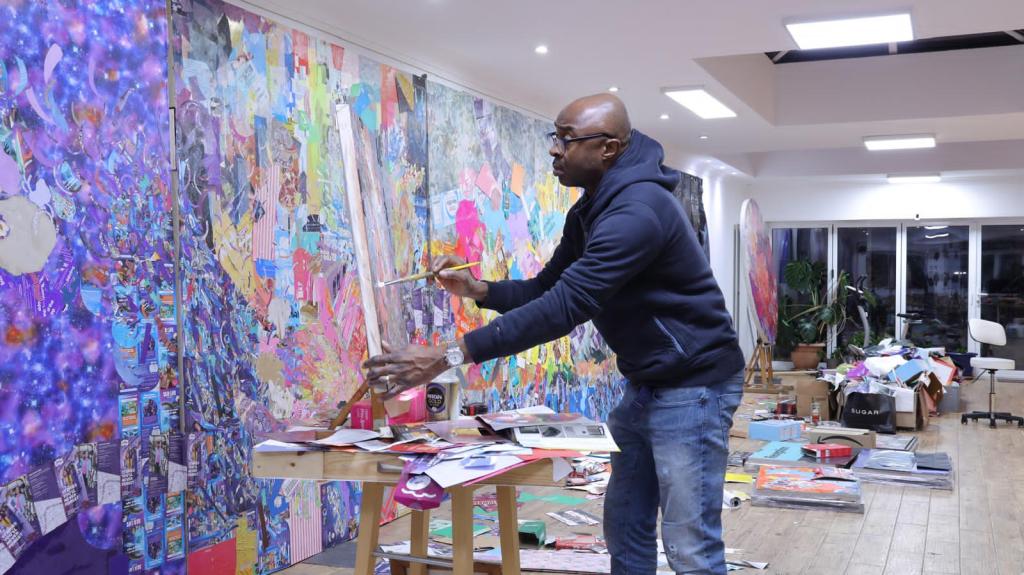
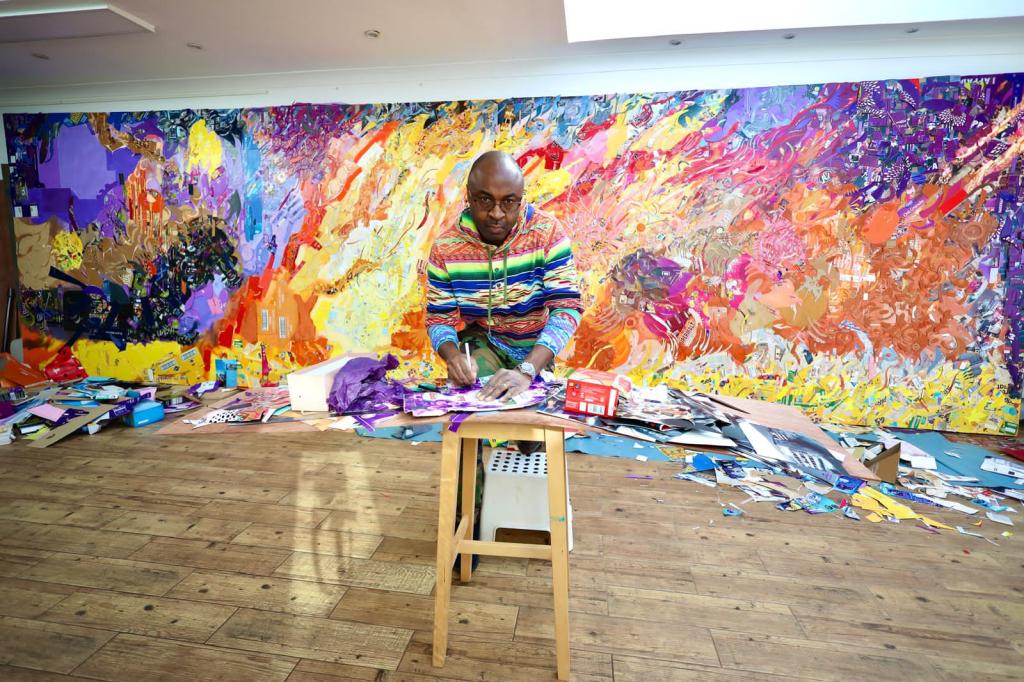
Immediately, with no formal approach, veteran art auteur, British – Nigerian born Hassan Aliyu, replied when I asked if he was smiling good over there? He guffawed, “hahaha with Ebenezer Obey filling the air in my studio, def am!!” Listening to Juju music means Hassan belongs to that era when music was music traditionally and not auto – tune. While that period the music was being played means Hassan work as a full time studio artist. He quickly responded, “ Yes – in addition to curating and academia.” Not wasting time, he reminded me that “I’m one of the first generation of professional artists of the 80s generation in Nigeria,” what an interview it will surely be. Hassan is not just an OG, he is a mercurial trailblazer!
He quickly chips in some chats; “ I left Ahmadu Bello University in 1986 and embarked on full – time practice until I visited the United Kingdom to have a show with Emmanuel Jegede in 1990 and the rest today is history,” he posted. As I was trying to figure out how the conversation would be, he sent another chat guffawing, “there is more to come, you’d be wetting yourself with laughter by the time we’re done. I’m pre-social media, as such, I have not benefitted from the overwhelming explosion of new kids on the block – but I spend my time enjoying the work I make diligently, even if, at times, a labour of love.” I couldn’t be asking for more.
The interview with Hassan came about the same time, yours truly, was glued on a podcast, watching a man that changed the way we think about football managers and world football, the iconic Jose Mourinho, a football manager with a heart of gold. I never supported any of the three clubs he coached while in England. In fact, I abhor them like filth. I belong to the flambouyant Merseyside club in red outfit because they assured me, I will never walk alone!
Mourinho was recounting his experience on this podcast as a coach of many clubs, talking about captains and leaders. “There are captains and there are leaders,” he said. “ When I was at Porto, I had a captain and a leader in Jorge Costa. We were playing a lowly rated club in the first division – Belenenses and were down by two goals. At half time while walking to the dressing room, the players could see how I was fuming along the dugout. Jorge whispered to me to wait outside for two minutes and he shut the door to repair the damage. He did what I would have done. Later, Jorge Costa opened the door and told me to come in and coach us. We won the match by 3 goals to two. Jorge had never scored a goal in his life but on that fateful day, he scored two goals,” Mourinho reveals.
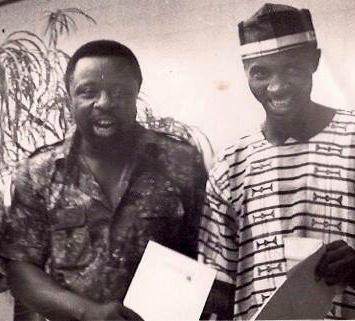
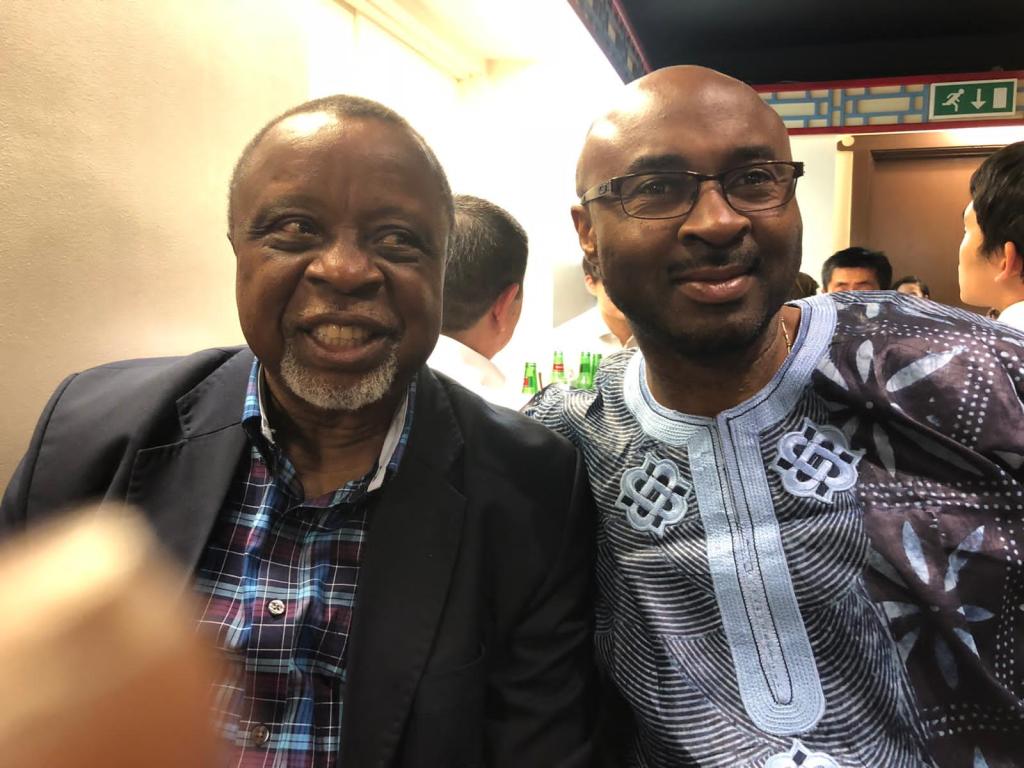
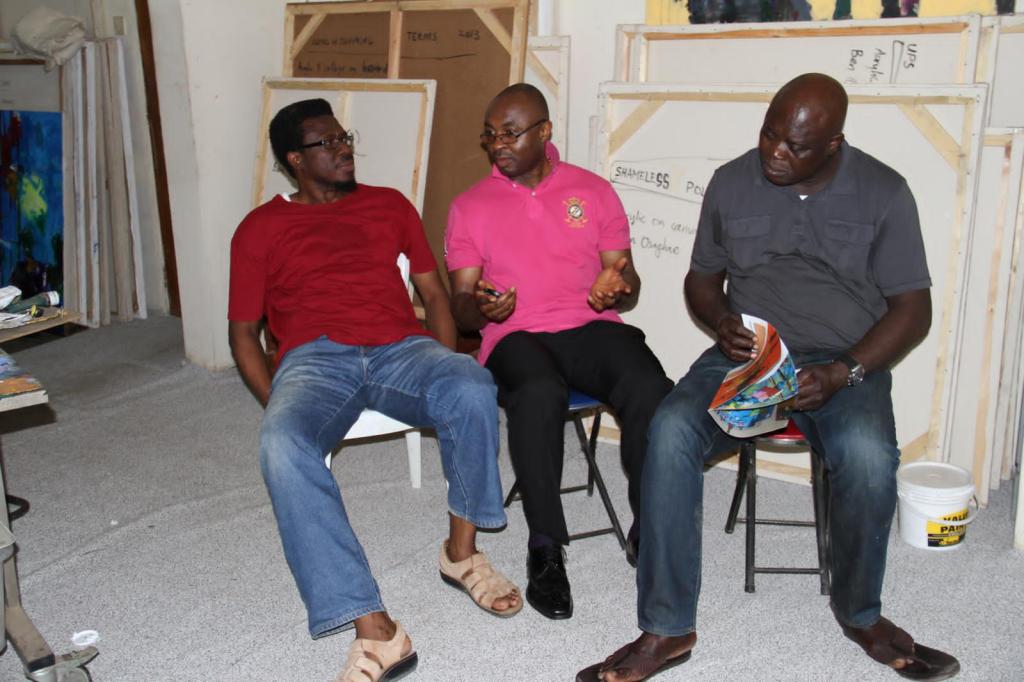
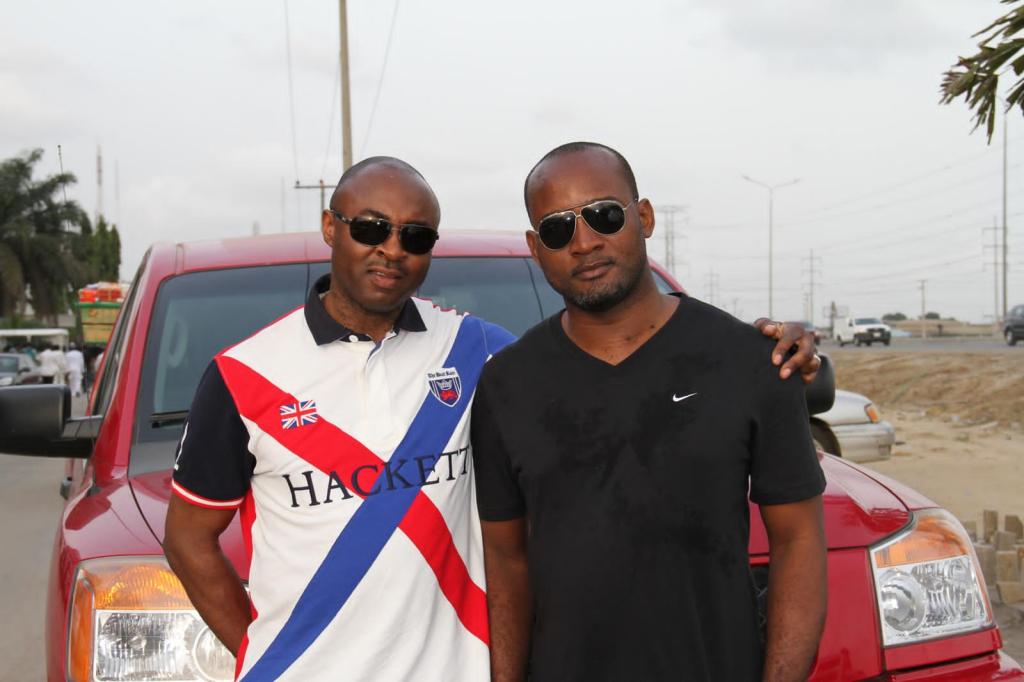
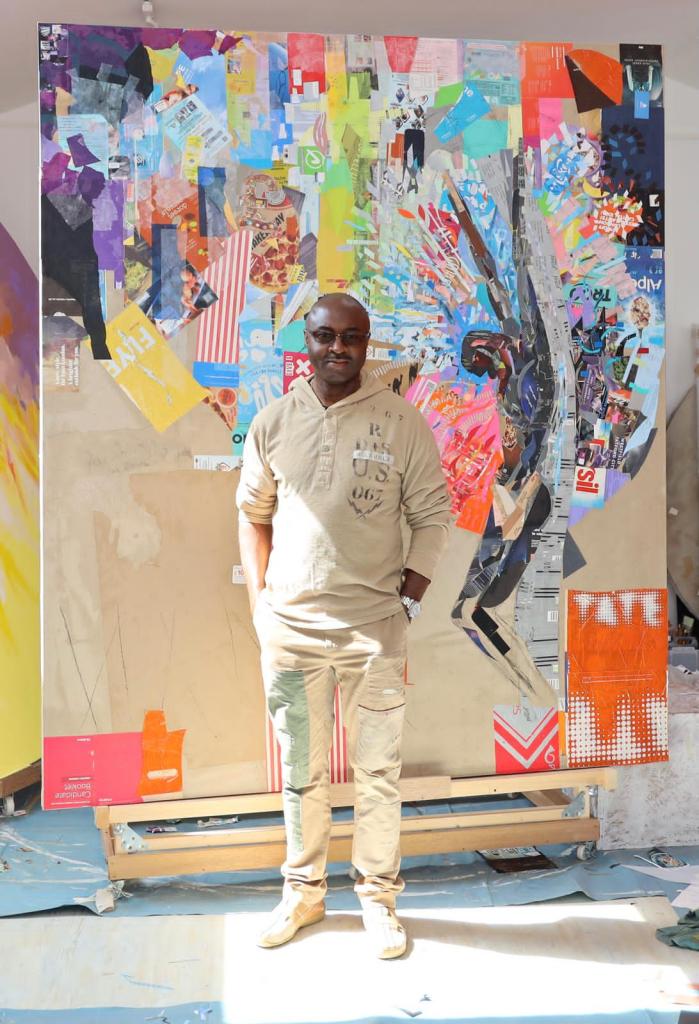
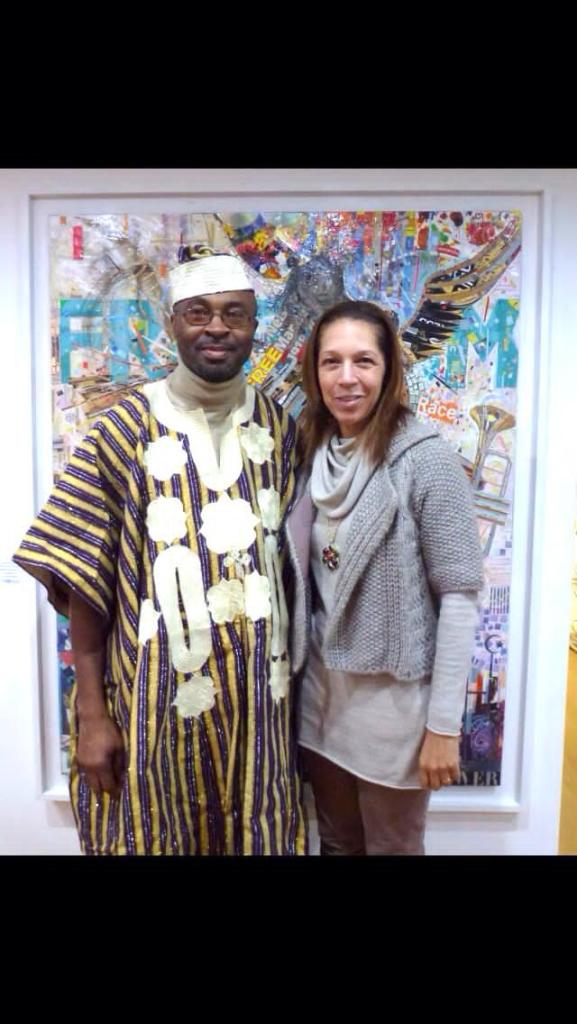
Hassan Aliyu while in Nigeria opened doors for his generation because of his leadership qualities. A never – say – die attitude. In the UK presently, he leads the Nigerian contingent of artists and creatives. His time and investment in promoting Nigeria and the Nigerian spirit positively, has made him a stalwart commander among generations. He is a captain and a leader.
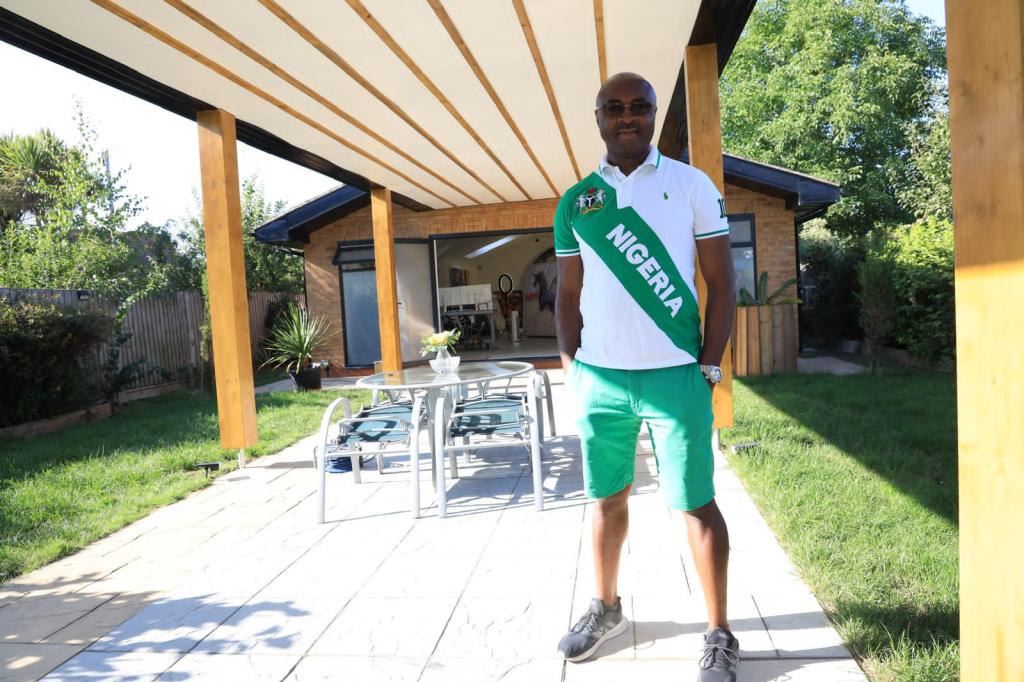
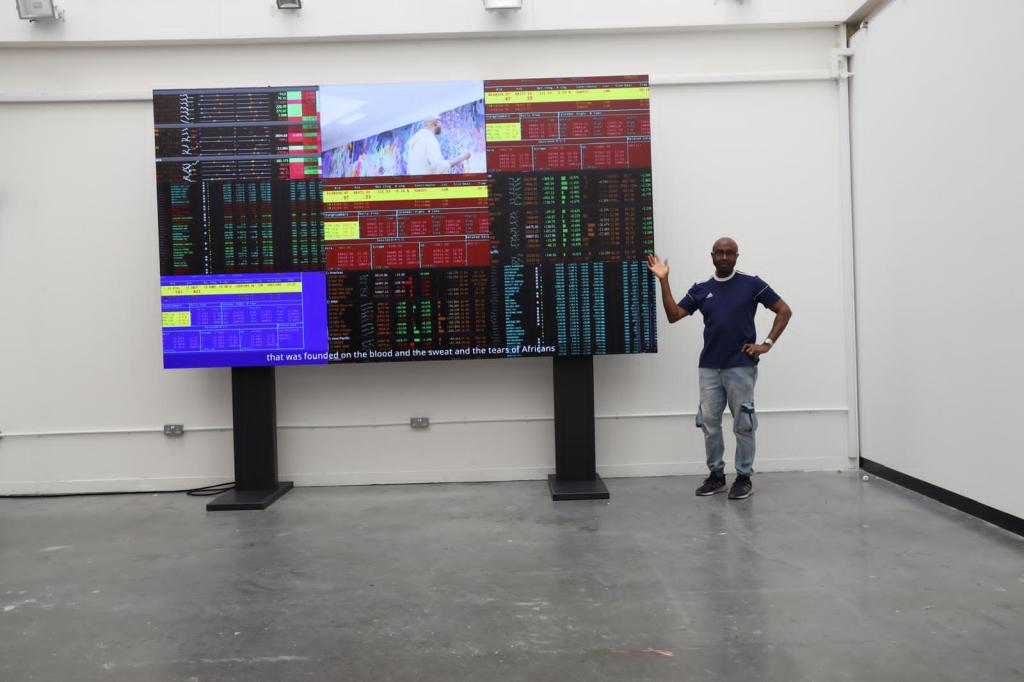
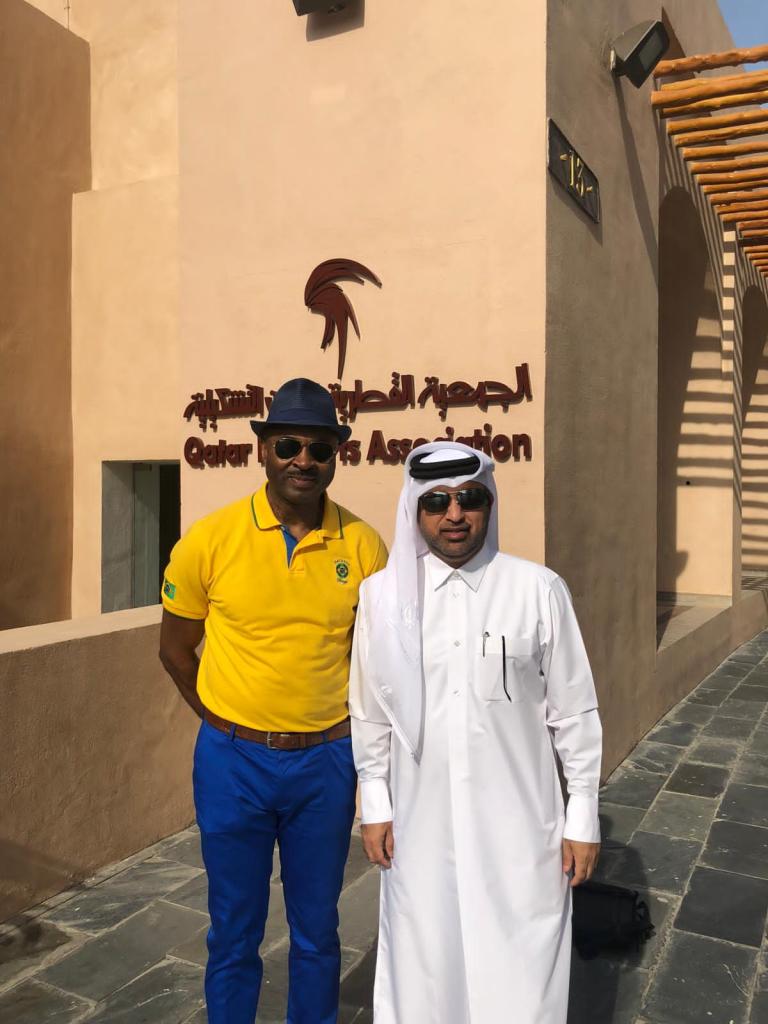
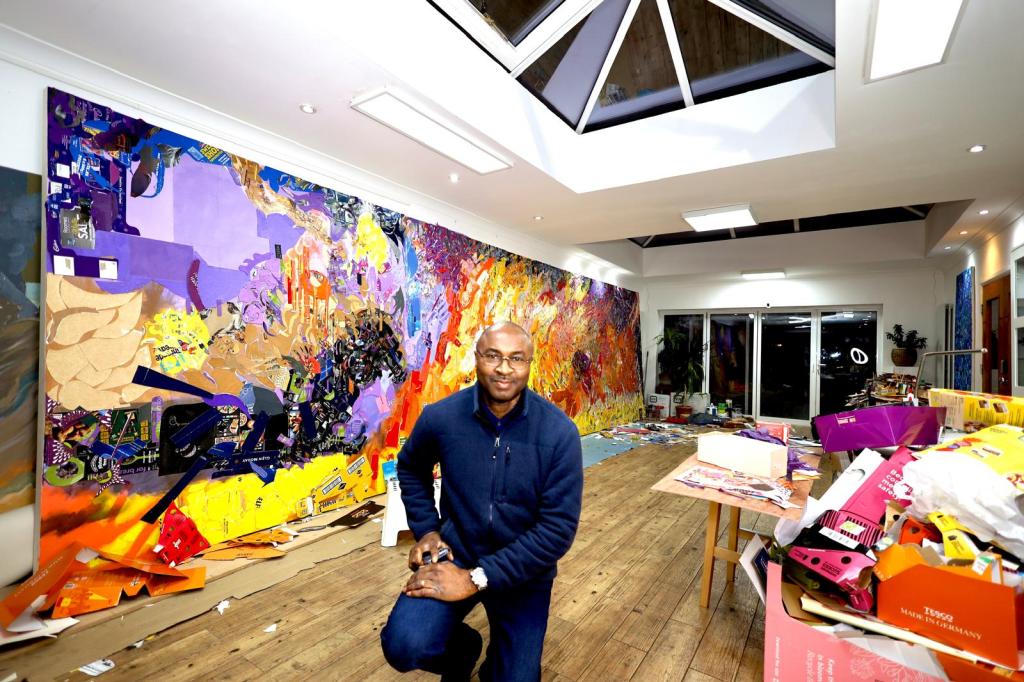
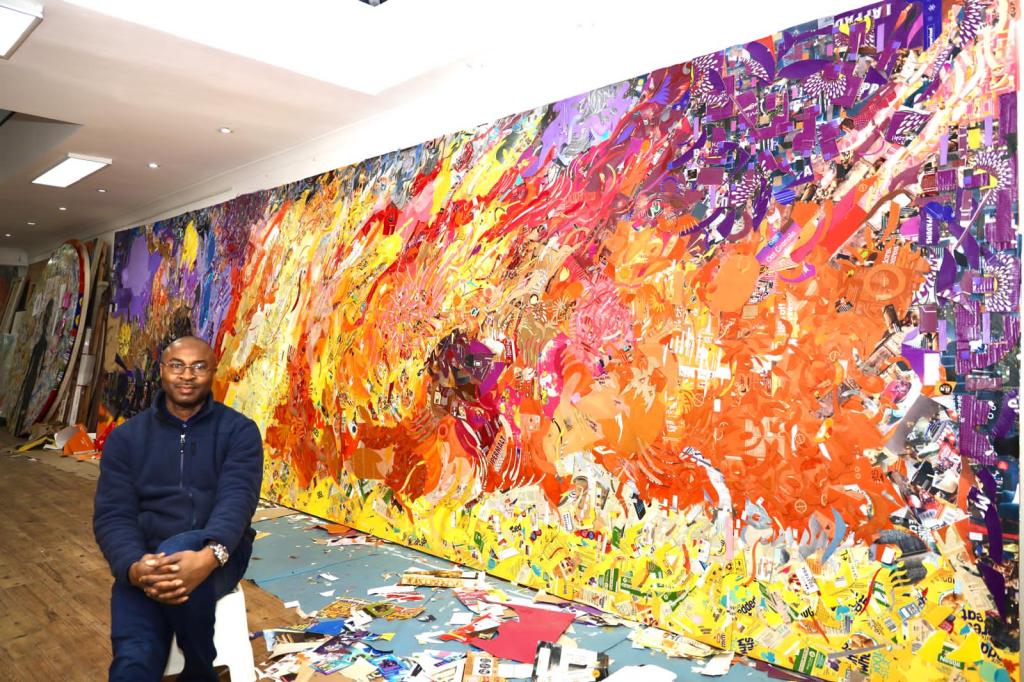
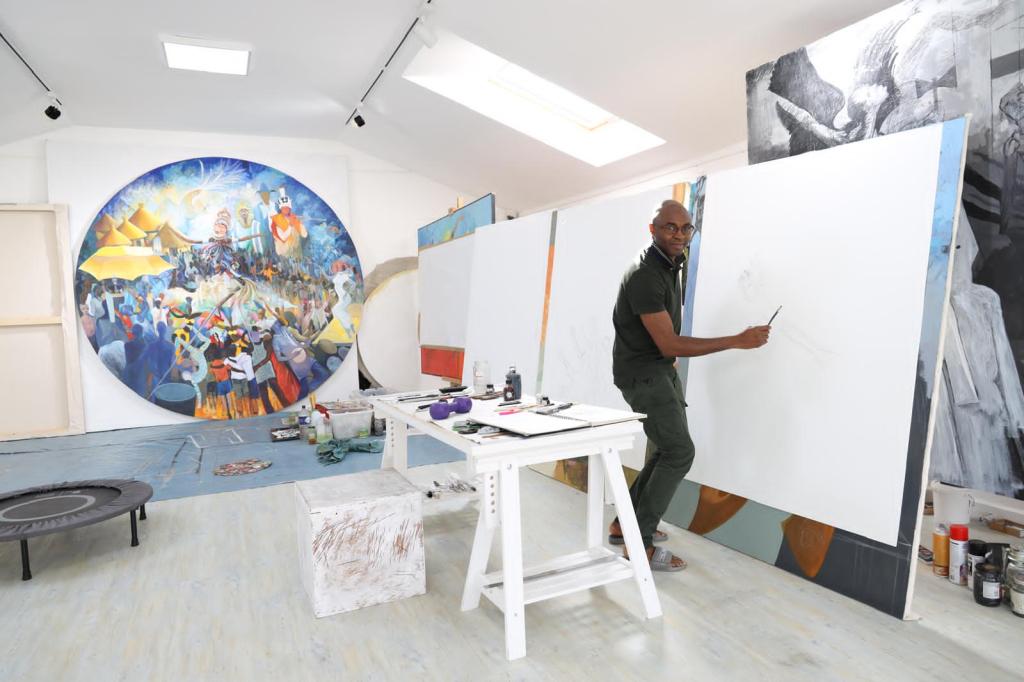
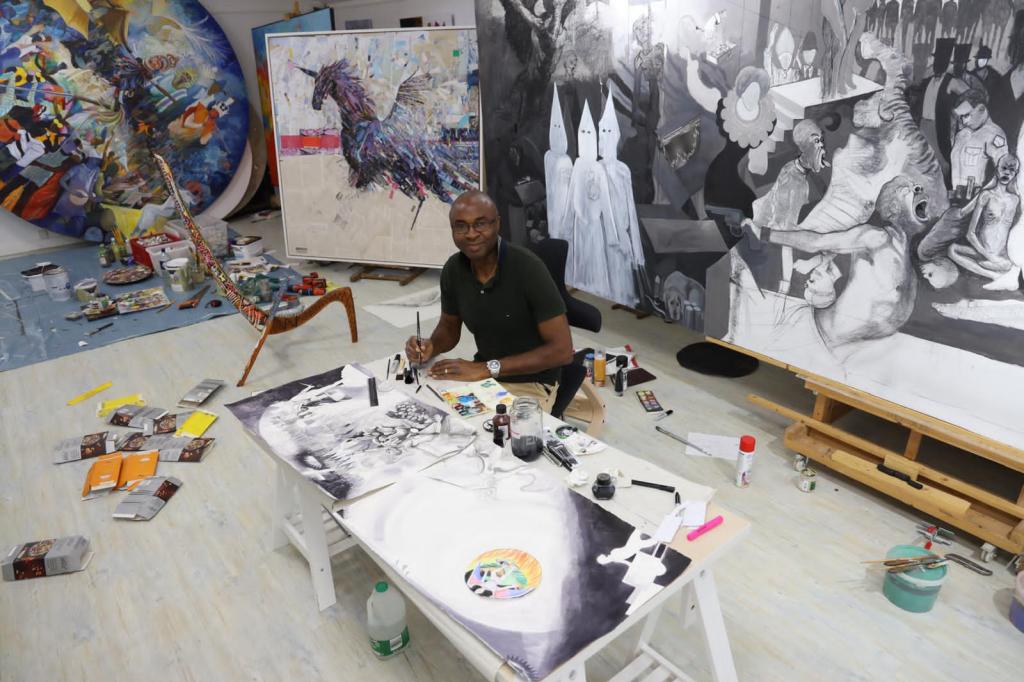
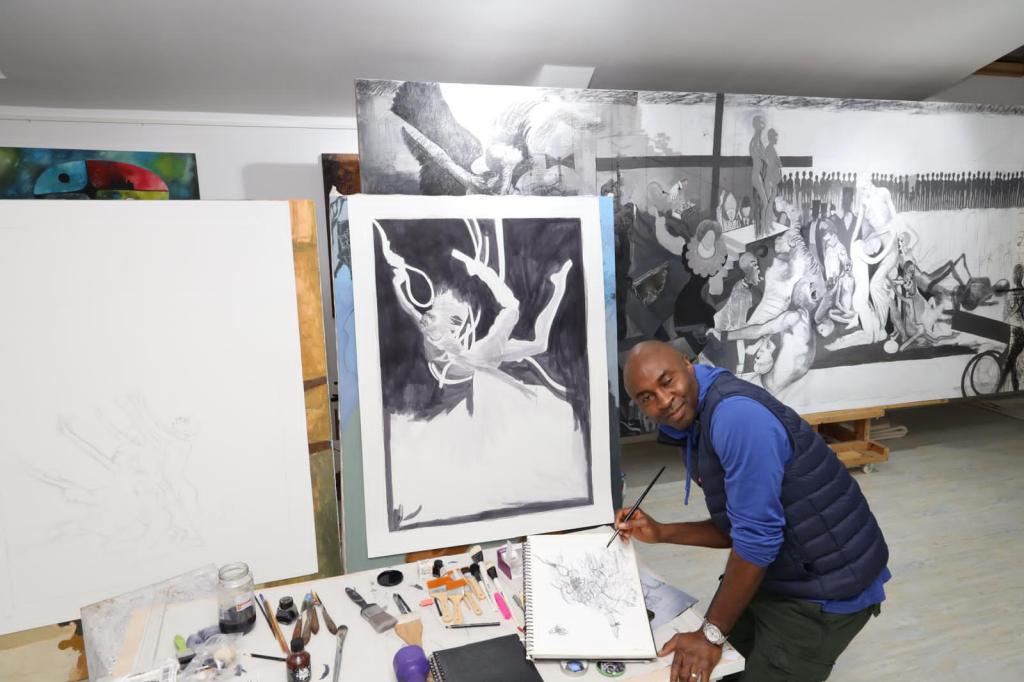
His story about life odyssey will heal generations for life. Hassan Aliyu has seen it all. I got myself a hot, well roast – corn with big Ube – pears to salivate as Hassan and I were chatting and he was exchanging voice notes, revealing his standing position in his expansive London studio cum office. Hassan Aliyu is not just a visual artist but a storyteller who manicures words to the listener. Hassan is a curator and has always been teaching all his life both at home in Nigeria and in the UK. By the way, when I asked him if he speaks any of Nigerian languages? He quickly answers, “Oh yes I speak Auchi, Hausa, some Igbo and Yoruba.” A polyglot? Somehow, maybe, he is.
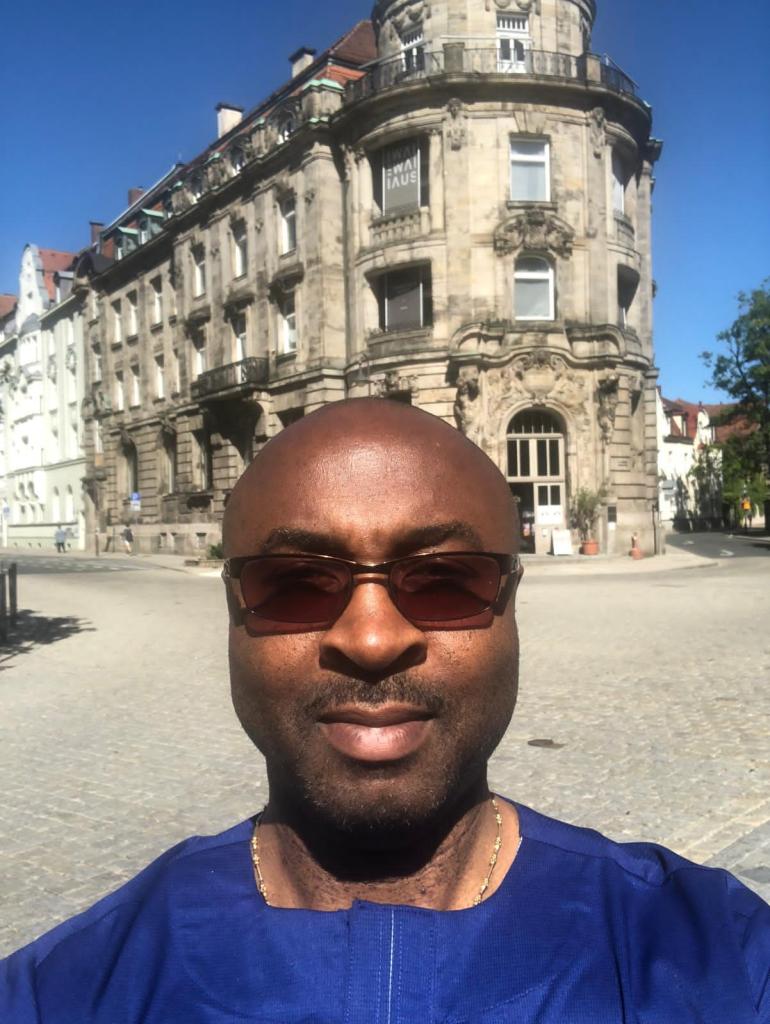
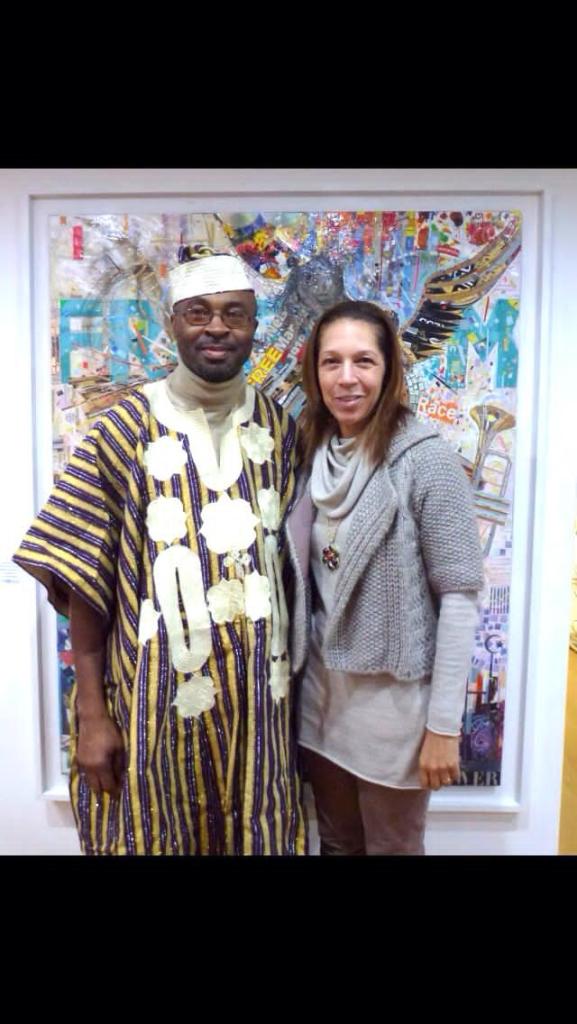
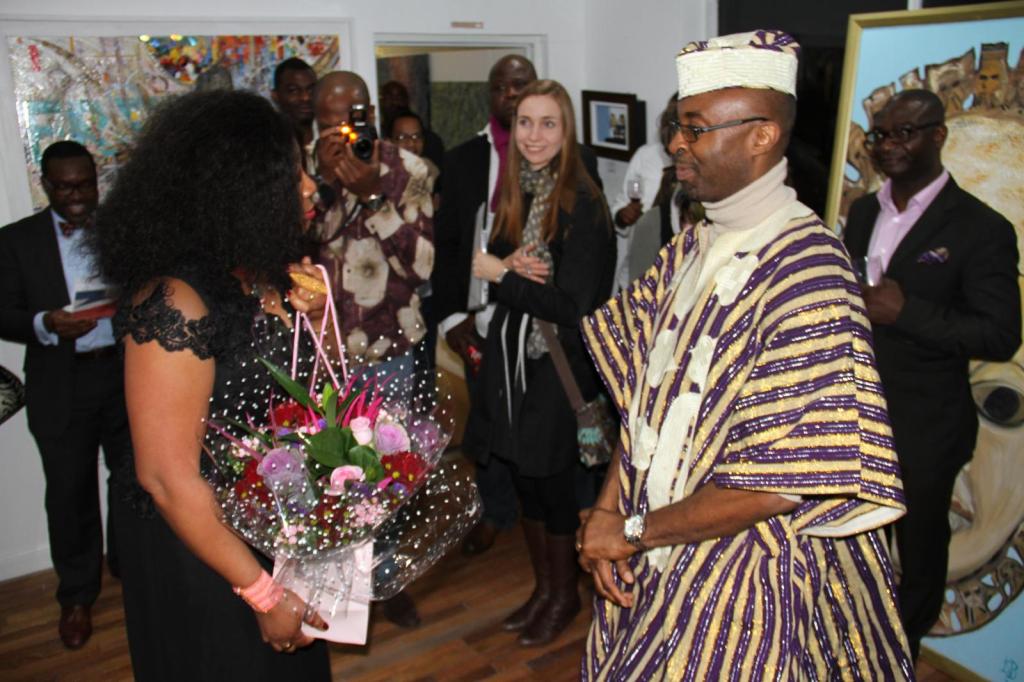
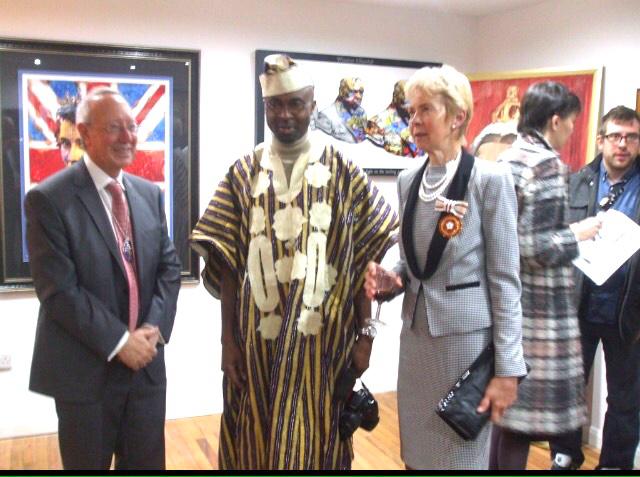
Hassan Aliyu’s journey from Britain to Nigeria and back to the UK is a testament to resilience and the power of art inspired life to transcend adversity. Born as the first of a set of twins, May 10, 1964, in Barnet, Hertfordshire, England, Hassan’s early life was marked by hardship, including eviction from their home in East Finchley, London, due to discriminatory attitudes towards children and immigrants, in Britain’s era of ‘no Irish,’ ‘no dogs,’ ‘no blacks.’ His Nigerian parents were immigrants in the United Kingdom. Mom was a nurse while Dad was a student and road sweeper. Earning a living in the UK in the early 60s was tumultous for immigrants, especially, Africans. Wole Soyinka’s ‘Telephone Conversation’ says it all.
Africans back home in the 60s were embroiled in liberation struggles with their colonial masters. And it was evident that the colonialists didn’t want Africans to be free. Harsh policies at home and at the foreign missions. The African representatives and nationalists were also adamant and hell bent fighting for independence. They were indeed hard times but black times.
After fighting for independence, Africans got involved in serial nepotism and ethnic strives which affected their Republics and wars, agitations, corruption, military coups and civil wars pervaded the continent.
Hassan Aliyu’s parents were victimised and kicked out into the streets to live while in the UK. Life burning as hell for them, the young couple with their newly born twins – Hassan and Hussainia were finding life difficult to live in the UK. Despite these challenges, his family persevered, finding temporary shelter and eventually sending Hassan and his twin sister to Nigeria amidst the civil war in a place called Auchi, the land of landscape artists to live with their grandmother.
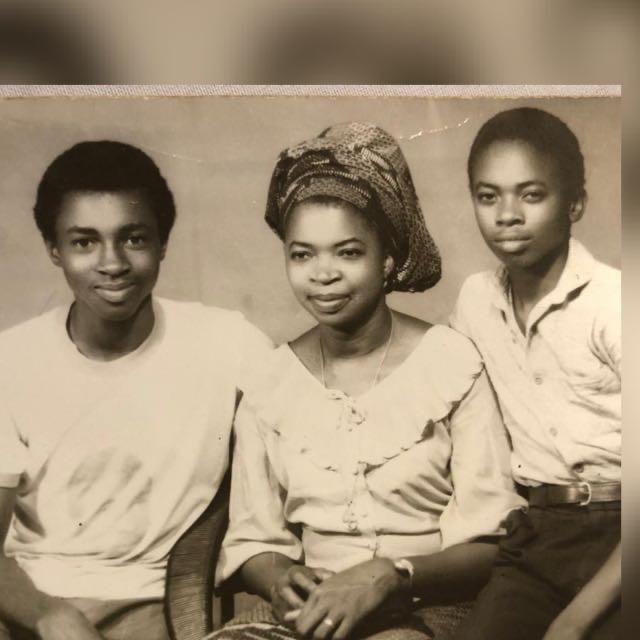
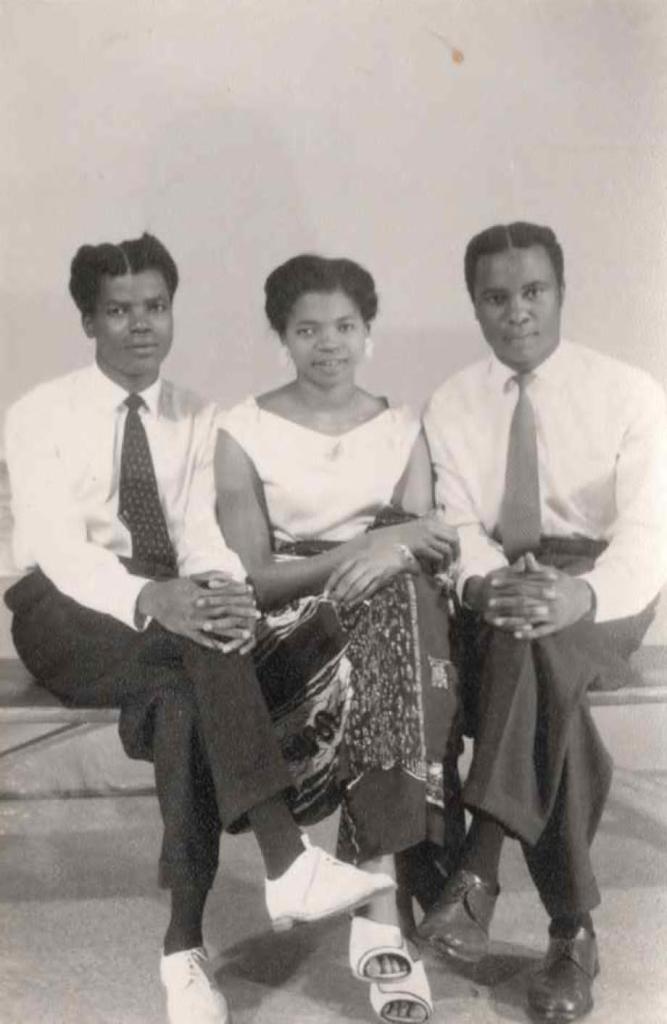
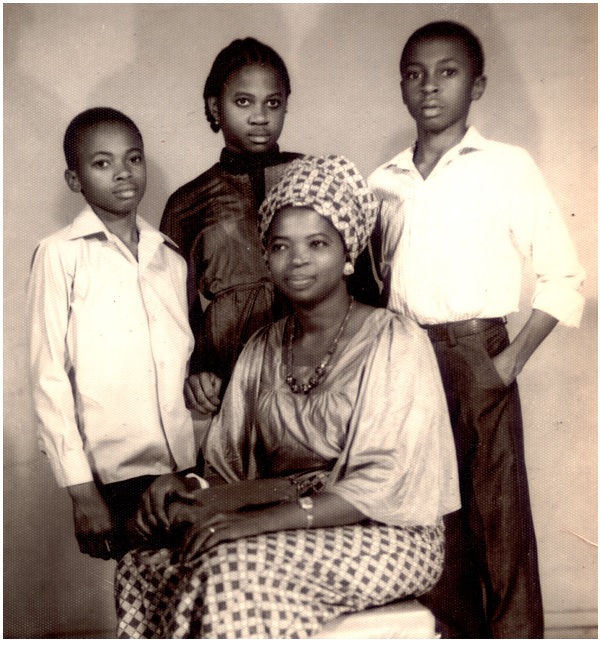
The experience of displacement and separation left a lasting impact on Hassan, shaping his artistic expression and thematic focus. Returning to the UK after a successful career in Nigeria, Hassan encountered racism and discrimination, further fueling his exploration of identity and race in his artwork explorations. His poignant storytelling through art reflects the struggles and triumphs of the immigrant experience, resonating with audiences worldwide.
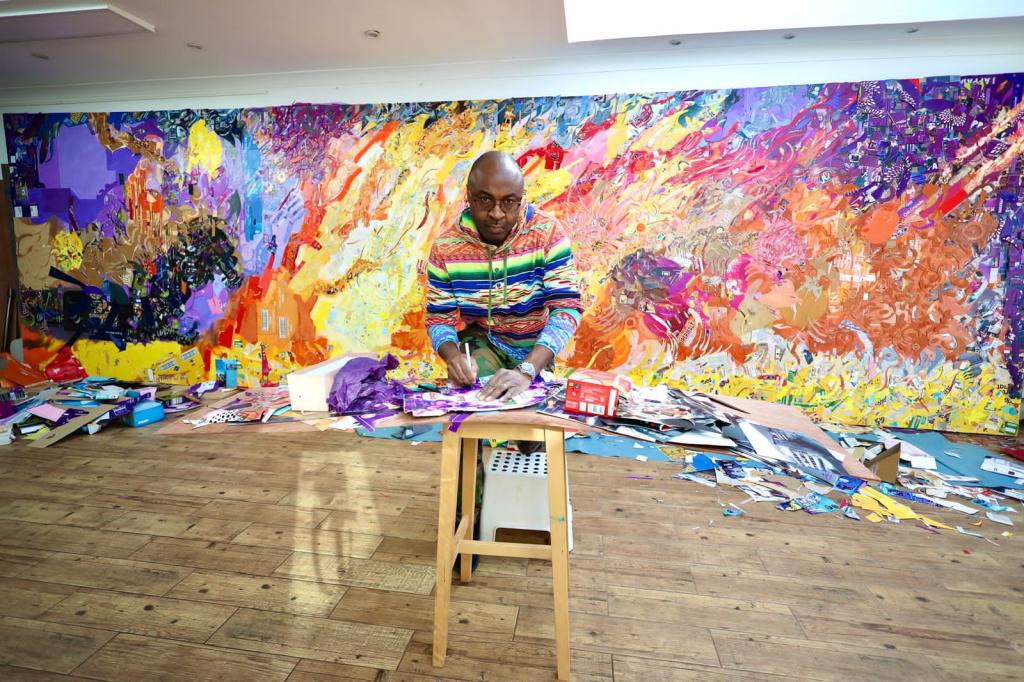
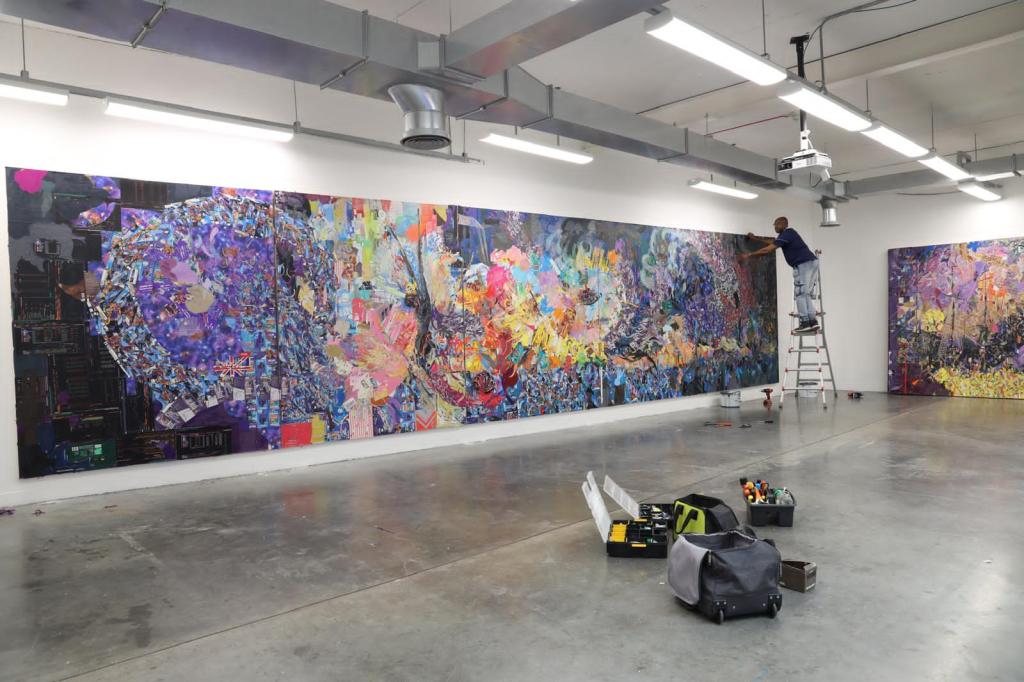
Despite personal tragedies, including the loss of his father to illness, aged 48, Hassan persevered, channeling his experiences into his art. His return to the UK coincided with ongoing race related issues, inspiring him to confront cultural prejudice and discrimination through his work. Through his resilience and creativity, Hassan Aliyu continues to inspire others to overcome adversity and find strength in their unique stories.
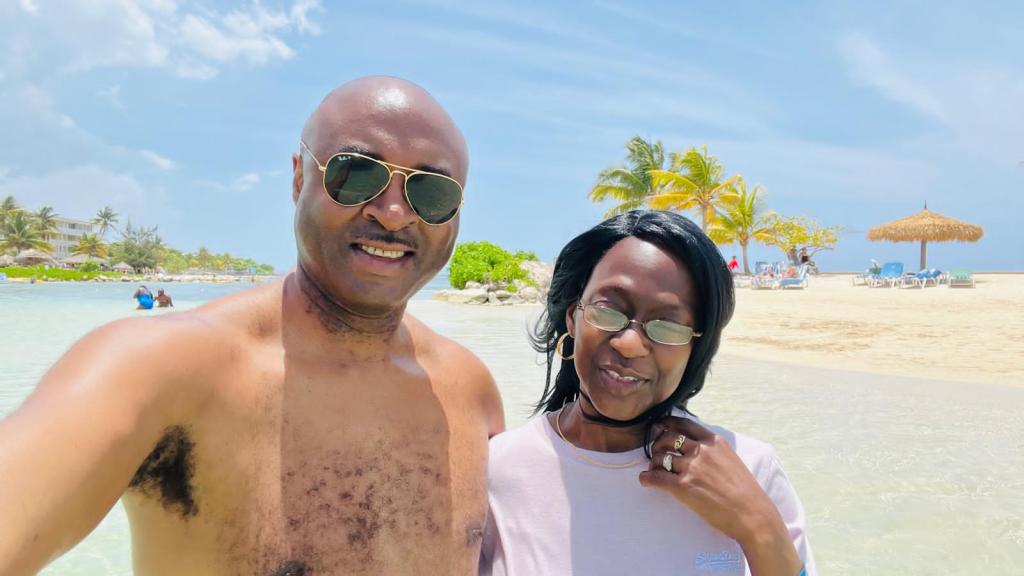
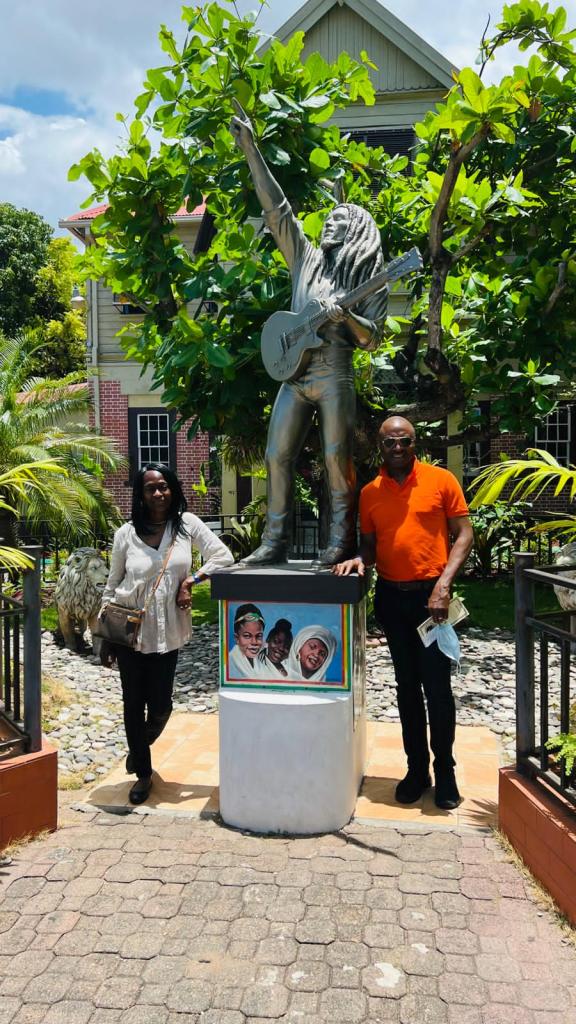
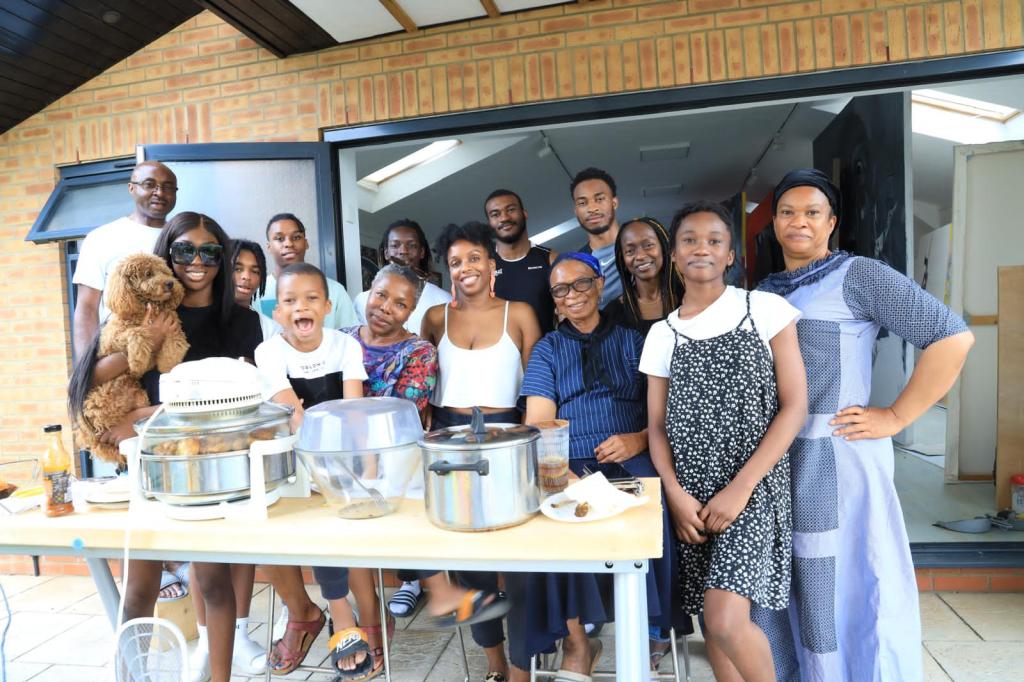
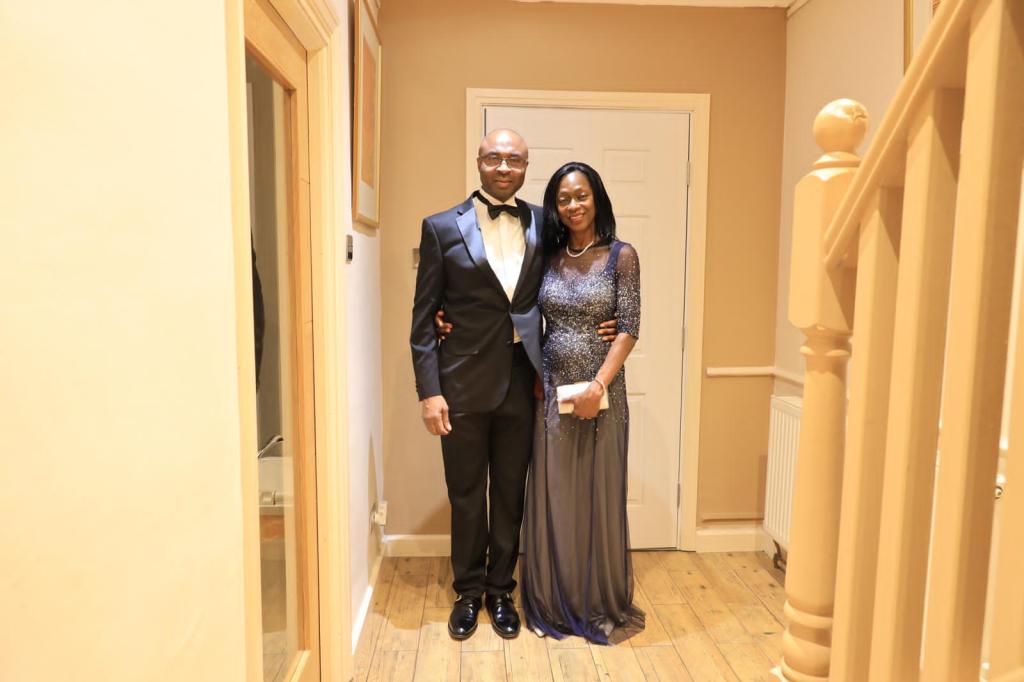
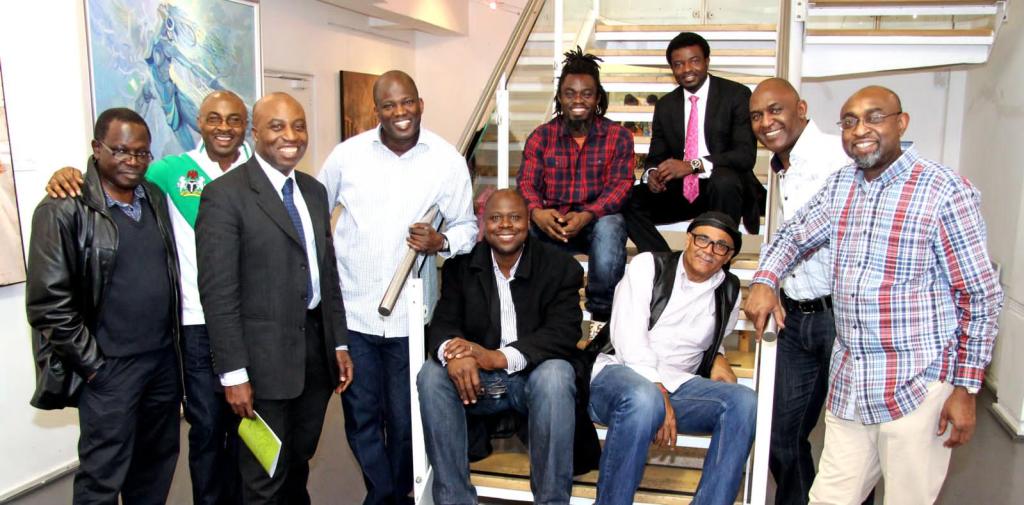
Today, Hassan celebrates the resilience of his family and honours their legacy through his art. His mother’s perseverance and the injustices faced by his family, serve as constant reminders of the ongoing struggle for equality and justice. Through his art and advocacy, Hassan Aliyu continues to be a voice for change and a beacon of hope for marginalized communities everywhere. He heads Nigerian Artists’ Society of United Kingdom.
Wole Soyinka s telephone conversation was harsh communication with his prospective houselady. Hassan and I had a WhatsApp conversation that opened healings to mankind. Very spiritual at heart and relishing through art and life conversations. Hassan opened up on his wet appetite for Nigerian delicacies, a day before this interview, Hassan reveals, myself, my wife and a visiting friend from Nigeria, ate Abula for dinner.” Abula is the combination of Amala made from dried yam flour, ewedu, stew and gbegiri which is made from ground soybeans or beans in a combo – fashion. “I look forward to visiting African restaurants to eat African delicacies,” he confesses. Just like his art, he takes his health so seriously; “I go out on an 8 kilometer trek with my wife every evening after dinner. I do it to digest my dinner. And I find it very relaxing for us to also catch up on everything that transpired throughout the day, he explains. His massage therapy for foot on his machine always come in handy every evening.
Hassan agrees that art is relaxing. And now, he enjoys travels. Both Hassan and wife travel a lot outside the UK either for art related endeavours or for relaxation. They are actually preparing to travel to Venice for Biennial together on the 28th of June and stay till July. His travels calendar can turn him into a travel blogger with his travelogue. From Venice, getting to Greece in September for their holiday. A visit to Mexico in October has been mapped. And not done yet, come in November, Hassan and wife will be in Havana Biennial in Cuba where he is a participant. And in December, the couple will be in the United States. Early this year, they have visited Morocco, Las Vegas in the US and Germany. Yours truly was so jealous, listening to Hassan and his ‘Around the World in 80 Days’ look alike travel recap. He is indeed an easy – motion tourist.
Hassan confesses he doesn’t have any English Premier League club he is attached to but enjoys watching some certain clubs like Chelsea and Arsenal. Not a die – hard fan, unlike the typical Nigerian football fan. And always afraid supporting home teams, as he confesses, “they don’t always win anytime I am in the stadium.”

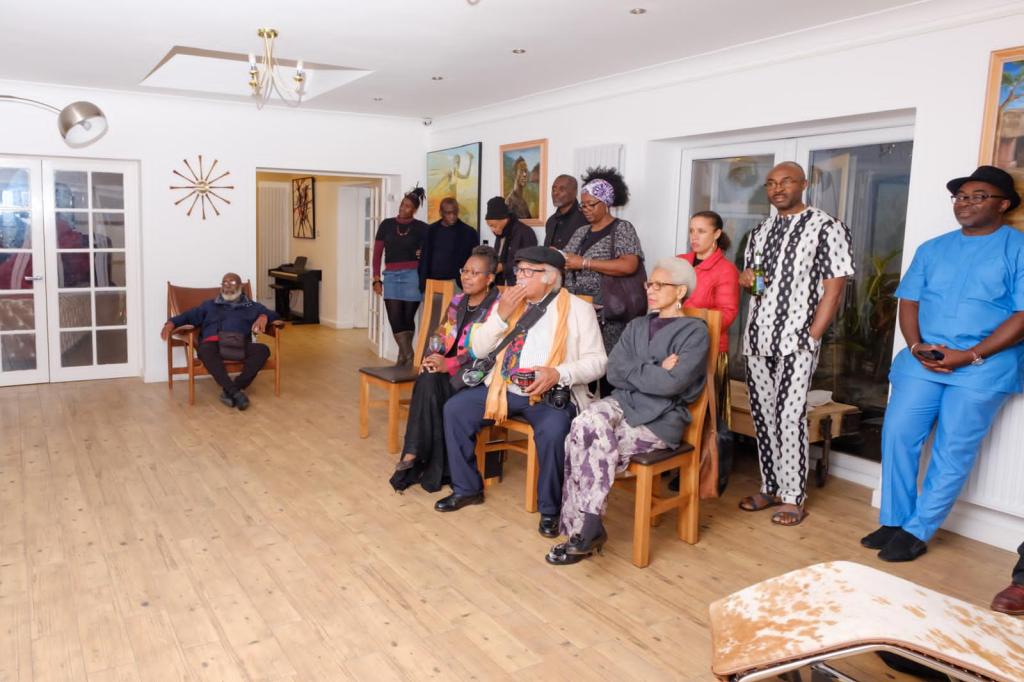
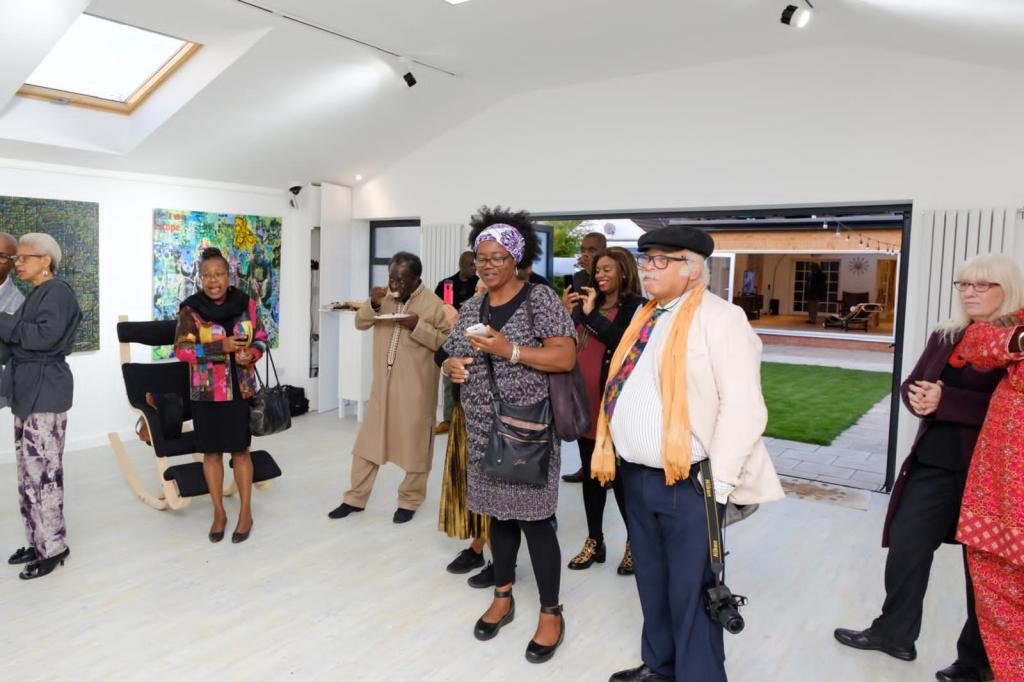
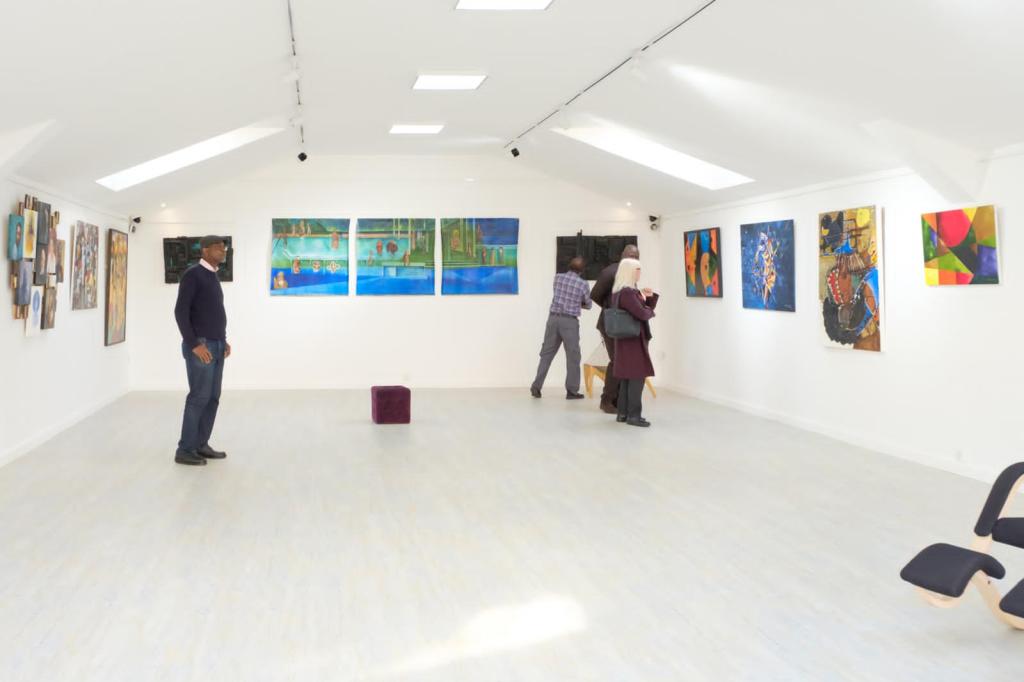
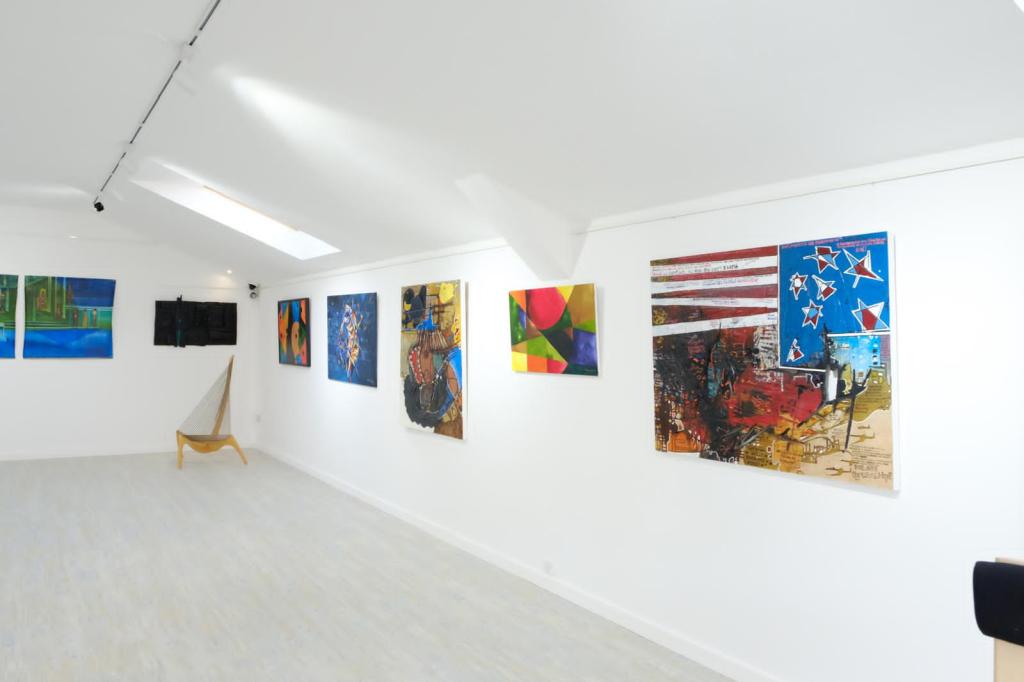
Hassan leads the Nigerian Arts Society, United Kingdom, known as NASUK and explains more on success stories, his views on contemporary art among blacks. He talks about his landmark achievements and breakthroughs after leaving Nigeria.
What was growing up period like for you?
I was born in London, England in 1964. My parents had migrated to the UK before Nigeria’s independence and they had a set of twins which was a commitment, a responsibility for them being students with very little income. So, the difficulties of keeping us in the UK, necessitated them sending us to live with our grandparents and rather than fostering us out to white people to live in the UK. At a very young age before the Nigeria and Biafra Civil War that broke out later in the 60s, we went to Nigeria to live in Auchi with our grandparents. And that is when I sincerely found my comfort in creative experience and it took shape.
Very early on Auchi red sands, I was drawing aeroplanes, making my own toys. I sort of having that knack for drawing four – legged animals like horses and dogs, illustrating, I don’t still remember when I was taught to represent something visually. It is something I have always had I believe. It is something I developed, rather than I was taught really. Childhood in Nigeria was very exciting. When my parents came back to Nigeria in the late 1970s, they naturally, resisted my being an artist. I came against what most Nigerian children came up against which is your choice of career path resistance. Parents would want you to pursue other professions instead of pursuing creative practice.
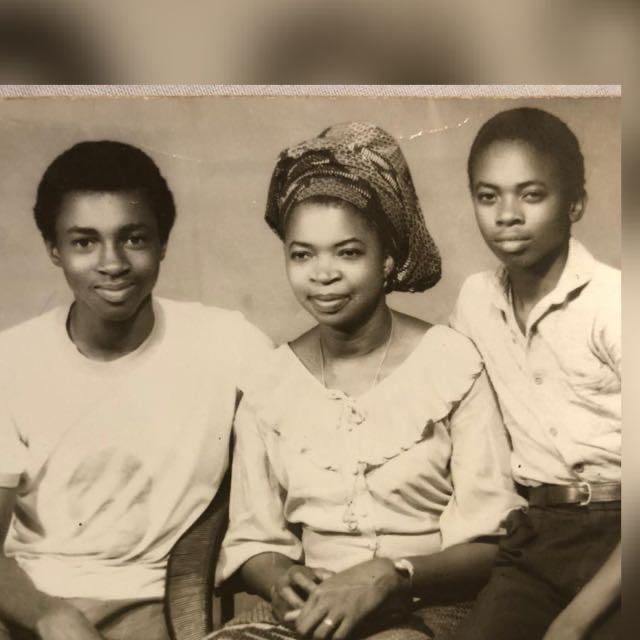
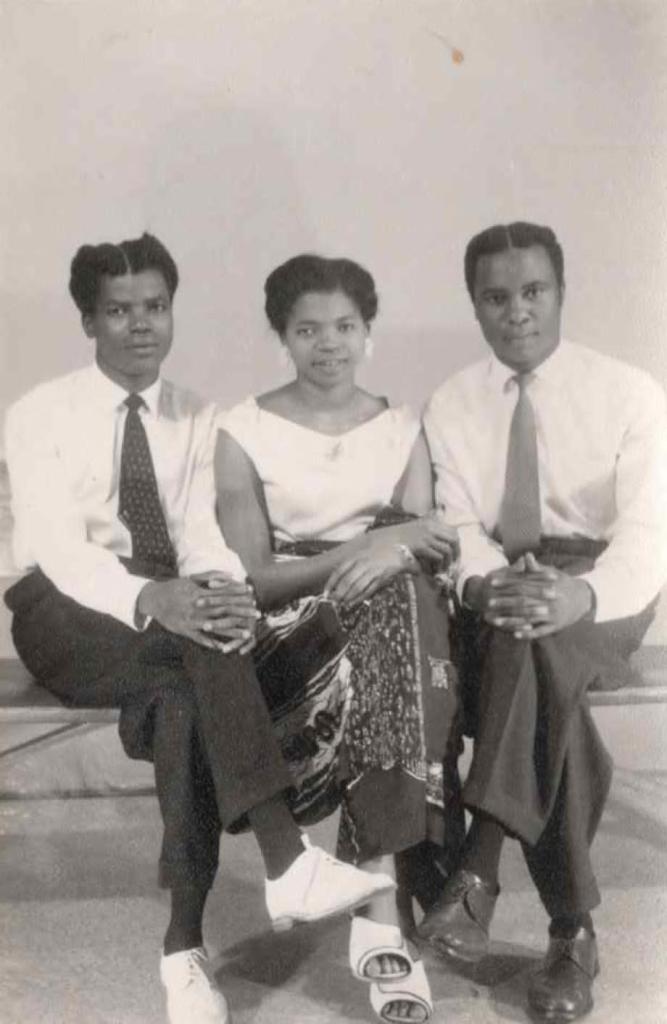
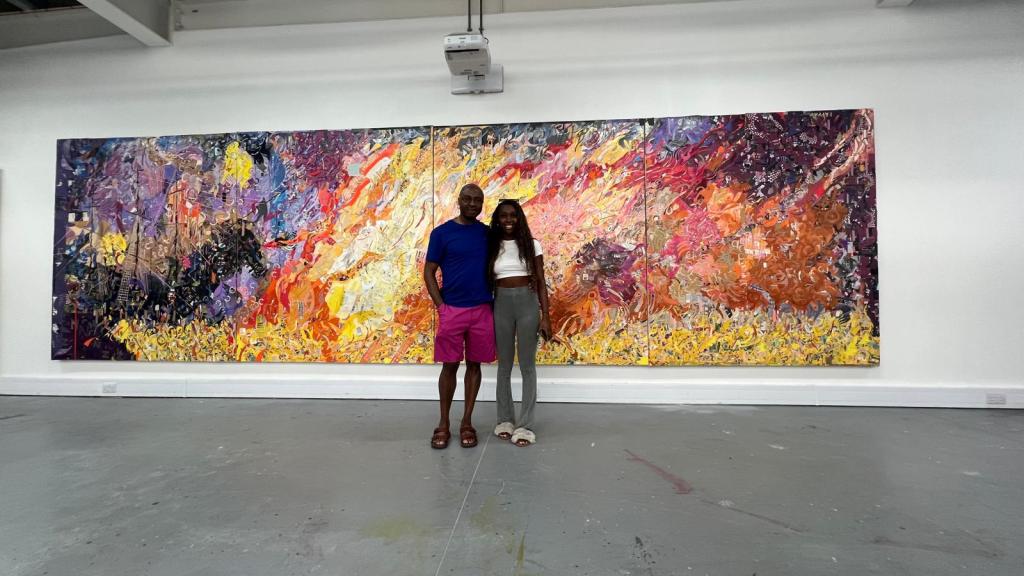

I was more inclined to do Fine Arts at Ahmadu Bello University, ABU, I also gained admission to study Political Science at University of Benin. I found myself removing myself from ABU to go and study Political Science at University of Benin. Unfortunately, the Academic Staff Union of Universities, embarked on an industrial action. They went on strike in 1981 and this affected my admission process, as I couldn’t register. I had to go for external GCE to do A Levels courses in Politics, Economics and Fine Arts. After that I found myself in a dilemma on what to study. But in 1982, I went back to Ahmadu Bello University to continue my study in Fine Arts and graduated in 1986.
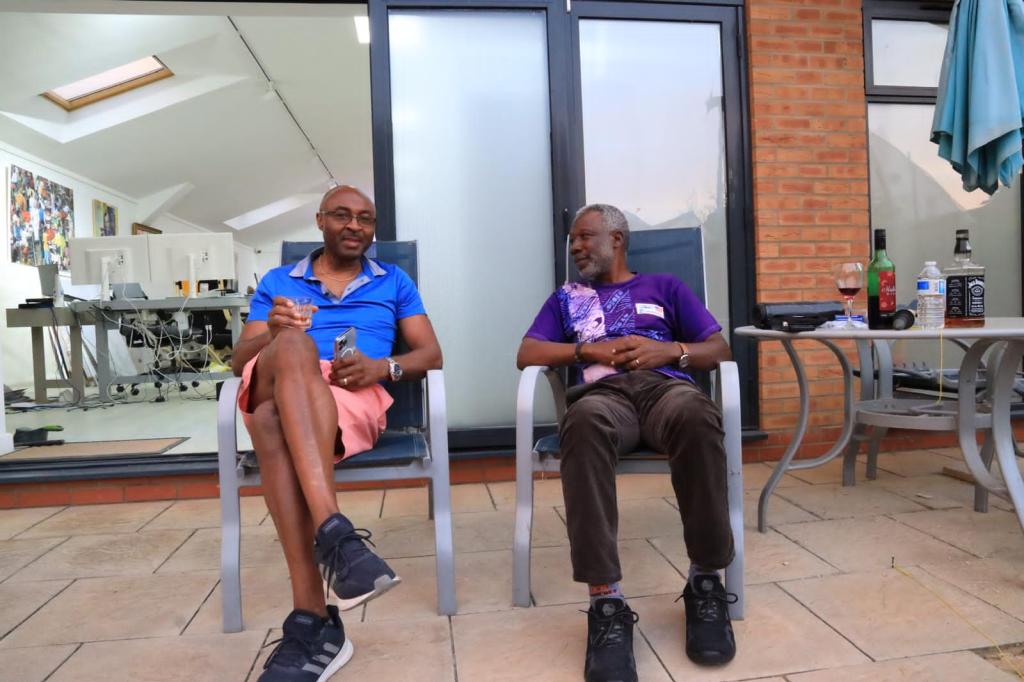
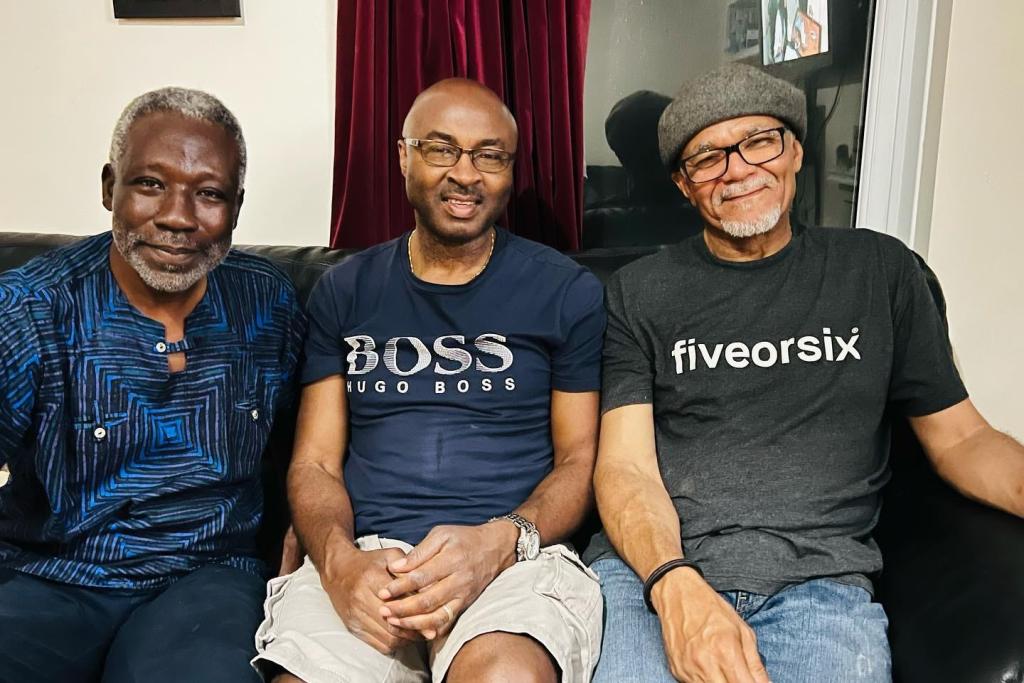
You mean all along, becoming an artist was the Plan A for you and no Plan B?
Becoming an artist was the only Plan A for me. Even during the time I was floundering with other things. I felt I was multi – talented, I was all – rounder academically. I thought I could still do anything I set my minds to and still be an artist. To be an artist was not something I felt I needed to do at a degree level than to practice. However, the resistant forces that I had initially were relaxed in the sense of losing my father in 1983. So, I never had any resistance anymore. My father believed that I could not make a living by being an artist. It looked awkward to him at the time. But very early on when I was observing my National Youth Service Corps scheme in Enugu, I was making a comfortable living. I did quite well for myself in Nigeria. I lived on my own and shouldered a lot of responsibilities for my family very quickly.
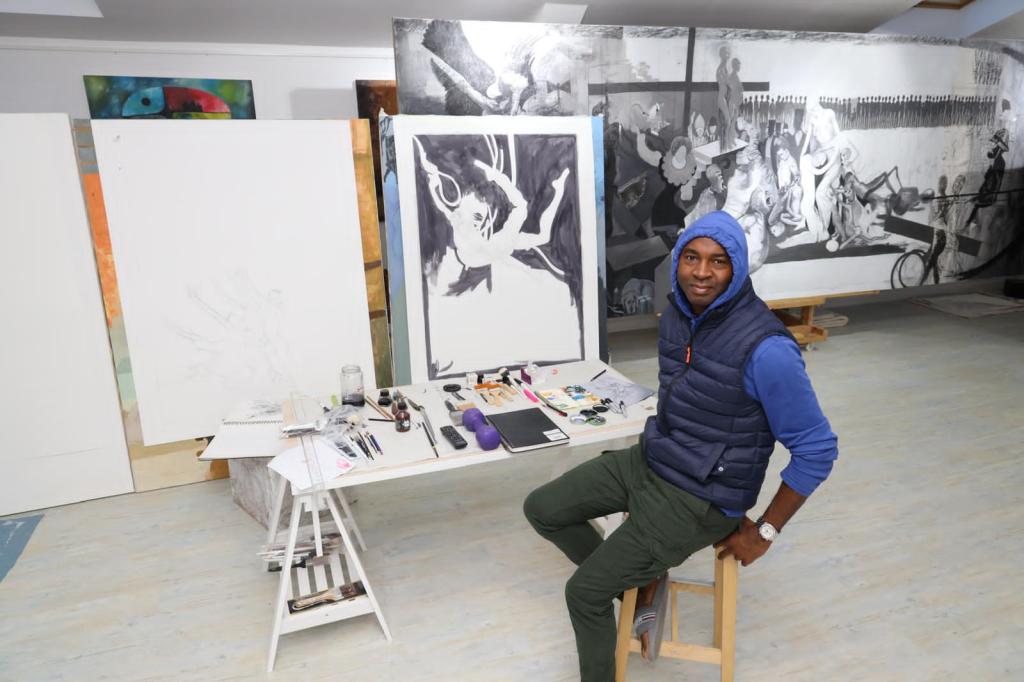
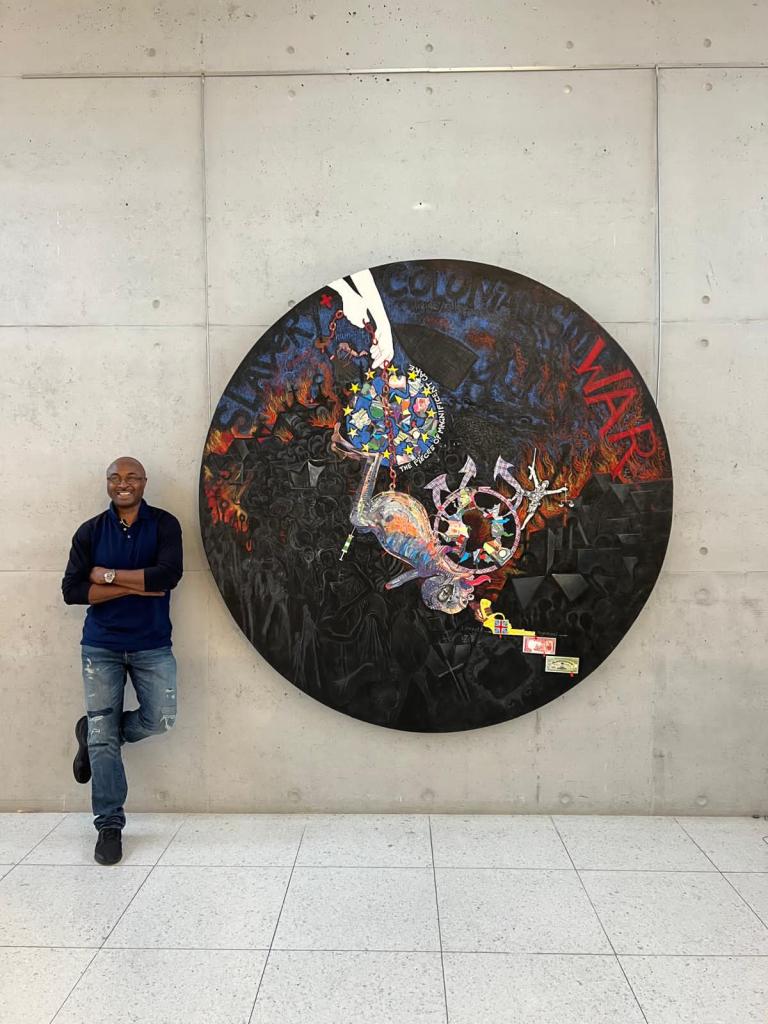
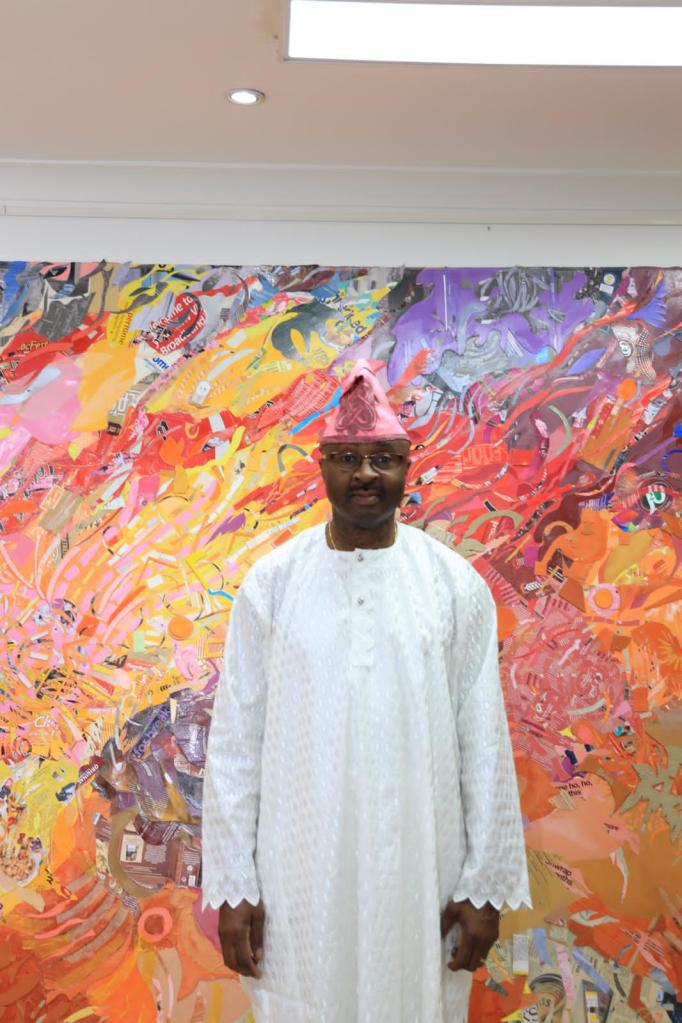
Yes, I was in good stead to start my art practice which ushered in pioneering exhibitions. I was the first artist to exhibit at Soviet Cultural Centre, now defunct, “Coloured Concepts,” Soviet Cultural Centre, Lagos, April 25-May 6, 1989, was held at Soviet Cultural Centre that opened after ‘Glasnost and Perestroika,’ meaning openness and restructuring of the Soviet Union. But my first show in Lagos was in 1987, at the National Gallery of Modern Art, then had another show at National Museum in 1988, in an exhibition titled “A Grain of Corn,” I invited another artist called Joe Musa to show with me, thereby, giving him a debut exhibition as well. About the same time, I was also showing my works at the National Council for Craft and Design Gallery, opposite the National Theatre Complex at Iganmu. Both exhibitions were held concurrently. That show was with John Onobrakpeya, Ayodele Elebute, Chike Nwaka and myself. It was a four – man group exhibition.
When did you decide to relocate to the UK and were there certain reasons for the relocation?
I was at the peak of my artistic practice and comfort as a human being in Nigeria when I left in 1990. In 1988 when I had my shows at the National Museum and the National Gallery of Craft and Design, a Nigerian artist who was based in the UK, since the 1960s, Emmanuel Jegede, was visiting Nigeria to marry a new wife. Emmanuel Jegede visited my two exhibitions and was quite thrilled at my level of creativity and beckon to have a show with me. We both agreed to have a show in London with support from a gallery that represented him known as Westburn Gallery in Portobello Road. We planned to have two shows; first one in London and the next one in Lagos. It was a welcome development for me. I didn’t have any immigration constraint with coming to the UK, as I was born there and held a British passport. I came to London to do a show and still kept my studio in Anthony Village, a Mainland upscale neighbourhood in Lagos which I maintained for five years between 1990 and 1995. Relocation was never on my mind. All my clientele was in Nigeria. I had commissioned projects underway which had not been delivered before I embarked on the London exhibition. There was always the intention to honour them and deliver before I left. I never really ‘Japa – ed’ but only came to do a program. Along the line, in the months between January and December 1990 when I came to London, strange things started happening back home in Nigeria like the economic sabotage influenced by the Ibrahim Babangida regime and 2nd Tier Foreign Exchange Market policies. It became a sort of upheavals for many people, including myself. I started looking at my prospect. While I was not on economic migrant away from Nigeria, I was aware of the deep level of material and financial hardships that afflicted many people who were my clients. Furthermore, my girlfriend decided to join me during that sojourn and along the line, we contemplated on family and more which necessitated our living in the UK.
You were born in the UK but returned to the UK after some years. Did you experience culture shock integrating into the system?
Yes I did. For the very first time in my life, I suddenly became a black artist. I never saw myself as a black artist back home in Nigeria, of course, ethnic representation was prevalent in Nigeria. It is the way our society was structured. My awareness of colonial history was mainly founded upon my arrival to the UK where I discovered that race is such a big deal, a serious issue. Moreover, being a victim of cultural misunderstanding, most people don’t even make enough efforts to understand you as a cultural equal. Cultural superiority complex was a big issue at a time in the UK and the Nigerian migrant was often subjected to rectal examinations to check for drugs, that is really bad, a negative stereotyping.
And the narratives of my work changed. It became a lot more looking at my history, my individuality, my identity as black and African. I started looking at social aspect of stigmatization that was prevalent at that time, since then, we have had globalization, so, a lot more intercultural understanding. Today, the UK is a lot more integrated and it’s the most diverse place currently on earth, in terms of people all over the world. Although, we still have glass ceilings.
For the very first time in my life, I suddenly became a black artist. I never saw myself as a black artist back home in Nigeria, of course, ethnic representation was prevalent in Nigeria. It is the way our society was structured.
Some artists living in places like the UK had some culture experiences in their line of work. In the UK, you work, exhibit and market your creations and career through agents. Did you go through such societal and business systems too?
To be honest, it was an interesting period. There were no galleries focused on the works created by people like me. There was the mainstream artworld located in the center of London. They were commercially viable. Also, in the 90s, UK was going through a massive recession. There was no disposable income. Basically, the disappointed hope of coming to the UK was very clear, I was a big fish in a small pond back home in Nigeria. Unlike in the UK where I was so insignificant, a fish in a very large pond where I was excluded from the main stream which is where I belong from where I was coming from. So, Nigeria remains important to me not only to make an income, but also where my work are most relevant. I looked around and started working with many galleries. At a time, I became the Art Officer of the Caribbean Craft Circle. It wasn’t a job but a project I was working on, in developing an environment for the blacks visual arts which was known at a time as black art. I came in the month that one of the most significant landmark exhibitions of black people’s work occurred in the UK was underway and was about winding down in the month of January. The exhibition was titled ‘The Other Story’. It was curated by Rasheed Araeen some of the participants are today’s acknowledged and most prominent names in the black visual arts in the UK. They rebelled against the system that marginalized and isolated black peoples work from the main stream. I came into the scene acknowledging those pioneers efforts. Also, acknowledging the fact that there wasn’t any readily available market and neither any social mobility opportunities that I was privileged to have while working in Nigeria.
Race was a big issue. In fact, I approached a gallery in the West End, offering to hire their space. It is a gallery for hire space. Despite offering my money to have a show with a sculptor called Raymond Watson, initially, the gallery accepted my proposal and a week later, I was called by the gallery and explained told me they were sorry that their clients would be offended if they give me the chance to exhibit in their space even if I was paying for the space. These are part of the nightmares we went through in the 90s. The new generation may not know that people ahead fight for their mainstay today in the British visual art circle. I had to find a way to make a living. I became an illustrator for a number of book projects for Heinemann Writers Series including Ama Ata Aidoo ‘Changes‘ and ‘ The Girl Who Can,’ poetry work of Leila Aboulela ‘The Translator‘ and a few more. I did 100 illustrations for Yasmin Alibhai – Brown’s Training Manuals ‘Equal Value Equal Care.’ I was gainfully active, in addition, making work for the gallery in Atlanta and running my studio in my modest dwellings. Shortly after, I became the curator of 198 Gallery which is a big institution today. Then, it was just being founded in 1988. I ran the gallery for three years and later, set up the Norwood Arthouse which was really an artist studio complex in South Norwood, London. From Norwood Arthouse, I bid for public art projects and did mosaic commissions and other things. I did a mosaic commission in a 900 year old park called park. In 1992, I set up Society of Cotemporary Nigerian Artists. Through this society, I wrote a proposal to the Federation of British Artists’ which was accepted by them and we were granted an exhibition at the Mall Galleries in Central London. Back then, we have to pay for the space. The fees was £1,800 a day. And in the next few months, myself and my colleagues who were members of this group, tried to raise the sum. Unfortunately, we couldn’t raise the sum of money. In 1990, an average salary was £7,000 a year and raising £1,800 for a day show was too much for migrant African artists to pay for a show. But we remain committed. We were not daunted. We still strive to raise the amount. Our zeal and courage opened new opportunities when I met former Nigerian – British born footballer, the legendary John Fashanu, I also had an audience with Chief Ernest Shonekan when he was Head of the Interim Government of Nigeria. I was also working very closely with the Nigerian High Commission. But we couldn’t raise £18,000 pounds for a ten day show, £4,000 for the media and publishing, printing and others, making £22,000. We raised £4,000 from London Arts Board. We shelved the idea and some of the artists who couldn’t persevere, kind of drifted. However, many of us stayed in touch and subsequently, we had collaborations over the years. These collaborations went on, until the early 90s and we held exhibitions among ourselves in non – commercial places. Eventually, we started thinking about forming another group. In 2010, we came together and formed the Nigerian Art Society of United Kingdom which we reconstituted in 2013 and had some ground breaking exhibitions in London. One of the recently held is titled ‘The Legacies of Biafra.’ The Legacies of Biafra is sequel to a landmark exhibition we had in 2014 which was titled ‘Nigeria Art of 100: Transforming the British Experiment‘. We chose the Nigerian – Biafran Civil War, as the most significant event in Nigeria’s history in 100 years. Yet, nobody wanted to talk about it. I have my experience of the war when I went back to the Mid – West as a child, the Midwestern enclave of the war was overtaken by Biafran forces. When they came to occupy, we were evacuated and ran into the farms for safety. We were there for the better part of the war.
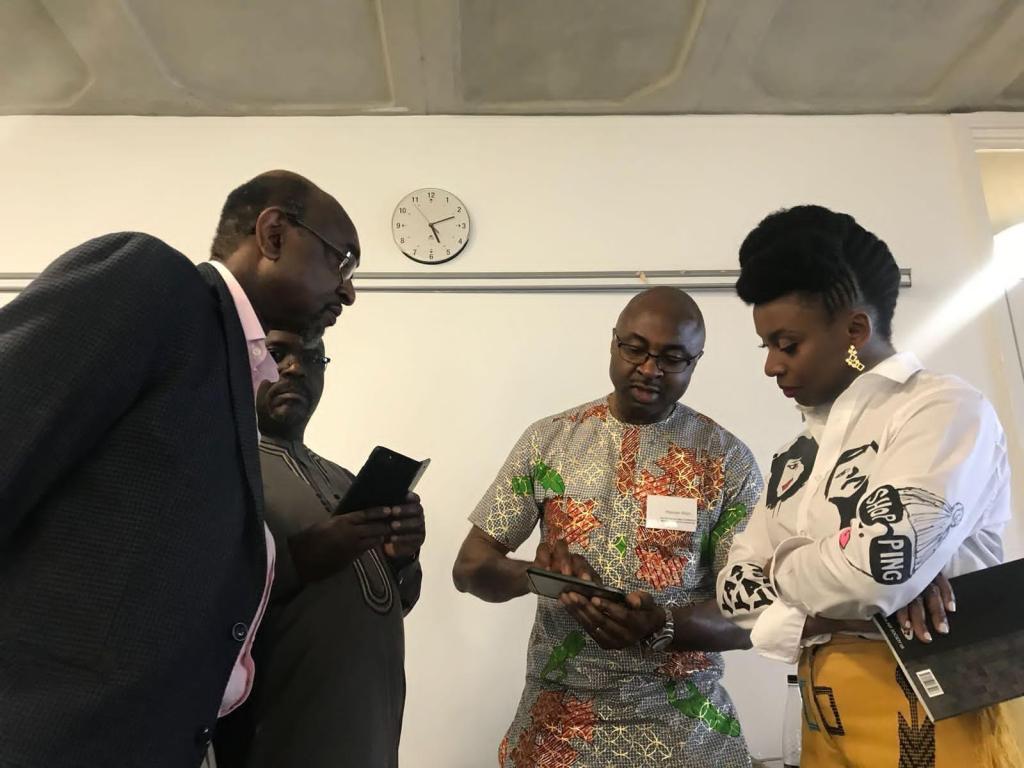
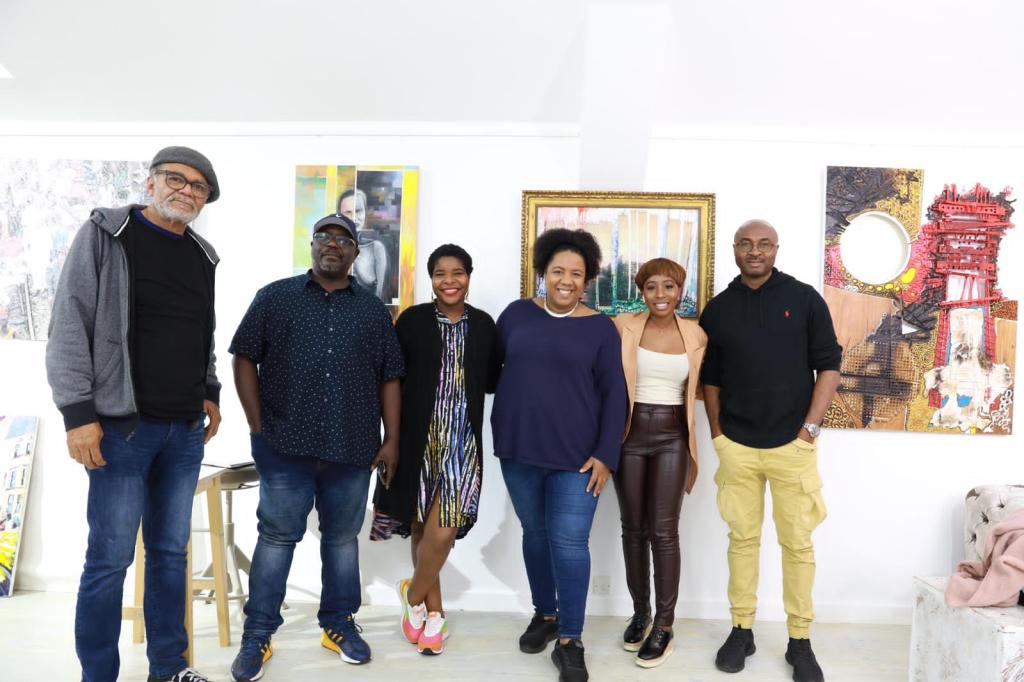
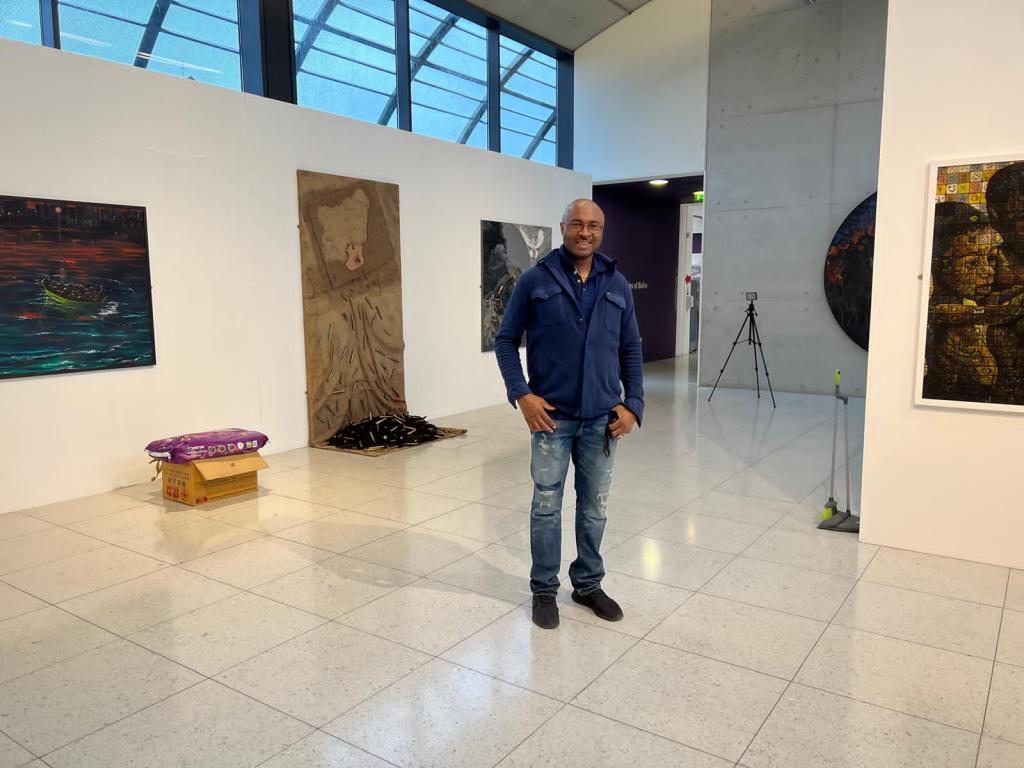
We chose the Nigerian – Biafran Civil War, as the most significant event in Nigeria’s history in 100 years. Yet, nobody wanted to talk about it. I have my experience of the war when I went back to the Mid – West as a child,
the gallery accepted my proposal and a week later, I was called by the gallery and explained told me they were sorry that their clients would be offended if they give me the chance to exhibit in their space even if I was paying for the space.
At that time, did you have regrets and felt like coming back to Nigeria?
There was no regrets whatsoever. Neither any yearning to come back to Nigeria. I am a bull by my zodiac sign. Also, by my nature and character, I am a fighter. I like taking up challenges and don’t give in. That’s exactly the steps I took. But beyond that, I also used my faculties. Even, if I wasn’t selling my paintings with the way I was selling with ease and comfort back home in Nigeria, one thing happened, I set to look inwards with what I was actually painting. The art I was making, I became more scrutinising of it. My lived experiences became a pivotal wealth spring for inspiration. I derive inspiration in self – discovery of myself, finding myself as an artist which I did very well. I still sold work in Nigeria, bringing paintings so often to collectors such as Sammy Olagbaju, Fola Adeola. I did several commissioned works. Also did commissioned work for musician Toby Foyeh’s album, Jalolo, produced by Nkono Teles album designs of his songs that he released in London with a recording company and subsequent album covers and design of the great recording company and their musicians were done by me, spanning 30 years.
No regrets and I have been very busy. Maybe, the only regret would be losing those contacts of my erstwhile colleagues in Nigeria. Back then in Nigeria, my home at Anthony Village was a beehive of activities. The camaraderie was incredible. Artists such as Kunle Adeyemi, myself and a whole lot would gather to do inspirational things. I lost their contacts and that incredible community disappeared. I had to build that all over again in the UK which I did. Today, I am a member of Guild of Fine Artists of Nigeria, previously, I was a member of the Executives of Society of Nigerian Artists. My relationship has waxed stronger with artists globally. This has been an impactful experience to have which I will never undermine in gratitude.
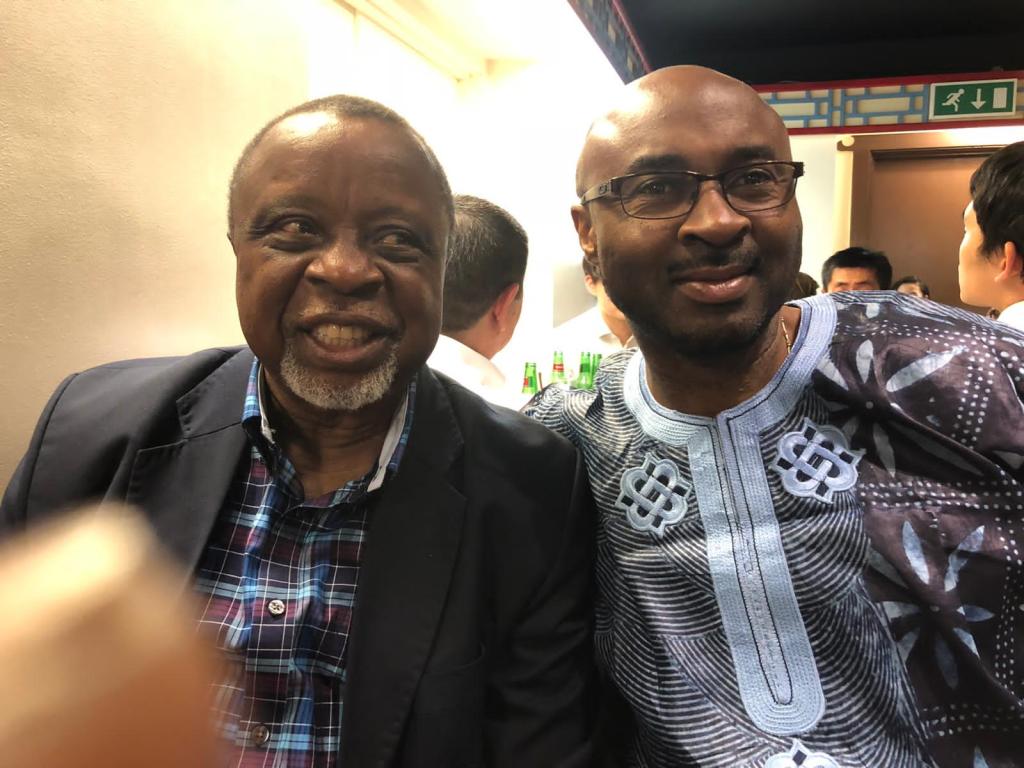
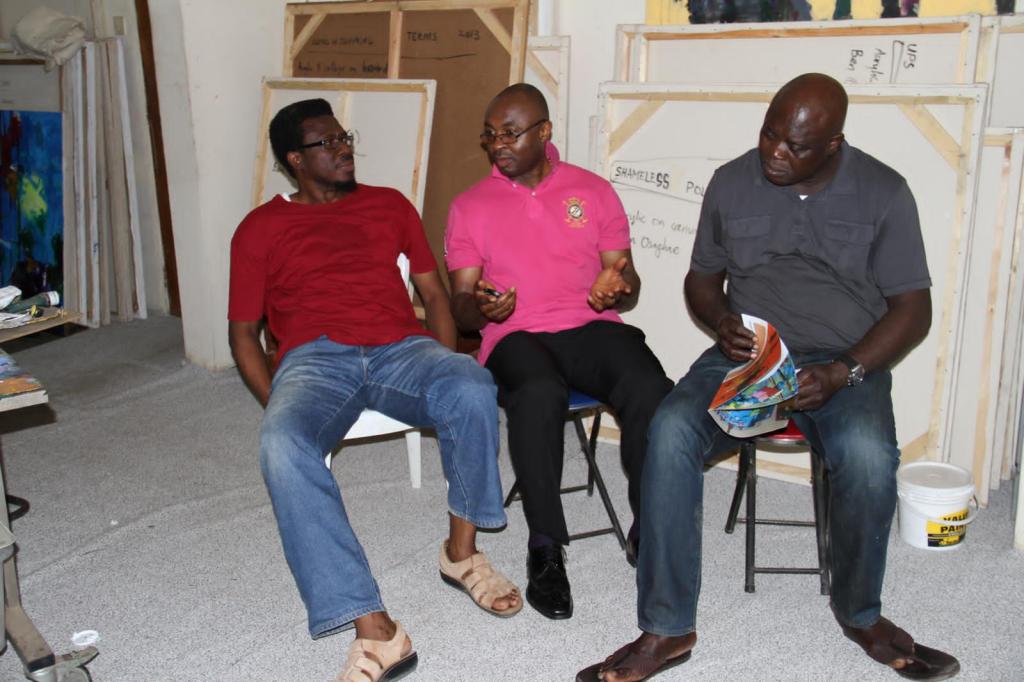
Working with many galleries and as an Art Officer must have positioned and networked you to where you are today, or wasn’t it?
Yes it did. One of the biggest outcomes of the position was a landmark exhibition of British Artists titled, ‘Transforming the Crown: African, Asian and Caribbean Artists in Britain 1966 – 1996,’ the exhibition was held from October 17, 1997 to March 15, 1998 at the Bronx Museum of Art in New York, The Caribbean Cultural Center and Studio Museum in Harlem. Those were the three venues it happened concurrently with major sponsorship consideration from Rockefeller Foundation, Ford Foundation and other top – tier organisations. My contribution to the exhibition was pivotal at the time I was working as the curator of 198 Gallery. I gained a lot of experience in how to raise funding for events, write applications, do timely and profitable networking and how to organise events. It really paid off working in that space at the time.
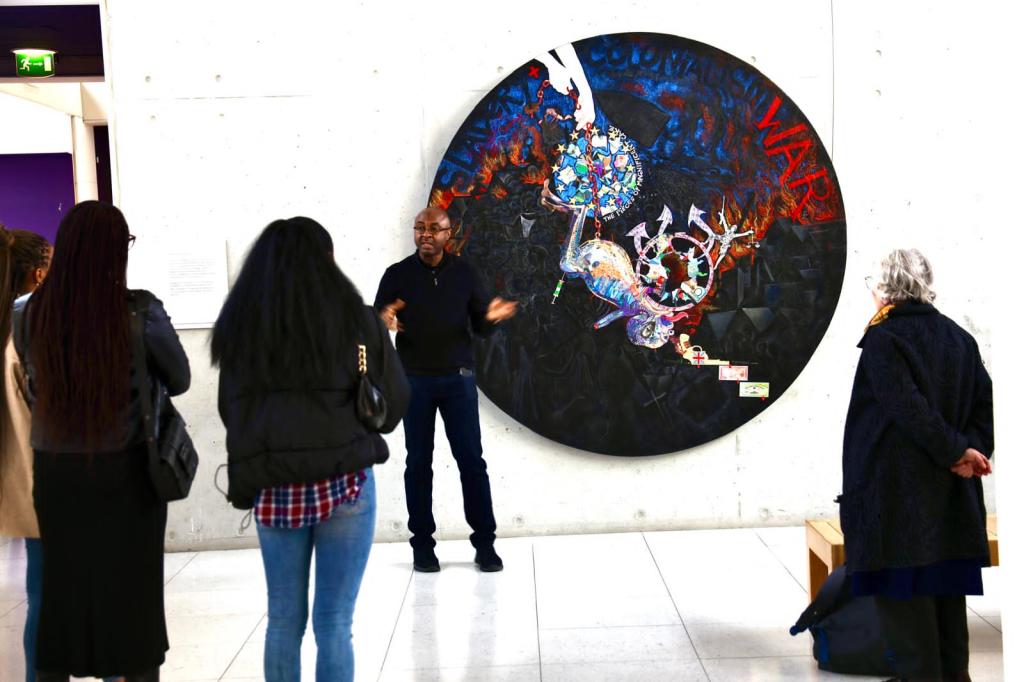
Did the culture shock influence your works, artworks and career periods at the time? Maybe, the stigmatization for migrants became a source of inspiration to work from?
The stigmatization of migrants is still a part of my work. I look at migration holistically, leveraging on technology, like modernity, initially in shipping technology, the sea going vessels across the Atlantic came to our shores and took our people away into slavery. Then, despite the abolition of slavery, those vessels were still coming. But, rather than, taking our people away into plantations abroad, they brought our people into forced plantation work called colonies. ‘Colonia‘ is the Greek word for plantation. So, colonialism simply means, On – Continent – Plantation which effectively was just a transmutation of slavery. Shipping technology played a big in impact in colonialism because of the mass movement of produce from one end to another. Container boats, war ships which crossed the Atlantic to impose the power and might of global north, as well as, stowaway boats of desperate people who have been victims of these situations they found themselves aided by the global north. The Atlantic has been a great source of inhumanity for the African.
You were just a child during the Biafran War and running into the farms. How did you survive with people around you?
During the Civil War, there were always military patrols all over the town, mostly Nigerian forces. One of the key distributions was water. There was water tanker going up the main streets of Auchi and people would be chasing the water tanker with their buckets to fetch water. If not, people were fetching their water in the river. But the main fear of fetching water at the river and get attacked by the Biafran forces who were believed to be lurking in the bushes around Auchi, instilled that fear in people. There was a huge shortage of water which was ameliorated by the distribution from the military trucks driving from house to house. I remember, vividly, during the war, that Radios were connected to every house, propaganda was a big deal then. Speakers were attached to houses and you could hear broadcast all the time. We learnt about Murtala Muhammed’s victory at Onitsha through the radio and we celebrated because the people of Auchi, believed that Murtala Muhammed was an Auchi person. On his way to Onitsha, Muhammed stopped by and prayed in Auchi. Auchi was vehemently, on the side of federal forces. Auchi was also the crossroad to Northern part of Nigeria. The Biafran forces had to pass through Auchi and Kwara to get to the North for any operation. When the news brokered that Biafran forces were coming to overrun Auchi, my twin sister and I, together with our grandmother, ran to go and hide in her farm. My grandmother had a farm shack where she normally spent few days in the farm, feeding on yam and palm oil she made by herself from palm kernels. Every thing we fed on was on her farm. We ate delicacies such as grasshoppers on sticks and we roast on fire. It was a source of protein for us. We get snails beneath leaves and eat aa well. We had bush meat occasionally if we were lucky. There was no shortage of food. Auchi was the food basket of Nigeria.
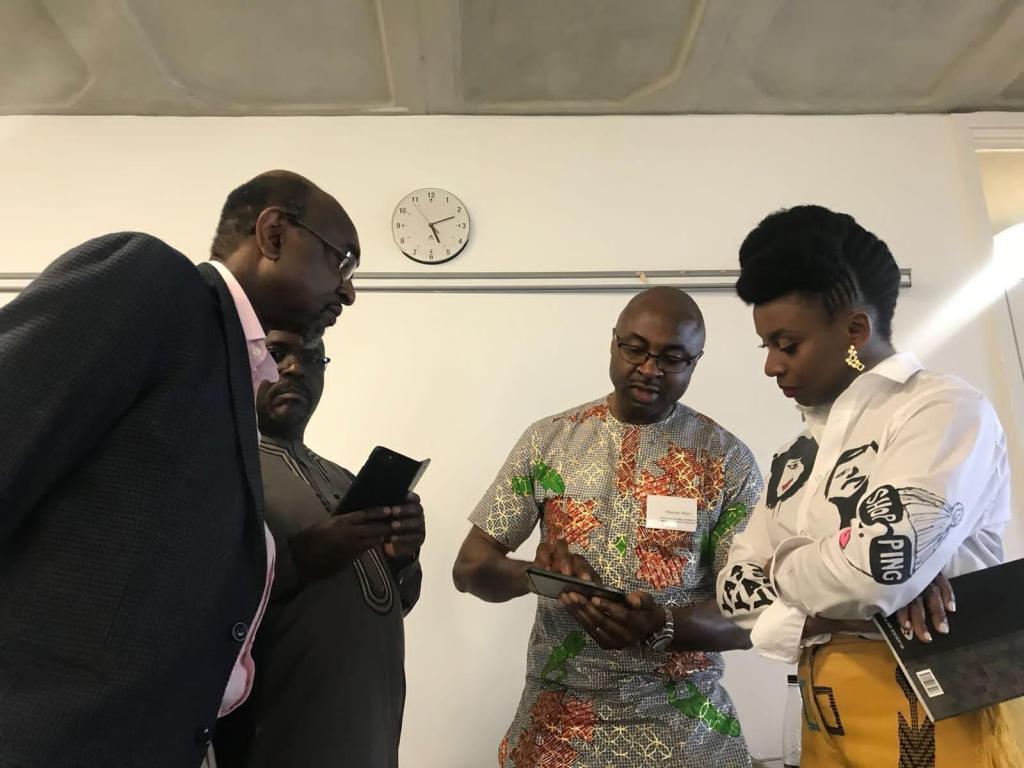
I remember, vividly, during the war, that Radios were connected to every house, propaganda was a big deal then. Speakers were attached to houses and you could hear broadcast all the time.
Do you think Nigeria as a country learned anything from the war as we speak today?
Nigeria never really spoke about the war. And if we ever had an image of the devil, that was sub – projected to us, as Nigerians, it was an image of Ojukwu that led the Biafran causes. In fact, there was a song done in Auchi by the most popular musician of his era, Ako Limited which further demonise Ojukwu. (Hassan did the song in Auchi dialect which was so hilarious from his London base).
Now, that the exhibition is ongoing in the UK, did you invite the Nigerian diplomatic circles and more to be part of this?
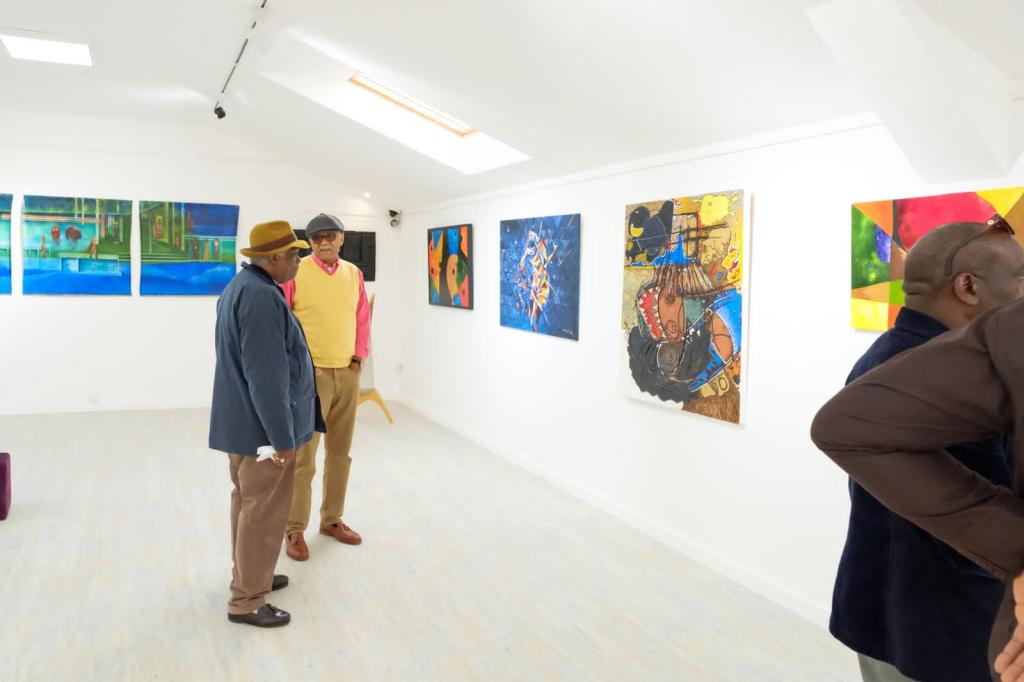
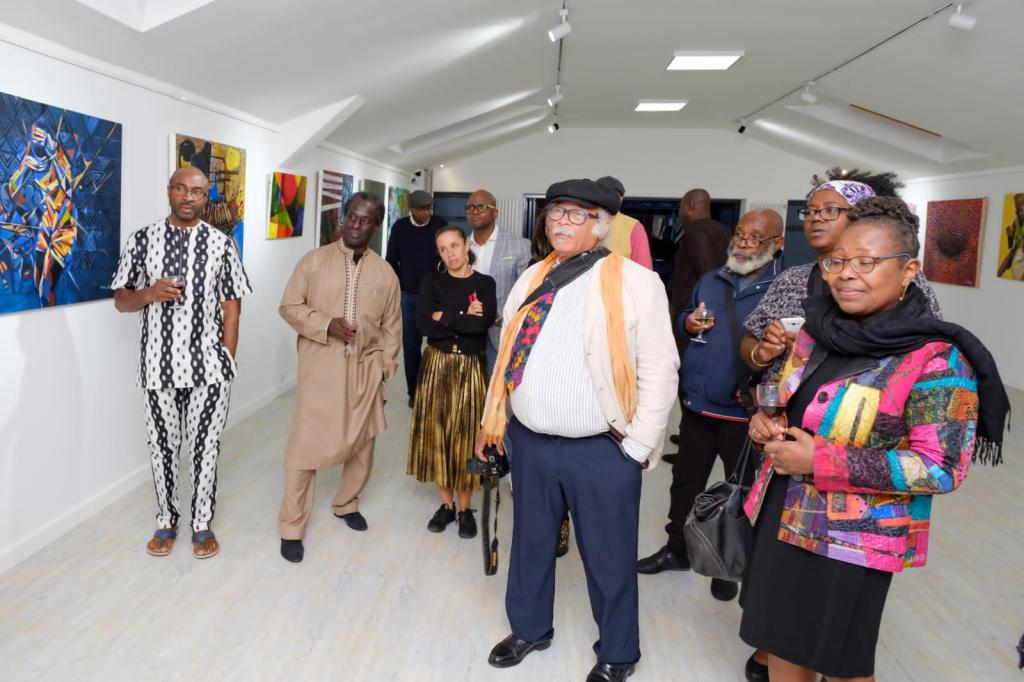
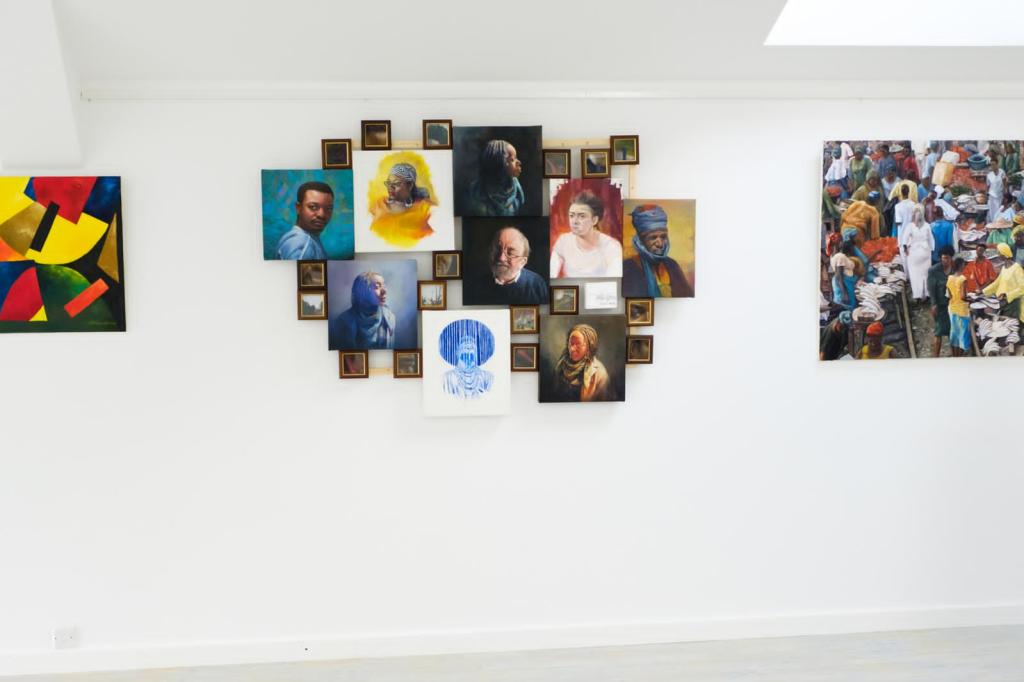
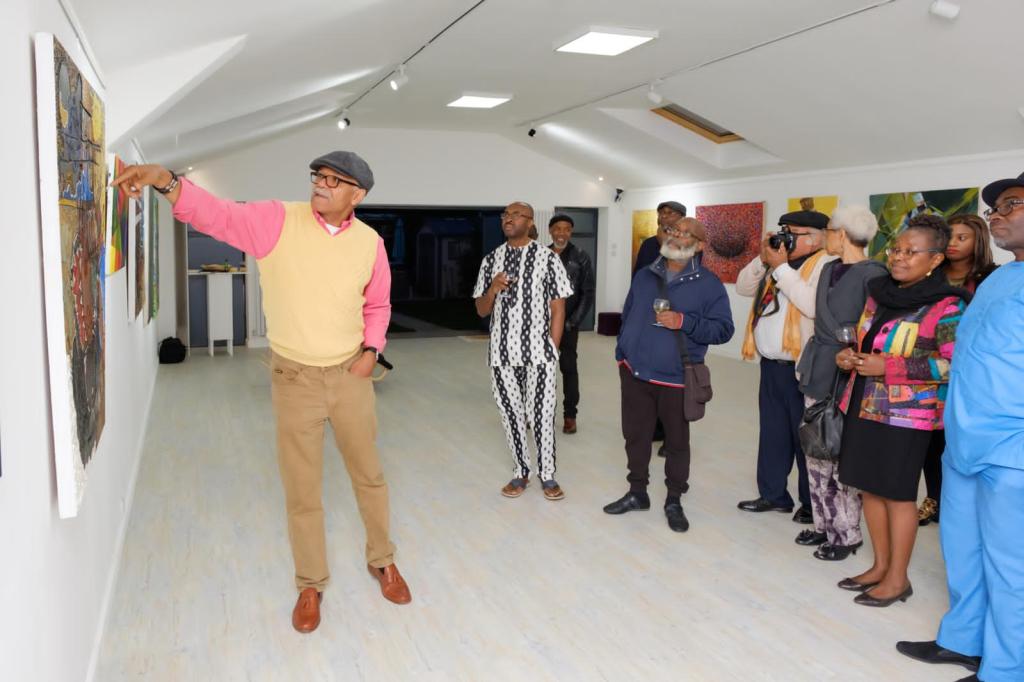
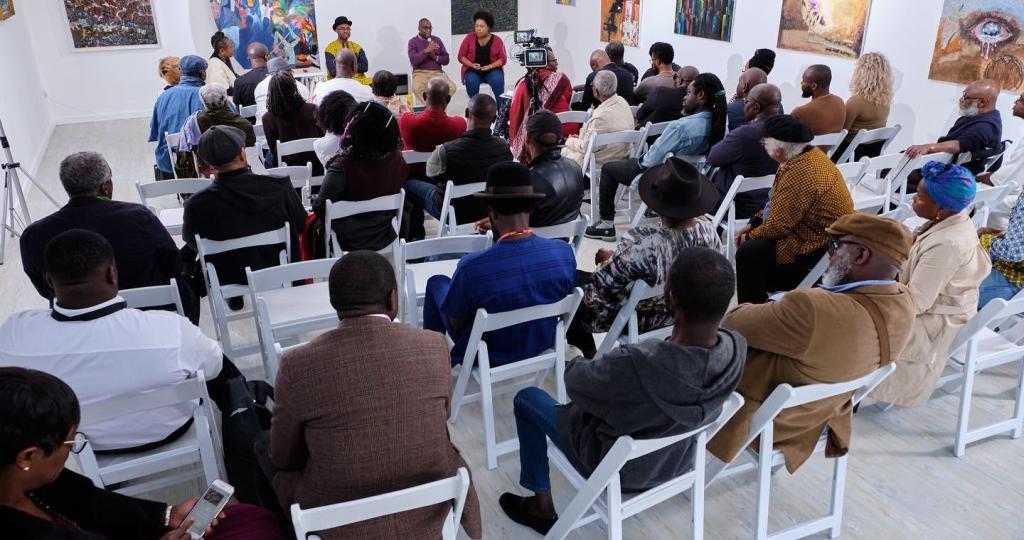
The Legacies of Biafra Exhibition, was a peaceful and inclusive conversation among artists from every part of Nigeria, including other participants who came from other walks of life who either had past experiences of the war or interest in the causes of the war and subsequent events that had manifested in our country since the war. The Nigerian High Commission was invited but didn’t turn up.
However, getting sponsorship for the exhibition was a daunting task. We got some funding from academic institutions in the UK. And that’s how we were able to mount the exhibition. The sponsorship in kind for the space cost in a region of £100,000. And the sponsorship in cash from different organisations came to about £20,000. The subsequent show in a museum, Oldham at Greater Manchester, happened from right after COVID – 19, from October 2021 to March 2022. The Oldham Council sponsored that tour. The keynote address was delivered by Nigerian famous writer, Ben Okri, who also narrated his experience of the civil war. The show was attended by over 10, 000 people. It ran in London for three months and six months in Manchester. The show itself is going to hold in Germany in the neighbourhood of Nuremberg where the second world war trials were done. So, the connection to global war is what makes the exhibition particularly poignant for that venue where it is going to hold from February 2025 to October 2025. We hope to take the exhibition to Smithsonian in due course.
Artists have a greater liberty to talk about issues of concern in environment where they are not at direct risk of persecution. But we still had the privilege of Nigerian based artists who participated such as Edosa Oguigo, Obiora Udexhukwu, Chinwe Uwatse, Ndidi Dike was to participate but we couldn’t get her work early enough to be part of the exhibition. The estate of Uzor Eguonu submitted a work and estate of Chinwe Roy also contributed. Other Nigerian based artists joined us.
Artists inspired the enlightenment and renaissance in Europe. Artists articulated that ideology that brought out technological revolution in Europe. Modernists and philosophers were inspired by artists in that era seeking a better world. Artists challenged the divine rights of kings. Artists challenged the role of the church. People like Goya were painting for the church during the day but in the night, in the privacy of their own space, were producing the materials they wanted to produce which corresponded to their real thoughts and beliefs. What Goya left behind are being celebrated today. Fela Kuti would remain renowned for his exploits in speaking out for the people. He challenged status quo and rebelled for just cause. That’s the role of artists. The artist should not be restricted or complacent to painting beautiful faces of black people because that’s what the buyer is buying. The artist responsibility is not to the buyer, but to the society, himself, to truth. If a rich man finds value from what the artist is doing from conviction and deliberation, then that is an added bonus. Artist who rely on street scenes, believing that is what sells is doing himself a disservice. The artist should not forget that art changed when technology came along. AI is already making artists who slavishly reproduce nature irrelevant just what photography did some centuries ago. The artist must challenge the society regardless of where they are. Venice Biennale was a protest. The Havana Biennale which I am participating in November is a protest. Aesthetics alone is not enough. But our artists due to the nature of patronage in Nigeria rely more on such leverages.
The artist should not be restricted or complacent to painting beautiful faces of black people because that’s what the buyer is buying. The artist responsibility is not to the buyer, but to the society, himself, to truth. If a rich man finds value from what the artist is doing from conviction and deliberation, then that is an added bonus.
Has NASUK ever being a pressure group to fight or advocate at any time and why?
NASUK is a 15 – member organisation for now and it is not at any time an ideology driven group nor advocacy group. We mainly try to advance the visibility, awareness and knowledge of us, as, a people who come from Nigeria and to sort of propagate our culture creatively. Some of our exhibitions and their themes can be read as an interest group like campaigns for a fairer society. Our next exhibition is a VIP exhibition for the 154 Art Fair which is sponsored by the 154 Art Fair is an exhibition which centres on the narrative of arrival to the United Kingdom. This is neccessary for us to do as other people’s arrival narratives such as the Windrush, has been well documented and supported in the public domain. They have been seen as the victims of UK’s hostile environment policies which strips post second world war migrants of their identities. And many people not just Caribbean, also Africans were deported between 2014 and 2017. The Theresa May government called that policy ‘The Hostile Environment Policy’ It was basically to make the UK a hostile environment to migrants who are not documented.
On the flipside, you were listening to Ebenezer Obey earlier, what do you have to say about Nigerian music globally?
Yoruba is the most sonorous language for music. The music genres from Yoruba moves anyone easily. You see yourself nodding your head to the music compositions even when you don’t understand any word. My mother lives directly above my studio and when I play my Ebenezer Obey, I play it a bit loud, even when it is low, she can still hear through the wood floor. She nods her head to the lyrics while upstairs. Her favourite is The Man, the son and the donkey.
Words/Ireho Aito/Don’t Keep Your Art in the Finger/Pictures/Hassan Aliyu studio

