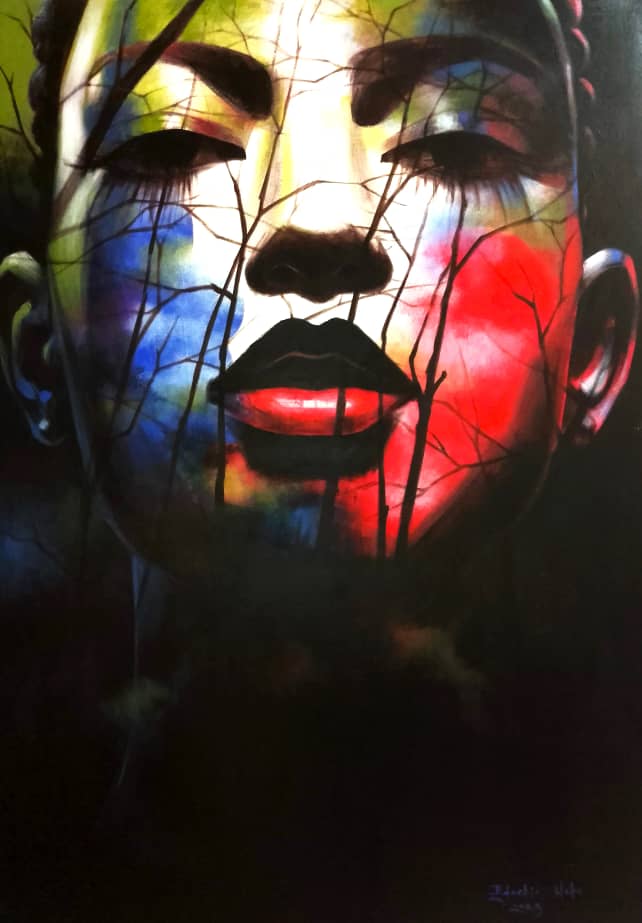
When Nana, the dynamic founder and curator of Art Pantheon Gallery in Oniru, Lagos, dropped her Instagram announcement about Uche Edochie’s solo exhibition “All The Leaves Are On The Ground,” it was not just a post but it was a vibe. Her ecstatic invitation lit up the art scene, setting expectations high and stirring the curiosity of art lovers across Lagos and beyond towards the opening of the exhibition on the 24th of May, 2025. No doubt, it was clear something special was coming, and Nana’s infectious energy made it impossible to ignore.
Uche Edochie is not your everyday artist, he is a storyteller in every sense of the word. Far from blending into the crowd, Uche stands out with a voice that is honest, bold, and deeply human. On Instagram, he doesn’t chase attention, not at all, instead, he offers thoughtful reflections drawn from his own life, revealing how everything in life, joy, pain, struggle, and triumph connects in unexpected ways.
Scroll through his feed and you will find raw and powerful narratives, from surviving COVID-19 and the financial toll it took on him, to the emotional and physical ordeal of building his home and studio twice. Yes, twice. These are not just stories; they are lessons. Uche bares his soul not for sympathy but so we can learn, reflect, and grow through his journey.
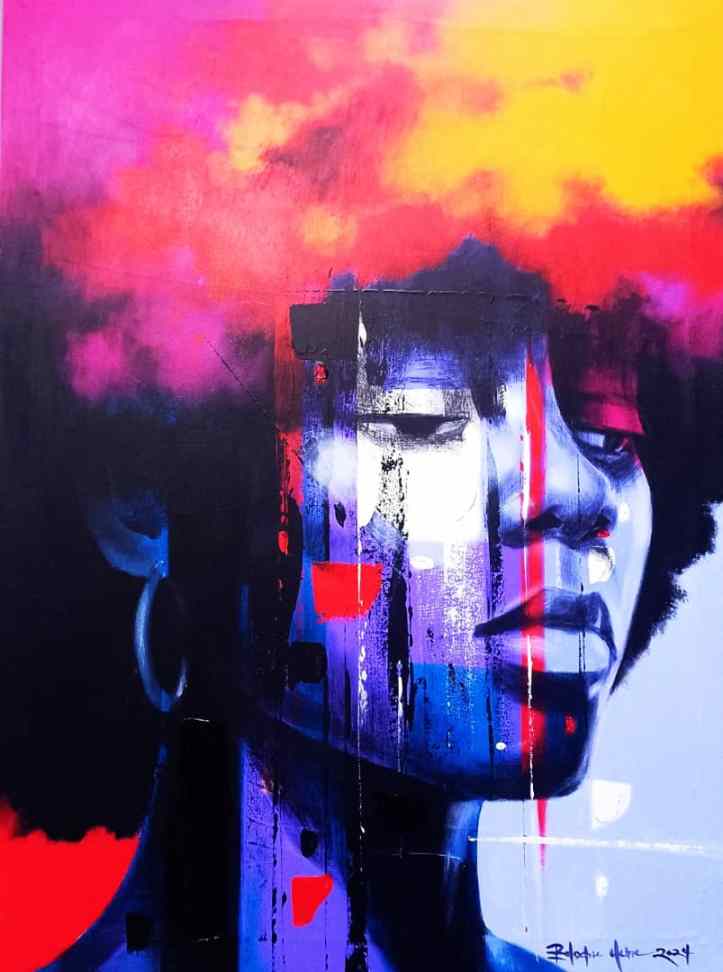
His art carries this same energy. His works throb with emotion, pulsing with the weight of a man who has wrestled with life and emerged with truth. It’s no surprise that themes of existence, healing, and spiritual awakening run deep in his practice. Whether he’s sharing the joy of raising well-rounded children or escaping to the village to sip palm wine with elders, Uche Edochie reminds us that the artist’s life is the art itself.
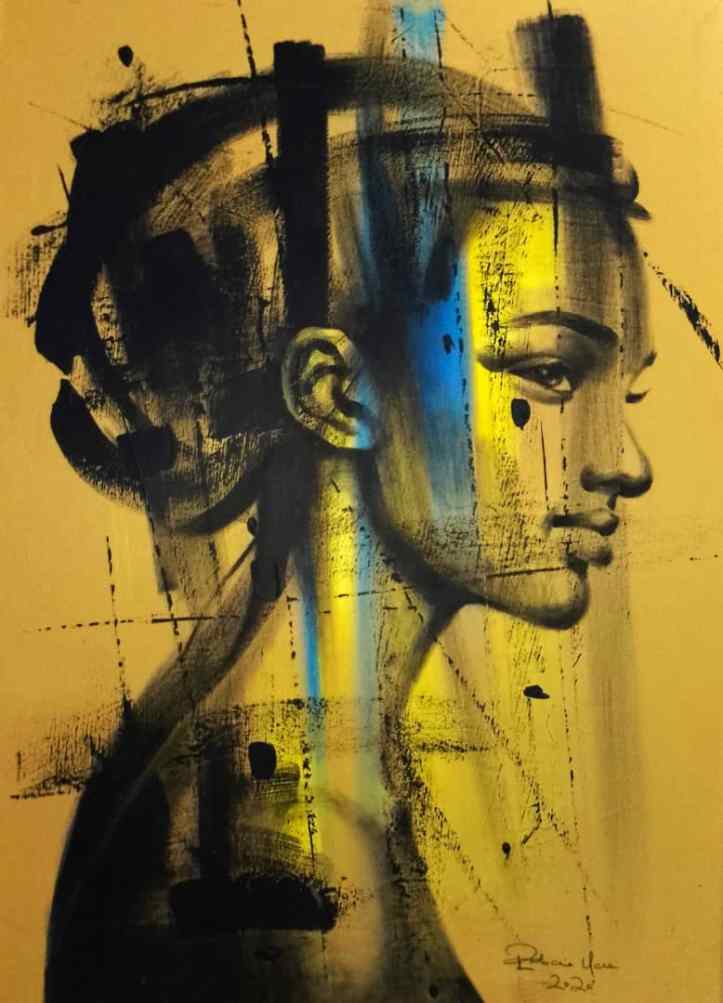
Through his paintings and storytelling, Uche continues to inspire and that is the true beauty of his work.
Coming from a family steeped in artistic expression and bold storytelling, Uche Edochie is no stranger to creativity. His father, the legendary broadcaster and actor Pete Edochie, MFR, a towering figure in African cinema, etched his name into our childhood memories as Okonkwo in the 1980s television adaptation of Chinua Achebe’s literary classic, Things Fall Apart. The series, aired on the national network, brought to life the powerful clash between traditional Igbo society and British colonial rule.
Uche Edochie, in his own right, has carved a distinguished path in the world of visual arts. He is one of the few Nigerian artists confident enough wayback to advertise his studio, Edge Studio, in Position, a respected quarterly arts and culture magazine published by Backpage Productions and curated by renowned journalist Dapo Adeniyi. That was a costly adventure and the same time a part that set Uche apart from his contemporaries which is the power of exploration.
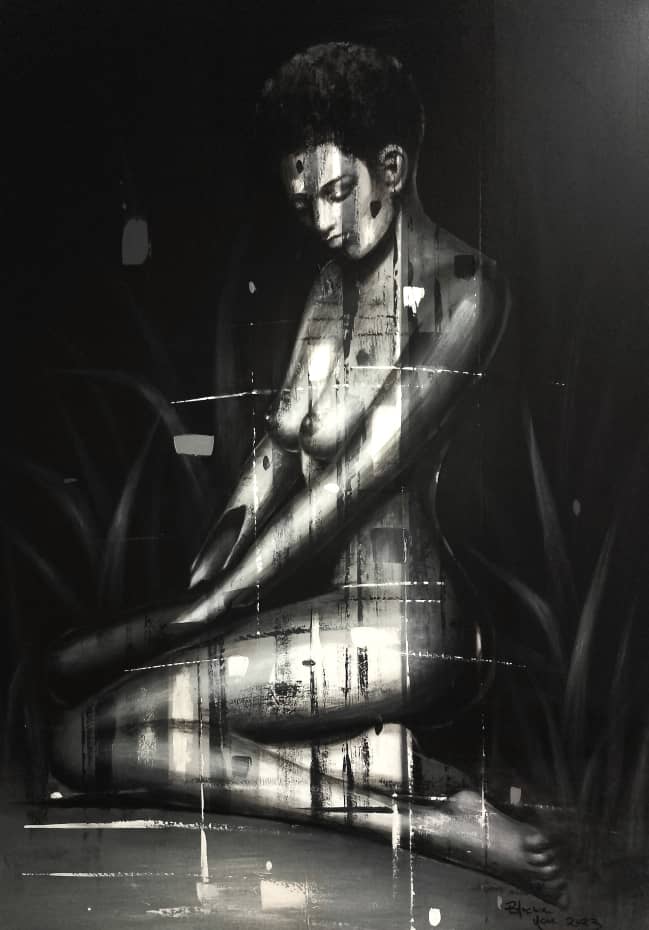
For decades, Uche has captivated the art scene with bold, thought-provoking works showcased in numerous exhibitions. His creative voice continues to push boundaries and challenge perceptions.
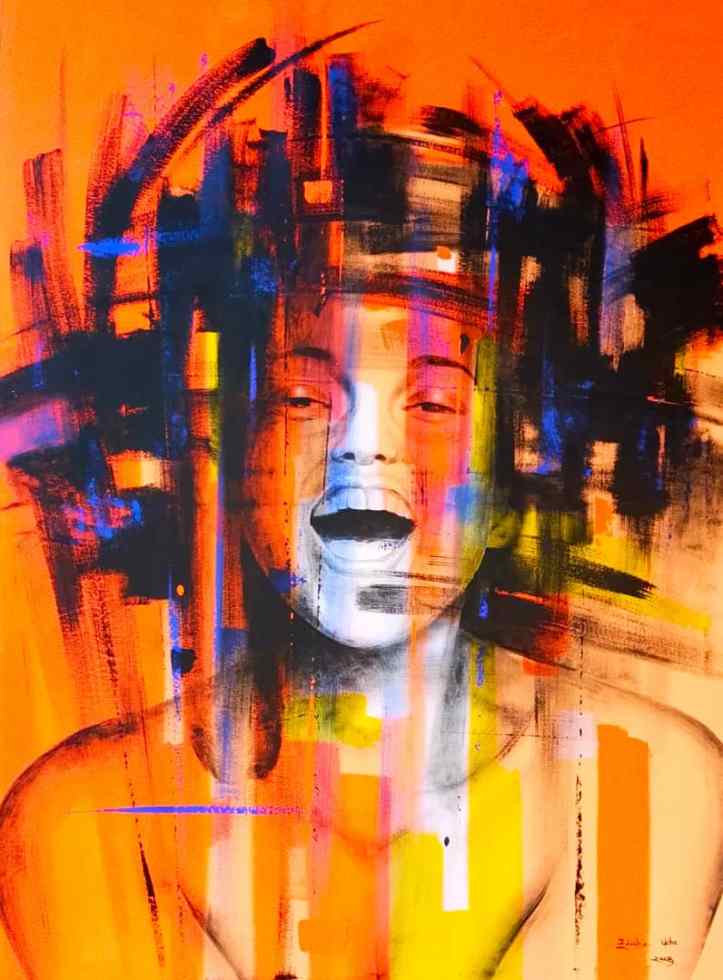
In this exclusive Q&A with Ireho Aito for iBAND Magazine, Uche opens up about his artistic journey, his views on contemporary African art, and the inspiration behind his latest exhibition, “When All the Leaves Are On the Ground which held at Art Pantheon Gallery, an exquisite gallery in high heeled Oniru, Victoria Island.
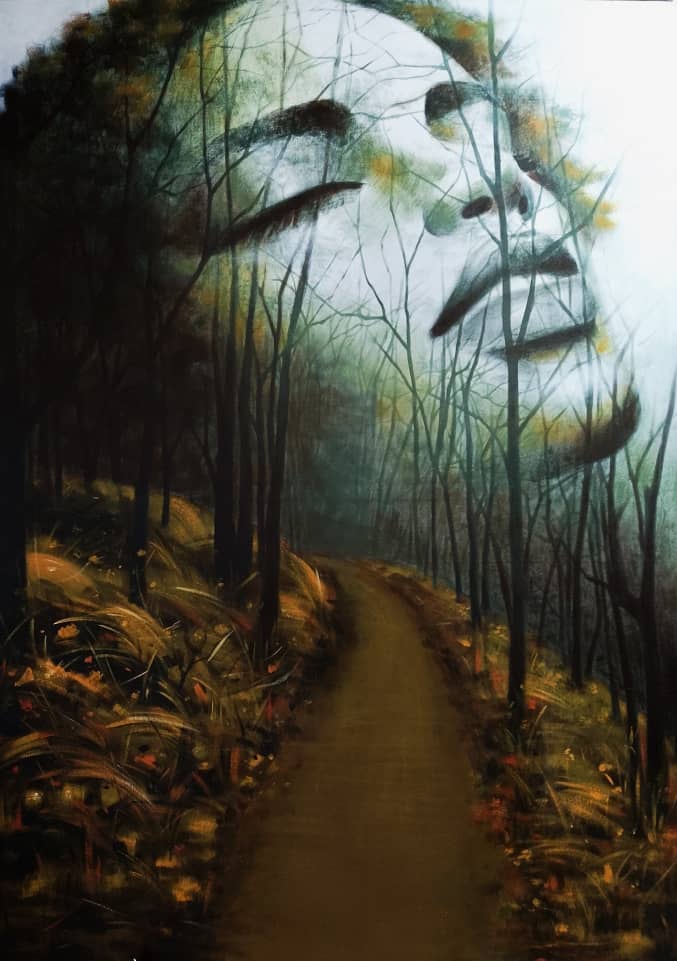
Your latest solo exhibition, “All the Leaves Are on the Ground,” is such a poetic title—what inspired it, and what themes were you exploring through the body of work?
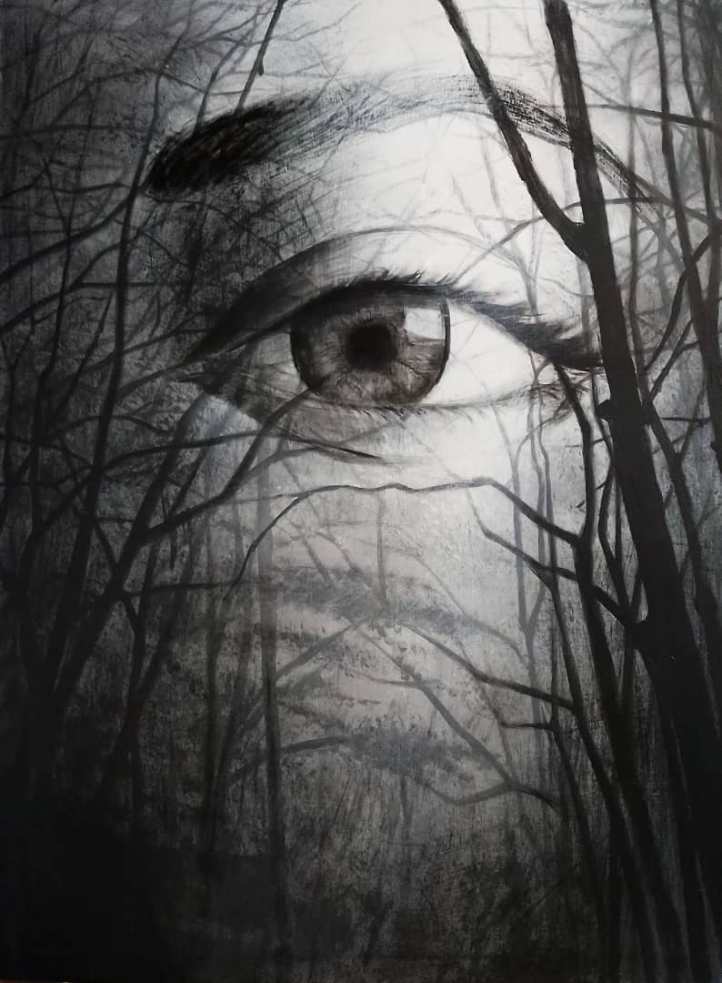
The theme is a metaphor that indicates a starting point in life. A new beginning. That’s what I see in a tree that has shed its leaves. The start of a new cycle. That’s what we are when we are born into the world. Frail, dependent and ignorant. Our journey then becomes the gathering and application of information as we navigate life. So this exhibition is really about man’s journey from birth to death and the lessons learned in between.
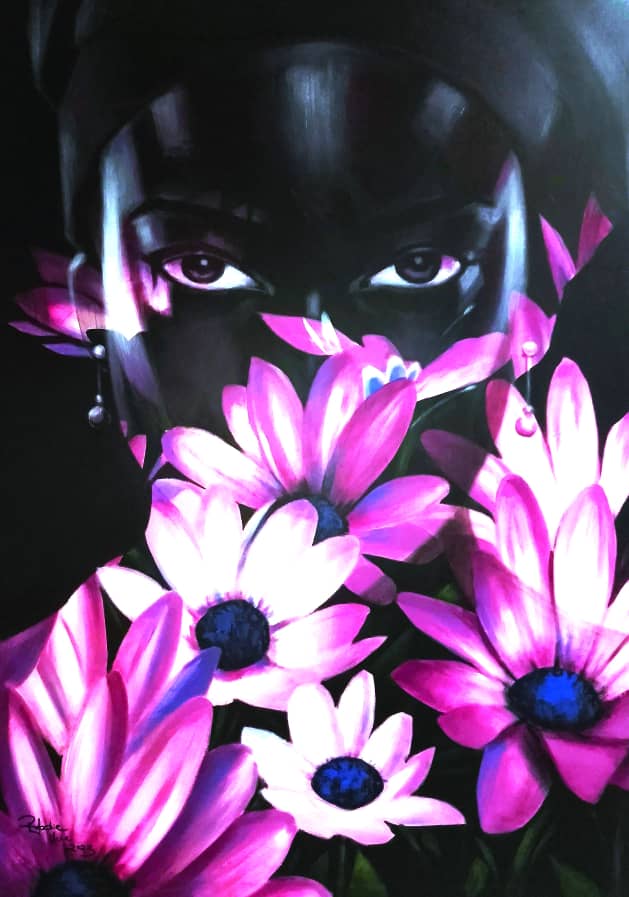
The theme draws from life lessons on a variety of subjects such as discernment, vulnerability, mental strength, mental health, clarity, purpose and our understanding of the physical and metaphysical worlds.
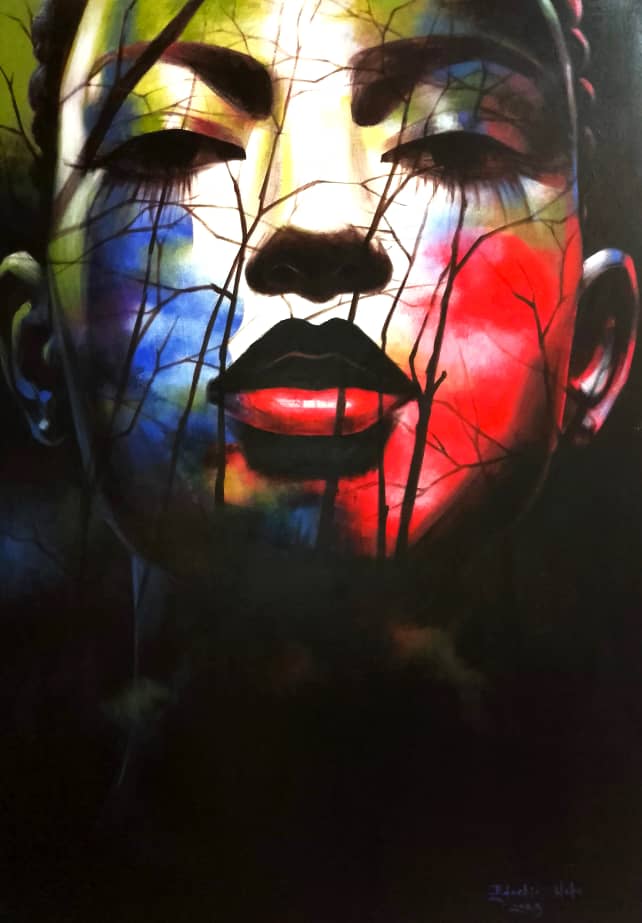
There’s often a deep emotional or spiritual layer to your paintings what role does memory or personal experience play in your creative process?
Personal experience colours my view of a lot of subjects. I would rather speak from experience than speculate. That way I actually have a full understanding of what I am talking about. And yes, creative expression is an emotional endeavour. I dig deep to find honest questions and answers on the subjects I engage with. And from my research and life experience, the metaphysical world governs the physical world. So one is an extension of the other and you cannot discuss any of them in isolation.
How has living and working in Lagos shaped your art over the years, especially in terms of style, mood, or subject matter?
I am an introvert. So while artists typically talk about being influenced by their surroundings, my art is a response to the larger planetary and cosmic reality in which we find ourselves. That’s why my subject matter isn’t tied to race and culture in the traditional sense. I often engage with the philosophy and societal mindset that influences culture, trends and thought processes rather than the cultural practices themselves. So while I am sure living in Lagos has been influential in some way, I can’t quite identify what those influences are.
Coming from a family with a legendary figure like your father, Peter Edochie, how has that legacy influenced your path not just personally but artistically?
The talent and values that I have as an adult and a man were passed down to me from my parents. So, yes, the similarities and influences are heavy from creativity to ethics, philosophy to parenting style. I will say that I come from a family of centrists. Politically, spiritually and culturally, my family is right of center. What that implies is that we are more conservative than liberal but not heavily conservative. More like a blend of both worlds but right-leaning.
Would you say there’s a particular message or feeling you want people to leave with after viewing “All the Leaves Are on the Ground”?
I always like my audience to contemplate life deeply. Who are we? What are we? Why are we here and what’s our purpose? Are we here willingly or are we hostages in a predatory system that thrives on our amnesia? Is our knowledge of life the consequence of personal education through research or the result of societal indoctrination? These are the kinds of fundamental musings I wish to inspire in my audience. My approach to discourses has never been to instruct or deliver my point of view as gospel. It is more of an invitation to ponder and reevaluate the things we think we know and reach our own conclusions.
What mediums and techniques did you explore in this exhibition that were either new or different for you?
My medium isn’t new. I have worked with acrylic paint for nearly thirty years while experimenting with other mediums from time to time. Apart from its quality and convenience of use, acrylic is a tried and tested medium of painting. I don’t gamble with experimental mediums when I don’t know for sure that they will stand the test of time. I want the best for the people who invest in my work so I don’t gamble with their acquisitions. I was just in a client’s house the other day to help them frame an old portrait I did for them seventeen years ago. I saw paintings I did in 2003 in their collection. That was twenty-two years ago and they were all as fresh as ever. All of them are acrylic paintings. None had faded.
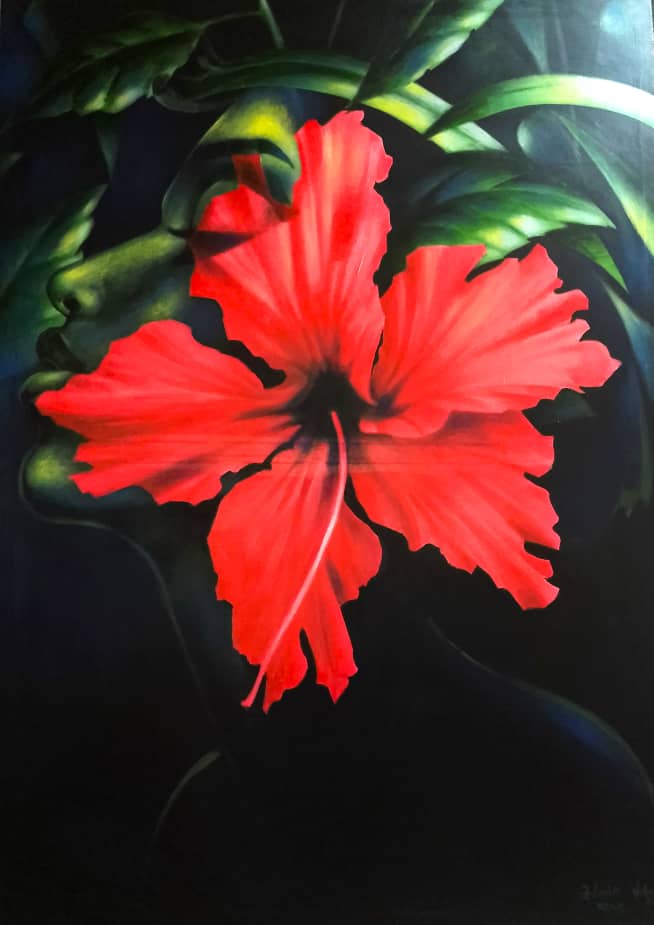
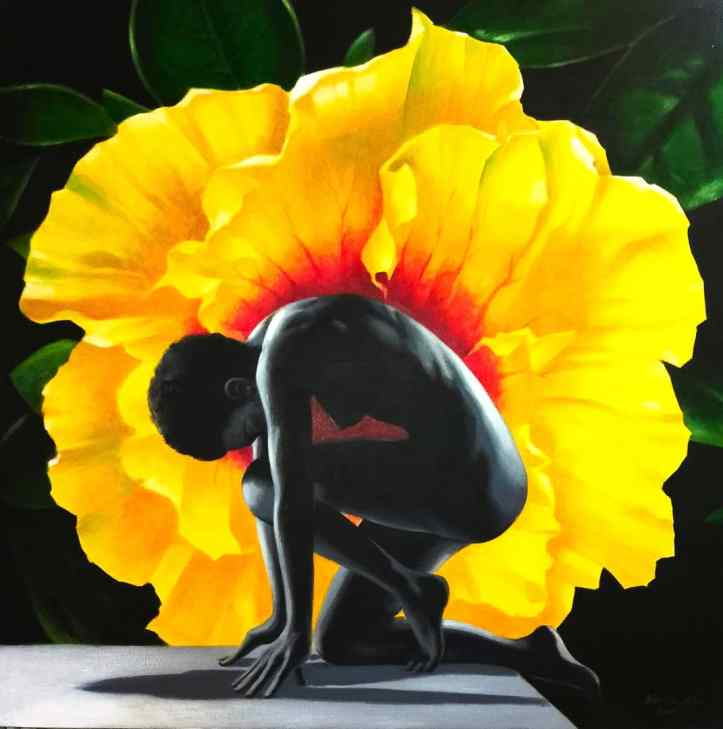
While I am predominantly a figurative artist, I continue to push those boundaries of expression and this exhibition saw me merging figures with florals to create a new visual language that is remarkably different from what I am known for. So in that sense, this collection is stylistically more experimental than my typical style.
You have been part of Nigeria’s contemporary art scene for decades what changes have you noticed in how Nigerian art is received both locally and internationally?
Nigerian art has blown up in the past thirty years that I have been in the scene. The appreciation and valuation of the works keep growing and it’s a beautiful thing. And in this age of social media, it has become a lot easier for up and coming artists to show their talent to the world even without much experience or representation as exhibiting artists.
What does a typical studio day look like for you when you are deep into preparing for an exhibition like this?
I rarely go out when I am deep into work. If I do, it can sever my connection to the art and it can take a while before the work lets me in again. So I wake up, pray, shower, eat, work and go to sleep. Following day, I press repeat. My concepts are often fully developed when I am working on a show. So I have a clear understanding of what the body of work is about. I find it is best to work this way so as to stay on topic. I read and research a lot too but often when I am not busy painting.
As someone who balances artistic vision with the demands of the art market, how do you stay true to your voice in an increasingly commercial space?
This can be tricky. That’s why I often advice younger artists to have alternative sources of income. It takes away the pressure of commercializing your art to the point of focusing exclusively on ‘what sells’. This enables you do the kind of art you really want to do without worrying about whether it will sell or not. I just endeavour to do quality work. If I succeed, the work always finds its buyer eventually.
What is next after “All the Leaves Are On the Ground” are there any future projects, collaborations, or ideas already taking root?
Oh yes, I have several ideas for new projects both in the short and long term. But it is too early to discuss them. But yes exciting things are in the works.
What is the attraction for you between the old and modern art galleries?
Frankly, I like all kinds of art and galleries. If the works presented are good, they will always appeal to an audience. But I can say that I generally lean towards art that reflects good craftsmanship. Just like only talented singers can sing, I like seeing evidence of talent in the art work before me especially in this day and age where anything can be art.
Interview/Ireho Aito/Don’t Keep Your Art in the Finger. Images/Artworks credit: Uche Edochie

