Remember the Prof? Professor Yusuf Grillo, the man of honour and diligence? Four years after his passing, some of Nigeria’s brightest, master artists are celebrating him in a moving exhibition at his museum and gallery in Ikeja. It feels less like an art show, more like a family reunion with the master still in the room. Writes Ireho Aito.
The heavy hum of Lagos traffic from Balogun end of the popular Awolowo Road in Ikeja fades the moment you step into the middle class neighbourhood of Ogunlowo Street. The neighbourhood is made of high heeled residents, except the noisy generator, typically coming out of a residence turned into office apartment which is now very common in Lagos since the end of COVID – 19 lockdown.
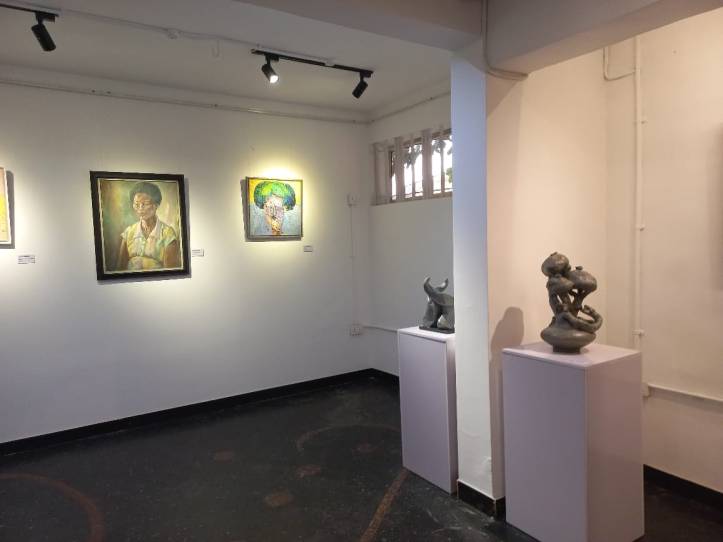
Getting close to the edifice known as Grilloart Limited in Ikeja where the museum and gallery are both situated, the air feels cooler, calmer, as though time itself has slowed to make room for memory.
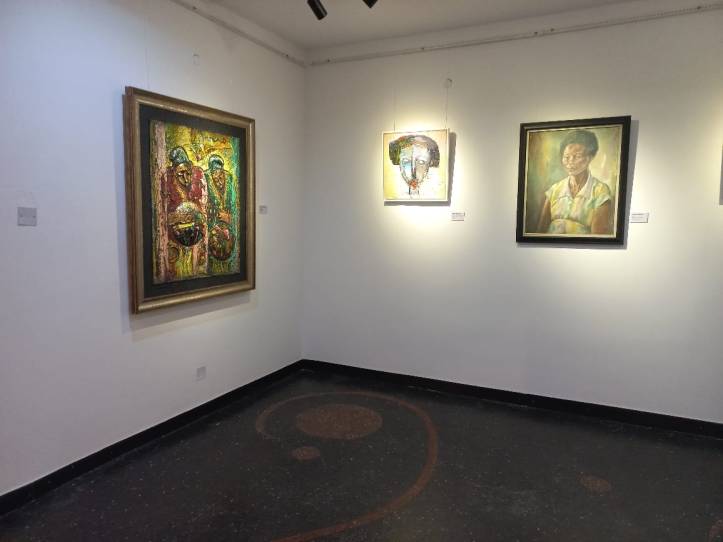
Sincerely writing, on the white walls, the signatures of legends seem to glow with their own quiet light, and one name lingers in every corner, Professor Yusuf Adebayo Grillo (1934–2021).
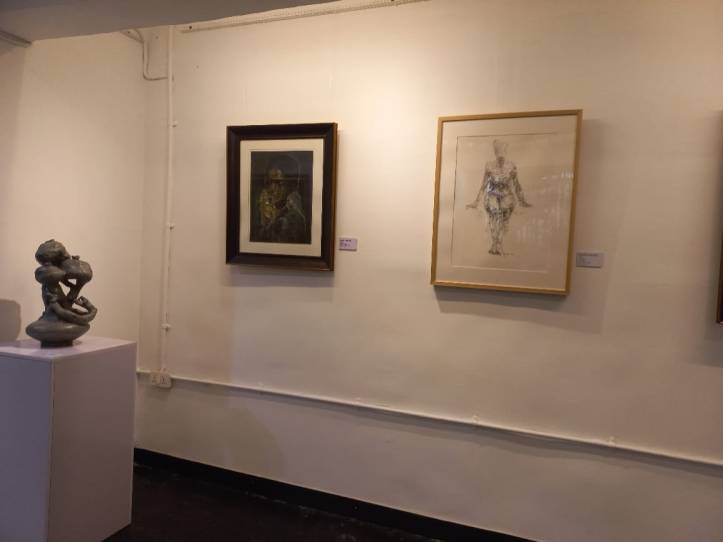
Grillo was more than a painter. He was a pioneer of modern Nigerian art, a teacher at Yaba College of Technology who shaped countless students, and the first president of the Society of Nigerian Artists. He was also a man of deep humility who gave scholarships, opened doors, and guided without noise. To his students, he was not simply a lecturer; he was a compass pointing them towards their destinies. Four years after his passing, this exhibition, “Lineage of Masters,” feels like his spirit has returned to walk among us once more. And this is fourth memorial exhibition in honour of a visual art crusader.
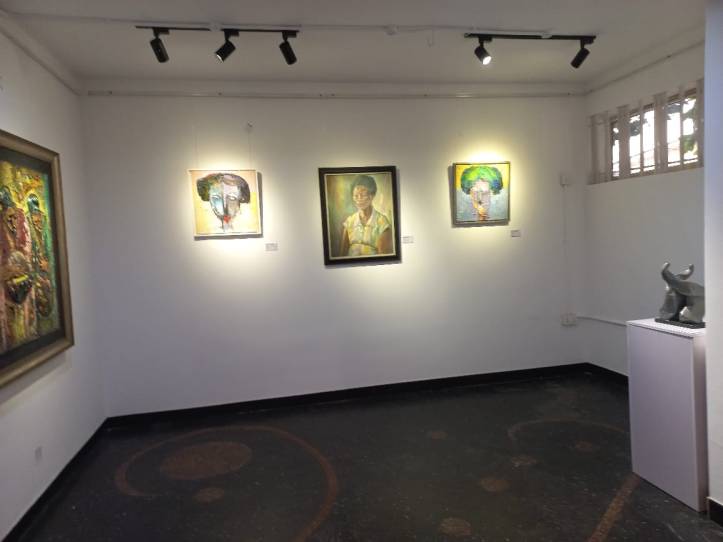
The show, which opened on the 23rd of August and runs until the 13th of September, is no ordinary exhibition. It is a reunion. Thirteen artists, twenty-three works, and a thousand echoes of a master’s influence. The opening ceremony from Tsemaye the current manager of the museum and gallery was nothing short of a wonderful reunion. The attendees was made up of virtually everyone in the visual art space. From former colleagues, gallery proprietors, curators, artists and friends of the family were all around to witness another epoch making event.
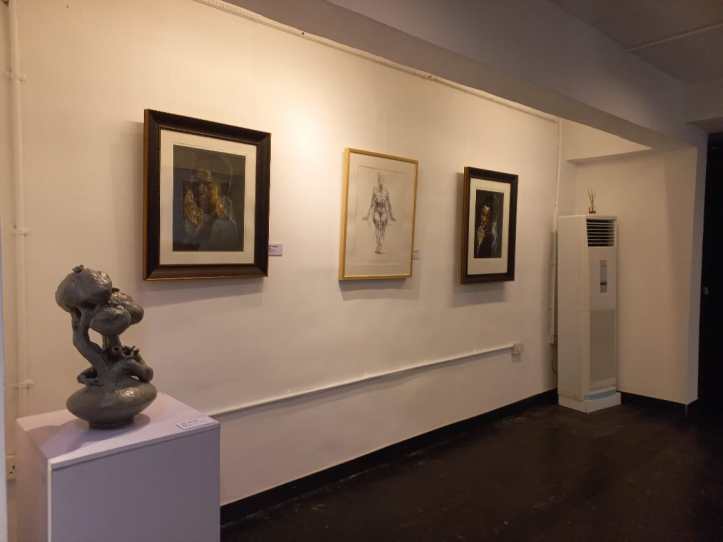
Tsemaye welcomes you very well as she is well nurtured to do so. In fact, someone would surely get consumed with the collection of mastery on display at this fourth memorial exhibition.
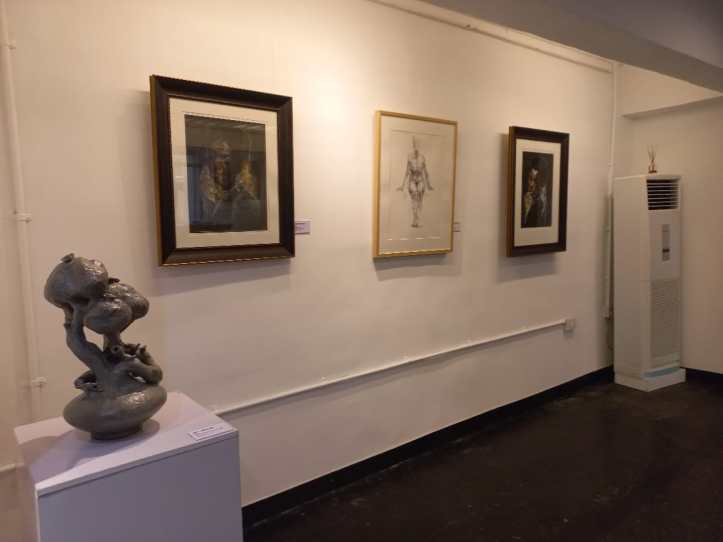
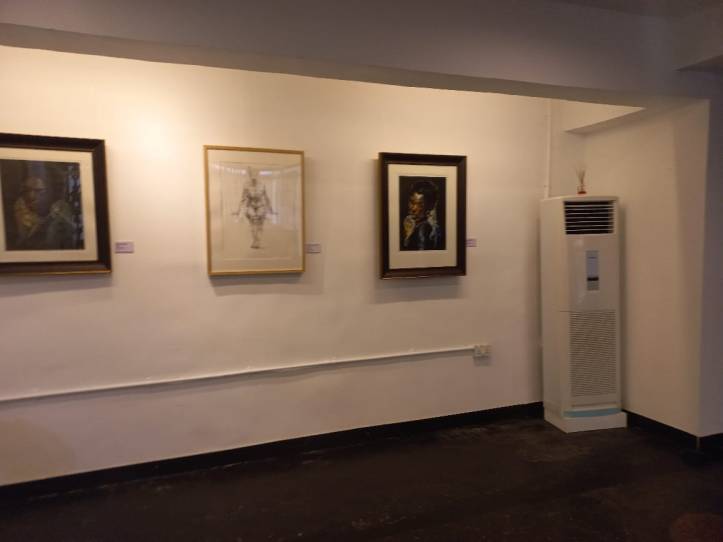
Near the entrance, Sam Ovrait’s Black Tutu series, portraits from 1988 greet viewers with elegance, their pastel forms glowing on black paper like ghosts of a bygone era.
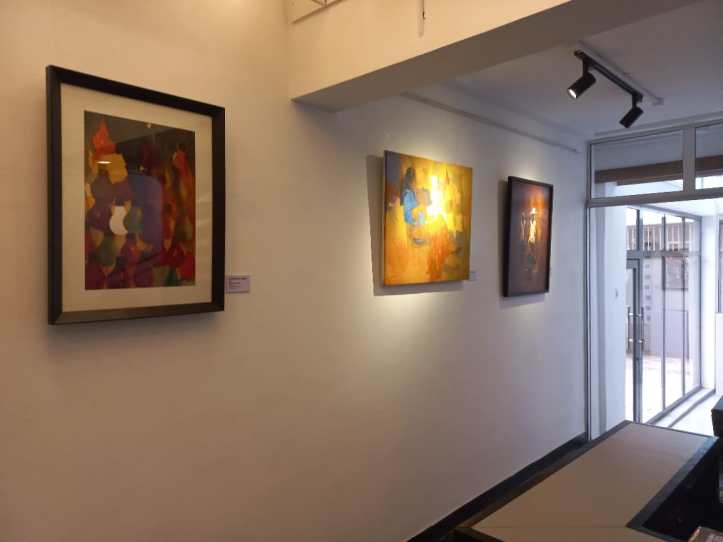
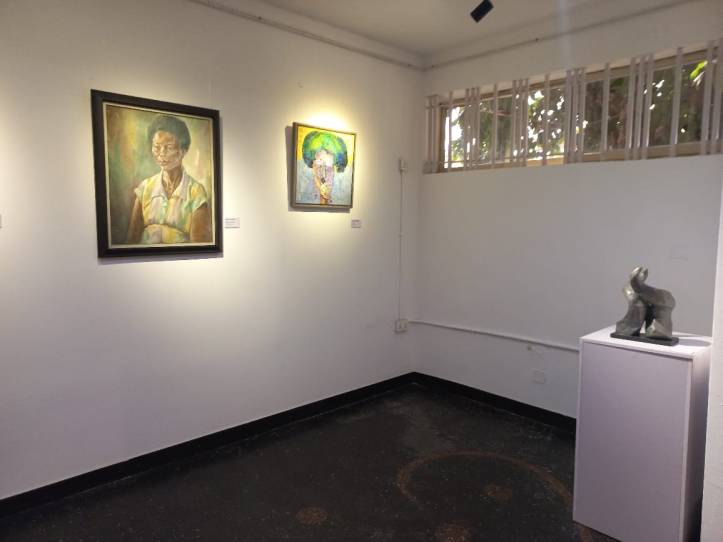
A few steps away, Segun Adejumo’s Blue Shirt stares back quietly, a painting that feels both personal and universal. Duke Asidere demands attention with bold oils like Rainfall and Things I Learnt From My Mother, his colours spilling with energy that dares you not to look away. Anyone that is familiar with Asidere knows about his musing on females a lot which has become one of signatures. He has never undermined the role his mother played in his formative years and he keeps coming back for his sweet mother.
Still close by, the works of Edosa Oguigo take you on a journey through time with Tina from 1985, a portrait of a Yabatech model, carries the charm of youth, while Wedding Gift (1994) feels like opening a family album.
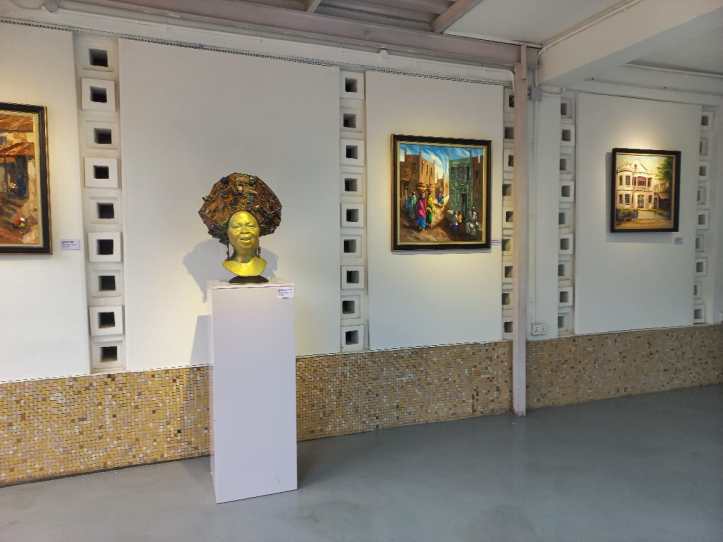
The exhibition balances memory with experimentation. Kunle Adeyemi’s Paintocast The Minstrels (2011) and Wheel of Fortune 1 (2006) show his playful blend of mixed media, while Onabanjo Lekan offers quiet grace in Salient Personality, a watercolour that whispers rather than shouts. Kehinde Sanwo celebrates heritage with Dignity of Labour (1990) and Ule Sule Gbadamosi (2012), paintings that honour resilience and community.
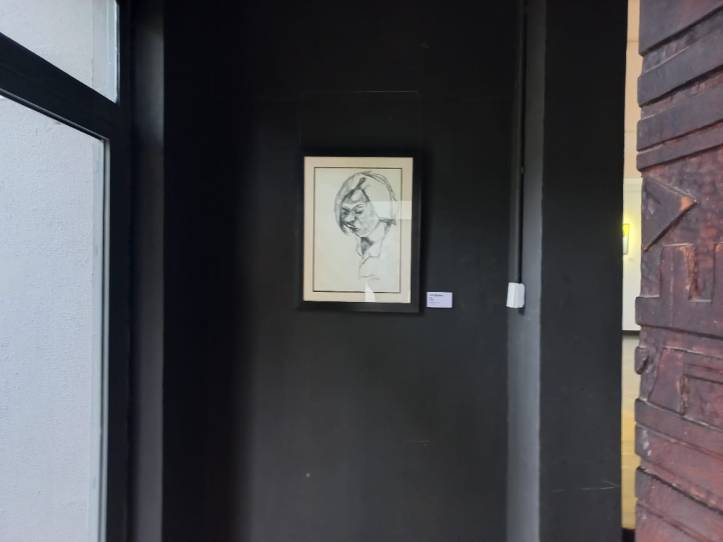
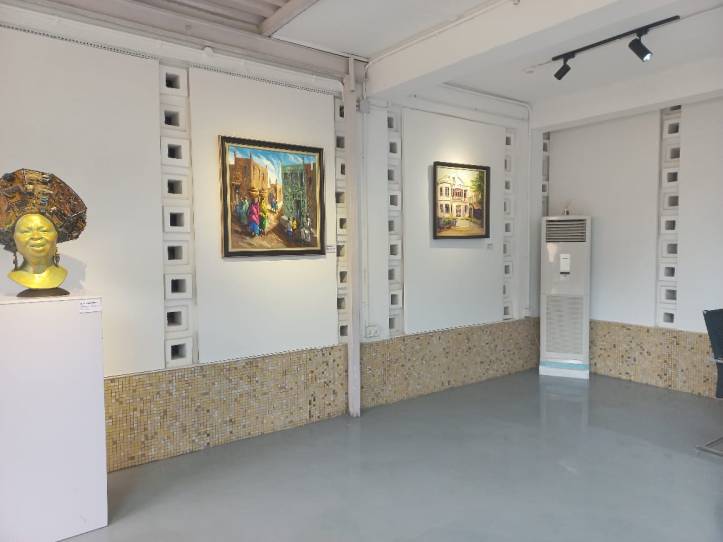
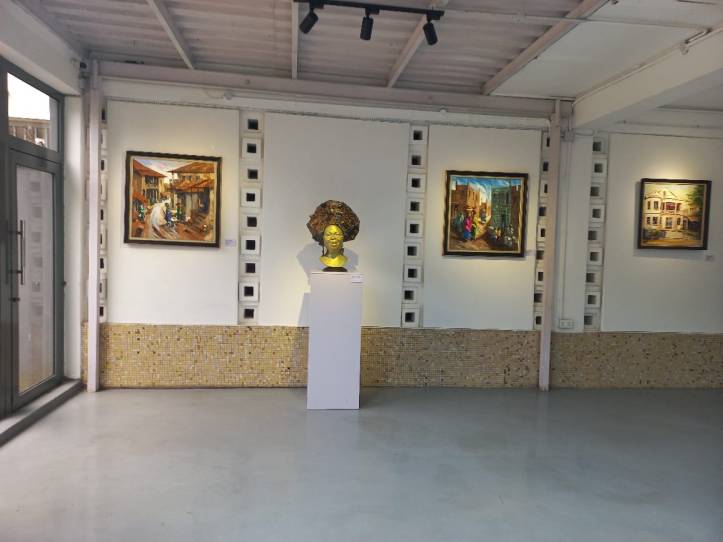
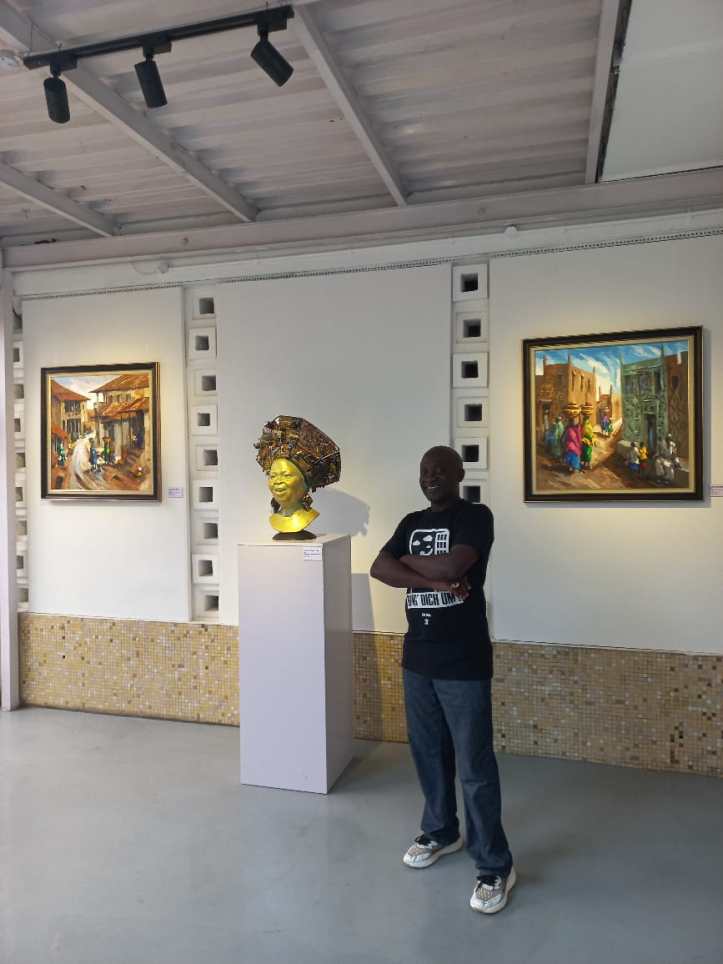
UK based Lara Ige-Jacks, the only artist that did not grace the opening day but visited the gallery earlier during the preparation captures geography and memory in her Black Street in Tudun Wada Kano and Ikirun, Close to My Hometown both acrylic works painted in 2001.
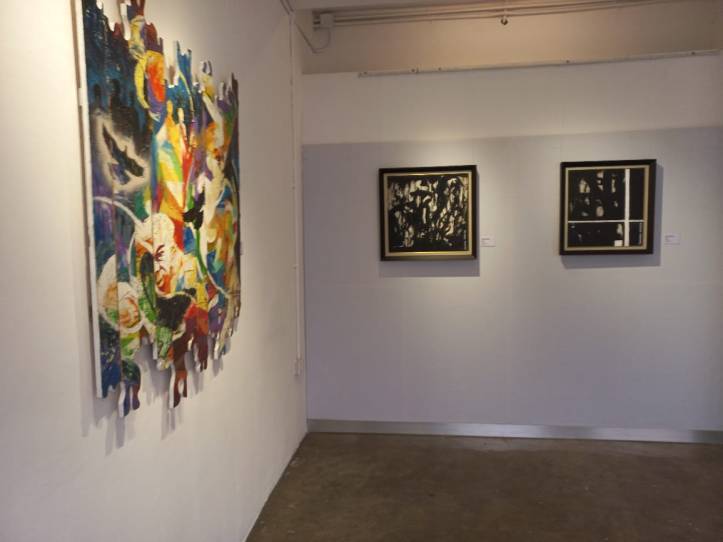
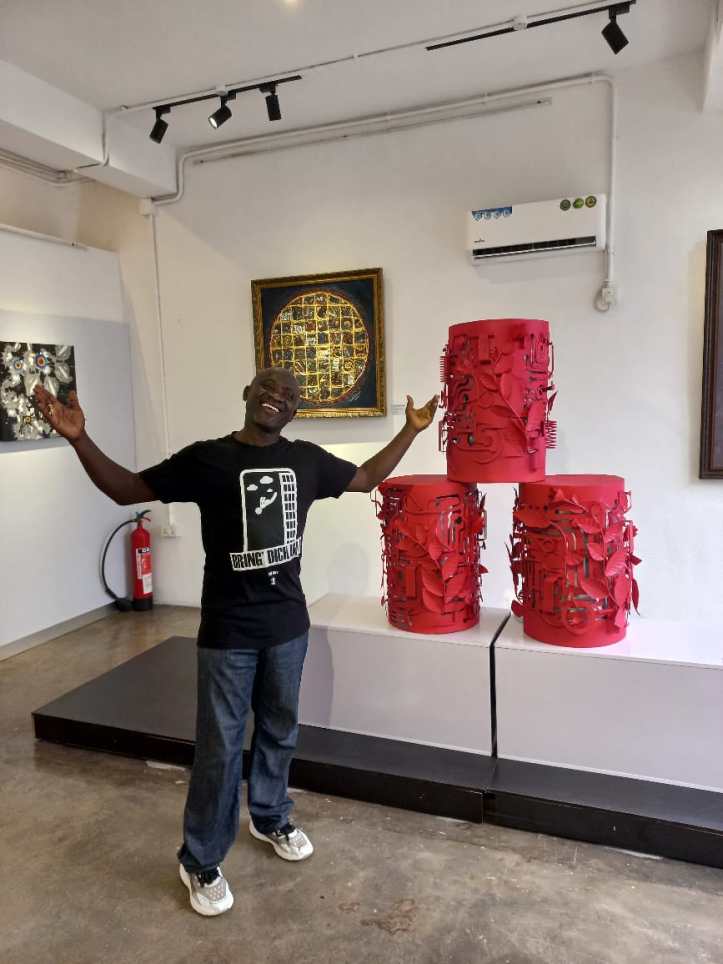
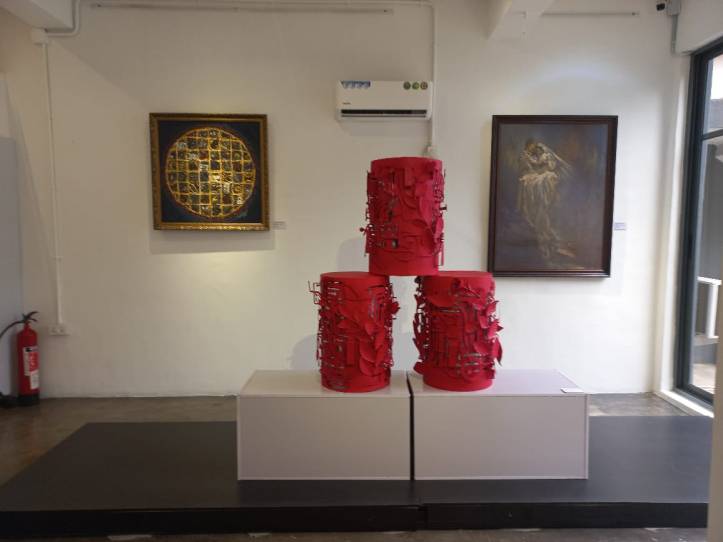
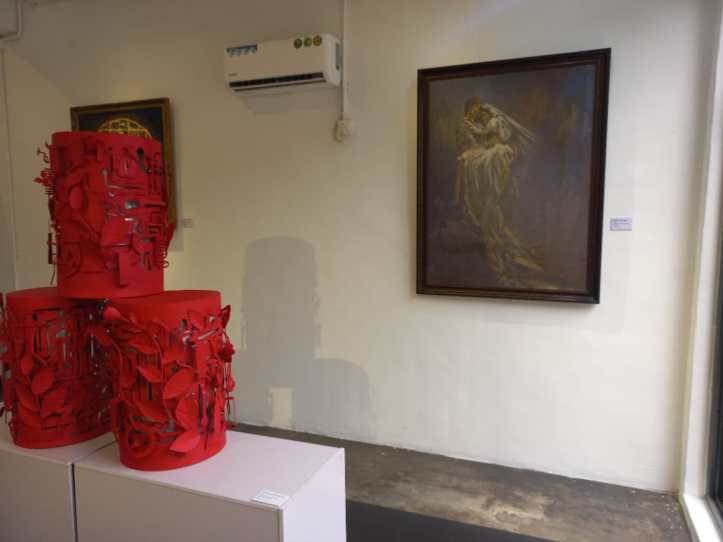
Sculpture and mixed media find their place more in the legendary room with hard working Adeola Balogun bends metal into meaning with Grandma in Connection with Gen-Z (2023) and The Red Pyramid of Red Roses and Thorns (2025) which adds colour trims to.the room.
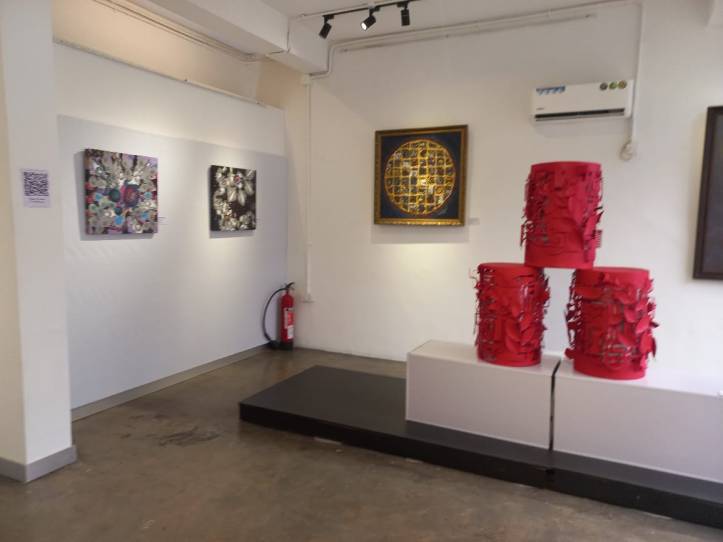
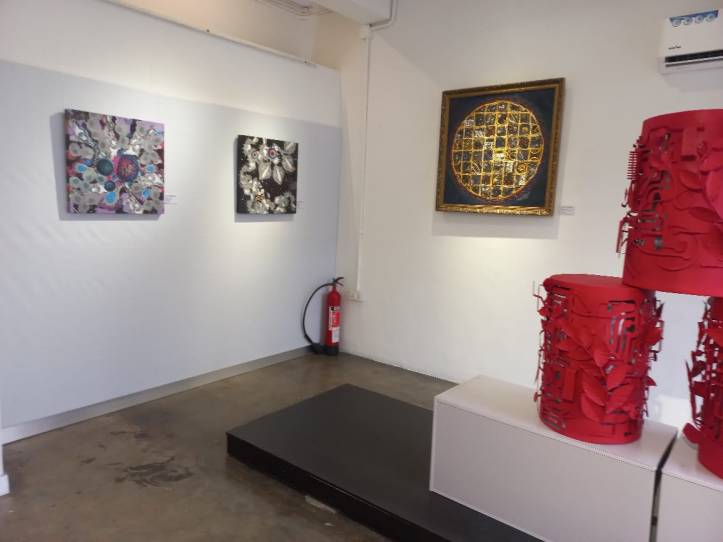
Odun Orinmolade, now a lecturer at Yabatech uses collage to explore language itself in her Particles of Word series. Ben Nwosa keeps the rhythm alive with Eyes On and Dance (2020), both acrylics that sparkle with motion.
Sam Ebohon’s Spirit of Peace (2019) and charcoal drawing Shania (2013) remind us of the strength of simplicity. And very simply arranged on the wall with a lot of influence.
Finally, Ato Arinze brings the circle to a close with fired clay. His It Takes Two to Tango and Tree with a Fallen Branch (2024) are sculpted metaphors for resilience, fragility, and connection.
And through it all, Grillo is present. Not in body, but in spirit. His indigo tones, his love of geometry, his insistence on truth, and his generous mentorship run like threads through the works of every artist gathered here. His brush may have stilled, but his influence lives in each stroke, each sculpture, each story.

Walking through Lineage of Masters is more than an encounter with paintings and sculptures. It is a cultural pilgrimage and an intimate reminder that an artist’s greatest masterpiece is not what he paints, but who he inspires. Each work, whether pastel, oil, metal, or clay, carries a piece of Grillo’s eternal flame.
Leaving the gallery, you realize you are carrying something with you, not just the memory of paintings, but the sense of being part of a lineage. A chain that began with Yusuf Grillo and continues through the hands of those he touched. He taught us that art, like life, does not end. It transforms, it multiplies, it lives on.
Words/ Ireho Aito/Don’t Keep Your Art in the Finger!

