
Words – Ireho Aito | Don’t Keep Your Art in the Finger! Photographs – Selma Etareri
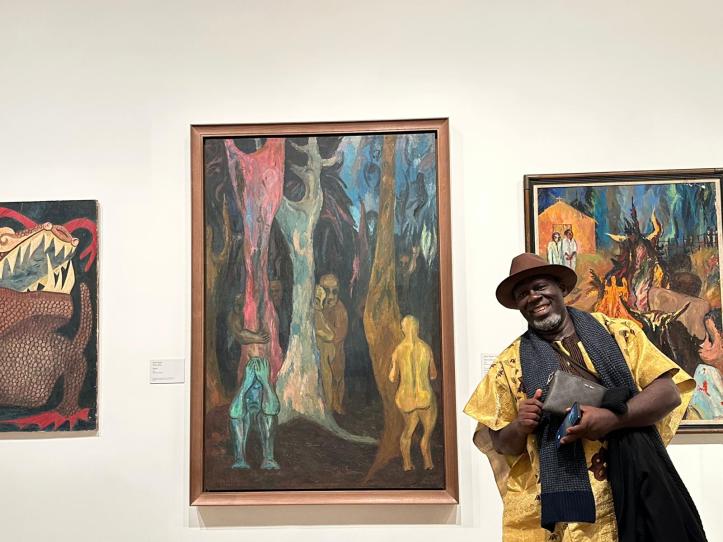
When Nigerian Modernism opened at the Tate Modern in London, it was more than a milestone exhibition. The exhibition was a moment of reckoning. For the first time, the works of Nigeria’s pioneering modernists took their place within one of the world’s most influential art institutions, alongside the greats of global modernism. The exhibition illuminated a truth long known at home that Nigerian art has always been global in vision, deeply rooted in history, and profoundly spiritual in expression.
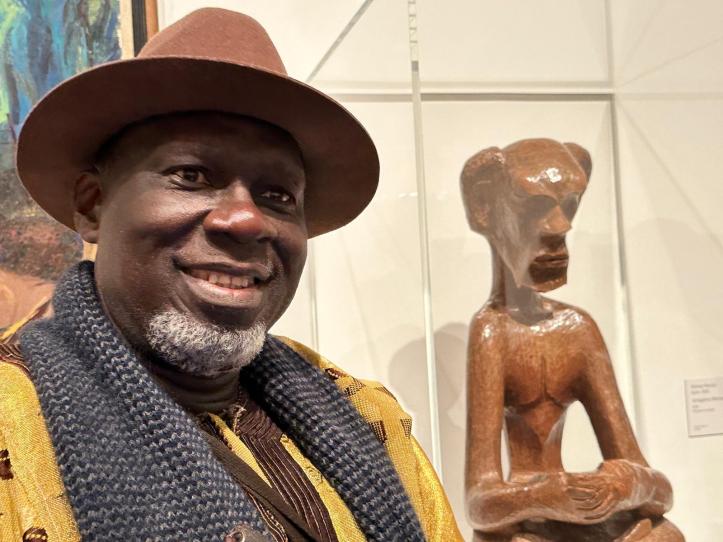
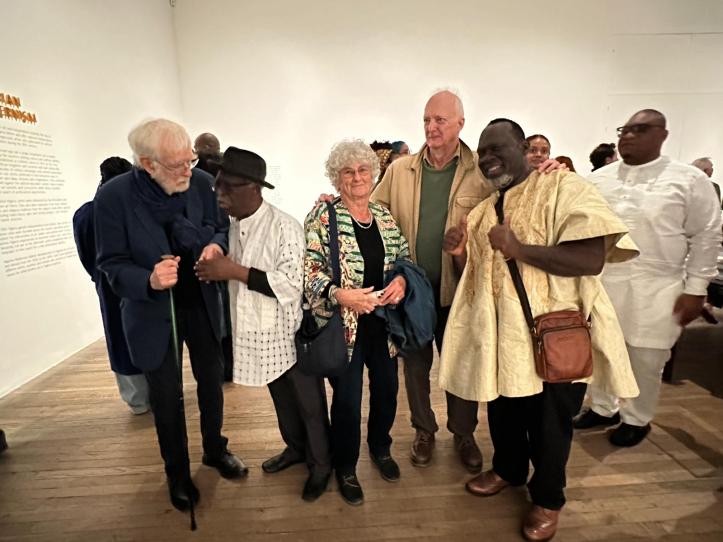
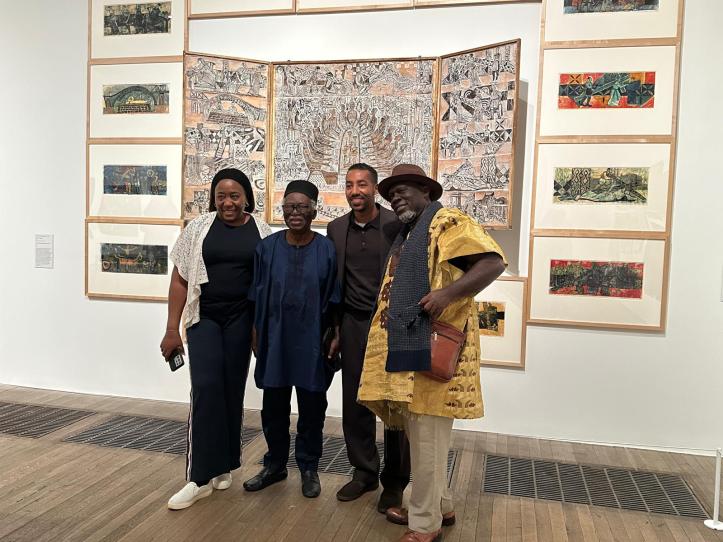
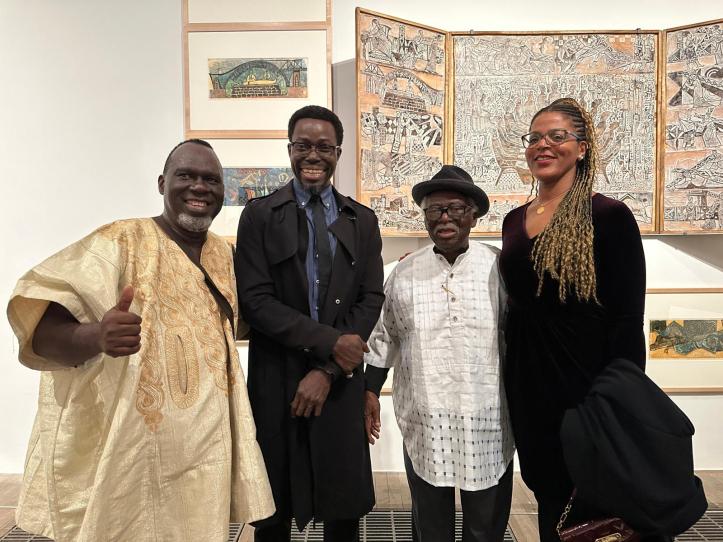
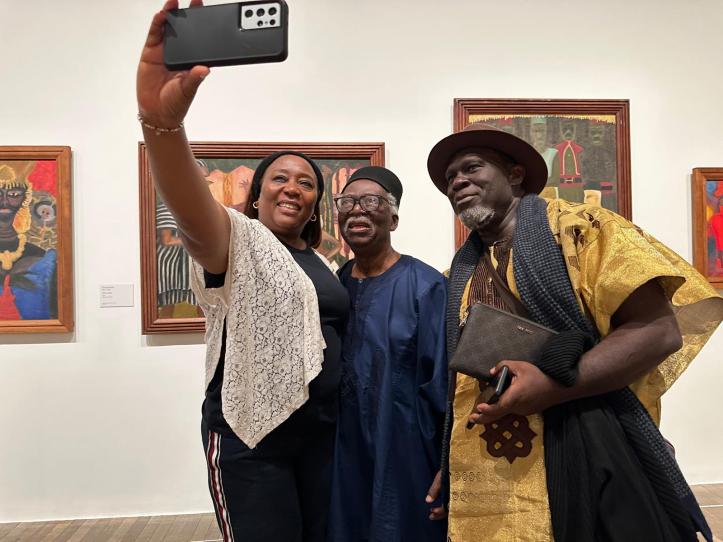
For Mudiare Onobrakpeya, Ph.D. artist, curator, and son of the legendary Prof. Bruce Onobrakpeya, the experience was both deeply personal and symbolically national. Standing before his father’s works displayed within the Tate’s hallowed halls, he witnessed not just an exhibition but a bridge between generations, continents, and creative legacies.
Mudiare Onobrakpeya has given the global world on how to believe in generations coming after the Masters with his curatorial practice that has created the access for young and emerging creatives not only in Nigeria but Africa as a whole.
And for sure, the success stories of Ovuomaroro Gallery, Harmattan Foundation and Yearly Workshops at Agbarha Otor in Delta State, has the sterling input and contribution of a visionary like Mudiare Onobrakpeya in beautiful stories recorded today.
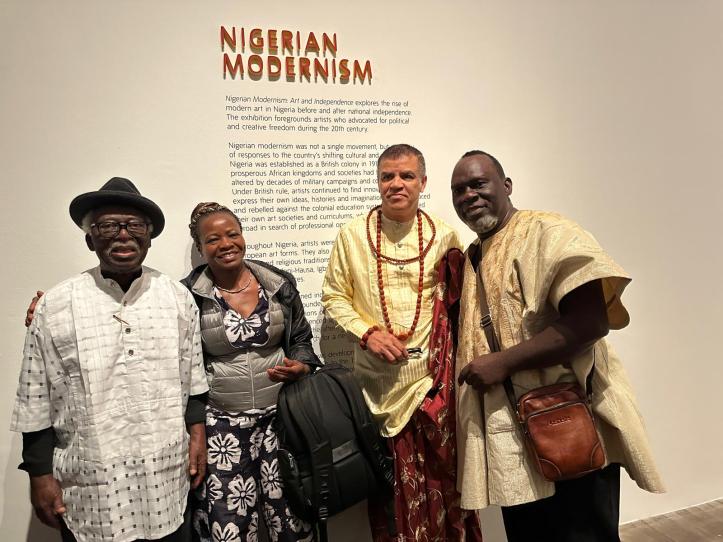
In this iBAND Magazine exclusive, Mudiare reflects on the meanings and milestones of Nigerian Modernism at Tate Modern. From redefining modernism through an African lens to the evolution of curatorial practice on the continent, his insights speak to the spirit of a new artistic awakening. He also shares lessons for the next generation of artists and curators and the crucial role of storytelling platforms like iBAND Magazine in sustaining Nigeria’s growing global presence.
Q&A with Mudiare Onobrakpeya
iBAND – Nigerian Modernism at Tate Modern is a landmark exhibition that connects Nigeria’s artistic past with global modernism. How did it feel to witness these seminal works, including your father Prof. Bruce Onobrakpeya’s, displayed on such an international stage?
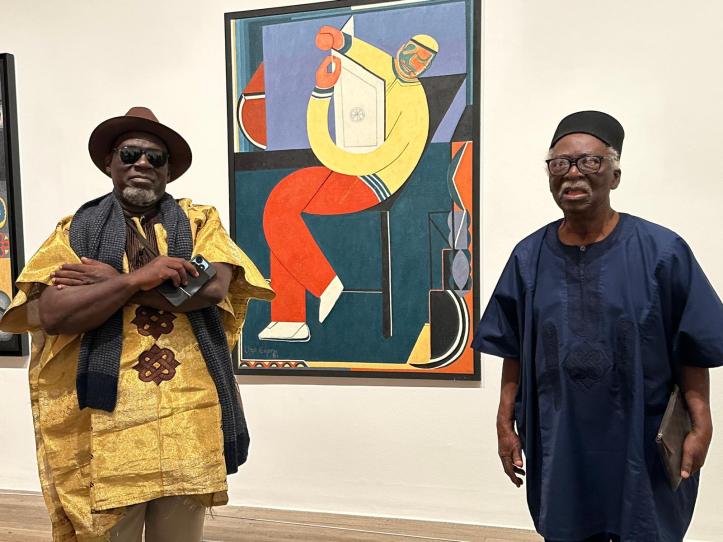
It was a profoundly moving experience, one that transcended pride and entered the realm of legacy. Seeing my father, Prof. Bruce Onobrakpeya’s works illuminated within the walls of the Tate Modern was not just a personal moment; it was a national one. It affirmed Nigeria’s rightful place in the global modernist conversation and celebrated the depth, intellect, and spiritual resonance of our art. For me, it felt like watching history bow in acknowledgment. This is a bridge between generations, continents, and the enduring power of African creativity.
The exhibition highlights artists who merged indigenous traditions with global ideas. In your view, what does “modernism” mean within a Nigerian or African context today?
In the Nigerian and broader African context, modernism is not merely an adoption of Western artistic ideas but a reinvention of them through our own cultural lens. It is the dialogue between tradition and innovation, where ancestral symbols, folklore, and spirituality find new expression in contemporary forms. Modernism here means self-definition, that is, the power to reinterpret global ideas without losing our identity. It is Africa speaking in her own visual language, confident, evolving, and timeless.
iBAND – As a renowned curator, how would you appraise or critique the curatorial journey of African curators using this exhibition as a benchmark?
I would say the curatorial journey of African curators has reached a moment of remarkable maturity and purpose. This exhibition at the Tate Modern stands as evidence of that evolution, a masterful balance between scholarship, sensitivity, and vision. It shows how African curators are no longer content with merely being represented; they are now the authors, interpreters, and narrators of their own histories.
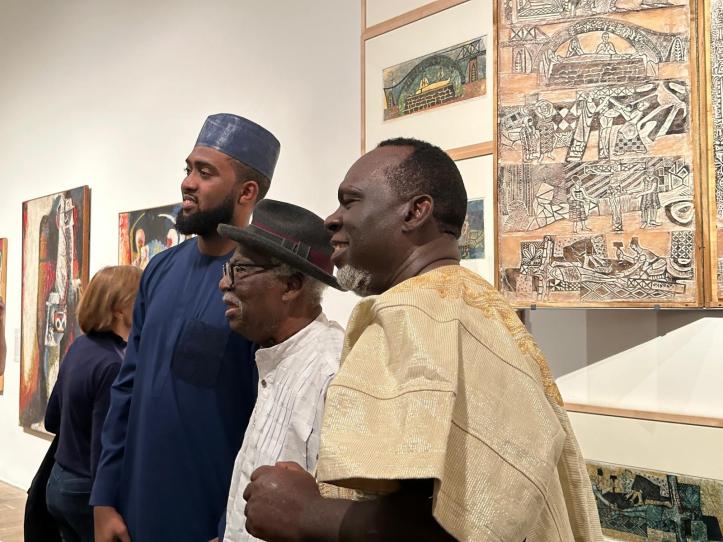
Using this exhibition as a benchmark, one sees curators who understand both the rigor of global museum standards and the spiritual pulse of African creativity. They are shaping narratives that are intellectually grounded yet emotionally resonant where context, provenance, and identity are not footnotes but the central story. It’s a new era where Africa curates itself with authority, nuance, and pride.
iBAND – Nigerian art has always carried stories of resilience, identity, and innovation. What lessons do younger artists and curators stand to learn from the modernist pioneers featured at Tate Modern?
The modernist pioneers at the Tate Modern embody lessons that go far beyond technique, they represent courage, conviction, and an unyielding faith in purpose. These artists created in times when there were no guarantees of recognition or global validation. Yet, they built worlds from intuition, cultural memory, and experimentation.
For younger artists and curators, the key lesson is that authenticity endures. The pioneers remind us that art rooted in one’s truth, in heritage, in lived experience will always find resonance. They also teach the discipline of excellence: that mastery comes from patience, curiosity, and the willingness to innovate without abandoning one’s roots.
In essence, the modernists teach that the future of Nigerian and African art will not be shaped by imitation, but by imagination, by those who, like them, dare to blend tradition with vision and turn their local stories into universal languages.
iBAND – Finally, what does this exhibition say about the future of Nigerian art on the world stage, and what role do you see for platforms like iBAND Magazine in sustaining that conversation?
This exhibition makes a powerful statement for the future of Nigerian art is no longer something on the horizon; it is here. The inclusion of our masters at the Tate Modern confirms that Nigerian creativity now stands at the very center of global modernism. It marks a turning point where our stories, aesthetics, and philosophies are helping to redefine what the world understands as beauty, innovation, and identity.
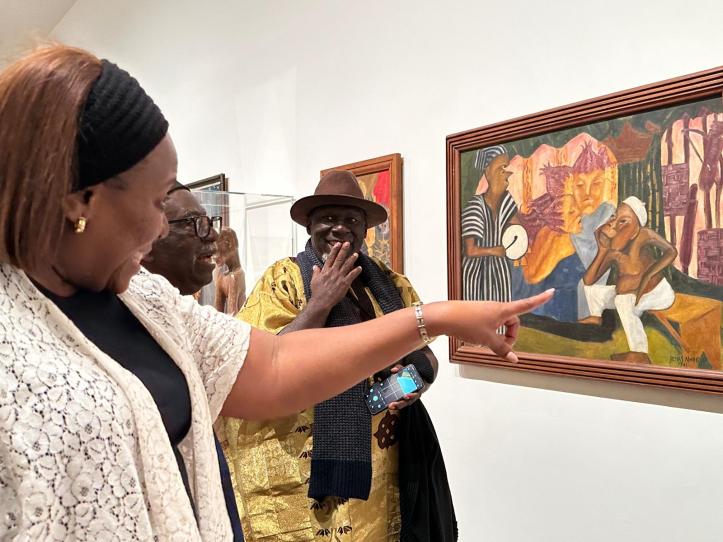
Platforms such as iBAND Magazine play an essential role in sustaining this new wave. They keep the conversation alive long after the exhibition ends by documenting, analysing, and giving voice to the people and ideas that fuel our artistic landscape. Through their work, artists, collectors, curators, and thinkers remain connected in one continuous dialogue that strengthens the foundation of our art world.
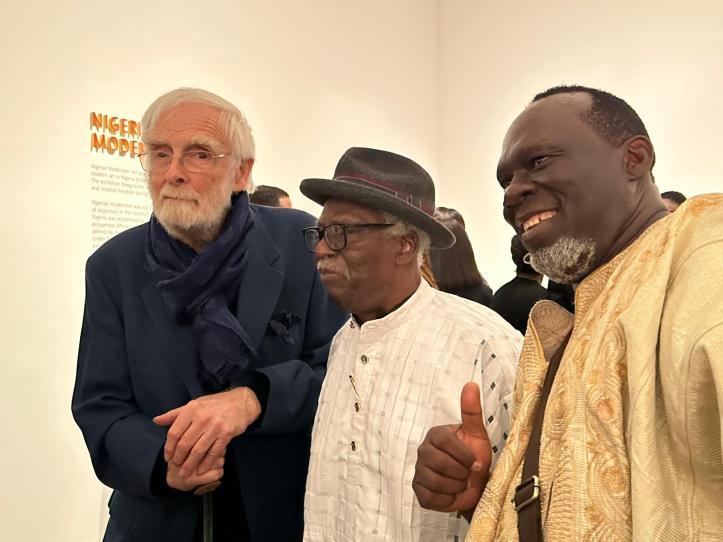
Ultimately, the future will be shaped by those who can carry forward the spirit of exhibitions like this through consistent storytelling. Nigerian art will continue to ascend not only because of its brilliance, but because of platforms like iBAND that keep its flame burning, ensuring that its story is retold, reimagined, and renewed for generations to come.
Nigerian Modernism at Tate Modern, London runs from October 8 2025 to 10 May 2026

