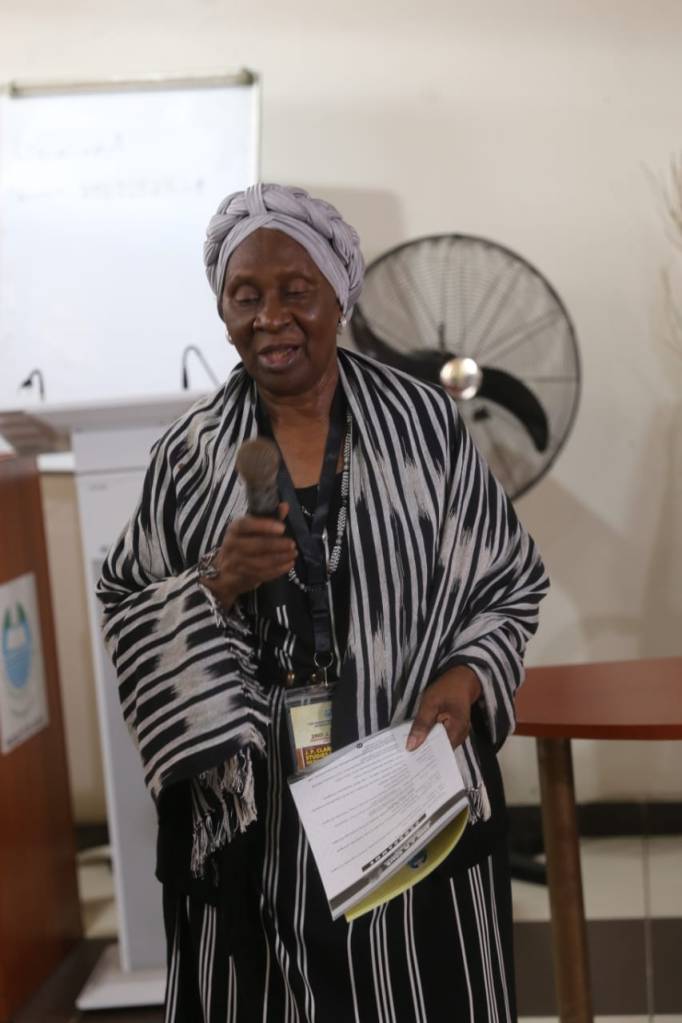
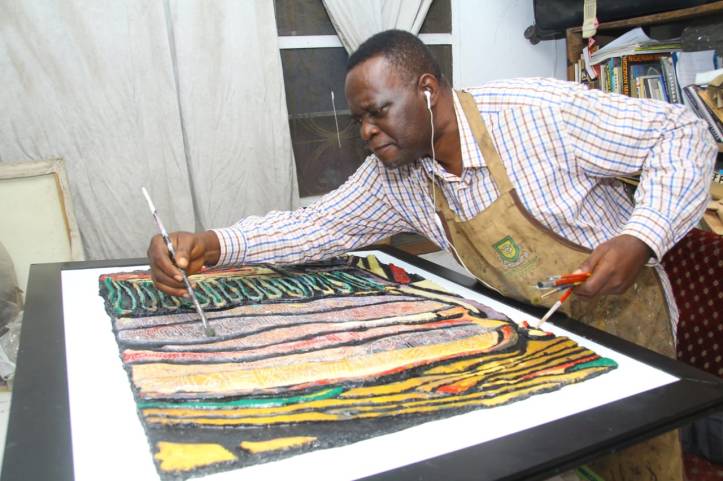
Visiting Bruce’s studio in Mushin, she was captivated by his prints. In fact, one of her earliest acquisitions came from a piece Bruce had discarded, dissatisfied with its outcome. Professor Clark saw beauty where the artist saw imperfection. She picked it up and told him, “Don’t worry, I’ll keep it.”
In a nation where art often struggles for the attention it deserves, few individuals have devoted their lives to preserving its pulse and memory like Professor Ebun Clark. Her story is not just one of collecting but of curating Nigeria’s visual identity through decades of quiet dedication, intellectual rigor, and heartfelt passion.
As she marks six decades of collecting prints, Professor Clark opens a new window into her world where prints speak louder than paint, where every acquisition is an act of faith in creativity, and where each work reflects the cultural heartbeat of a nation in evolution.
This exhibition at the National Museum, Onikan Lagos, is more than a gathering of artworks; it is a pilgrimage through time, an encounter with the mind of a scholar, the eye of a collector, and the soul of an artist’s ally.
In this piece, we journey through Professor Clark’s legacy, her relationships with pioneering artists like Bruce Onobrakpeya, her influence on emerging talents, and her philosophy that art collecting is a form of cultural authorship.
It is a story of vision, courage, and stewardship told through the eyes of those who knew her impact and felt her generosity.
Words Ireho Aito | Don’t Keep Your Art in the Finger!
This Sunday, the serene halls of the National Museum, Onikan Lagos, will come alive with colours, textures, and stories as Professor Ebun Clark, Nigeria’s trailblazing art collector and scholar, opens an extraordinary exhibition of her collection of prints.
Organised by the Oluwani Creative Arts Foundation, the exhibition is not a commercial show but a cultural celebration, a moment to honour six decades of Professor Clark’s dedication to collecting, preserving, and promoting Nigerian visual art, especially prints.
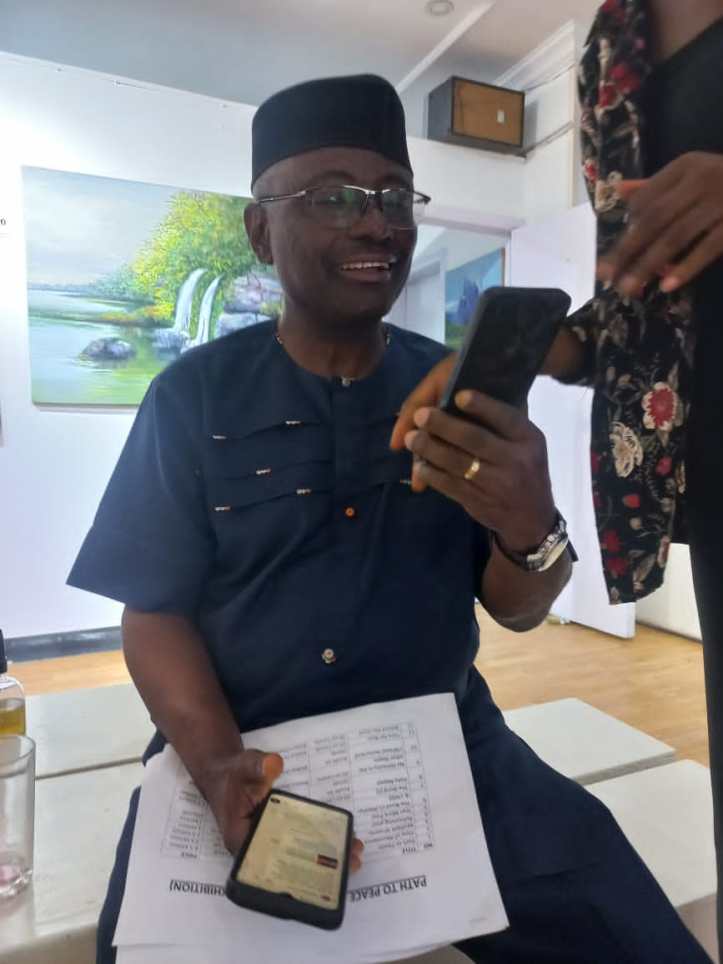
According to curator Moses Ohiomokhare, in a short documentary to honour Ebun Clark, he says, “It was selected for people to enjoy before they move into the greater season of art exhibitions and fairs. It is a no-sales exhibition. It is curated just for you to come, enjoy, learn, and see how much someone else has collected, and what was going on in her mind when she was doing this collection. It’s so educative and worth your while when you come and see it.”
A Journey that Began in 1964
Professor Ebun Clark’s passion for collecting began in 1964, while she was a lecturer at the University of Ibadan, where she started with antique masks. When she later moved to Lagos to join the University of Lagos, alongside her husband, the late Professor J. P. Clark, destiny brought her into contact with the legendary artist Bruce Onobrakpeya.
Visiting Bruce’s studio in Mushin, she was captivated by his prints. In fact, one of her earliest acquisitions came from a piece Bruce had discarded, dissatisfied with its outcome. Professor Clark saw beauty where the artist saw imperfection. She picked it up and told him, “Don’t worry, I’ll keep it.”
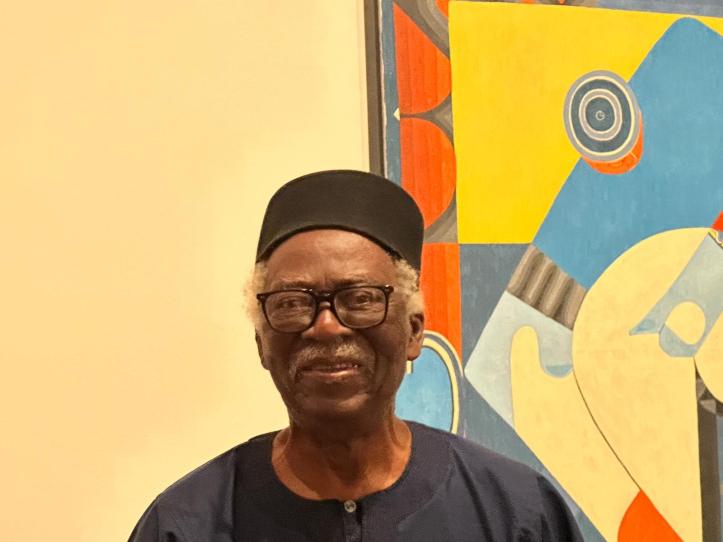
That moment marked the beginning of her lifelong relationship with prints and the start of a collecting journey that would shape generations of Nigerian artists.
Why Prints Matter
In the upcoming short documentary to be screened alongside the exhibition, Professor Clark reflects,
“I started buying prints in 1965. Very few people pay attention to prints, but it’s a fantastic world. It actually covers about 90 percent of visual art. For young collectors who want to start, start with prints and not because they are less important than paintings, but because they’re more affordable.”
This exhibition is designed to show exactly that the beauty, range, and depth of printmaking. Visitors will see miniature prints alongside large-scale works, revealing the versatility of this often-overlooked medium.
Professor Clark adds, “I want to share my journey with prints, show the different types, and in doing so, celebrate Bruce Onobrakpeya, the master of prints. He will have one whole room to himself.”
The Foundation of Greatness
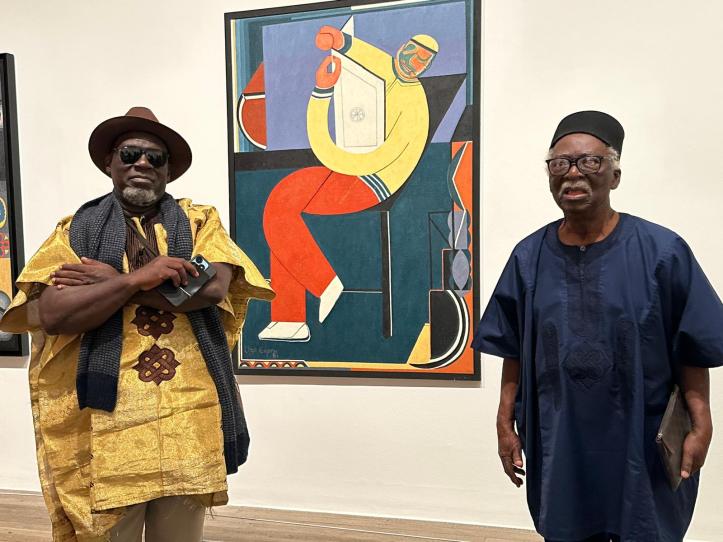
In the documentary, Bruce Onobrakpeya speaks warmly of Professor Clark’s early influence on his career:
“Her legacy as an art collector is only now yielding big fruit. She is a builder that created a rock foundation. Because the foundation is solid, the height I am going appears limitless. That’s the importance of her purchase.”
For Bruce, Professor Clark’s early patronage provided confidence and validation was the kind of encouragement that helped to establish his career and, by extension, shaped the development of Nigerian printmaking.
The Collector Who Became a Cultural Custodian
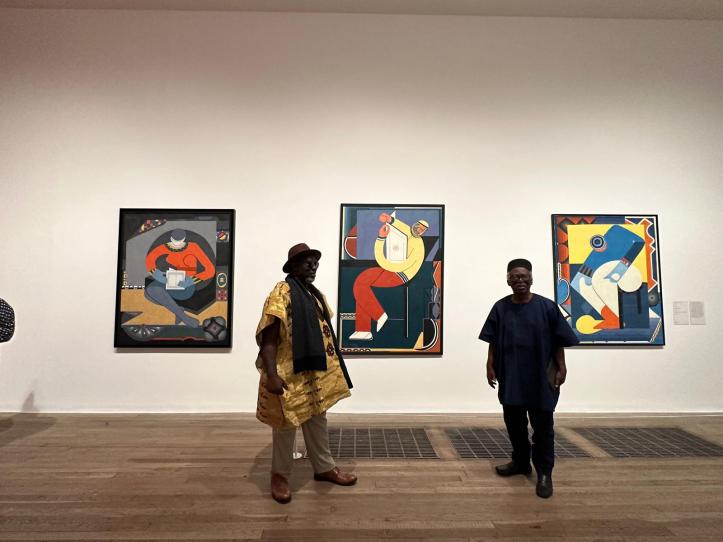
Dr. Kunle Adeyemi, artist, printmaker, and founder of KAS Studios, describes Professor Clark as “a kingmaker in the art world.” He explains more about how she came and created a new dimension for the artists to see, “she doesn’t just collect she studies the artists and supports them. She encourages them and backs her words with action and finances. That’s why her collection is so vast. People like her made Bruce Onobrakpeya who he is today.”
Similarly, Juliet Ezenwa Pearce, one of Nigeria’s distinguished female artists, describes Clark as a mentor and muse:
“Professor Ebun Clark is one of my heroes. Each time she talked about art, I saw visions. Her purchase of my work over three years gave me courage and motivation. She helped me understand that as a woman artist in a patriarchal world, my voice must be strong and defined.”
Juliet’s well-known Female Masquerades series was born from that mentorship, reflecting the depth of Clark’s influence on contemporary female artists.
A Lifelong Dialogue with Art
Mudiare Onobrakpeya, curator and art consultant, calls her one of the first truly informed collectors in Nigeria.
He recalls seeing her ‘Adam and Eve’ exhibition at the University of Lagos in the 1980s and realising that “only someone deeply informed about art could put together a retrospective of that quality.”
Mudiare explains, “her collection is transnational and transgenerational which is a cultural roadmap that documents Nigeria’s modernist evolution. Through her collection, she’s authored herself not only as a collector but as a co-writer of our cultural history.”
The Exhibition and Its Essence
The Sunday event, hosted by Oluwani Creative Arts Foundation, will feature Bruce Onobrakpeya’s works in a special gallery, alongside pieces from Professor Clark’s private print collection spanning decades and artistic movements.
The Foundation, which has sponsored several art exhibitions and young artists, continues its mission to promote Nigerian creativity through this show. For Professor Clark, it’s all about sharing joy and knowledge, “I just want to share my pleasure,” she says simply.
A Legacy Worth Celebrating
As anticipation builds toward Sunday’s opening, one thing is clear and that is, Professor Ebun Clark’s name is forever etched in the story of Nigerian art. She has not only collected works but preserved history, nurtured creativity, and inspired generations of artists and collectors alike.
Her exhibition at the National Museum Onikan promises to be more than a showcase; it will be a visual memoir a testimony of passion, vision, and an unshakable belief in the power of art.

