By Ireho Aito | Don’t Keep Your Art in the Finger! Photographs, Ireho Aito, Babatunde Muyi
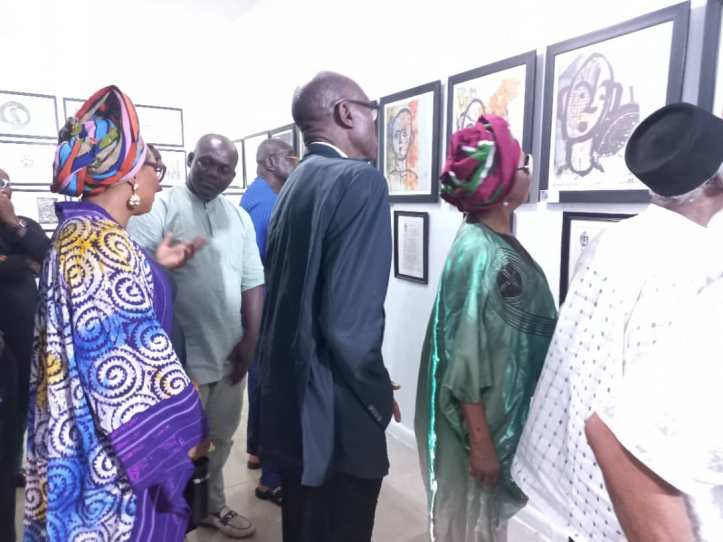
On Sunday, October 19, 2025, the National Museum, Onikan Lagos, opened its doors to a truly historic moment in Nigeria’s art and cultural landscape, the celebration of Professor Ebun Clark’s six decades of art collecting, focusing on her extraordinary collection of prints and her lifelong friendship with master artist Bruce Onobrakpeya the illustrious printmaker.
Organised by the Oluwani Creative Arts Foundation, supported by Legacy Art Foundation and mt Management Transformation – A strategic consulting firm. The exhibition was curated by Moses Ohiomokhare and Mudiare Onobrakpeya. It was not designed for commercial gain but as a cultural pilgrimage, a journey through memory, mentorship, and meaning. From the first print Clark picked up in Onobrakpeya’s Mushin studio in 1965 to her support for contemporary artists like Juliet Ezenwa Pearce, the event captured the life of a woman who saw art as a mirror of national identity and a vessel of friendship.
Here are some key highlights from the exhibition that lit up Lagos on Sunday.
A Cultural Homecoming and Celebration of Legacy
The exhibition marked a rare convergence of art and history. For many visitors, it felt like stepping into a living museum of modern Nigerian creativity. This is a story told through the eyes of a scholar, a collector, and a cultural matriarch. The show traced Clark’s 60-year journey, from her early years collecting antique masks at the University of Ibadan to her deep engagement with printmaking after meeting Onobrakpeya. It was a fitting tribute to her role as a quiet architect of Nigeria’s artistic memory.
Bruce Onobrakpeya’s Prints in a Dedicated Gallery
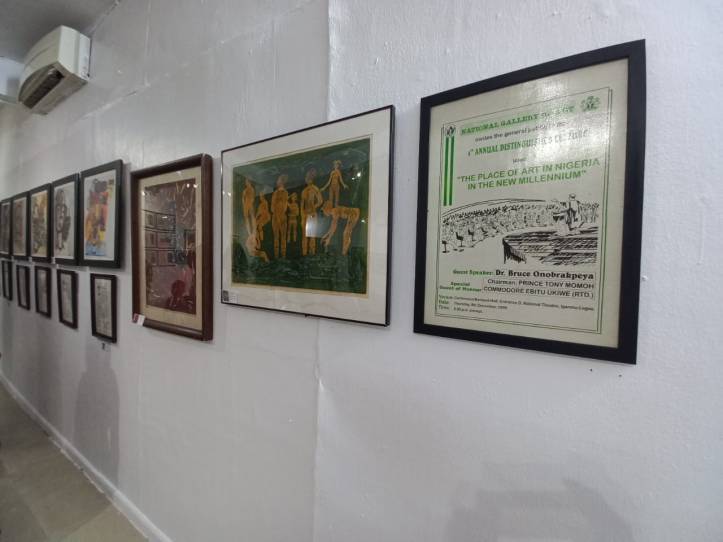
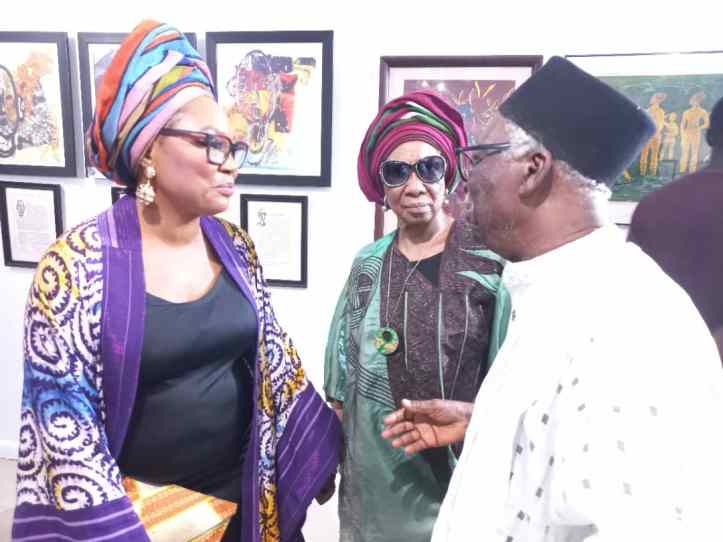
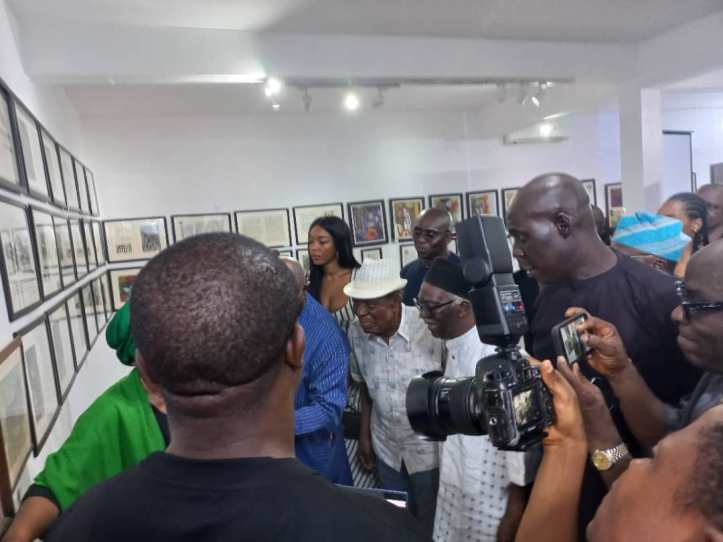
A central highlight was the exclusive part of the museum gallery dedicated to Bruce Onobrakpeya, the doyen of Nigerian printmaking and Clark’s lifelong friend. Visitors encountered an intimate visual conversation between artist and collector, starting from early lino prints to later experimental works. Each piece told a story of shared trust and vision. Clark’s first purchase from Onobrakpeya, a print he once discarded was represented symbolically, reminding viewers that great art often begins in unexpected places.
The First Purchase
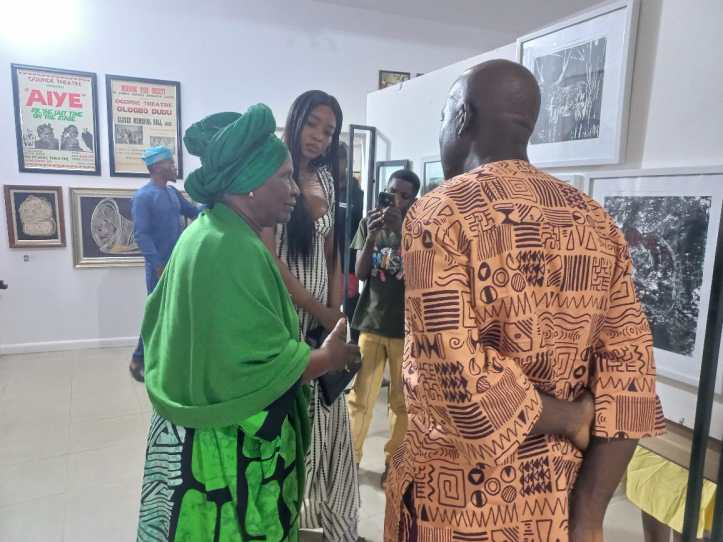
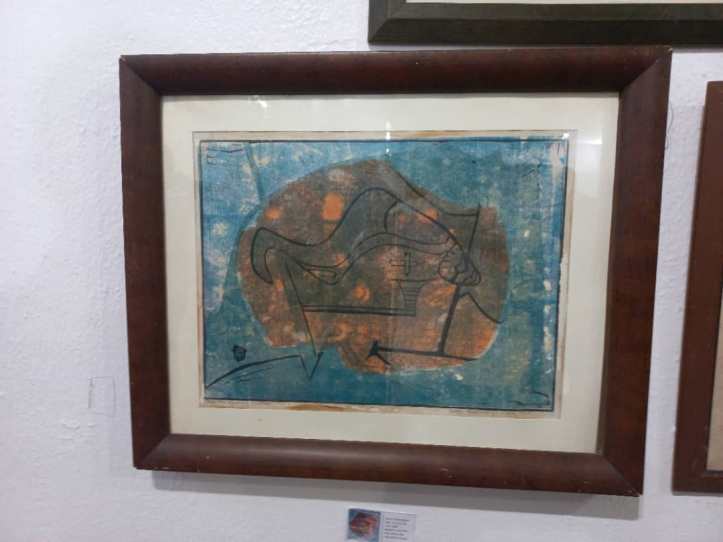
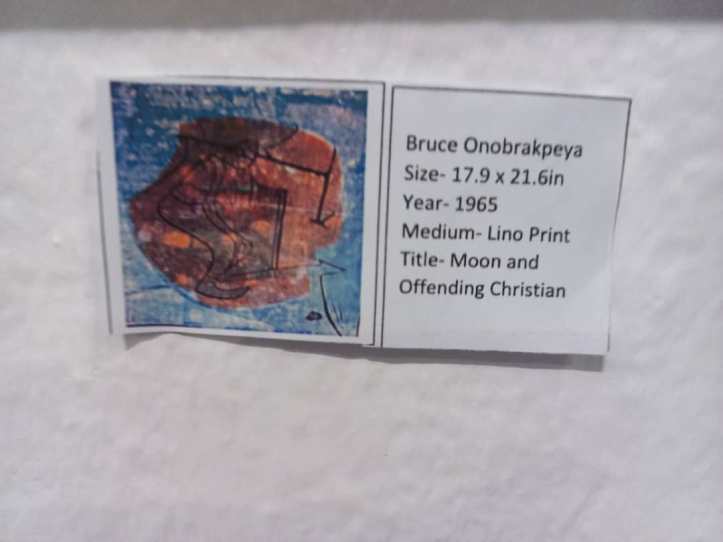
Visitors were eager to see the first purchase in the room and which they all did. In fact, everyone wanted to be part of this epoch making encounter as Professor Ebun Clark took everyone on a memory lane just as a storyteller that she is. In her explanation, it was her famous husband, Professor John Pepper Clark that took her to Lagos and down to Mushin, a popular suburb in Lagos where Prof. Bruce Onobrakpeya resides to see new form of artistic impression in 1965. While in the studio with Bruce Onobrakpeya on the 1st of December 1965, one of the prints Bruce Onobrakpeya had discarded was randomly picked by Ebun Clark. Even when Bruce Onobrakpeya was appealing to her to discard the lino print due to unsatisfactory result from the work, Ebun Clark decided to pick it and collect the print titled “Moon and Offending Christian” at Three Pounds. She eventually went ahead to buy two more prints for the same price totalling Nine Pounds. One of the purchase was titled Edjo Eghwa (Forest Spirit) a Deep Etching done in 1965.
The Short Documentary Release on Her Legacy As A Builder
Before the opening reception for the exhibition, the curatorial team had released a featured, short documentary that captured the essence of Professor Clark’s influence. In it, Bruce Onobrakpeya described her as “a builder who created a rock foundation,” while curator Moses Ohiomokhare and printmaker Dr. Kunle Adeyemi reflected on how her collecting shaped entire generations of Nigerian artists. The short film, equal parts reflection and revelation, contextualised her role in preserving not just artworks but the intellectual and emotional fabric behind them.

In the Language of the Ancestors: Bruce Onobrakpeya’s Visual Legacy
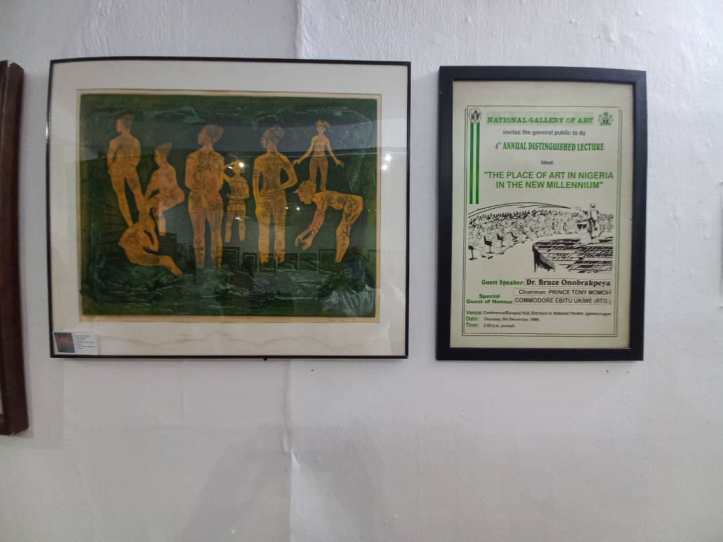
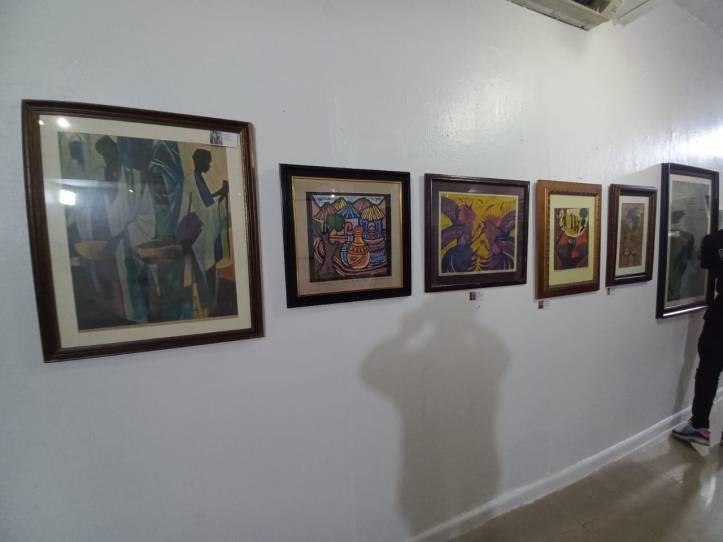
The exhibition felt like a museum within a museum in a space where history, culture, and language intertwined. Professor Bruce Onobrakpeya has devoted his entire life to projecting Africa onto the global stage through his evocative illustrations and prints, deeply rooted in his cultural milieu the Urhobo language.
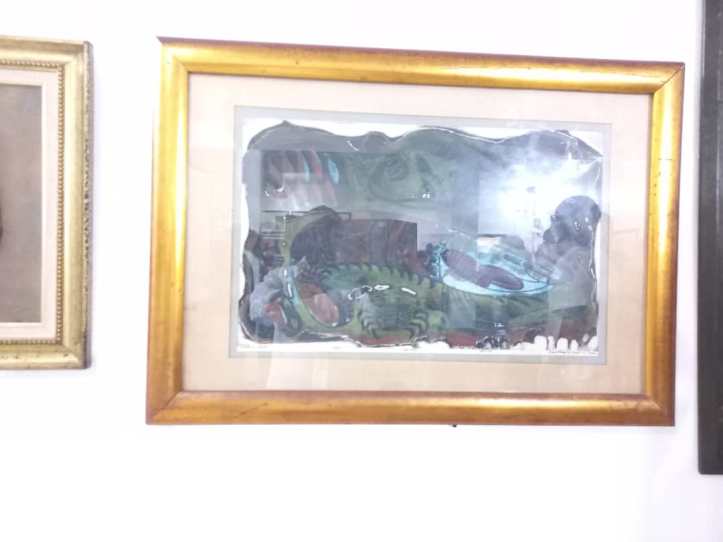
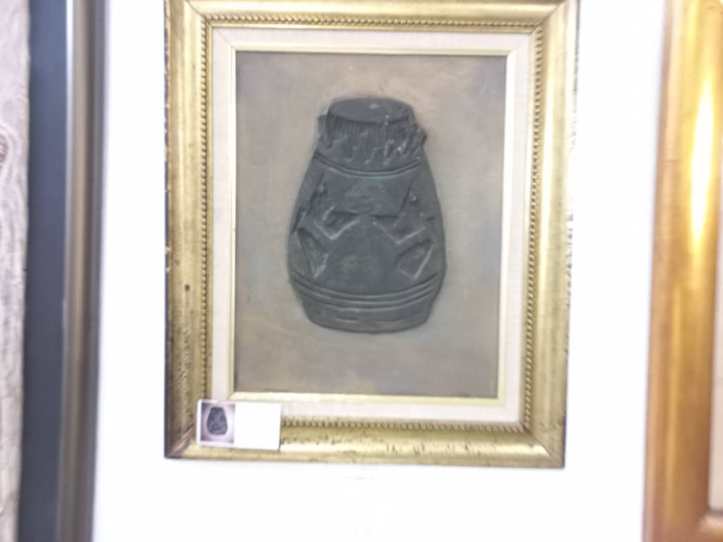
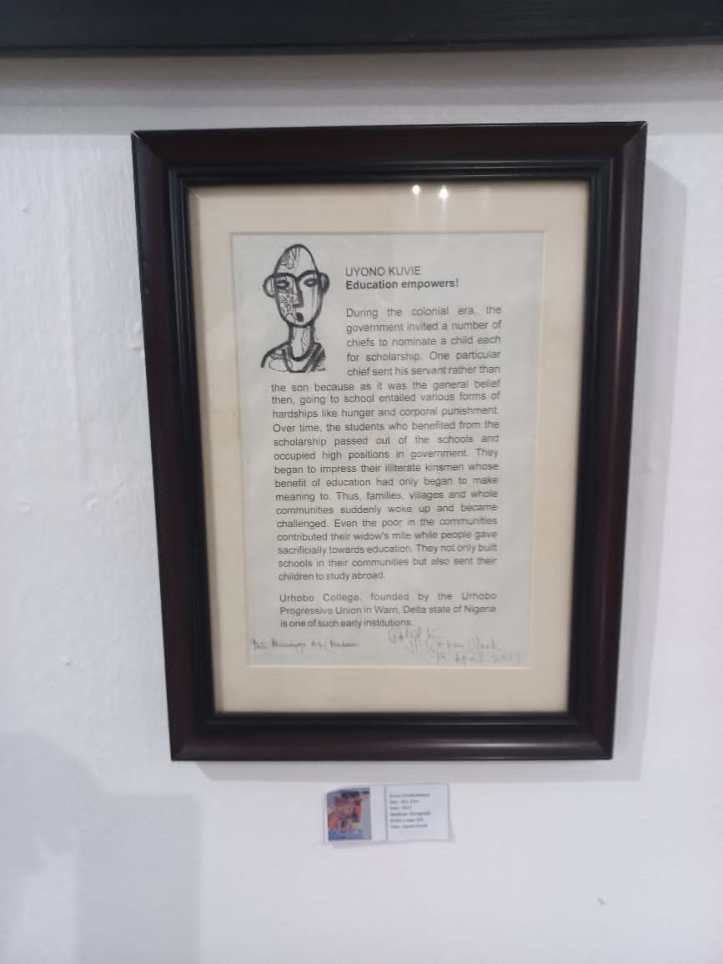
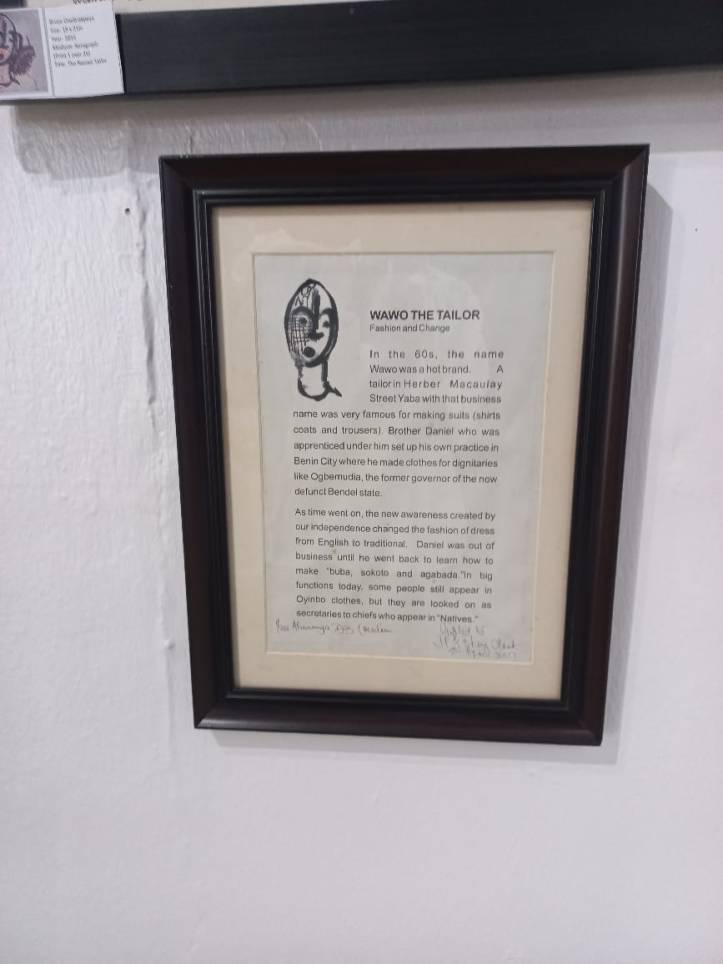
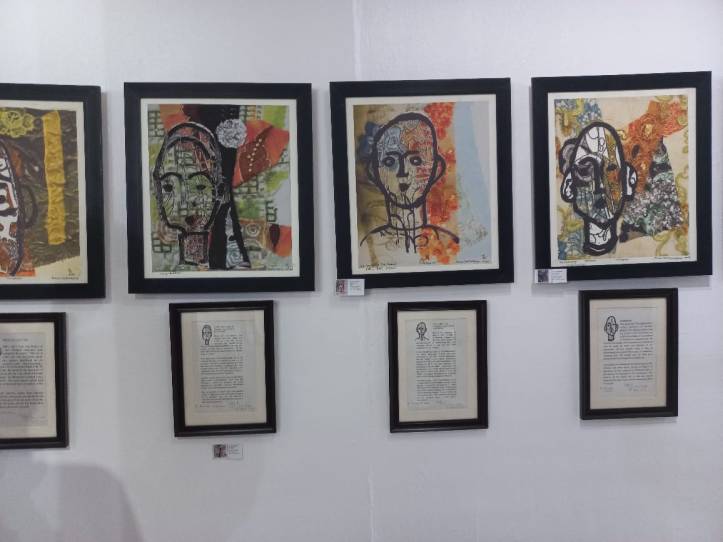
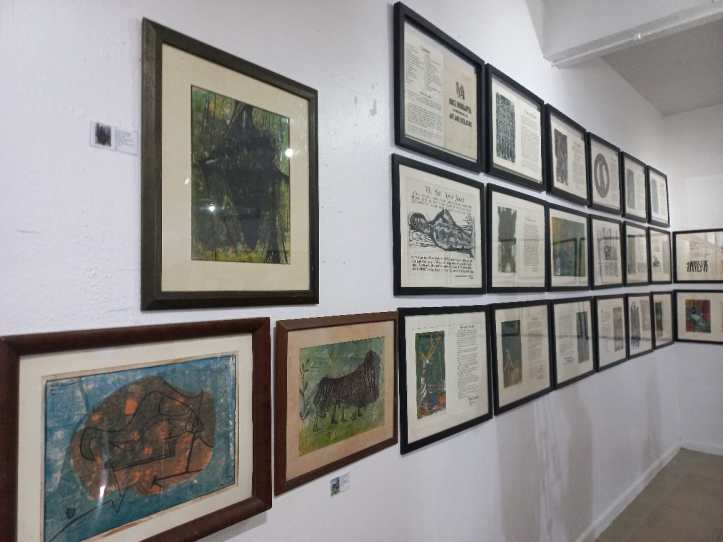
Among the early modernists, he stood out as a pioneer who boldly titled many of his works in Urhobo, celebrating the richness of indigenous identity. Today, the revered patriarch of printmaking stands as a global symbol of artistic excellence and cultural pride.
Many of his works draw inspiration from Urhobo folktales, myths, and folklore, each print carrying a story that connects the viewer to ancestral memory. Walking through the exhibition, one couldn’t help but marvel not only at the beauty of the art but also at the curiosity it sparked about the meanings and stories behind each indigenous title.
Portfolio of Art and Literature
Where were you when Professor Bruce Onobrakpeya unveiled his Briefcase-like Portfolio of Art and Literature in the early 2000s, precisely in 2003? It was one of the most imaginative artistic compilations of its time, a treasure chest of prints celebrating the union of visual art and African literature.
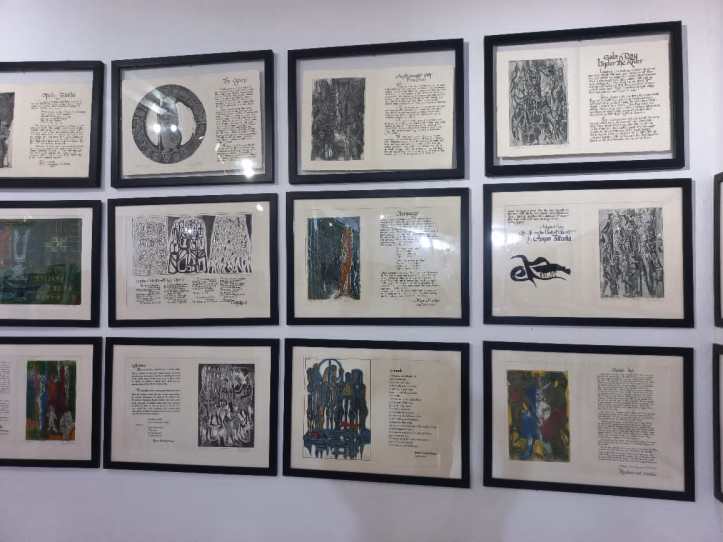
The portfolio featured Onobrakpeya’s commissioned illustrations for some of the most iconic titles in the African Writers Series that included My Life in the Bush of Ghosts by Amos Tutuola, Ake: The Years of Childhood by Wole Soyinka, Sugar Girl by Kola Onadipe, and Eze Goes to College by Onuora Nzekwu and Michael Crowther, among others.
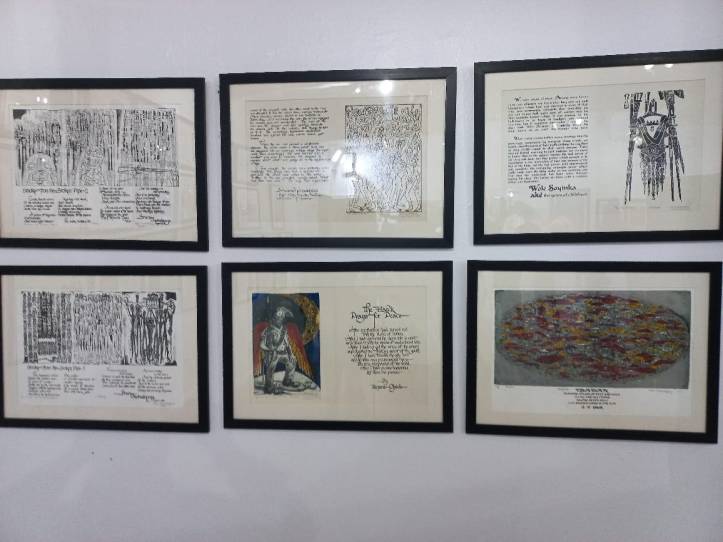
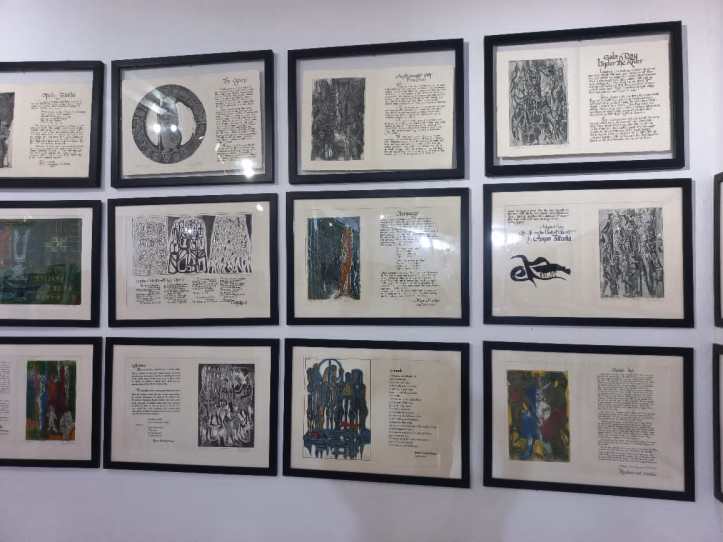
Widely regarded as one of the most successful and fastest-selling print collections of the modernist era, The Portfolio of Art and Literature remains a landmark in the fusion of literary imagination and visual storytelling. This is a true testament to Onobrakpeya’s genius and his enduring dialogue with Africa’s literary heritage.
A Curatorial Journey Through Six Decades of Prints
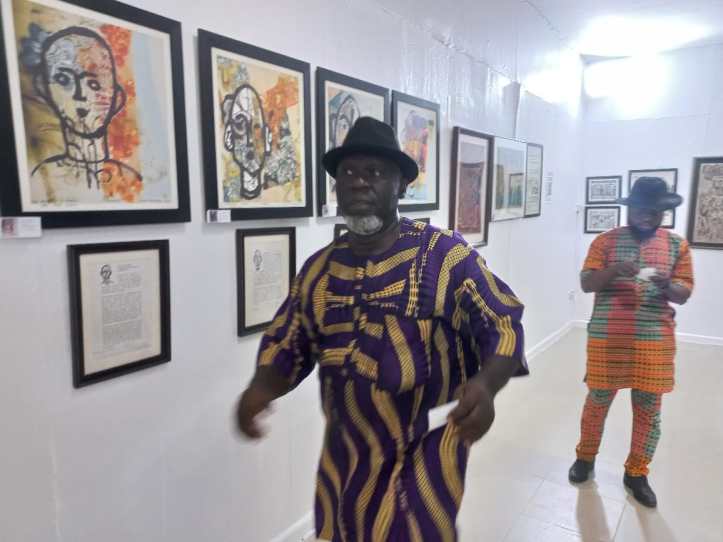
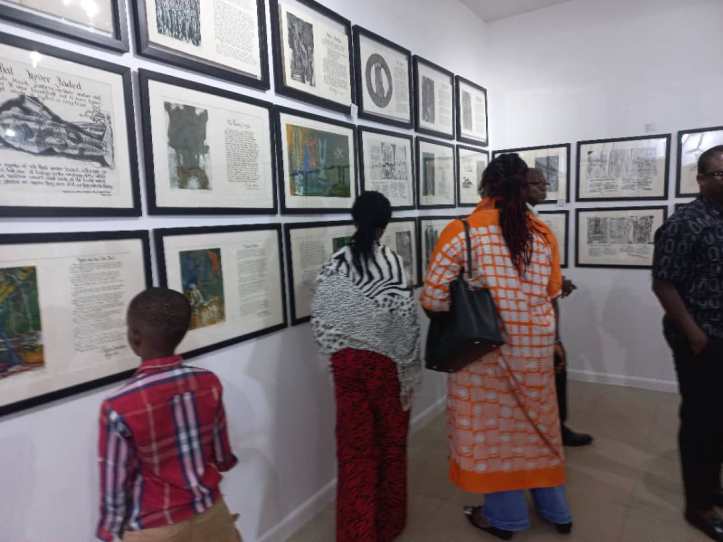
Under the thoughtful curation of Moses Ohiomokhare and Mudiare Onobrakpeya, the exhibition presented prints spanning six decades. This is a journey that traversed materials, techniques, and movements. From miniature etchings to bold relief works, the display demonstrated the versatility and power of printmaking as a medium of modernist expression. The curators emphasised that it was a no-sales exhibition, created purely for the public to enjoy, learn, and connect with the story of collecting as a cultural act. The exhibition rounds up on the 27th of October 2025
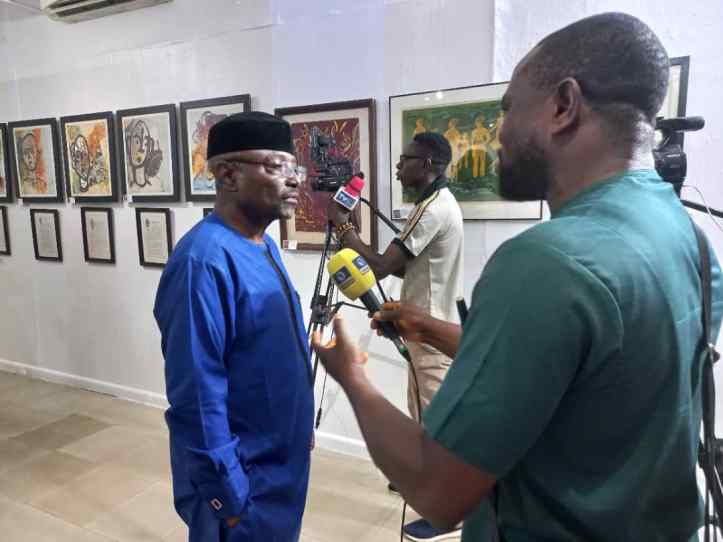
Time is a Great Healer – History and Time from the Art and Heart of Storytellers
Between the artist and the collector lies the living memory of literature and culture. In the hands of Bruce Onobrakpeya, history finds preservation through his masterful Xerograph creations, each piece a metaphorical archive of what many history classrooms failed to keep alive. His works boldly safeguard our stories, values, and traditions, our educational ideals, cultural nuances, naming ceremonies, and significant historical events from fading into oblivion.
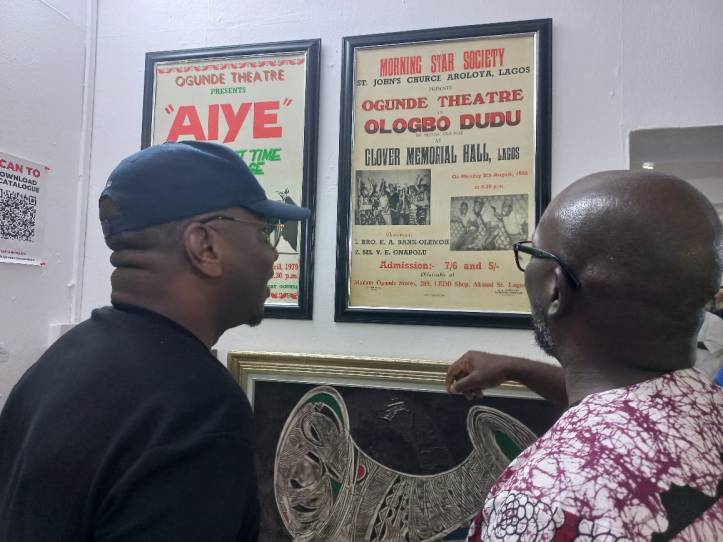
Among these timeless pieces, Owanran, Uyono Kuvie, and African Time stand out not only as artistic triumphs but also as vital documents of heritage. Through Onobrakpeya’s creativity and Professor Ebun Clark’s discerning collection, history and time continue to converse, reminding us that art remains the truest storyteller of who we are.
A Gathering of Minds, Friendship, Art, and Influence
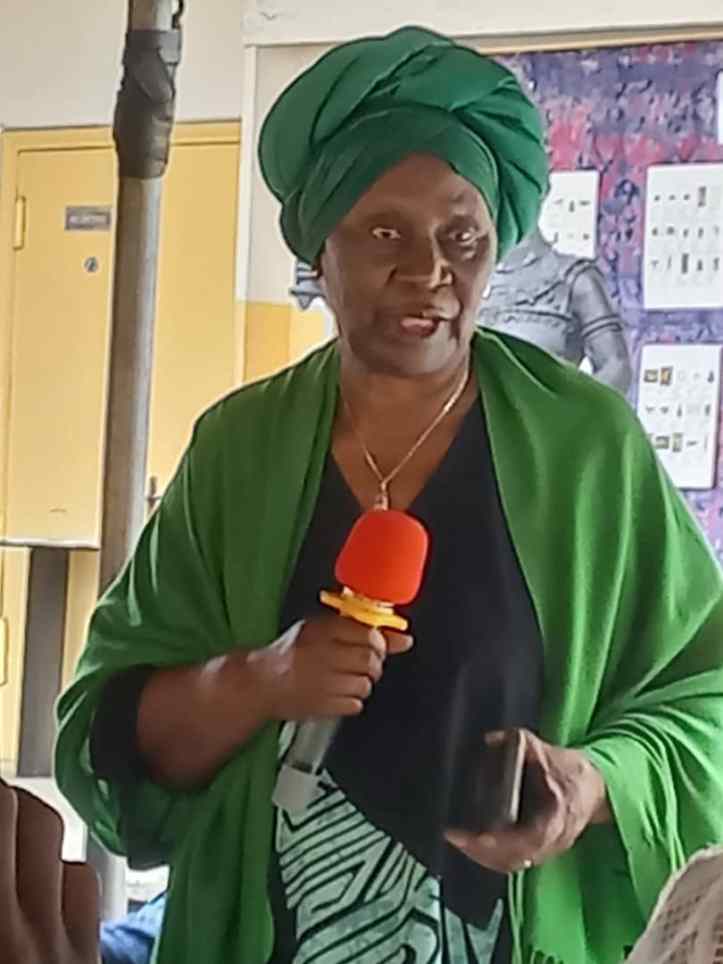
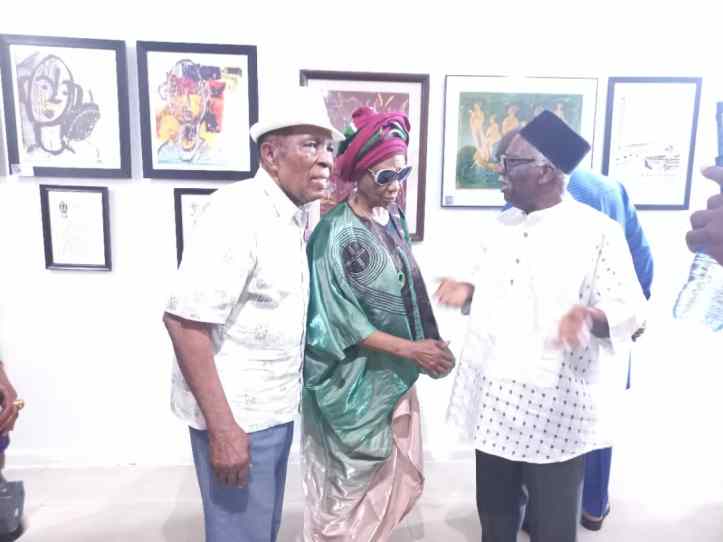
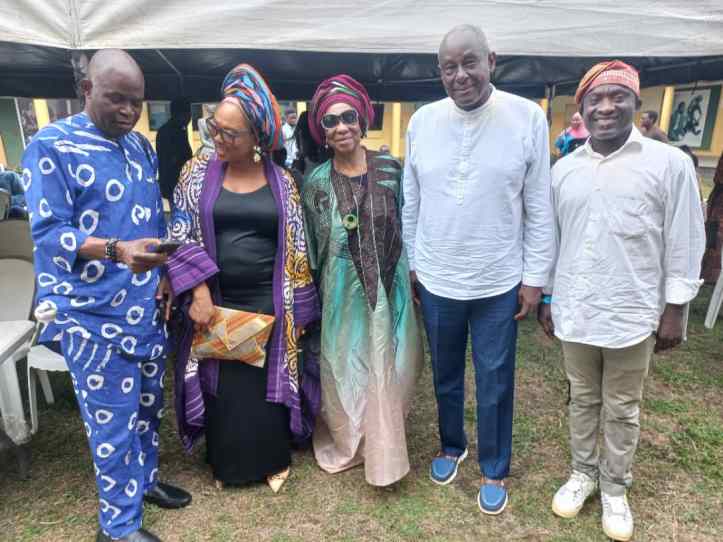
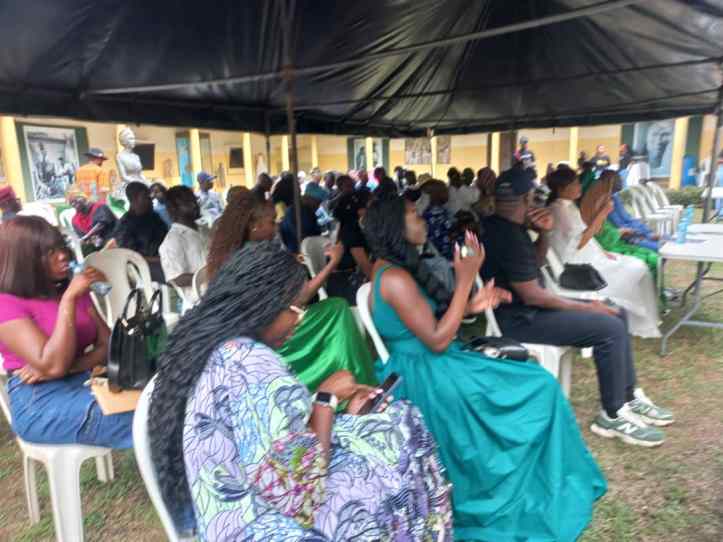
Beyond the epoch making exhibition at National Museum, the atmosphere inside the Museum was one of warmth and reflection. Artists, scholars, collectors, and admirers gathered to honour a woman who has quietly shaped Nigeria’s art ecosystem. Female artists like Juliet Ezenwa Pearce in the short documentary, credited Clark’s mentorship as pivotal in their careers, while voices from the Onobrakpeya family reflected on the intergenerational legacy she helped sustain. In every corner, one could feel the resonance of friendship, mentorship, and shared vision with values that defined both her life and her collection.
The Older the Wine
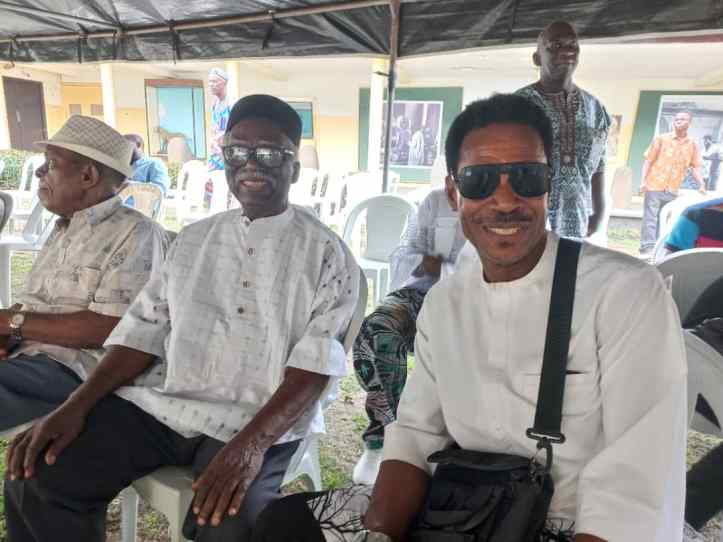
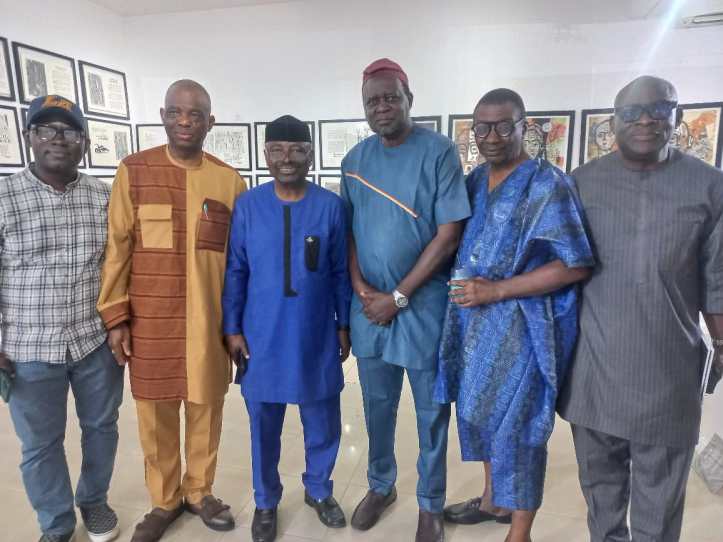
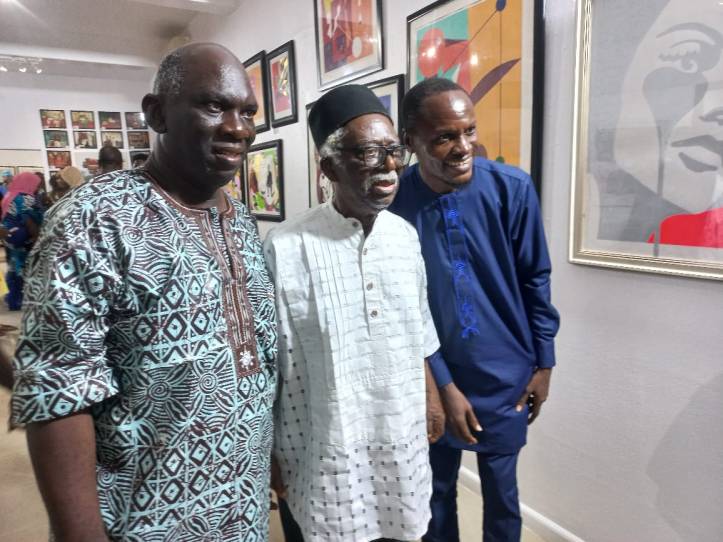
As the saying goes, “The older the wine, the richer the flavour.” The atmosphere at the exhibition echoed that sentiment perfectly. Everyone wanted a picture with the two iconic Nigerians being honoured — Professor Ebun Clark and Professor Bruce Onobrakpeya — towering figures whose lifelong dedication has shaped minds and guided generations. Their celebrated status came as no surprise; it was a well-earned tribute to decades of vision, creativity, and enduring friendship.
A Legacy Illuminated in the Room.
Professor Ebun Clark has done more than collect prints. In fact, she has collected time, preserving the story of a nation’s creativity for future generations. Her exhibition at the National Museum stands not only as a tribute to artistic friendship but also as a testament to the enduring power of passion, scholarship, and belief in the transformative role of art in society.

