
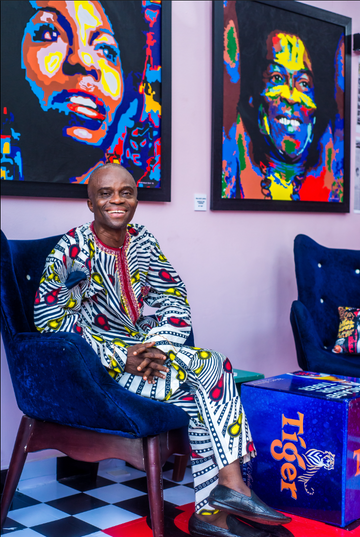
When Lemi Ghariokwu crossed the Idi-Oro railway track in 1974, he was barely 19. What lay on the other side was not just Fela Anikulapo Kuti’s Kalakuta Republic, but the beginning of one of the most consequential visual careers in African music history.
Words Ireho Aito | Don’t Keep Your Art in the Finger!
Last year, on December 26, 2025, renowned artist Lemi Ghariokwu quietly joined the septuagenarian club 70 years of life, memory, lines, colours, resistance, and design. Yet, like the man himself, the moment passed with genuine fanfare. Sounds and trumpets with a standing band to entertain guests and well wishers.

Before a word was spoken or a story told, the message had already been delivered. The black and gold invitation card carried the quiet authority of history and the glow of legacy, less an announcement than a coronation. It signalled that this was not merely a celebration, but a reckoning with time, memory, and cultural endurance.

Such moments are reserved for figures whose work has long escaped the boundaries of profession and entered the realm of heritage. In honouring Lemi Ghariokwu at seventy, we are not marking an age, rather, we are acknowledging a reign that is defined by vision, courage, and an unbroken dialogue with African identity.
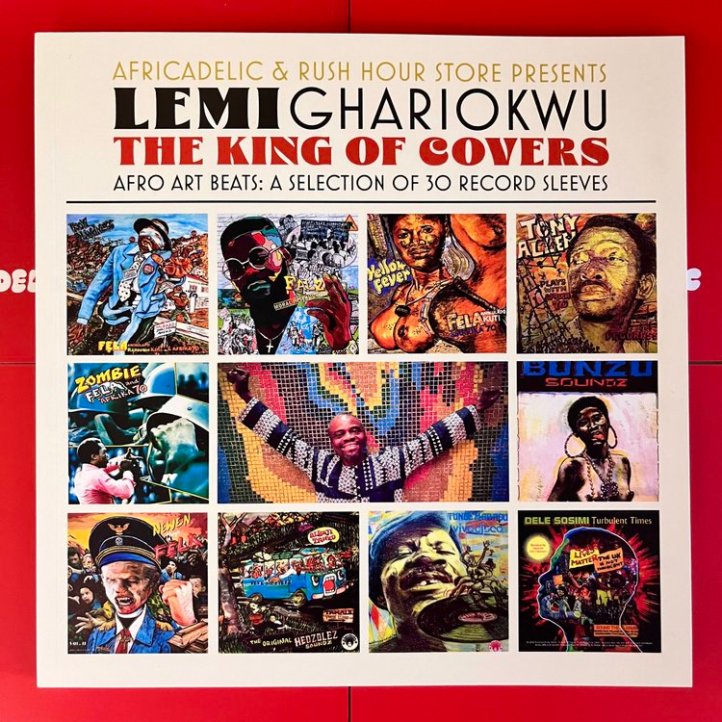
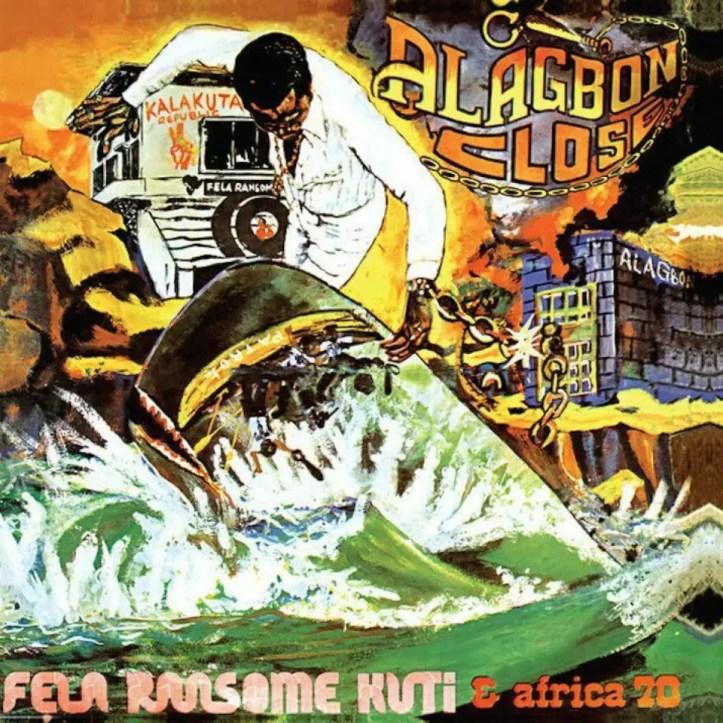
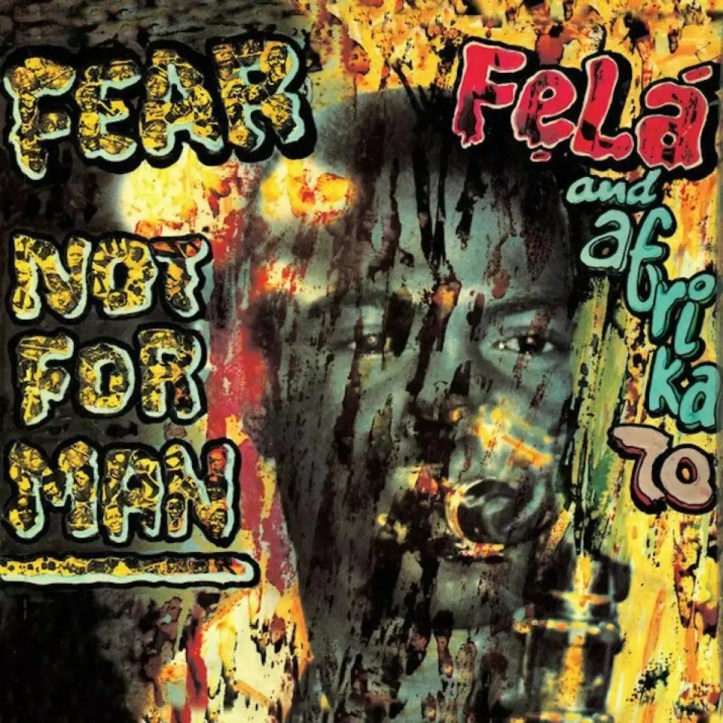
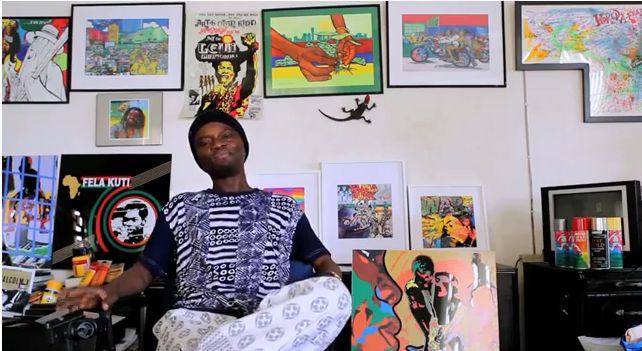
Lemi Ghariokwu is widely regarded as the king of album covers, not by proclamation but by consequence. His art did not merely package music, to be precise. This is a genius whose art argues, documents, confronts, and joyfully educated. Nowhere is this clearer than in his lifelong visual dialogue with Fela Anikulapo Kuti, the king of Afrobeat.
Watching him on his beloved Instagram and Facebook accounts, dancing to soulful tunes and exhibiting traits that belie his age, Lemi Ghariokwu is a wonderful icon. His introduction of the young band for the birthday celebration, the sweet and soulful “SugarBeat Band was heartwarming. It demonstrated the personality that he is, opening doors for generations after his. Lemi Ghariokwu is an accomplished statesman.
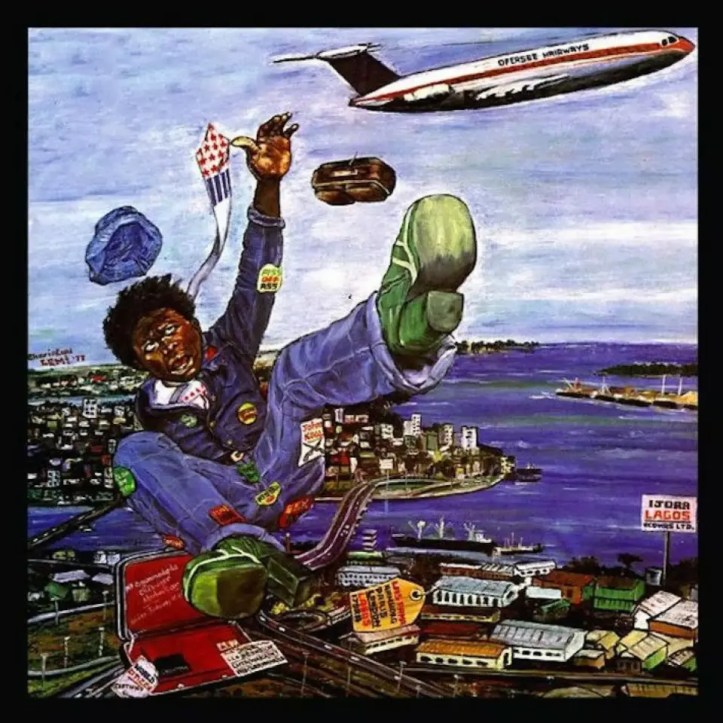
In retrospect, the breadth of his collaborations with musicians, artists, writers, authors, and producers cannot be overstated. Lemi Ghariokwu’s creative language has always thrived in communion, quietly shaping sounds, stories, and sensibilities from behind the scenes. Yet there came a moment when the curtain lifted. It was a beautiful scene to behold when he shared a stage with pop and reggae singer of the 1990s, Daniel Wilson, in the duet Omolakeji. For many devoted television viewers, this was a revelation. The unmistakable face behind decades of iconic album covers finally stepping into the light. In that instant, the “king of album covers” was no longer just a name etched in liner notes, but a living presence, recognised, celebrated, and embraced by a wider public.
In fact, even the new wave of Afrobeats ambassadors has found its way to his creative sanctuary. Contemporary icons such as Davido and Falz the Bahd Guy have worked with the king in his studio, drawn by a legacy that refuses to fade into nostalgia. Lemi Ghariokwu is not merely a name but indeed a weight that has carried an entire industry on its back, quietly but steadfastly.
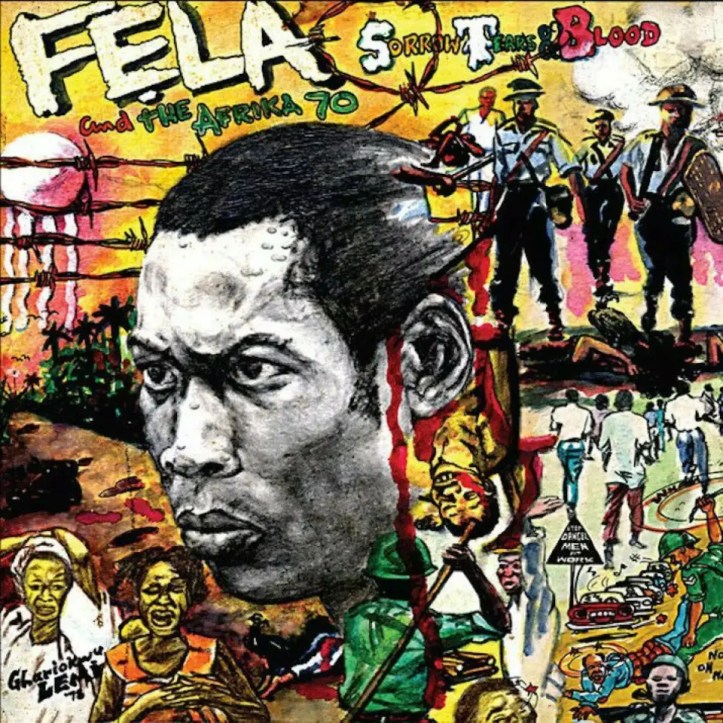
Today, he stands as one of the foremost custodians of Fela Anikulapo Kuti’s rich and defiant history, a role earned through proximity, trust, and shared vision with the music maestro himself. Through ink, line, and ideology, Lemi helped translate Fela’s sound into a visual language that the world could recognise. To speak of Afrobeat without invoking his hand is to tell an incomplete story.
A Railway Track, a Blessing, and a Leap of Faith
In an interview with iBAND Magazine years ago, Ghariokwu retraced the moment that changed everything. Right there in his studio at Palmgrove in Lagos, he recalled that it was a music journalist, Babatunde Harrison, then with Punch newspapers, who made the connection. Fela needed an album cover. And Lemi had ideas, being a self – taught artist who was always drawing by the side of an Ijaw family owned joint selling liquors. Harrison was a patron of the place and enquired if Lemi could something for Fela that he would do the connection. Lemi accepted and one day, Babatunde Harrison came, then saw Lemi’s catalogue again and quickly whisked him away, across the railway line at Idi-Oro towards Kalakuta.
The crossing itself has since become symbolic. For a teenage artist raised in a disciplined, religious household, stepping into Kalakuta was a leap across worlds.
“My mother was a religious person,” Lemi recalled, “and she blessed my visit to the musician’s abode.”
That blessing mattered. Because what awaited him was not merely a musician’s home, but a commune that was alive with bodies, beliefs, freedoms, and contradictions.
“I was a bit afraid,” he admitted. “The house was full of community to behold.” Lemi saw shades of colours in human characters while the Punch man asked him to wait while he quickly jumped out again. A typical journalist was what came to Lemi’s mind at the time. Journalists work on deadlines, maybe the reason Babatunde Harrison couldn’t stay in one place for too long.
Inside Kalakuta, Lemi could see and only see. Women everywhere. Men everywhere. Noise, presence, life. And then, the shock of recognition, Lemi sighted a neighbourhood girl, someone he knew from home, now fully part of the Kalakuta ecosystem.
Her calm confidence unsettled him more than the chaos itself.
“What are you doing here?” she asked Lemi without fear, neither an apology.
In that moment, Ghariokwu understood something profound, something that would later echo in his art that power does not always announce itself loudly. Sometimes it moves quietly, assuredly like the women of Kalakuta.
Five Minutes to Destiny
Lemi Ghariokwu explained to the neighbourhood girl about his mission and when the girl who had run away from home to be an integral part of Kalakuta saw the painting in Lemi’s hands, she assured him of a connection with Fela. Though Fela was sleeping at that time but only women could wake him up, according to the rules inside Kalakuta Republic.
The girl disappeared upstairs and returned with Fela himself almost casually, almost impossibly. The Afrobeat prophet appeared in briefs barely clinging to his waist, according to Lemi, the brief was just hanging, slightly above his ‘big man joy stick.’
Fela, still trying to clear his eyes from that deep sleep, stared at Lemi and stared at the artwork, he put up a smile, and uttered a word Ghariokwu was hearing for the first time in his life “Gaddemnit!” That American slang exclamation was the approval of the artwork
Fela ushered the teenager upstairs to write a cheque. A cheque that Ghariokwu refused not out of arrogance. Not out of strategy. But out of conviction.
“I just wanted to do it for him,” he said.
Instead, Fela gave him something far more valuable than money, he got an access. A handwritten note granting him free passage to his home, his shows, his world.
That was how Lemi Ghariokwu became Fela’s youngest best friend at the age of 19 and, unknowingly, the visual chronicler of an era.
The Art That Spoke When Music Paused
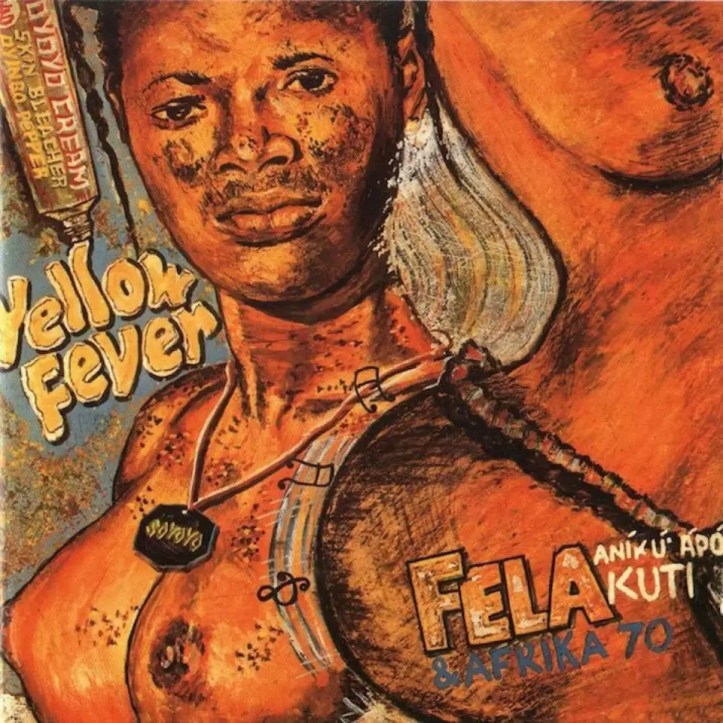
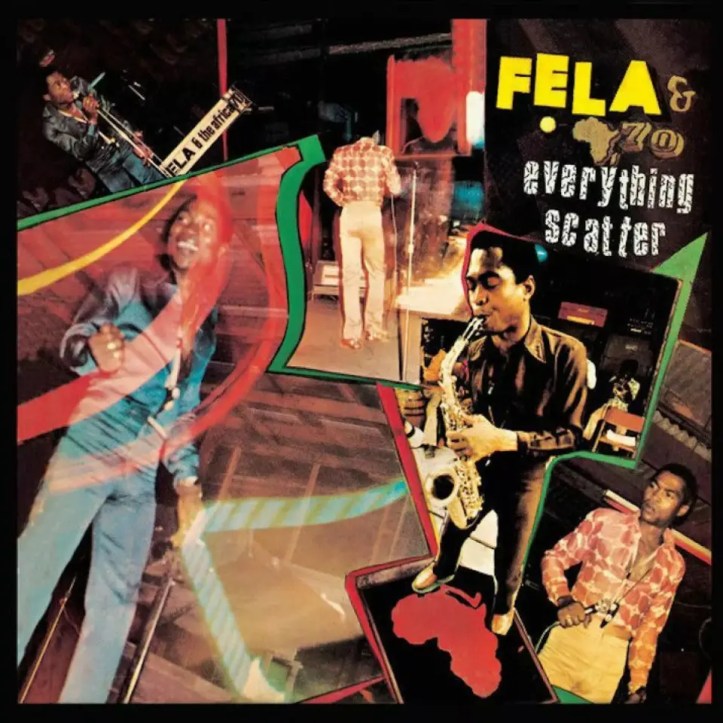
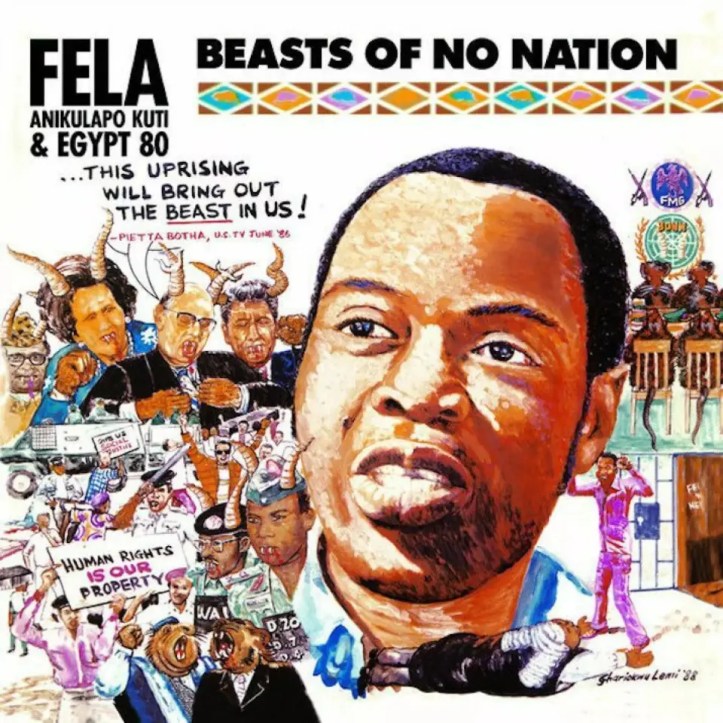
Over the decades, Ghariokwu’s covers became inseparable from Fela’s sound. They were not decorative sleeves, these covers were political posters, cultural manifestos, social critiques rendered in ink and colour.
His lines were sharp because the times were sharp. His satire was biting because the system was brutal. His compositions were crowded because Nigeria itself was crowded with corruption, resilience, laughter, rage, and hope. One must confess, to look at a Ghariokwu cover is to read Nigeria without subtitles.
Palmgrove Conversations, Years Later
I encountered Lemi Ghariokwu twice in his Palmgrove office. No theatrics. No nostalgia-for-sale. Just quiet reflection, the walls heavy with history.
When I asked him how he felt crossing Idi-Oro railway track at 19 to see Fela, he didn’t dramatise it. He simply spoke as someone who understood that destiny often arrives disguised as an errand.
What struck me most was not the story which he has told before but the steadiness with which he carries it. No bitterness or inflation. Just gratitude, memory, and work still unfinished.
At 70, the Crown Is Undisputed
At 70, Lemi Ghariokwu does not need reintroduction. His legacy is already archived in vinyl, in libraries, in the visual memory of Afrobeat itself.
He crossed a railway track once and never stopped crossing boundaries thereafter.
From a teenage artist clutching drawings in 1974, to the definitive visual voice of Africa’s most radical musician, Ghariokwu’s life reminds us that history often begins with a question asked, a door knocked, and a risk taken.
And sometimes, all it takes is the courage to cross the tracks.
iBAND Magazine, Celebrating Visual Arts from the Original.
Africa | Visual Art | Lifestyle | Culture

