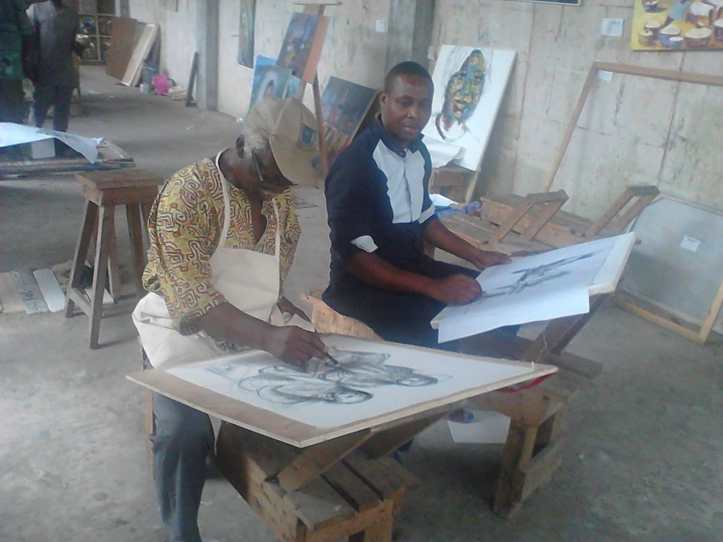
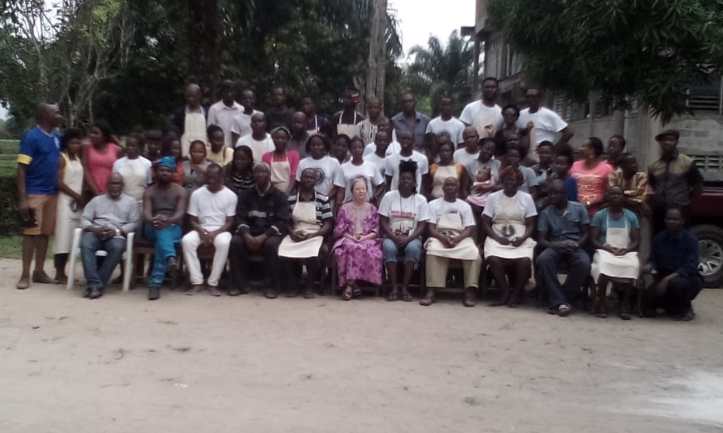
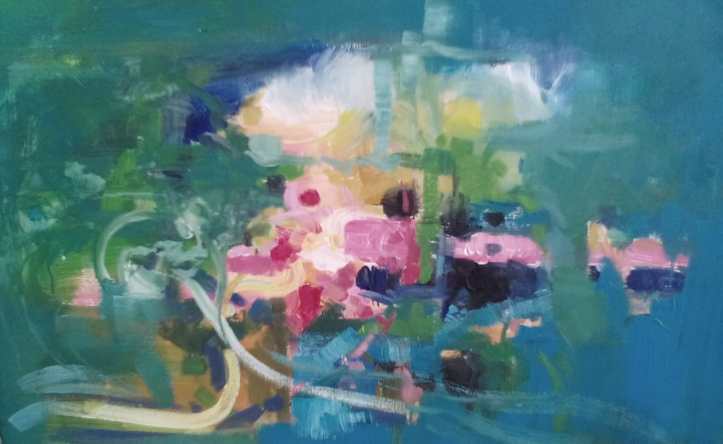
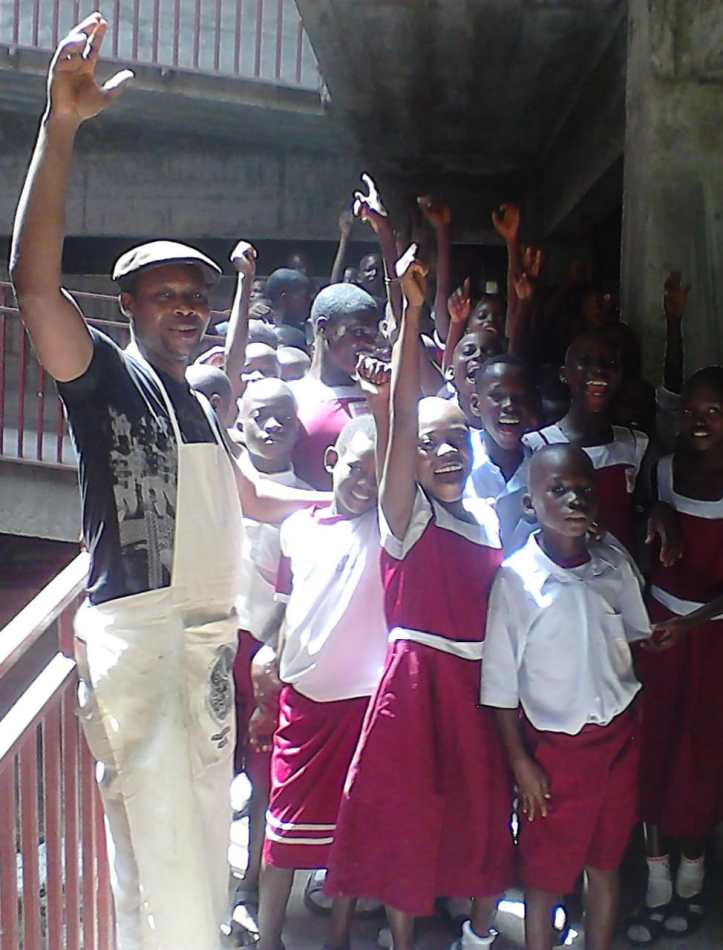
U.K.-based Nigerian artist, Yusuf Seidu Okus, recently on his Facebook page, reflects on the Harmattan Workshop experience at Agbarha-Otor in 2015 with one of his workshop work entitled “Blossom” the quiet discipline of drawing, the enduring influence of Prof. Bruce Onobrakpeya, and the spiritual and mental-health dimensions shaping his practice today.
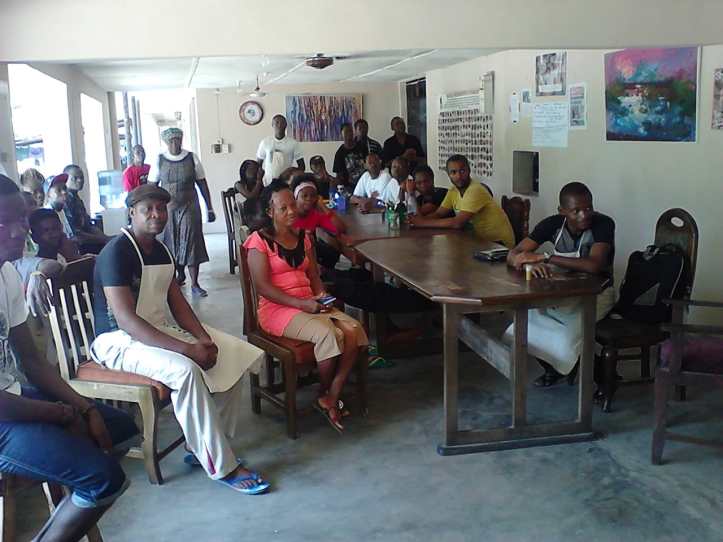
The Harmattan Workshop at Agbarha-Otor has long been a place where memory, discipline, and creative freedom intersect. For U.K.-based Nigerian artist Yusuf Seidu Okus, the 2015 edition remains a defining moment, as one shaped by reunion, rigorous drawing routines, cross-disciplinary exploration, and the quiet mentorship of Prof. Bruce Onobrakpeya.
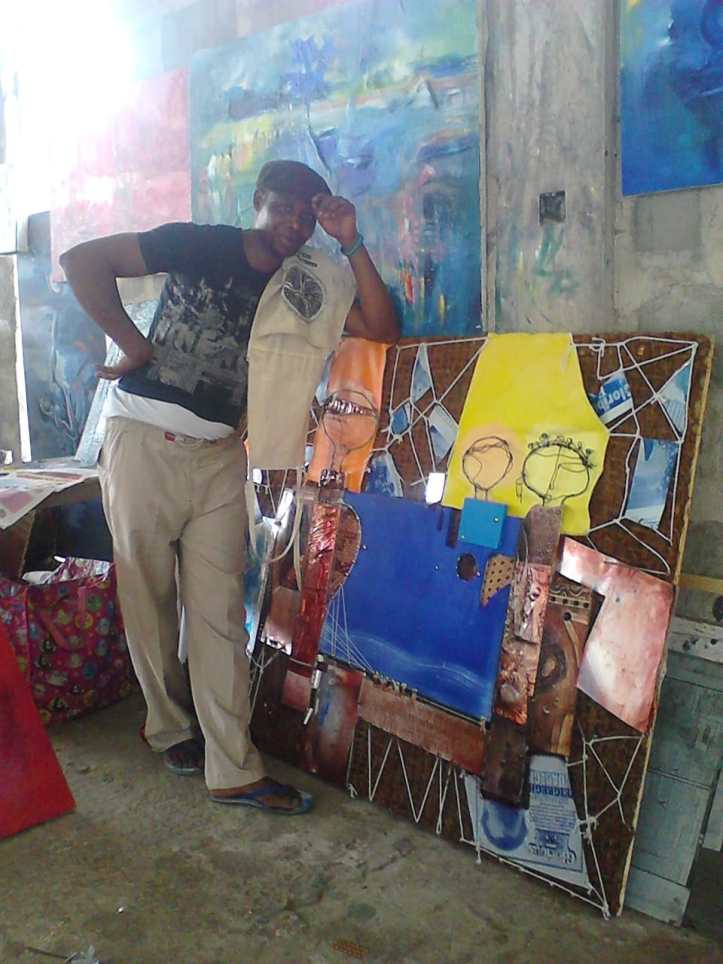
In this conversation with iBAND Magazine, Yusuf reflects on the values that continue to guide his practice through commitment to process, openness to learning, an evolving language of abstraction, and a growing engagement with mental health advocacy. Threaded through his reflections is a deep spiritual consciousness, an understanding of art as both belief and calling.
Words Ireho Aito | Don’t Keep Your Art in the Finger! Photographs and artworks credit: Yusuf Seidu Okus
This interview offers insight into an artist shaped as much by environment and mentorship as by faith, purpose, and lived experience
Take us back to 2015 at Agbarha-Otor. What emotions and expectations did you carry with you as you arrived for the Harmattan Workshop that year?
Yusuf Seidu Okus
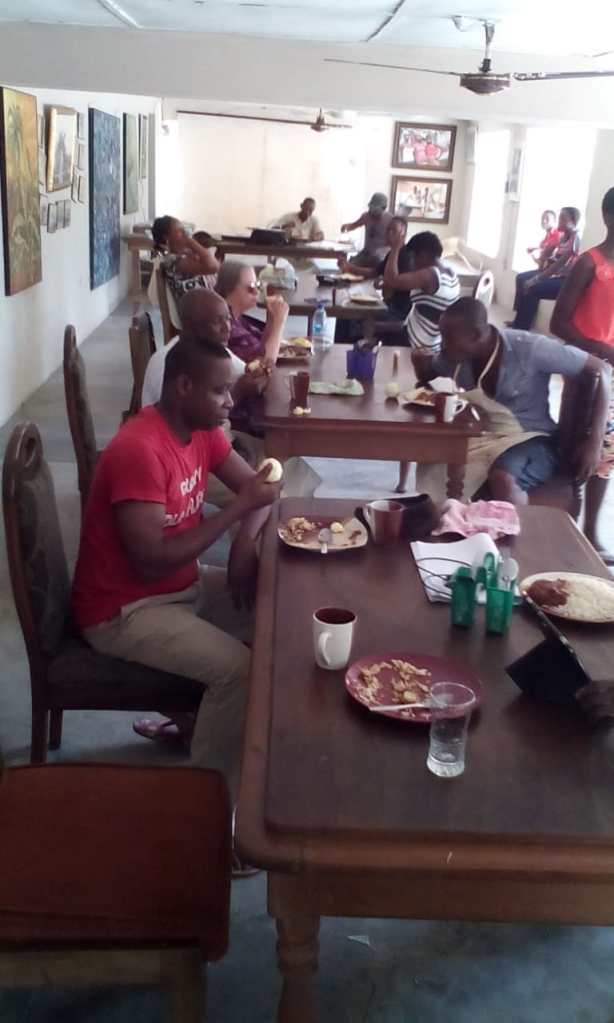
Every session at the Harmattan Workshop has always been greeted with mixed feelings. Firstly, it has always served as a point of reunion with friends and colleagues while sharing ideas both in a lighter mood and on a professional level.

You have spoken vividly about the early morning drawing sessions with your donkey (drawing stool). How did that disciplined routine shape your mindset and creative process during the workshop?
Yusuf Seidu Okus
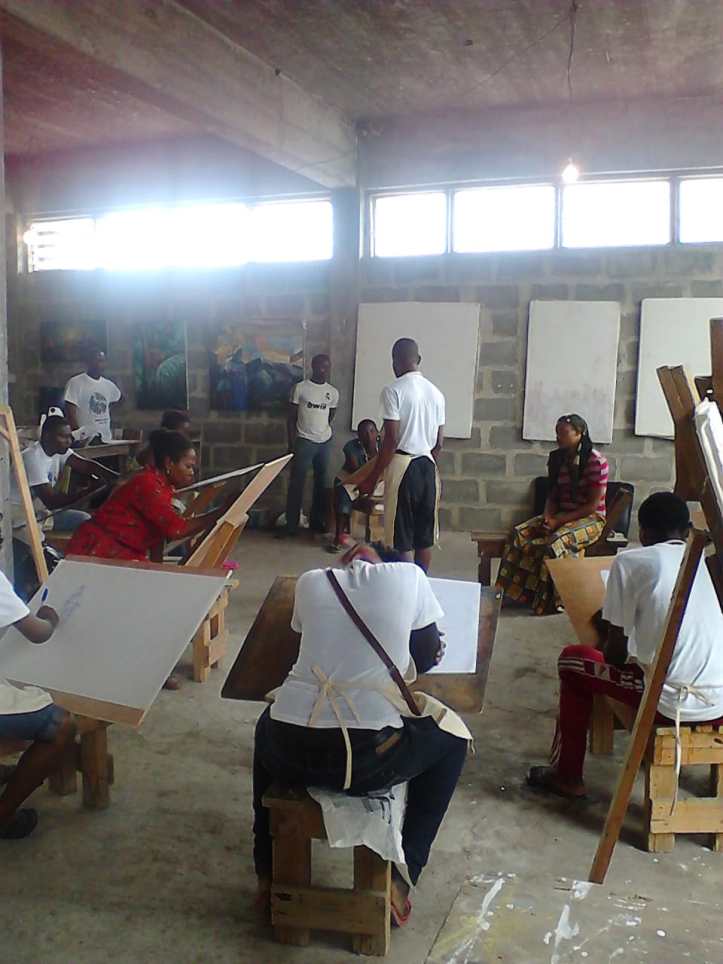
Despite the fact that the workshop setup is informal, there is an orderly arrangement of programmes and activities for everyone to follow, and the drawing session is no exception. It helps to strengthen our hands in that very basic and important aspect of one’s practice.
For an iconic artist like Baba Bruce Onobrakpeya to be actively engaged in that routine goes a long way in showing that drawing is an integral part of the creative process. Personally, I was excited and looked forward to a continued exploration of the Coco Canvas which is a fibre derived from coconut shells and explored as a support material that was introduced to us at the workshop in 2014. A few of us used it to create some very interesting pieces.
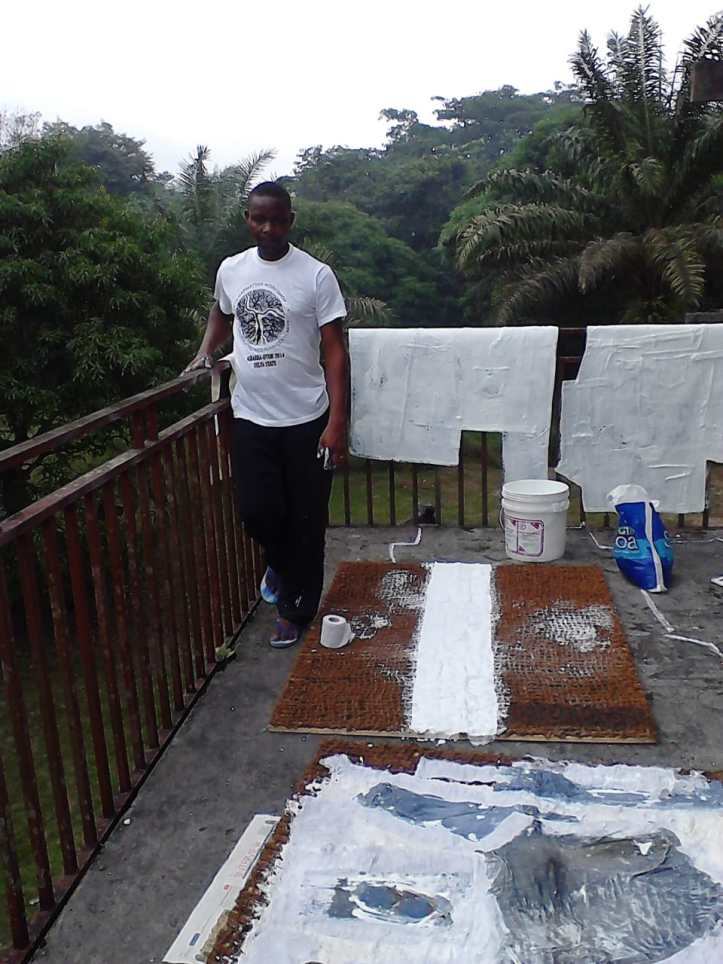
Working side by side with Prof. Bruce Onobrakpeya, whom you refer to as “Baba himself,” must have been profound. What was the most powerful lesson, spoken or unspoken that you absorbed from him during that informal but intense mentorship?
Yusuf Seidu Okus
Simplicity, resilience, and dedication, those are the words I would use to describe Baba Bruce. Very early in the morning, you would see him observing his exercise routine, jogging around the premises, after which he would inspect the workshop facilities and sometimes commence work immediately, while most artists were still in bed. He would also be found late at night, working at the upper floor of the workshop.
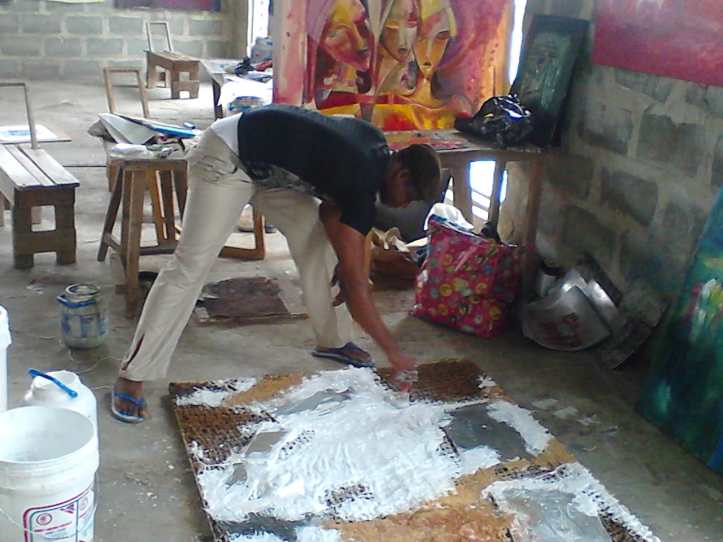
You described the Harmattan Workshop as a space where creative juice flowed naturally without inhibition. In what specific ways did that environment free you artistically compared to other formal art settings?
Yusuf Seidu Okus
Every artist who signs in for the workshop under a particular section, painting/mixed media, textile, ceramics, sculpture, and so on is encouraged to spend time in other areas in order to learn something new. Printmaking, of course, is a very important section and attracts many creatives to the workshop.
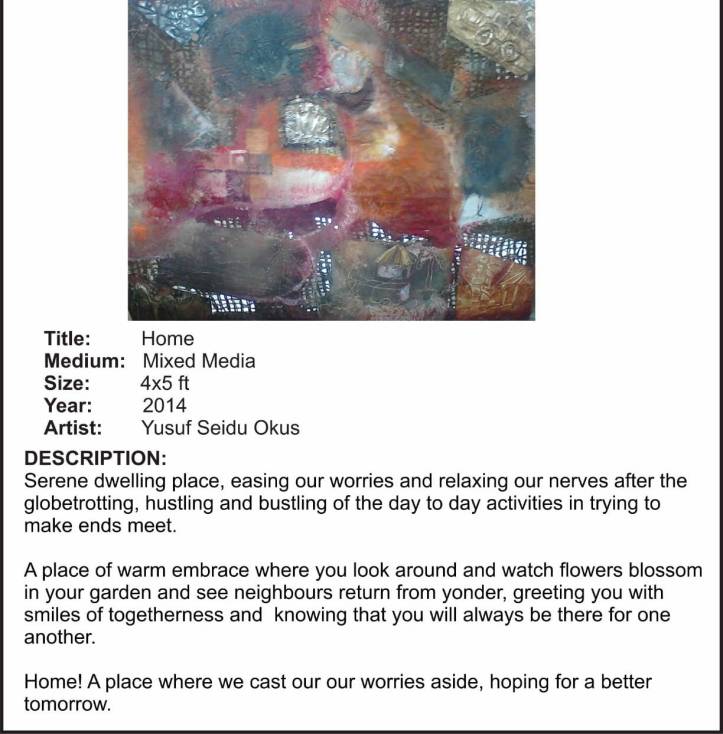
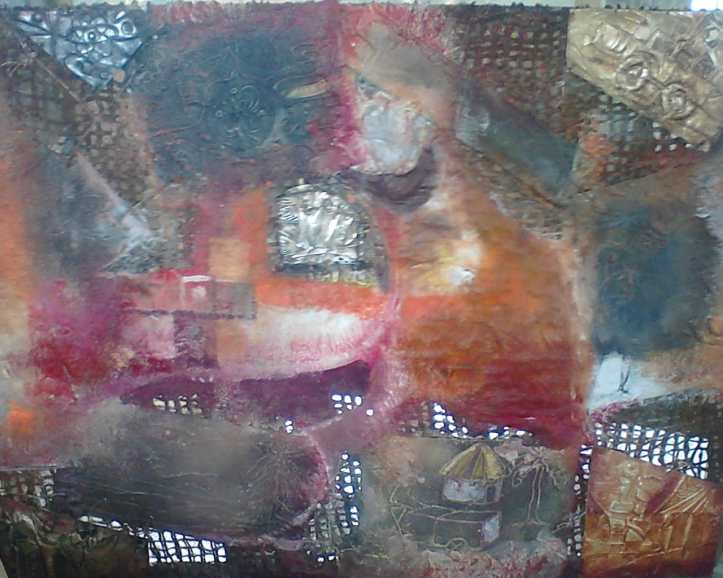
The piece you created then was untitled in 2015, but later became Blossom. At what point did the meaning of the work begin to reveal itself to you, and what personal or societal adversity does it speak to?
Yusuf Seidu Okus
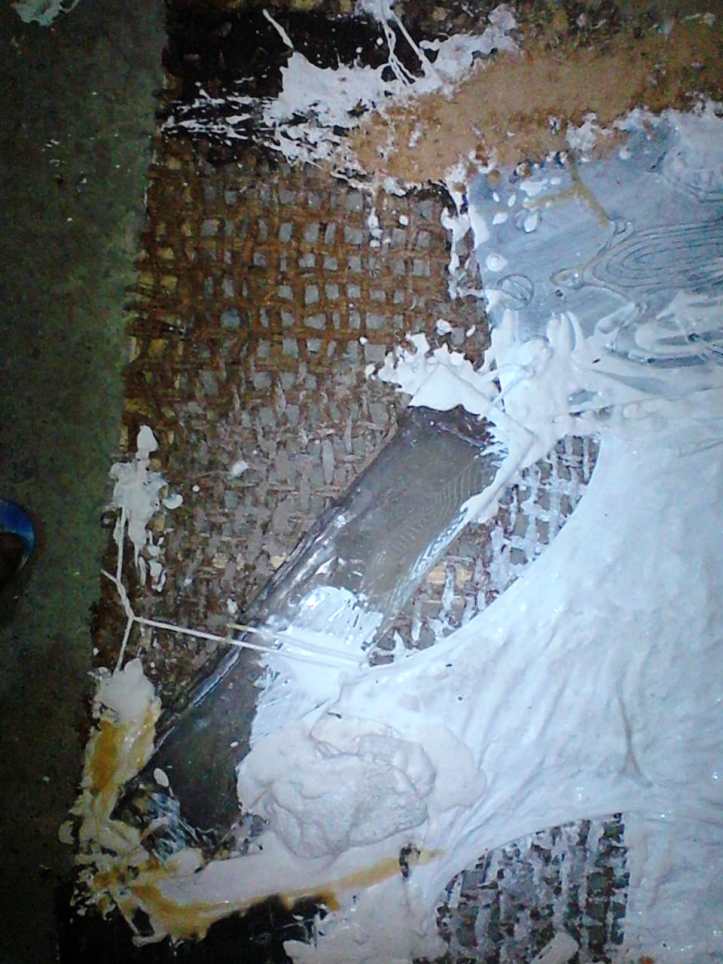
The interpretation of any work of art is often shaped by circumstances and events before, during, or after its creation, and it resonates accordingly. At that time, my art practice was beginning to metamorphose from stylistic representation into semi-abstract or fully abstract renditions, almost spontaneously.
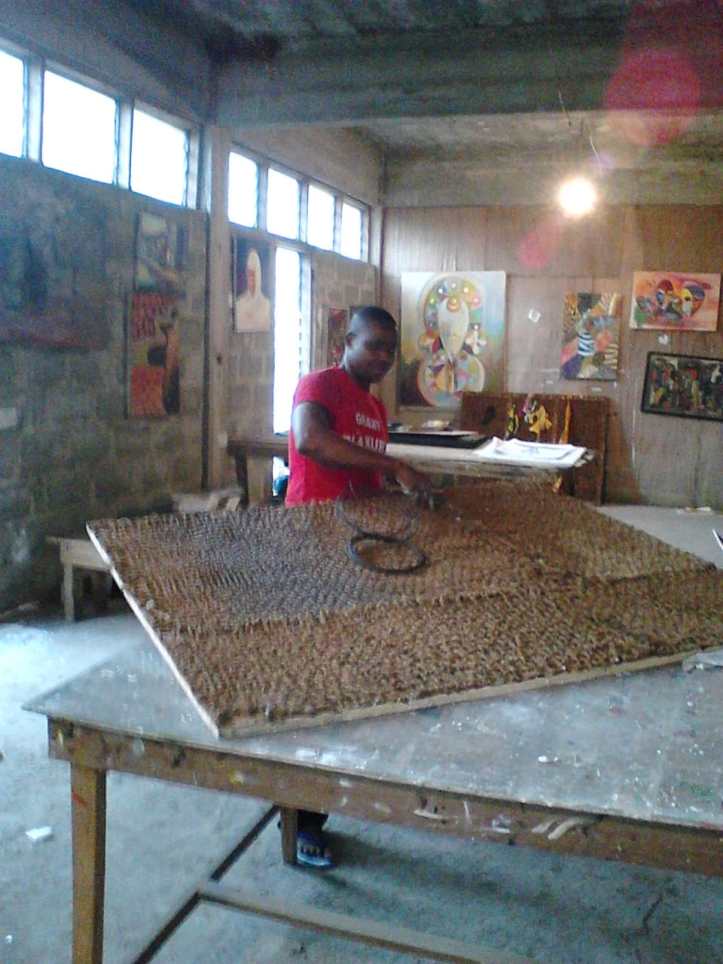
Incidentally, this period also coincided with my growing interest in mental health advocacy, while working at the Occupational Therapy Unit of the Federal Neuro-Psychiatric Hospital in Benin City, Nigeria.
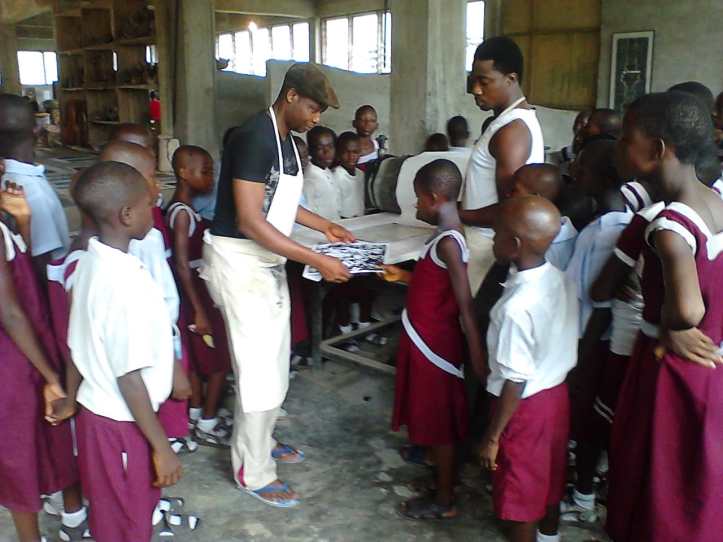
Looking back from the vantage point of 2026, how would you say that single workshop experience redirected or reaffirmed your artistic purpose and career path?
Yusuf Seidu Okus
Every life experience leaves a trail in one’s career whether good or bad, sweet or bitter. What truly matters is how much of the good you absorb and apply towards your progress in life.
Your testimony carries a strong spiritual undertone when you shared, “what God can’t do doesn’t exist.” How do faith, destiny, and divine timing intersect in your art practice today?
Yusuf Seidu Okus
Art is a religion that I believe in. Understanding that the spiritual controls the physical underscores the importance of living a purposeful life, one rooted in contentment and harmony with the people around you. What you cannot see is beyond you. Art is a spirit.
You often acknowledge key figures and milestones that shaped your journey. Could you reflect on the one or two of such people and moments that have been most significant to your growth as an artist?
Yusuf Seidu Okus
I remain deeply grateful to Dr. (Mrs.) Olabisi Ihenyen, former Medical Director of the Federal Neuro-Psychiatric Hospital, Benin City, who gave me the opportunity to work at the Occupational Therapy Unit of the hospital. I also acknowledge Dr. I. O. Agbonile, under whom I served until my exit in 2023. That period was formative, grounding my practice in discipline, empathy, and structure.
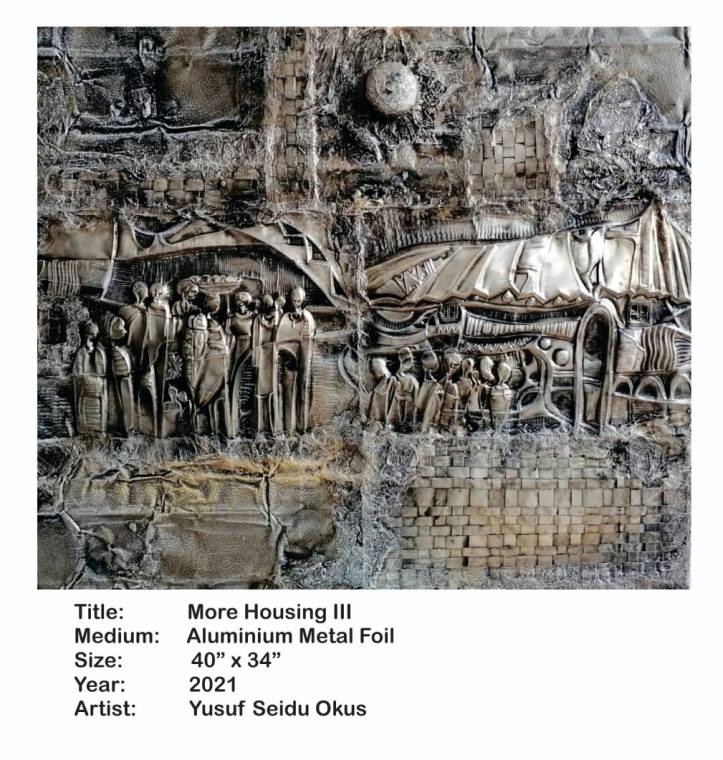
Equally significant was the acquisition of “More Housing” artwork which happened to be one of my largest and most intricate aluminum metal-foil works. It was collected by Prof. Bruce Onobrakpeya, Africa’s living treasure and a man of international status at the Sculptors Association of Nigeria (SCaN) exhibition in 2021. Together, these experiences affirmed both the human and professional dimensions of my artistic journey.
iBAND Magazine, Celebrating Visual Arts from the Original.
Africa | Visual Art | Lifestyle | Culture

