
An Open Letter to President Bola Ahmed Tinubu
As You Walk Through the Nigerian Modernism Exhibition at Tate Modern, London — 19 March, 2026
By Mudiare Onobrakpeya
17th March, 2026.
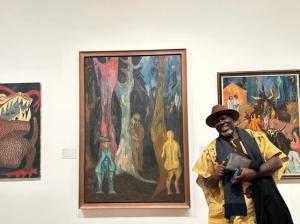
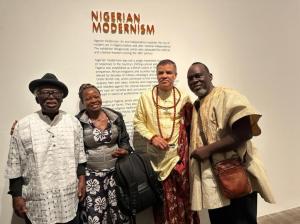
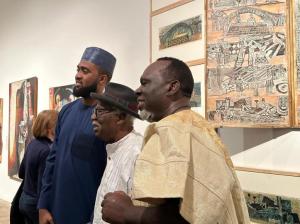
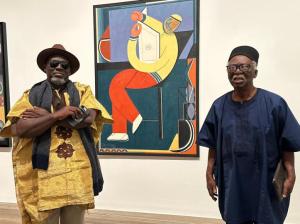
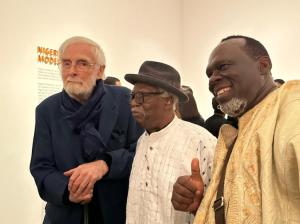
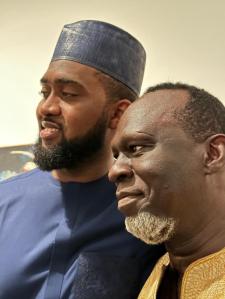
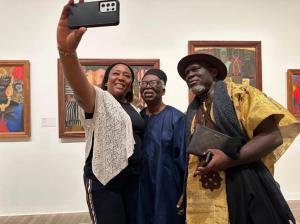
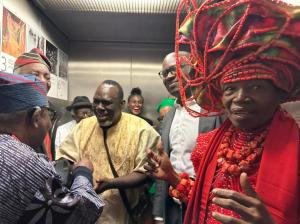
All Photographs courtesy Selma Etareri archives
Your Excellency,
On 19 March in London, you will walk through an exhibition on Nigerian modernism at the Tate Modern. It may appear, at first glance, to be a routine cultural engagement. But what you will encounter in those galleries is far from routine.
What hangs on those walls is not just art. It is a record of how a nation came to understand itself.
The generation that shaped Nigerian modernism like Ben Enwonwu, Uche Okeke, Demas Nwoko, Bruce Onobrakpeya and their peers were working through something deeper than aesthetics. They were confronting a defining question of their time: how to be modern without losing memory; how to move forward without becoming unrecognisable to oneself.
Their answer was neither imitation nor retreat. It was creation. They drew from indigenous forms, symbols, and philosophies, and transformed them into a visual language that could stand confidently in the modern world. What they produced was not simply a style, but a position—that Africa could define modernity on its own terms.
That position still matters.
Today, Nigerian art is receiving renewed global attention. Collectors are looking. Institutions are engaging. The conversation has shifted. Yet at home, much of the structure supporting this momentum remains fragile.
The energy is there and undeniably so. Across Nigeria, young artists are emerging with discipline, clarity, and ambition. Platforms such as Art X Lagos, the +234 Art Fair, and the Art Galleries Association of Nigeria have created vital spaces for discovery and visibility. But they have largely carried this responsibility on their own. Their success has been driven not by policy, but by persistence.
That imbalance cannot endure.
If the arts are to take their rightful place in Nigeria, then support must move beyond recognition into commitment. Subventions, grants, and structured sponsorship are not acts of generosity—they are investments in a sector that has already demonstrated its value, both economic and cultural.
There are institutions, too, that have quietly done the long work of building the future. The Bruce Onobrakpeya Foundation, through the Harmattan Workshop, and the Nike Art Foundation have trained generations, empowered women, and sustained creative excellence over decades. These are not peripheral initiatives. They are part of the country’s cultural backbone. They deserve consistent national support.
There is also a policy, long articulated but rarely implemented, that could reshape the presence of art in public life. A defined percentage of the budget for all government-built structures—schools, hospitals, civic buildings—should be allocated to artistic works. This is not merely about beautification. It is about embedding culture into the everyday life of the nation, and ensuring that our public spaces reflect who we are.
Beyond this lies a larger opportunity. Nigeria can strengthen its cultural leadership through the establishment of a National Museum of Modern Nigerian Art, the creation of a comprehensive digital archive of our artistic heritage, and sustained support for international exhibitions that carry our story to the world.
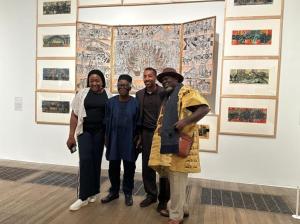
That this exhibition is taking place at the Tate Modern is itself significant. It places Nigerian modernism within one of the most influential spaces of global contemporary art, affirming its place not at the margins, but at the centre of international cultural discourse.
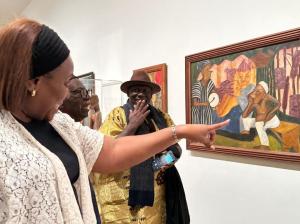
London, more broadly, remains a focal point for ongoing conversations about African cultural heritage. Nigeria’s voice in these conversations is growing, but influence requires more than presence—it requires strong institutions at home.
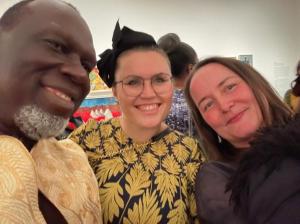
The Nigerian diaspora has also played an important role—collectors, scholars, and patrons who continue to advance our cultural story abroad. With the right framework, their engagement can become even more impactful.
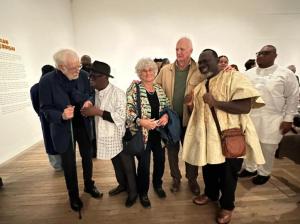
Your Excellency, as you walk through these galleries, you will encounter works that helped Nigeria imagine itself at a critical moment in its history.
The question now is whether we are prepared to match that imagination with action.
The reason is not far fetched, the arts are not an accessory to national life. They are one of the ways a nation understands itself—and one of the ways it shapes its future.
May this visit mark not just a moment of recognition, but the beginning of a renewed national commitment to the place of the arts in Nigeria.
With profound respect,
Dr. Mudiare Onobrakpeya
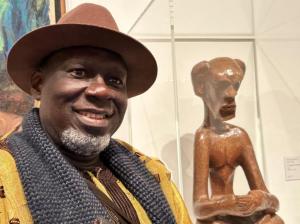
Visited the Nigerian Modernism Exhibition in London on the 8th of Oct, and is a Cultural Advocate and Trustee
Bruce Onobrakpeya Foundation
iBAND Magazine, Celebrating Visual Arts from the Original.
Africa | Visual Art | Lifestyle | Culture

