On this week’s edition of Don’t Keep Your Art in the Finger! there is something unfolding quietly on Instagram through the daily studio stories of Nigerian painter and visual artist Theophilus Adewuyi. It is no longer just social media content. It is becoming performance, documentation, cinema, diary, and visual anthropology all at once.
Words Ireho Aito | Don’t Keep Your Art in the Finger! Photographs courtesy Theophilus Adewuyi
There is something unfolding quietly on Instagram through the daily studio stories of Nigerian painter and visual artist Theophilus Adewuyi. It is no longer just social media content. It is becoming performance, documentation, cinema, diary, and visual anthropology all at once.
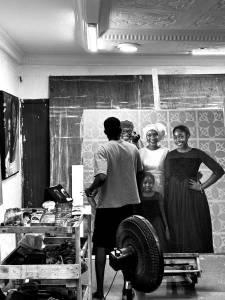
In the fast-moving landscape of contemporary African art, few young painters understand the rhythm of visibility quite like Theophilus Adewuyi. For many artists, Instagram is merely a digital gallery wall, a polished archive of completed works waiting for applause. But for Adewuyi, the platform has become something more intimate, more cinematic, and perhaps more revolutionary. His Instagram story functions like a living documentary, an unfolding diary where paint, music, sweat, silence, collectors, and studio rituals meet in real time.
The Ibadan-based painter has quietly transformed the ordinary act of posting into a compelling form of storytelling. Followers do not simply see paintings, they witness emergence. They enter the studio atmosphere. They observe the slow birth of portraits and figurative compositions from sketch to layered completion. They travel with the work from inception to varnish, from contemplation to delivery. In many ways, Adewuyi has become both painter and director, orchestrating an ongoing visual narrative through the immediacy of social media.
In one of his conversations with iBAND Magazine, Adewuyi explained the importance of technology in his artistic rise.
“Technology has really helped me a lot,” he said. “With just a post on Instagram or other platforms, your work can reach people around the world.”
That statement now feels prophetic within the context of his current visibility.
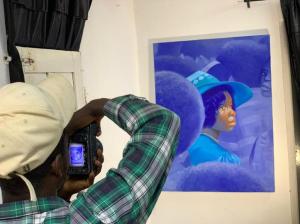
The artist also revealed how social media directly expanded his international opportunities.
“One of the exhibitions I participated in, an international art festival in Turkey, actually came through Instagram,” Adewuyi disclosed. “The organisers saw my work online.”
What makes his stories particularly magnetic is their sincerity. There is no forced performance in the frame. The artist appears immersed in labour, often surrounded by artistic tools, unfinished canvases, and the emotional influence of music. At one moment, the voice of Tupac Shakur drifts through the studio like a philosophical companion to his strokes. At another, the modern Afrobeats textures of Wizkid, Rema or Naeto C create a youthful rhythm behind his process. The soundtrack itself becomes part of the artwork, giving audiences emotional access into the mental environment where the paintings are conceived.
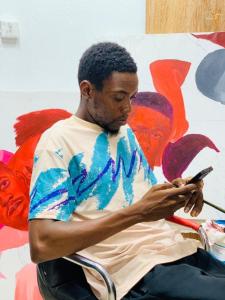
This evolving relationship between artist and audience reflects a larger shift in contemporary art culture. Instagram has altered the expectations of collectors and admirers. They no longer want only the finished masterpiece hanging in a living room or gallery space. They crave proximity to process. They seek authenticity, vulnerability, and evidence of labour. Adewuyi understands this instinctively.
Yet despite this digital expansion, Adewuyi remains rooted in painterly seriousness. His practice still reflects deep research, spirituality, colour symbolism, and cultural reflection. Speaking with iBAND Magazine, he once explained:
“I want my art to contribute to ongoing conversations, especially about African culture, identity, and movement.”
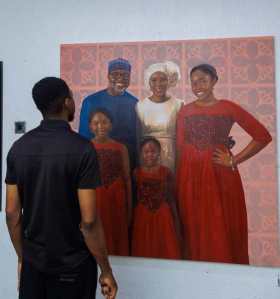
Rather than protecting the mystery of creation behind closed doors, he opens the studio doors wide. His audience witnesses mistakes, revisions, colour testing, pauses, and triumphant moments. The effect is powerful. Collectors become emotionally invested long before the final reveal. The artwork already possesses a history before it reaches its destination.
iBAND Magazine previously described Adewuyi as one of the emerging Nigerian artists “showing up his manual on Instagram” while taking followers through his studio practice in colourful rhythms. That observation now feels even more significant. His online presence is no longer just documentation; it is becoming an extension of his artistic language.
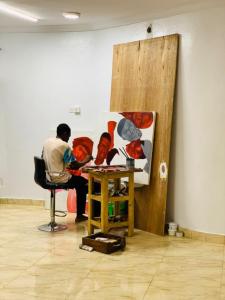
Born in 1998, Adewuyi’s practice continues to be shaped by culture, spirituality, portraiture, and ideas of togetherness. Very noticeable is, his interest in symbolic composition and expressive colour while exploring identity and unity through figurative painting. Adewuyi’s large commissioned portrait of the Baloni family particularly reinforced his devotion to storytelling through paint and emotional connection.
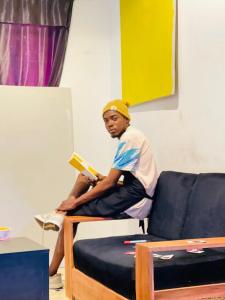
Yet perhaps one of the most fascinating dimensions of his rise is how digital culture has amplified his visibility without reducing the seriousness of his craft. Unlike many online creators chasing virality, Adewuyi retains the discipline of a studio painter. The Instagram stories simply allow viewers to accompany the pilgrimage.
Adewuyi himself understands that movement, adaptation, and visibility define contemporary artistic existence. In his iBAND Magazine interview, he reflected:
“I didn’t want to stay stuck in one place. I wanted to explore how people from different backgrounds live and express themselves.”
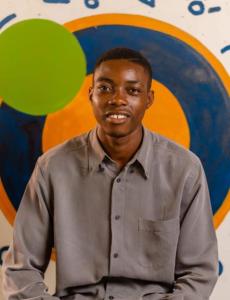
His growing recognition within the Nigerian art ecosystem has also extended into institutional and gallery spaces. Recently, the artist participated in the SOTO Art Fair at SOTO Gallery, an important platform within Lagos’ contemporary art scene. The participation further signalled his emergence among a new generation of artists balancing traditional studio practice with digital-era engagement.
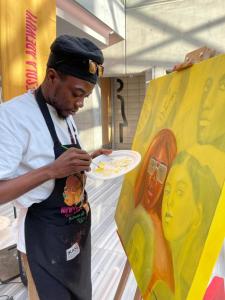
There is something cinematic about the way Adewuyi presents his deliveries to collectors. The wrapping of canvases, the movement of artworks into vehicles, the anticipation before unveiling, and the reactions of collectors themselves often resemble scenes from a carefully edited art film. These moments elevate the emotional value of collecting. The buyer does not merely receive an artwork, they inherit a journey already shared with thousands online.
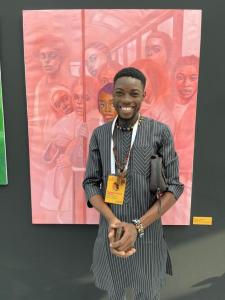
In this age of fractured attention spans, Theophilus Adewuyi has discovered a rare balance between patience and immediacy. His paintings still demand time, observation, and reflection, but Instagram allows audiences to experience their evolution in fragments of daily life. The result is a new kind of artistic intimacy where the studio becomes theatre, the process becomes narrative, and the painter becomes an auteur of contemporary African visual culture.
In many ways, Theophilus Adewuyi is gradually redefining what it means to be a contemporary African painter in the social media age. He is not merely posting paintings online. He is building narrative. He is creating atmosphere. He is turning artistic process into episodic storytelling.
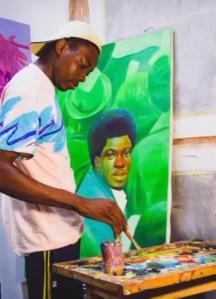
And somewhere between oil paint, Afrobeats, hip hop, silence, commissions, and moving artistic tools, a new auteur of Nigerian contemporary art is emerging before the public eye.
For Adewuyi, Instagram is not simply a promotional tool. It is a living extension of the canvas itself.
iBAND Magazine, Celebrating Visual Arts from the Original.
Africa | Visual Art | Lifestyle | Culture

