
Emmanuel Dudu’s painting is a celebration of the wrapper’s cultural significance. His vibrant, abstract pieces capture the essence of these colourful fabrics, inviting viewers to explore the stories and traditions behind them. From the intricate patterns of traditional Nigerian textiles to the bold, modern designs of contemporary fashion, Dudu’s art is a profound testimony to the wrapper’s enduring appeal. Writes Ireho Aito
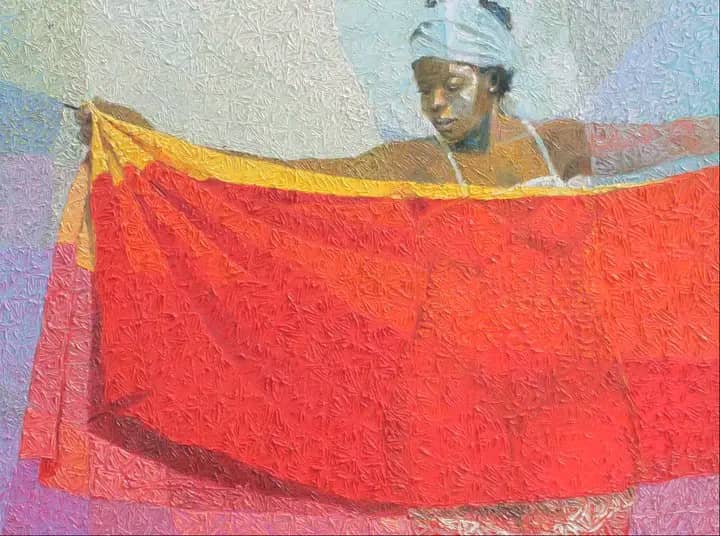
In Nigeria, wrappers are more than just a piece of clothing – they’re a symbol of identity, culture, and tradition. For many Nigerian women, their favourite wrapper is a prized possession, often passed down through generations. These vibrant fabrics, adorned with intricate designs and patterns, hold a special place in the hearts of women across the country.
From the bustling markets of Lagos to the quiet villages of Delta State, wrappers are an integral part of Nigerian life. They’re used to carry babies on their backs, worn to special occasions like weddings and church events, and even serve as a symbol of cultural heritage. Each wrapper tells a story, whether it’s a Holland Wax, Abada, Ankara, or Lace – every fabric has its own unique history and significance.
For Emmanuel Dudu, a renowned painter and multimedia artist, wrappers hold a special meaning. Growing up in Delta State, he witnessed firsthand the importance of wrappers in his mother’s life. As a businesswoman, she would often wear her favorite wrappers to market, and Dudu was fascinated by the way they seemed to radiate confidence and beauty.
Dudu’s mother was also the face of a popular detergent brand in the mid-2000s, starring in a commercial that showcased the power of the detergent to bring out clean wrappers. The ad, shot in pidgin English, told the story of a woman with fish roasting business, typical of the Nigerian woman, especially from the riverine part of the delta, struggling to keep her wrappers clean and fresh from stains emanating from the smokes and fish water spilling on the wrapper, until she discovered the magic of the advertised detergent that also gives pleasant smell. The commercial was a huge success, and Dudu’s mother became a household name.
As an artist, Dudu draws inspiration from his mother’s love of wrappers. His work often features vibrant, abstract depictions of these colourful fabrics, which he uses to explore themes of identity, culture, and tradition. With a background in fine arts from the prestigious Federal Polytechnic Auchi, Dudu’s use of metaphors adds depth and complexity to his art.

For Dudu, wrappers represent more than just a fashion statement – they’re a connection to his heritage and community. As he says, “Wrappers are a part of who we are, a symbol of our culture and tradition. They’re a reminder of our roots and the stories that shape us.”
“Wrappers are a part of who we are, a symbol of our culture and tradition. They’re a reminder of our roots and the stories that shape us.”
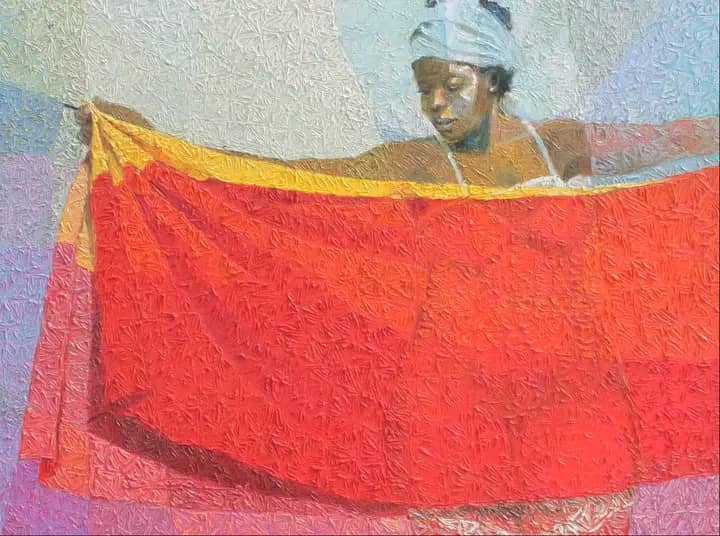
In a world where cultural identity is increasingly globalized, wrappers remain a powerful symbol of Nigerian heritage. Whether you’re a woman from Delta State or a fashion enthusiast from Lagos, the significance of wrappers is undeniable. They’re a sort of confirmation to the beauty and diversity of Nigerian culture, and a reminder of the stories that make us who we are.
Mama’s Favourite Wrapper is in the collection of Spanish Embassy in Abuja.
Words/Ireho Aito/Don’t Keep Your Art in the Finger!/Images/Artwork/Emmanuel Dudu

