
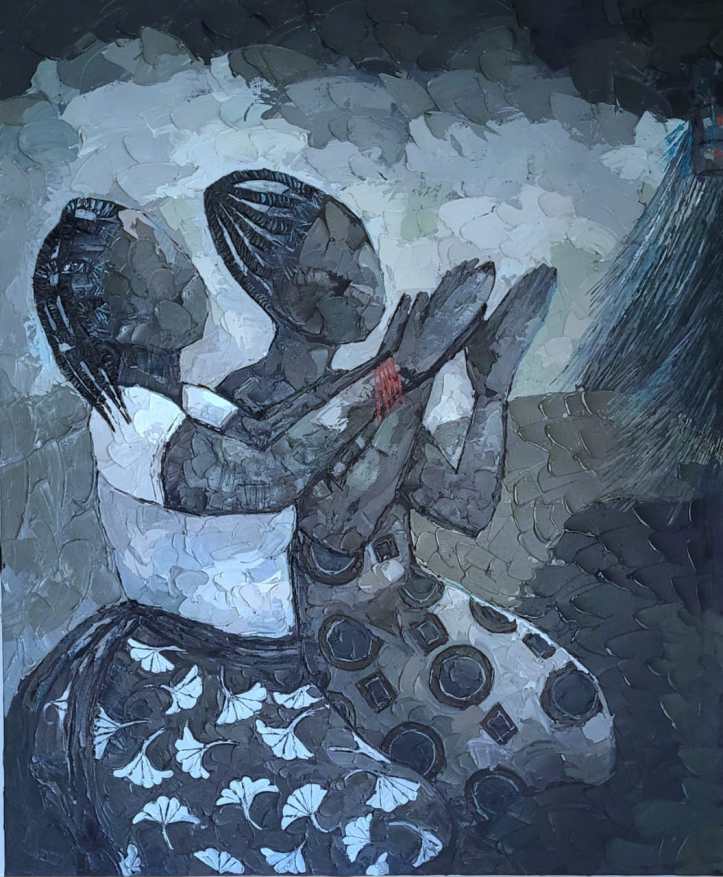
For Nigerian artist and impasto proponent, Pauline Malize Aborchi, culture is not just something to observe, it’s something to explore, challenge, and celebrate through her art. In a recent interview, she opened up about a powerful theme in her latest work, still in the process, in black and white to stir nostalgic memories, the quiet yet essential role of women in sacred ceremonies traditionally dominated by men. This new work she decided to share with iBAND Magazine, demonstrates the power of preserving our culture and tradition through documentation of any form. Writes Ireho Aito
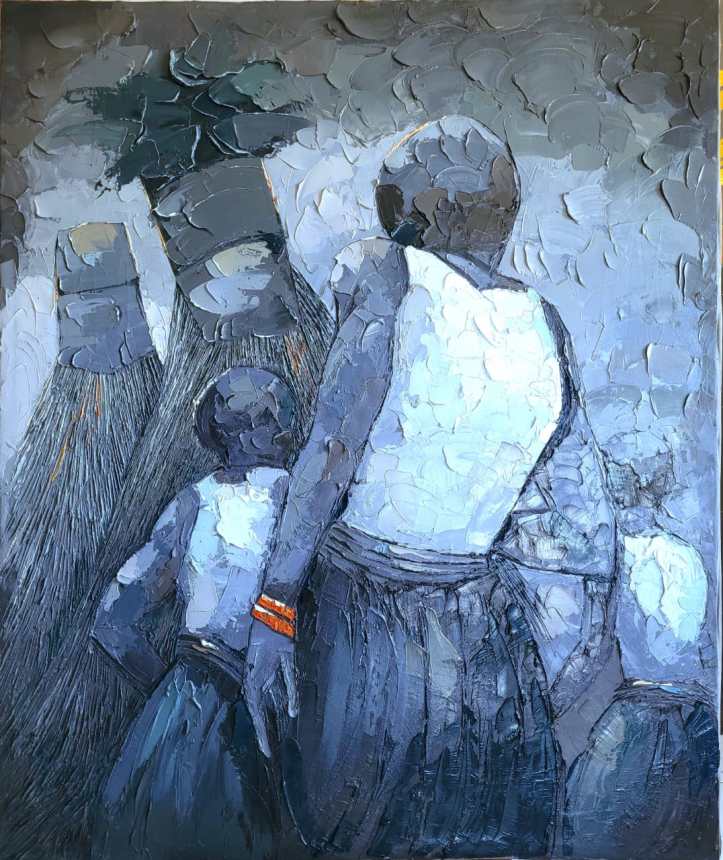
Pauline Malize Aborchi is currently working on a deeply personal art series inspired by her childhood memories growing up in Anambra State, Nigeria. The project revisits a time when her family would travel to their village, especially during festival seasons when masquerade dances lit up the streets with colour, music, and mystique.
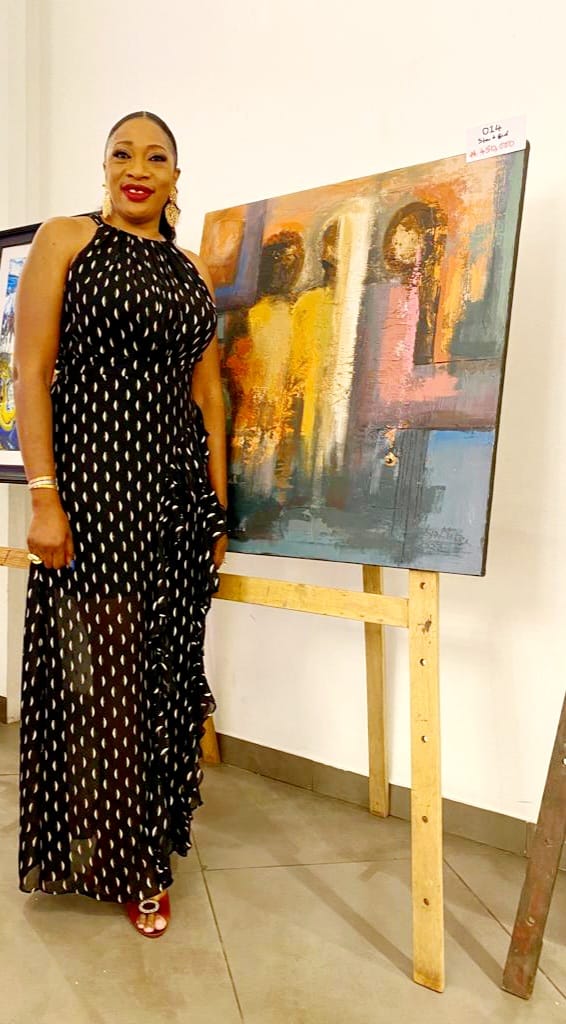
Right in front of her father’s house stood a masquerade house, a sacred place that played a central role in the cultural life of the village. Pauline recalls how she and her siblings would watch the ceremonies unfold up close, absorbing every chant, drumbeat, and dramatic gesture.
Though masquerades are often portrayed as sacred and male-dominated, Pauline’s memories tell a more complex story. She vividly remembers women participating as well by bowing their heads, clapping along, and contributing to the rhythm and spirit of the ceremonies. Their presence, though understated, was powerful.
Through her series, Pauline hopes to stir nostalgic memories and spark connection. These are not just personal recollections; they are shared stories that echo across generations. Her work invites others to reflect on their own roots, to find meaning in memory, and to celebrate the cultural threads that continue to shape who we are.
“People often say these ceremonies are sacred and reserved for men,” Pauline says. “But if you look closely, women are right there too, bowing their heads, clapping, singing, and participating in their own way.”
Her words pull back the curtain on a cultural truth often overlooked while the spotlight may not always shine on women in these rituals, their presence is deeply woven into the fabric of the event. Through subtle movements and rhythmic clapping, they carry centuries of tradition, emotion, and strength. The work is done in black and white to stir memories of the time.
In this work, Pauline captures the energy of these moments, the energetic particpants, the layered scenes, and the unique power of women standing in sacred spaces, even when not officially recognized.
“Their involvement may be quiet, but it’s powerful,” she says with conviction. “They are part of the rhythm, the spirit, the soul of the ceremony.”
With every stroke of her impasto, Pauline Malize Aborchi continues to spotlight stories that live in the margins where tradition are celebrated through painting, and where African women make their mark in ways the world is only beginning to see.
Words/Ireho Aito/Don’t Keep Your Art in the Finger!/Artwork/Pauline Malize Aborchi/Photographs/Pauline Malize Aborchi

