In a world eager to archive African contributions under broad, dusty labels, The Grandmasters gathering says something radical that our masters are here. They were always here. And they are more relevant now than ever. Writes Ireho Aito
If you have ever wandered through Ikeja’s noisy but money spinning Computer Village, you will know it is more than a tech hub. It is a living organism of movement, noise, and commerce. On rainy days, such as we have presently, the streets are a blur of umbrellas and shouting traders, yet even in that chaos, something deeper hums beneath on Pepple Street where the former home of the first Afrika Shrine was situated, one could feel the unmistakable organised sound of Fela Kuti’s “Teacher Don’t Teach Me Nonsense,” echoing as source of succour to majority of the drenched crowd in the village.
There is something about that moment and that is the memory of Fela, the street, the struggle, the message that echoes the essence of being a grandmaster. Not just in music, but in art, culture, and legacy.
This August, on the 10th to be specific, that spirit of fearless mastery will be reignited as nine of Nigeria’s most revered printmakers take center stage in a historic group exhibition at the Fobally Art Gallery in Lagos. The event will be held from August 10 to 30, 2025, the show is a landmark celebration of innovation, heritage, and artistic endurance. This exhibition is worth doing because they are the grandmasters.
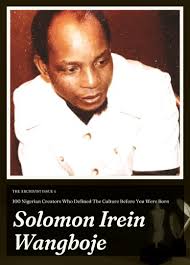
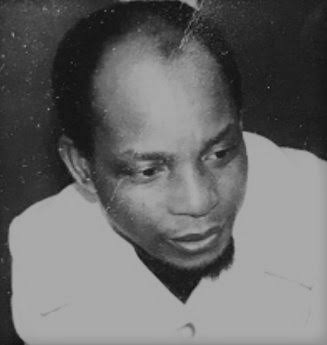
The line-up is a powerful roll call of pioneers that included Chief Tayo Aiyegbusi, Prof. Solomon Wangboje, Prof. Bruce Onobrakpeya, Prof. Uche Okeke, Mr. David Dale, Mr. Ademola Williams, Prof. Salubi Onakufe, Mr. Tayo Quaye, and Dr. Kunle Adeyemi. While four of these names are no longer with us, five are still practising, still creating, still pushing boundaries as living reminders that greatness evolves, but never fades.
Among them stands Professor Bruce Onobrakpeya, a titan of African art, now 92 years old. His story alone speaks to the heart of what this exhibition is about. What began as a chemical accident in his studio, an unintended reaction with hydrochloric acid led to the invention of Plastograph, a technique that revolutionised the visual arts on the continent. Onobrakpeya turned error into innovation, creating something the world had never seen before. That same spirit that looks experimental, unflinching, unapologetically African flows through the entire line-up. Professor.
He is a member of the Zaria Rebel alongside Professor Uche Okeke. They believed in ‘Natural Synthesis.’
Natural Synthesis, was a call to merge Western modernist techniques with indigenous Nigerian visual traditions, notably Igbo cultural symbols and folktales, to forge a uniquely Nigerian modern art identity.

Manny Jefferson/for NPR
Bruce Onobrakpeya s abode, at Oloje Street in Mushin is a behemoth of a structure housing tens of thousands of the creative ingenuity of one man who has been organising Agbarha Otor yearly workshop in Agbarha – Otor Delta State now in its 20th season.
While growing up as a secondary school student, the black drawing of Ralia, the character in Sugar Girl, a novel written by Kola Onadipe, captivated us while reading the book. His name Bruce Onobrakpeya was vividly acknowledged as the illustrator of the book which formed part of our assignment back then to explain the role of a book illustrator. What a Name so special to Africa. Professor Bruce Onobrakpeya has given Nigeria, Africa and the World a befitting gift of shared wisdom in his artistic journey. A treasure the world has continued to cherish.
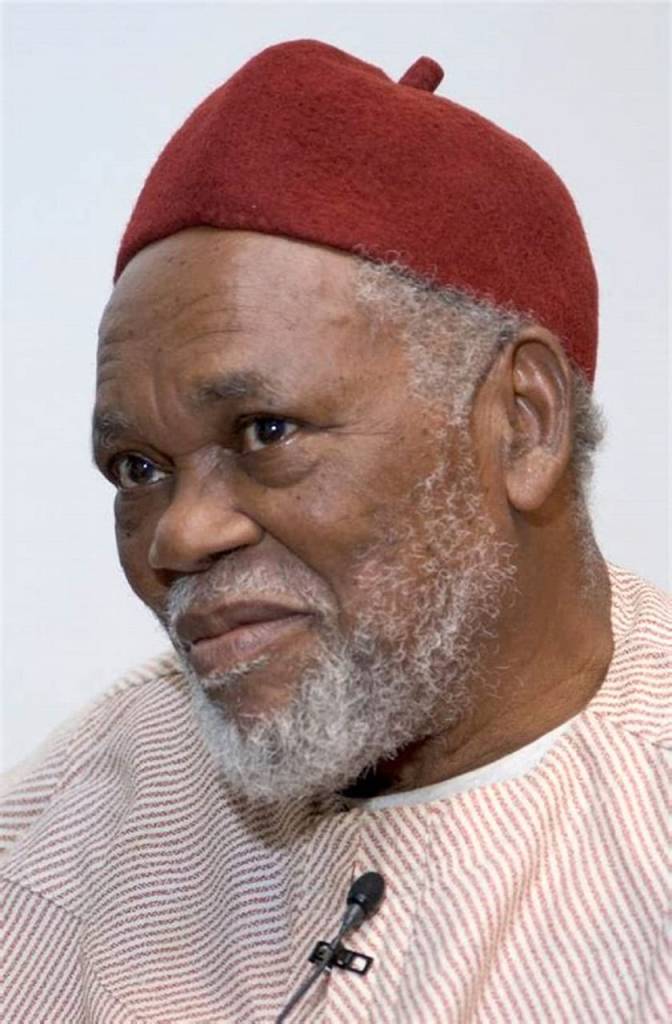
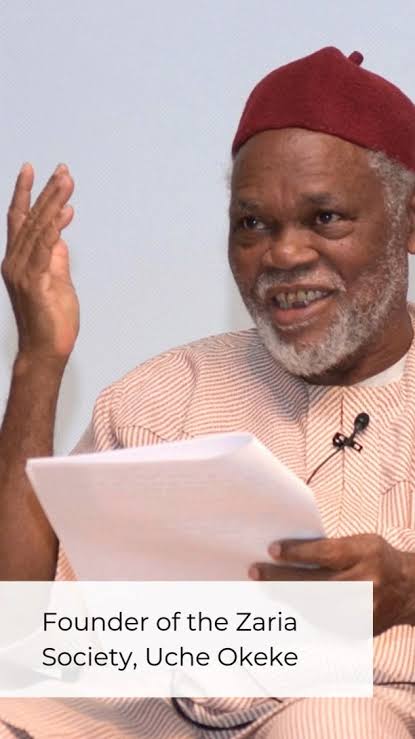
Professor Uche Okeke gave us the revival of Uli. He is best known for reviving and elevating Uli, a traditional Igbo body and wall-painting art used by women by transforming its fluid line-based aesthetic into a modern visual language across painting, print, and mural formats. He was also an illustrator like his great friend and schoolmate, Professor Bruce Onobrakpeya.
His students and those influenced by his teachings continue to shape art discourse across Africa and globally with his impact deeply visible in the works of artists like Obiora Udechukwu, El Anatsui, Marcia Kure, and others associated with the Nsukka School. Among his featured illustrations was between 1963–65, when Uche Okeke was commissioned to illustrate the second edition cover and design artwork such as The Conflict (After Achebe) for Achebe’s seminal novel Things Fall Apart. This powerful imagery conveys the clash of cultures through striking visuals, an Egwugwu council confronting the colonial authorities and a bird caught in a trap as cover symbolism.
One of the leading sculptors in Africa, Dr. Adeola Balogun once shared his encounter with David Dale how he came to him and held his hands in awe to see a young man who later won the Best Graduating Student at Federal Polytechnic, Yaba College of Technology Lagos. David Dale couldn’t believe his eyes but was sure of the best of future for Adeola Balogun. David Dale was so iconic and his name will forever remain in the pantheon books of contemporary Nigerian art.
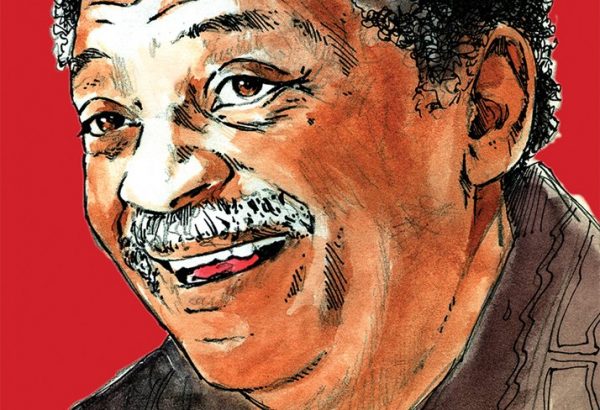
He was very visible at his abode at Adebola Street, off Adeniran Ogunsanya, Surulere, a quiet middle-class community in mainland Lagos. David . H. Dale was a former student of Bruce Onobrakpeya at St. Gregory College at Ikoyi, Lagos. He graduated from Ahmadu Bello University, Zaria where he specialized in illustration and graphic design.
David Dale worked across 23 different media over a 50-year career that included lino prints, etchings, mosaics, glass, oil, bead art, gouache, stained glass, and mosaic. He served as a Graphic Consultant for FESTAC ’77 and taught Visual Communication at the University of Lagos for 13 years.
He participated in over 70 art exhibitions beginning from 1967, both nationally and internationally. His works were featured in the U.S., U.K., USSR, Germany, France, Japan, Australia, Canada, Brazil, Sweden, and New Zealand.
His works include site-specific installations at Our Saviour’s Church (Onikan), St. Agnes Church (Maryland, Lagos), MTN Ibadan, Nigerian Stock Exchange, Shell Headquarters, and State House Marina, Lagos.
Dr. Kunle Adeyemi is the gentle giant of visual arts in Nigeria. A maestro who is so adorable with passion for discovering young ones. Personal experience wayback saw Dr. Kunle Adeyemi supporting our magazine right from the begining by driving yours truly to a bank at Ojuelegba to part with some money. I was still able to recollect his statement, “we long for people like you to promote the industry through writings,” he said. It was a great honour meeting Dr. Kunle Adeyemi, now retired from the academic practice at Yaba College of Technology Lagos since 2024, the same place he enrolled to become a grandmaster that he is today. Till date, Dr. Adeyemi gives quality advice for us never to stop producing the magazine celebrating the visual arts industry.
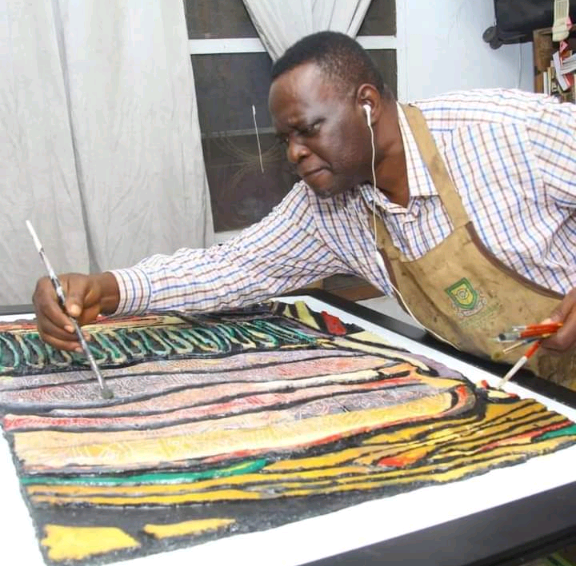
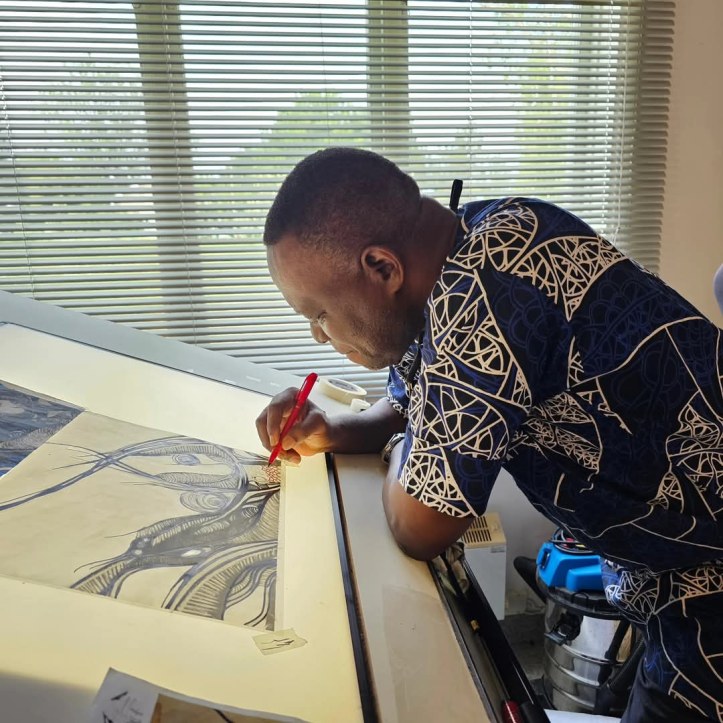
The tall amiable.artist was born on August 13, 1959 in Ondo State, Nigeria, and he got trained at Yaba College of Technology (graphic design and printmaking). He later attended University of Benin (MFA), and Lagos State University (PGDE), earning his PhD in Studio Arts (Practice-Led) from Delta State University, Abraka.
His office in Mushin, Lagos is like another school where young trainees are everywhere and being mentored into greatness. Dr. Kunle Adeyemi has exhibited in Astley Gallery in Sweden with works celebrated to critical acclaim. Adeyemi Sent – Forth exhibition and retirement event was one of the most colourful events in 2024.
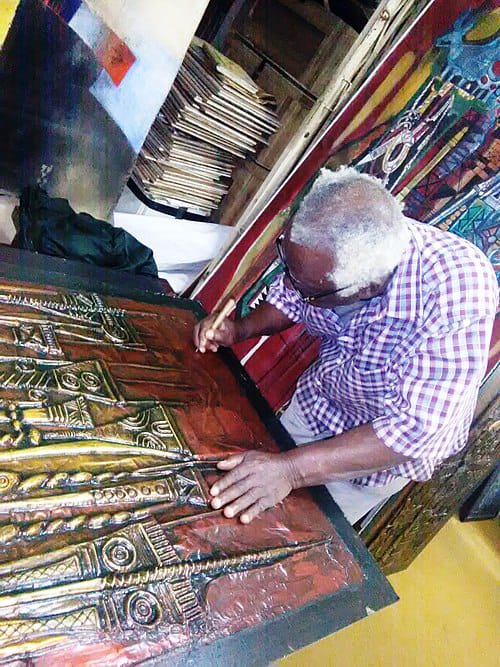
Adeyemi is well known for mixing printmaking and painting to create unique styles he called “Paintographs” (paintings based on prints) and “Paintocasts” (art made with cast metal foil in relief).
His art often includes Yoruba symbols, nature, birds, and everyday life, using soft colours and layered textures to tell thoughtful and quiet stories.
Throughout his career, he has taken part in over 120 group exhibitions and held 26 solo shows both in Nigeria and abroad.
But why does this exhibition matter now?
Because we are at a cultural crossroads. As digital art and instant media dominate the scene, traditional forms like printmaking risk being forgotten. This exhibition brings them back into the light. It is a reclaiming of craft. A loud, clear declaration that African art has always been original, and its grandmasters even when unsung have shaped global narratives.
The show serves as both a tribute and a classroom. Young artists will have the rare chance to learn directly from these legends, to see the power of linocuts, etchings, plastographs, and silkscreen in their raw, unfiltered glory. And for the wider public, it is a moment to reflect on how art tells our stories, how it holds our histories, how it shapes our identity.
In a world eager to archive African contributions under broad, dusty labels, The Grandmasters gathering says something radical that our masters are here. They were always here. And they are more relevant now than ever.
This is not just another exhibition. It is a moment to be reckoned with. The exhibition is a reunion of giants whose body of works do not just belong in galleries, rather they belong in the collective African memory.
So when the doors open at Fobally this August, step in with reverence. The masters are waiting. And they have something to show us.
Words/Ireho Aito/Don’t Keep Your Art in the Finger!

