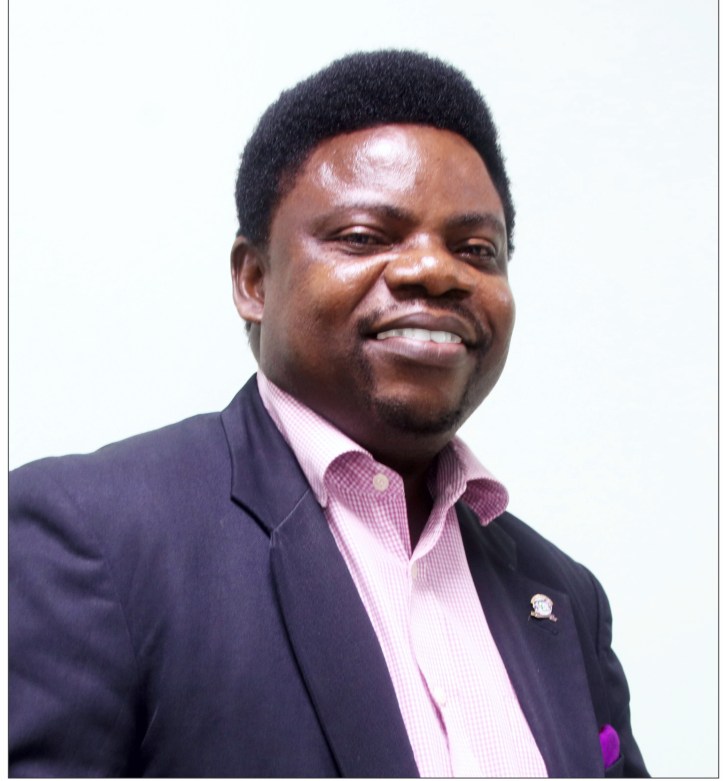
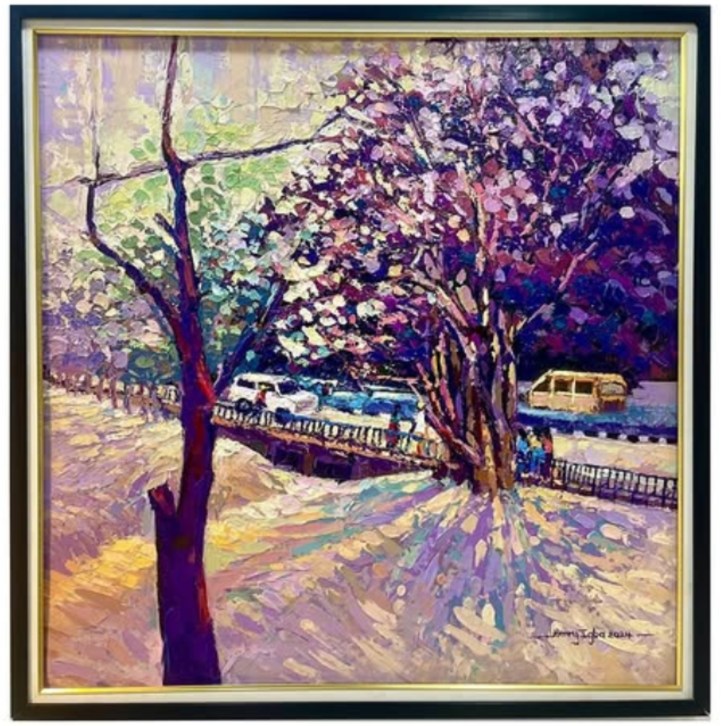
Often times, in the ever busy streets of Nigerian art, where talent often struggles against limited resources and societal expectations, Henry Igba stands out as a story of grit, grace, and guidance. Born into a police officer’s family and raised across several Nigerian states, Henry’s early life was a restless journey starting from new schools, new faces, and few chances to settle. Yet, amid the constant movement, one thing never wavered from his journey and that is, his gift for art. Along the line, Henry Igba ended up a polyglot. Henry Igba is our cover this week on iBAND Magazine
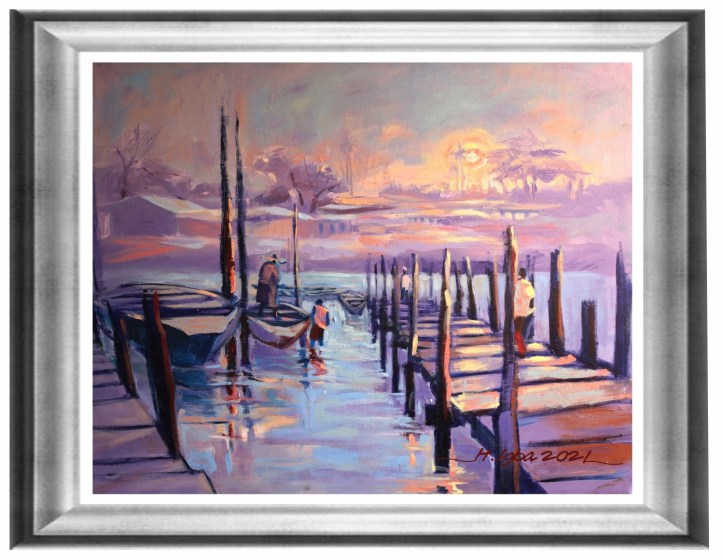
With no art teacher in sight for years, his creativity could easily have been lost. But fate brought mentors into his life. He won’t stop celebrating his parents, an uncle who became his first champion, a dedicated secondary school teacher who armed him with books and belief, and later, masters and studios that sharpened his vision. From the vibrant classrooms of Auchi Polytechnic to the professional buzz of Lagos studios, Henry has carved a path that blends raw talent with marketing savvy.
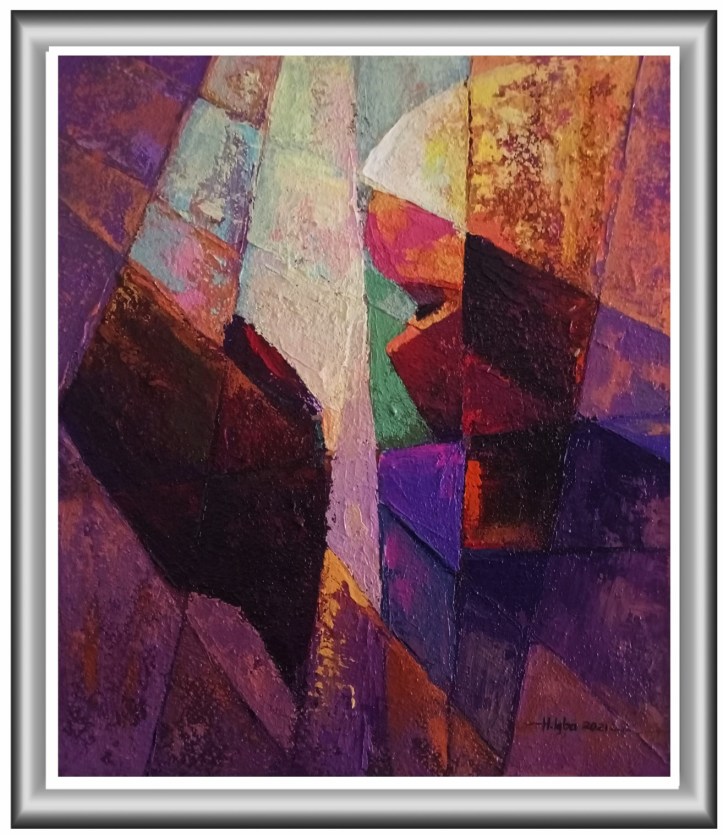
Today, he is more than a painter. He is a storyteller with colours, a Senior Graphics Artist at Covenant University, and a mentor to younger creatives. In this exclusive sit-down with Ireho Aito, Henry Igba opens up about his journey, family, mentors, education, and the business lessons that turned a wandering boy into a name that carries true artistic weight.
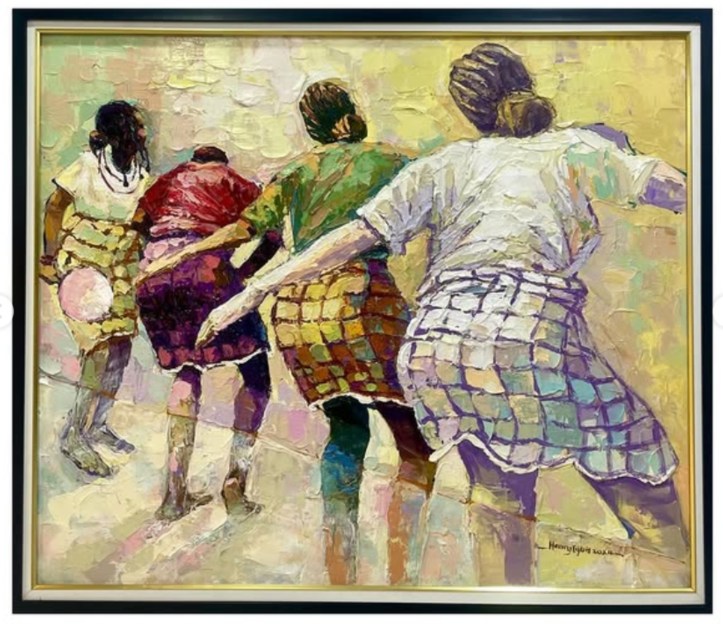
When you meet Henry Igba, there’s a calmness that settles in the room. Yet, beneath that gentle exterior is a man whose journey through art has been marked by resilience, mentorship, and sheer determination. We sat down to talk about his roots, his mentors, and the lessons that shaped his career.
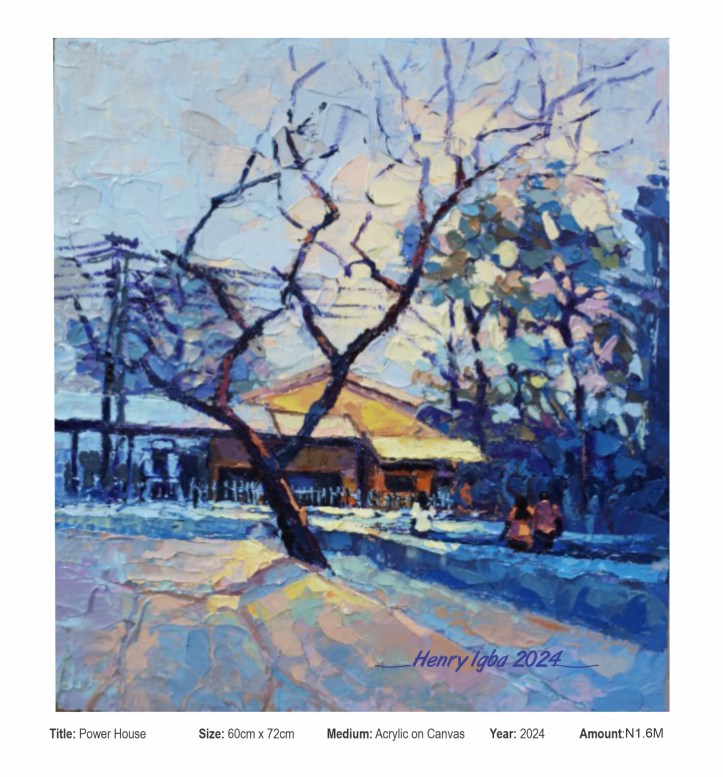
Ireho
Henry, your name “Igba” already carries weight in Ukwuani culture such as greatness, heroic feats. Do you feel your name has influenced your path?
Henry Igba –
Absolutely. Names carry spirit. For me, “Igba” is both a prophecy and a responsibility. Every time I paint, I feel I am carrying that greatness forward.
Ireho
Let’s talk about family. What role did your parents play in nurturing your art?
Henry
My parents, Simeon and Victoria, gave me discipline and creativity. My mother was a hairstylist and her creativity with women’s hair was my first introduction to art. My father, a police officer, taught me resilience. Their mix of toughness and artistry shaped me deeply.
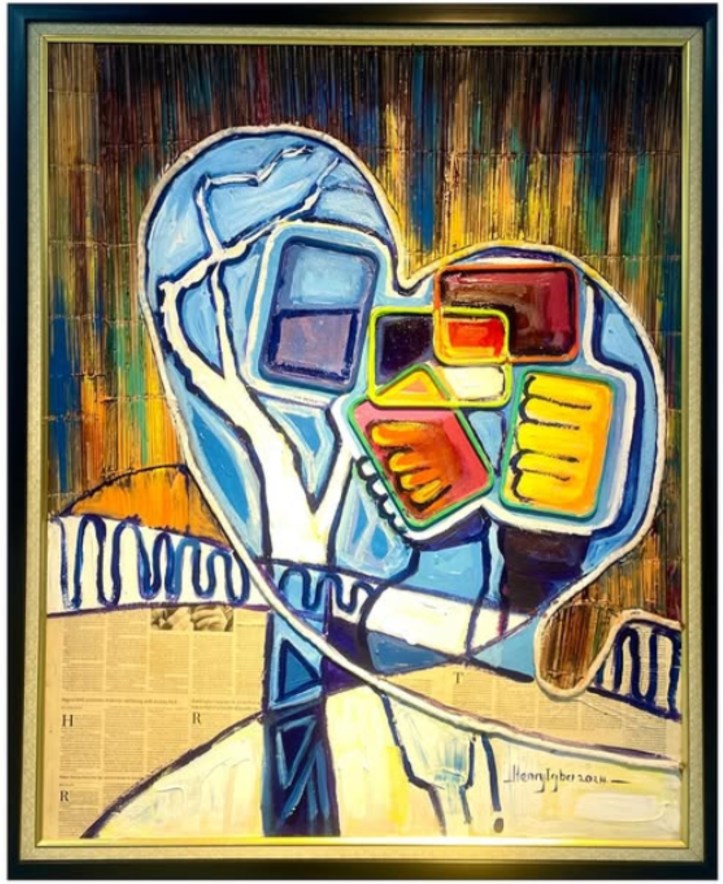
Ireho
Your father’s career took you all over Nigeria. Did that help or distract from your art?
Henry
It helped, though it didn’t feel so at the time. Moving from Kwale to Jos, Akure, Abia, and back to Delta meant I had to adapt constantly. But it also gave me languages, cultures, and colours that now live in my canvases.
Ireho
Was there a point when your family doubted this art journey?
Henry
(laughs) Oh, plenty! At that time, parents wanted Medicine or Law. Fine Art was alien. My parents were skeptical. It took my uncle, Alexander Agam, to convince them to let me pursue art. We used to call him Chief Alex
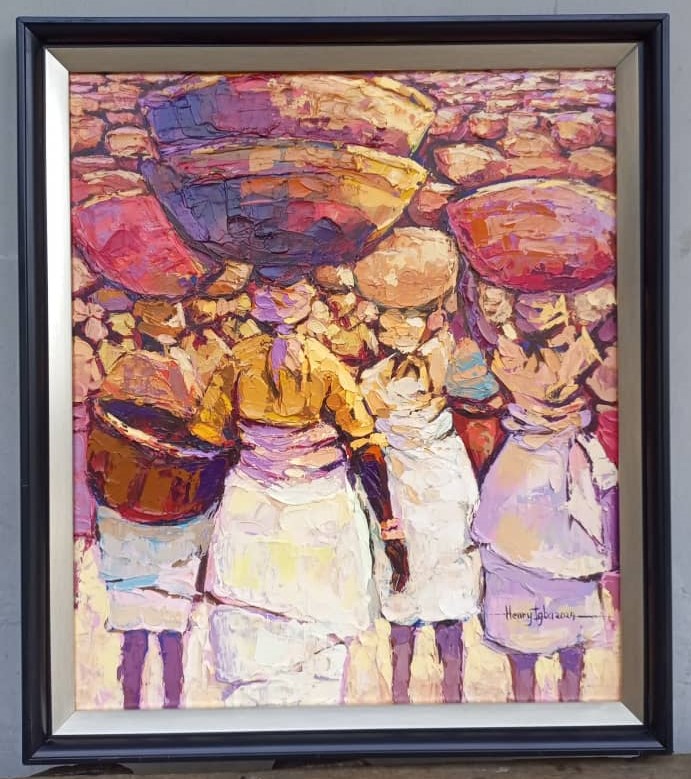
Ireho
Tell me more about Uncle Alexander?
Henry
He was my anchor. He understood me when others didn’t. He guided me to sit for the GCE and take Fine Art seriously. Without him, I might have abandoned the dream. His support was my turning point.
Ireho
But you didn’t always have formal art teachers, did you?
Henry
True. For years, there was no one to guide me. Then came Mr. Fidelis Achuma, my Fine Art teacher in secondary school. He is now in the United States, but back then, he was my angel. He bought me books, corrected my work, and gave me confidence to pass Fine Art with a good grade.
Ireho
After secondary school, your story shifts to Lagos. What happened there?
Henry
Uncle Alex brought me to Lagos in 1993. He got me into apprenticeship at Billyrose Signature Gallery at Oke – Afa, Isolo. That place changed everything. The big man’s name is actually Gbenga Billyrose, a master of the art and well respected businessman in PR and Advertising sector.
Ireho
How so?
Henry
Billyrose Studio was not just a studio; it was a university. Gbenga Billyrose taught me the discipline of art. But more importantly, I learned marketing. I saw how clients valued art, how to negotiate, and how presentation could raise the worth of a piece. That’s something schools rarely teach.
Ireho
So, Billyrose was your marketing school?
Henry
Exactly. The 1990s banking boom brought corporate clients into the studio. I watched deals happen. I even got to broker some through contacts. That’s how I realised an artist is also a businessman.
Ireho
Did that business side help you when you later studied at Auchi Polytechnic?
Henry
Yes. By the time I entered Federal Polytechnic Auchi later in the 90s, I wasn’t just an art student. I had seen real studio life. That gave me confidence, and Auchi gave me the academic depth.
Ireho
How was life at Auchi?
Henry
Emotional! When I walked into the School of Art and Design, tears came to my eyes. I saw murals, sculptures, colours everywhere. It felt like home. My lecturers then were great teachers like Kent Onah, Afolayan Jr., and Dr. Monye who inspired me. My classmates, like Titus “Snoop” Agbara and Emmanuel Dudu, kept me sharp with healthy rivalry.
Ireho
It sounds like friendship was just as important as teaching.
Henry
Absolutely. We were a family. We pushed each other. Our Klass of ’99 is still like diamonds and each one shining differently, but together, we light up the sky.
Ireho
And after school, you entered NYSC in Kwara. Did your art survive that period?
Henry
More than survive, honestly it thrived. At Queen Elizabeth Secondary School, I became a beloved teacher. Outside class, I sold my first watercolour collection to a client. I remember throwing the cash in the air, shouting, “You mean this is art?!” That validation was priceless.
Ireho
Then came Warri and your encounter with Sam Ovraiti.
Henry
Meeting Sam was like standing before a master. He taught me colour discipline. Though he was busy, he recommended me to Curio Studio in Lagos for industrial training. That studio was another world that was full of big names like Olu Ajayi, Lekan Onabanjo. All the big names in visual arts sector today were there, either as studio artists or visiting artists. Big names practicing, from Dafe Sowho, down to Enoch Ogbebor, Paul Aiweroba, Godfrey Williams-Okorodus and Ehi Obinyan. Godfrey Williams – Okorodus was an active member of the studio and very supportive financially it was a home for the masters that are known for their colour narrations, expressions and compositions. The masters present at Curio Studio were actually redefining the sector with their stellar touch on creations. Henry has never experienced such fraternity of masters before then.
Ireho
Between Billyrose and Curio, it seems studios shaped your career as much as classrooms.
Henry
That’s true. Studios gave me marketing, exposure, and real-world practice. Schools gave me theory, but studios taught me survival.
Ireho
And survival is still key in today’s art market. Do you feel your marketing edge from Billyrose gave you a lasting advantage?
Henry
Definitely. Many talented artists fade away because they don’t know how to market. Billyrose drilled into me that art must be seen, appreciated, and collected. That mindset kept me relevant.
Ireho
Today, you are not only a painter but also Senior Graphics Artist at Covenant University. Do you see yourself more as an academic, a professional, or a marketer of your own vision?
Henry
I see myself as a bridge. I create, I communicate, and I mentor. The tools change, but the mission remains which is to give visual expression to truth.
Ireho
Looking back, what do you owe most to your mentors?
Henry
Everything. My parents gave me roots, Uncle Alex gave me wings, Mr. Achuma gave me light, Billyrose gave me the market, and Auchi gave me the polish. Without them, Henry Igba wouldn’t exist as you see him today.
Ireho
And what do you want young artists to take from your story?
Henry
That art is not just talent. It’s family, discipline, mentorship, and business. If you keep those four pillars strong, your art will not only live, it will thrive.
Interview/Ireho Aito/Don’t Keep Your Art in the Finger!/Artworks/Photographs/Henry Igba Gallery.

