

Born from the restless creativity of Mufu Onifade, ARAISM has grown from a daring experiment into a global movement. Rooted in African tradition yet boldly modern, it stands today as proof that true wonder never fades. Writes Ireho Aito
“Oro Mufu o ti wa yemi mo,” “Mufu’s intentions make one to be dumbfounded,” said the late master wood sculptor, Bisi Fakeye, sometime in 2007 at Universal Art Studio. We were all gathered at the National Theatre, Iganmu, Lagos, enjoying the usual evening trends when he added, “Iwo ni Ara, Iwo ni o tun bosi oro tiata” – meaning, “You have a fully engaging career as a visual artist with commendable clients that is perfectly okay for you. Yet, you decided to fraternise again with the theatre and for what purpose?”
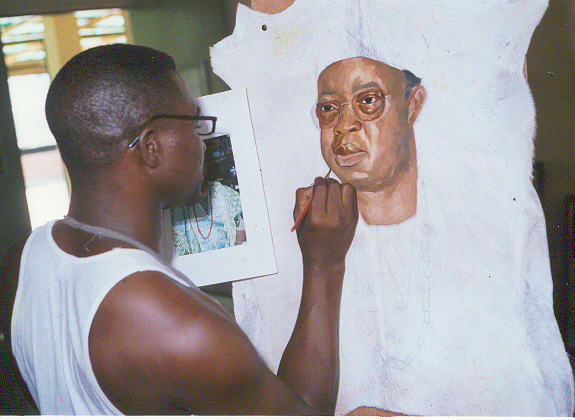
The man he spoke about was none other than Mufu Onifade, the versatile artist, dramatist, writer, critic, curator, and polymath. At that time, Mufu was not only running a full-time studio but also leading a theatre guild. Not done as well, he wrote weekly art reviews in the now-defunct NEXT newspaper. But Mufu Onifade’s literary prowess is evident on his social media handles, where he engages his followers daily with his fountain of inspirational engagement.
Till date, he works as consultant on museum projects, curated festivals, and, alongside Engr. Yemisi Shyllon, served as one of the two curators of Felabration in honour of Fela Anikulapo-Kuti. They have been saddled with the task of curating the visual art section of Felabration over the years. From that time and now, the enigma Mufu Onifade was, and still is, a restless creative spirit.
While we sat under one of the Theater complex trees, discussing and planning how to shoot ARAISM Movement documentary and at the same time listening to renowned Bisi Fakeye, who was serenading us with his escapades in Lagos, how he eventually found love over Christmas.
The sage extensively shared with us how he started hawking his sculptural pieces from Mabo end of Surulere, Lagos and down to various parts of Lagos as a beginner before he received a Goethe Institut contact from one of his clients who was also a collector with him.
Bisi Fakeye found favour at Goethe Institut and was able to make some of the memorable intercultural visits to Germany. The institute also supported his exhibition. It was an evening to remember.
The Birth of a Wonderful Movement!
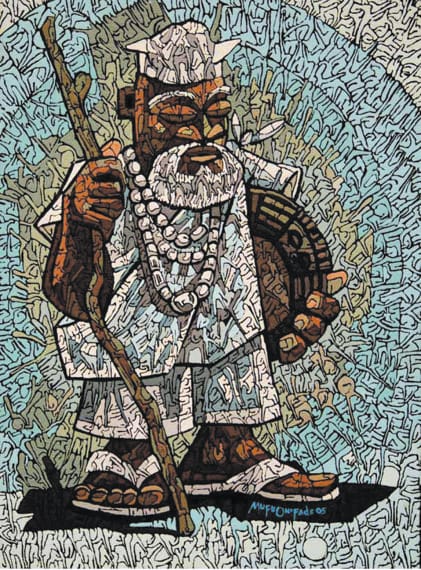
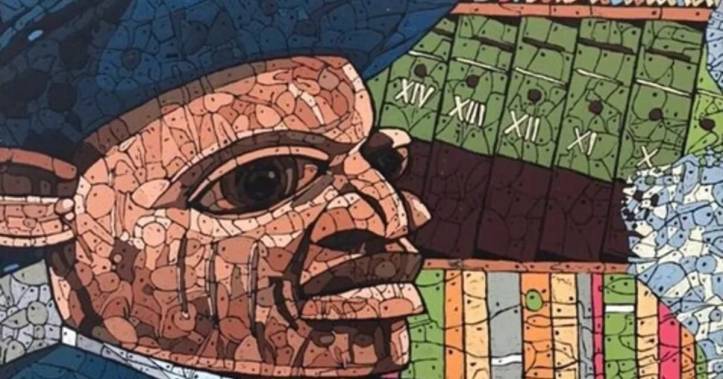
But the true landmark of Mufu Onifade’s career came in 2006 with the invention of ARA, meaning “wonder” in Yoruba. ARA is a painting technique that blends tradition with modernity, producing works that are deeply cultural yet vibrantly contemporary. Mufu Onifade’s ARA quickly moved from being criticised and questioned to being admired, collected, and celebrated around the world.
In 2006, at Prof. Bruce Onobrakpeya’s Harmattan Workshop Gallery, Victoria Island, Mufu unveiled ARA – meaning wonder in Yoruba. It was a bold fusion of culture and innovation, at once deeply traditional and strikingly contemporary. The art world raised its brows. Was this a style, a technique, or a movement? It was indeed an Aesthetically Rich Art, nurtured by revered Mufu Onifade.
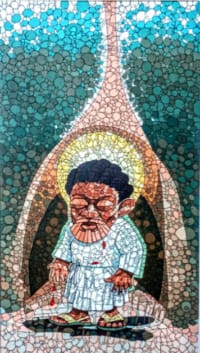
Mufu answered with action, the group came up forcefully into the scene with exhibitions, colloquia, and disciples.
Such debate only strengthened the movement. From skepticism grew admiration, from doubt came applause.
It was not an easy journey. ARA had to be defended in several intellectual spaces. In fact, Mufu became the first Nigerian visual artist to organise a colloquium to critique his own style. One of such events was held at the National Theatre, was anchored by Dr. Tunji Sotimirin. At another event, Professor Kunle Filani said, “I consider Ara as a style and not a movement. I therefore wish to espouse on the concept of ‘movement’ thereby distinguishing it from ‘style’ in order to understand better the place of Ara in the scheme of art. The difference in nomenclature does not in any way rob Mufu and his disciples the grace of innovations and creativity.”
Other critics, like Dr. Kolade Osinowo of Yaba College of Technology, urged the movement to produce original, standout works that will stand the test of time if they really mean business.
Renowned critic, scholar and publisher, Kehinde Adepegba traced its history back to its launch on July 22, 2006, at Prof. Bruce Onobrakpeya’s Harmattan Workshop Gallery. He wrote, “The epoch making event re-launched the phenomenon of ARAISM – Wonderful Art – to the sensibilities of artists, art writers, gallery owners, the art community and the general public.”
From then, Araism grew stronger. The pioneer disciples of the emerging technique, among them Oludotun Popoola, Jonathan Ikpoza, Abolore Awojobi, and Oluwanbe Amodu, staged group exhibitions that caught the attention of collectors far and wide.
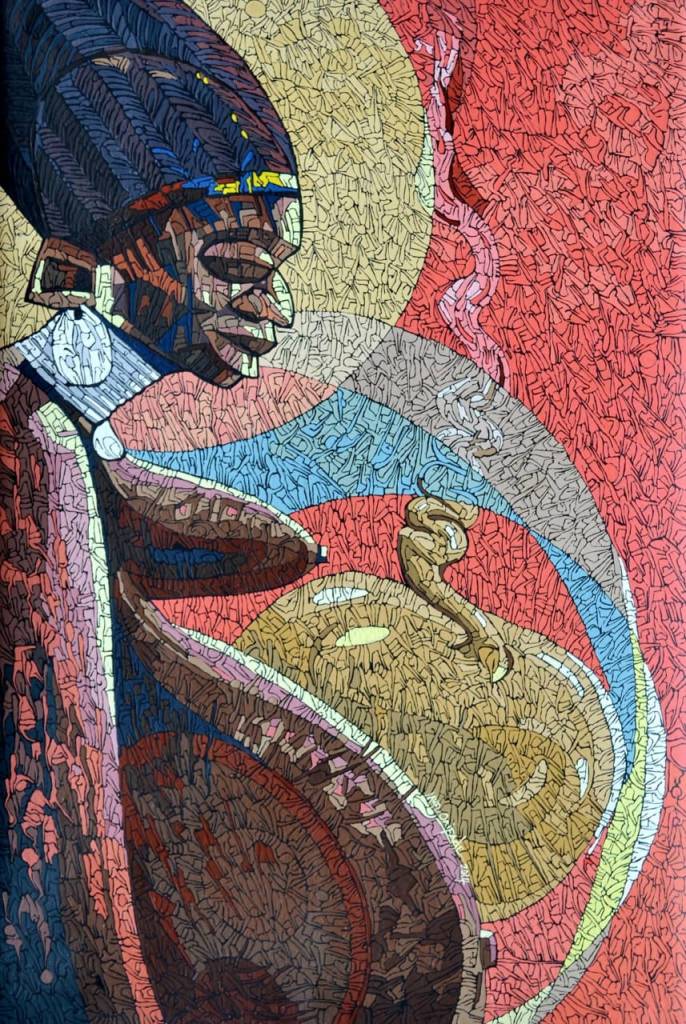
On September 13, 2025, Araism Movement celebrates its 20th anniversary at Iwalewa Art Gallery, the same way it began at Harmattan Workshop. Exhibiting artists include Mufu himself, Akande Mautin Abiola, Oluwanbe Amodu, George Egunjobi, Kesa Babatunde, Odumbo Adeniran, Jonathan Imafidon, Esther Emmanuel, Stephen Oni, Adeyeye Taiwo, and Emmanuel Eweje.
Mufu Onifade’s life is the story of an artist who refused to be boxed in. He is an Obafemi Awolowo University alumnus, an award-winning painter, dramatist, educator, and curator. He is a cultural ambassador whose technique is now found in airports, private collections, and institutions worldwide. His name has become synonymous with innovation and artistic courage.
20 Reasons Why the ARAISM Movement and Technique Have Both Come to Stay
Art movements come and go, but only a few leave a lasting mark that transforms the creative landscape. The Araism Movement, pioneered two decades ago, has not only stood the test of time but continues to evolve with fresh energy and relevance. What began as an experiment has now matured into a bold artistic language that bridges tradition and modernity, appealing to collectors, critics, and young creatives alike. Its resilience lies in its adaptability, depth of meaning, and undeniable aesthetic power. As we celebrate its journey, here are 20 reasons why the ARA technique has come to stay, firmly rooted in the present and confidently shaping the future of art.
Cultural Rootedness
ARA is deeply connected to Yoruba traditions while also engaging with broader African cultural values. This grounding in heritage gives it authenticity and makes it relatable to people at home and abroad. Coupled with the fact the founder of ARAISM Movement is rich a proudly cultural personality who has dedicated all his life to promote art and culture either through paintings, documentaries, theatre and performance.
Blend of Old and New
The movement and technique combine elements of traditional aesthetics with modern forms of expression. That balance allows ARA to appeal across generations and prevents it from being locked in time.
Strong Leadership
Every movement needs a visionary, and Mufu Onifade has provided consistent leadership. His ability to guide, mentor, and sustain interest has ensured the survival and growth of ARAISM Movement. Only very few artists in Africa had given their innovation total attention without turning away because of backlash that was meted on the technique and movement in the beginning of the journey. In fact, Mufu Onifade heaved a sigh of relief at the outcome of the second anniversary held at National Museum Onikan in Lagos.
Intellectual Validation
ARA is not just about beauty or creativity; it has been debated and defended in academic and professional spaces. By hosting colloquia and inviting critics, Mufu made sure the technique was taken seriously. He defended the movement and the world applauded the movement through extensive critique and appraisal. This can be measured by the curious engagement with scholars like Prof. Kunle Filani and Dr. Kolade Osinowo, just to mention a few that added credibility. Their constructive criticism helped sharpen the focus of ARA and gave it more depth.
Institutional Endorsement
Its launch at the gallery of the legendary Prof. Bruce Onobrakpeya gave it a prestige. Being hosted in such respected institutions linked ARAISM Movement with credibility from the beginning.
A Fusion of Tradition and Modernity
One reason the ARAISM Movement will be a legacy to cherish for generations is its ability to merge the richness of African traditions with the freshness of modern expression. Unlike fleeting trends, ARAISM is rooted in cultural identity while remaining open to global influences, making it both timeless and adaptable. This dual strength positions it to resonate not only with local audiences who see their heritage celebrated, but also with international collectors and institutions seeking authentic yet contemporary narratives. Such a foundation ensures that ARAISM is not just a movement of the moment, but one destined to achieve global dominance and lasting relevance.
Exhibitions Worldwide
The technique has travelled beyond Nigeria. Whether at airports, cultural institutions, or private homes, ARA has secured a global presence. That reach makes it hard to ignore.
Global Collectors’ Interest
International collectors have shown interest in ARA works. The presence of the style in collections abroad proves it has value beyond local appreciation.
Innovation in Style
ARA is not a copy of existing art traditions. It is unique in its approach, with its own visual language. Innovation of this kind guarantees lasting relevance.
Movement of Disciples
Mufu has raised a community of disciples who practise and expand the technique. A movement with followers is harder to erase than a lone artist’s style.
Versatility
ARA works are not confined to one medium. They appear in paintings, mixed media, and designs, making the technique adaptable to different forms of creativity.
Critical Acclaim
From Kehinde Adepegba’s description of it as a “phenomenon” to others calling it “wonderful art,” ARA has received high praise. Such acclaim helps to keep the technique in public conversation.
Durability of Vision
For 20 years, ARA has survived criticism, competition, and changing trends. Its ability to stay relevant for two decades is proof that it is not a passing fashion.
Educational Influence
Mufu’s integration of informal apprenticeship with formal art education keeps the style alive in both community studios and academic circles. This blend ensures continuity.
Festival Recognition
Through Felabration and other cultural events, ARA connects with a broader audience beyond galleries. Linking art with festivals ties it to everyday life.
Resilience to Criticism
Critics initially doubted the movement but rather than dying, the movement grew stronger. This resilience has built confidence in its staying power.
Identity and Character
Though different disciples bring personal flavours, ARA retains a singular identity. This consistency ensures that the style is always recognisable.
Generational Transmission
New disciples are constantly being mentored, which means the movement is not dependent on Mufu alone. ARA is already being passed down to younger generations.
Global Relevance
ARA speaks to universal themes of culture, creativity, and wonder. That global language makes it adaptable across continents, from Africa to Europe and beyond.
Celebration of Wonder
Finally, the very meaning of “ARA” – wonder – makes the technique evergreen. As long as humans seek awe and inspiration, ARA will continue to matter.
Words/Ireho Aito/Don’t Keep Your Art in the Finger!/Photographs/Images/ credit/Mufu Onifade Archives/Artgidi.com

