
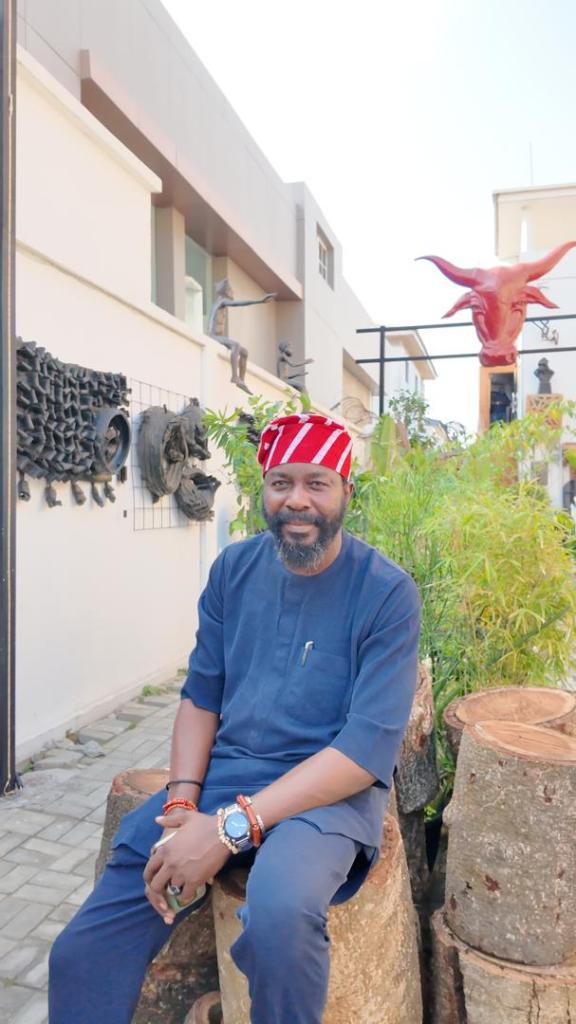
When a movement survives two decades, it is more than an artistic experiment, it has become a cultural landmark. ARAISM, the unique technique pioneered by Mufu Onifade, has not only endured but also carved its place in the story of Nigerian and African contemporary art. To celebrate ARAISM at 20, Ireho Aito of iBAND Magazine, had a chat with Femi Williams, the culture producer and curator at Iwalewa Art Gallery Lagos, which is hosting this milestone exhibition. In this conversation, Williams reflects on the resilience of the movement, the genius of its founder, and the role of Iwalewa as a custodian of Nigerian creativity.
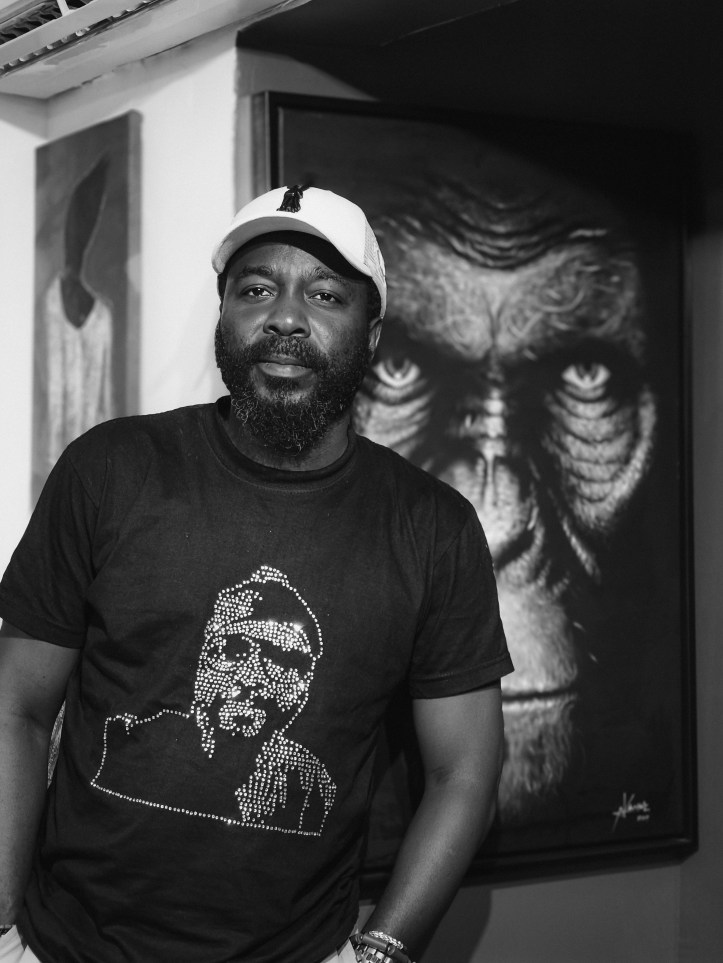
Playing host to Araism at 20 is a milestone. What does it mean to you personally and to Iwalewa Art Gallery to be the venue for this landmark exhibition?
Femi Williams
Hosting ARAISM at 20 is deeply personal, it is a celebration of resilience, creativity, and cultural identity. For me, it is an honour to be part of a movement that has not only survived but also thrived for two decades. For Iwalewa Art Gallery, it represents our commitment to providing a home for ground-breaking Nigerian art movements. This exhibition positions the gallery as a custodian of heritage while amplifying contemporary voices.
As a culture producer and curator, what do you find most unique about the Araism technique compared to other art movements you have encountered?
FW – Araism is unique because of its daring abstraction and its bold use of texture, rhythm, and fractured planes. Unlike other movements that lean heavily into Western styles, Araism springs from indigenous philosophies yet reinvents them through modern experimentation. Its visual language speaks both to ancestral memory and contemporary realities, making it distinctly African and universally resonant.
The movement has had its share of criticism and acclaim. From your perspective, what has enabled ARAISM to endure for 20 years?
FW – Endurance has come from two forces: the conviction of its founder, Mufu Onifade, and the adaptability of the disciples who embraced the philosophy.
Araism has weathered criticism because it is not just a style but a worldview. Its resilience lies in its openness and artists continually reinterpret it without losing its essence. That balance of flexibility and identity has kept it alive for two decades.
Galleries often serve as bridges between artists and the public. How has Iwalewa Art Gallery positioned itself to connect audiences with movements like Araism?
FW – At Iwalewa, we see ourselves as interpreters of cultural language. We deliberately curate exhibitions that contextualise movements like ARAISM within history, society, and everyday life. Our programs go beyond display, we host conversations, workshops, and collaborations that allow audiences to experience the art, not just view it. By doing this, we bridge the gap between artistic vision and public appreciation.
Mufu Onifade is known for his versatility as an artist, dramatist, and cultural thinker. How do you think his multidisciplinary background shaped ARAISM’s identity?
FW – Onifade’s multidisciplinary practice infused ARAISM with theatricality, rhythm, and intellectual depth. His background in drama gives the movement a performative energy; his cultural criticism grounds it in theory and philosophy. This fusion made ARAISM more than a visual experiment, it became a cultural manifesto that speaks across disciplines and audiences.
Looking at the exhibiting artists this year, what excites you about the new generation of ARAISM disciples?
FW – The new generation excites me because they are fearless. They are unafraid to experiment, to reinterpret, and to stretch the boundaries of ARAISM. Each disciple adds their personal voice while honouring the core technique. This continuity mixed with innovation assures me that the movement has a vibrant future beyond its 20th anniversary.
You have worked at the intersection of art and culture for years. How do you see ARAISM contributing to the larger story of African contemporary art on the global stage?
FW – ARAISM adds to the global conversation by insisting on African originality. It demonstrates that innovation can emerge from indigenous philosophies without needing Western validation. On the global stage, it tells a story of resilience, authenticity, and African contribution to abstraction. It situates Nigerian art as both rooted and forward-looking, enriching the tapestry of contemporary art worldwide.
Curating a movement that blends tradition and modernity can be delicate. What curatorial choices went into presenting this anniversary show at Iwalewa?
FW – We focused on creating a narrative journey, starting with historical works that ground the audience in ARAISM’s origins, then transitioning into newer works that show its evolution. Our curatorial choices emphasised dialogue: between past and present, between founder and disciples, between tradition and modernity. We designed the space to make viewers feel they are walking through 20 years of artistic conversation.
Beyond the exhibition, how do you see ARAISM inspiring future collaborations, research, or cultural policy in Nigeria and beyond?
FW – ARAISM can inspire research into indigenous aesthetics and their place in contemporary practice.
Beyond the exhibition, how do you see ARAISM inspiring future collaborations, research, or cultural policy in Nigeria and beyond?
FW – ARAISM, as both a technique and a philosophy, creates a platform for cross disciplinary dialogue that extends far beyond the canvas. By reinterpreting forms through fragmentation and reconstruction, it mirrors the dynamic processes of cultural reinvention taking place in Nigeria and across Africa. We see it inspiring collaborations between visual artists, designers, architects, and even digital creators who can translate its principles into new media.
On the research front, ARAISM offers fertile ground for academic inquiry into African modernism, postcolonial identity, and indigenous aesthetics. In terms of cultural policy, its resilience over two decades demonstrates how local art movements can contribute to nation-building, global cultural diplomacy, and the development of creative economies.
ARAISM has the potential to influence frameworks that support the documentation, preservation, and global visibility of African artistic innovation.
Finally, for young collectors and emerging artists encountering ARAISM for the first time at your gallery, what message do you hope they take away?
FW – We hope they see ARAISM as a reminder that innovation is born from courage, the courage to break away from convention while staying rooted in cultural authenticity. For collectors, the message is that investing in Nigerian art is not only about acquiring beauty but also about supporting movements that shape our shared history and future. For young artists, ARAISM shows that their voices and visions matter, and that they too can create languages of expression that transcend borders. Ultimately, the takeaway is that art is not static; it evolves with the people, and ARAISM is proof that Nigerian creativity can stand tall on the world stage.
Interview conducted by Ireho Aito/Don’t Keep Your Art in the Finger!/ Photographs/Femi Williams


This is quite interesting!
LikeLike