
Lagos has always been a city that speaks in rhythm, a place where art, sound, and resistance meet. Afrobeat Rebellion captures that spirit perfectly, turning walls into drums and colours into voices. This exhibition is more than a celebration of Fela Anikulapo Kuti’s legacy; it is a reminder that rebellion can be beautiful, purposeful, and deeply Nigerian. Here are seven reasons why this exhibition has become the talk of Lagos.
Words: Ireho Aito | Don’t Keep Your Art in the Finger! Photographs Ireho Aito and Babatunde Muyi
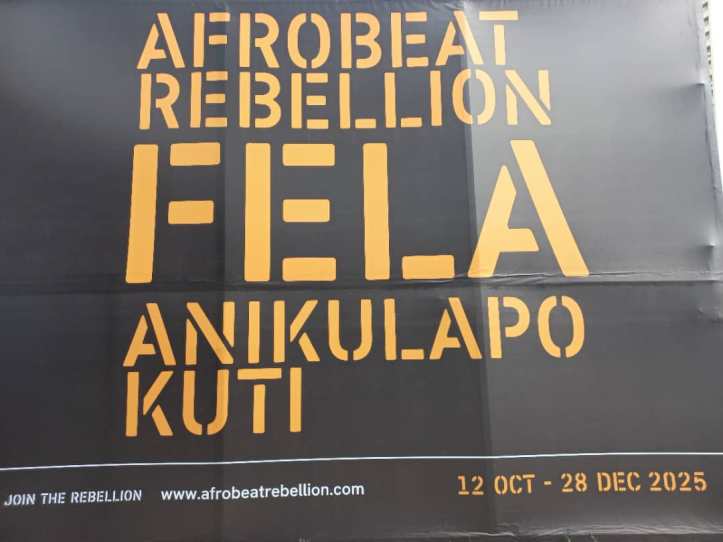
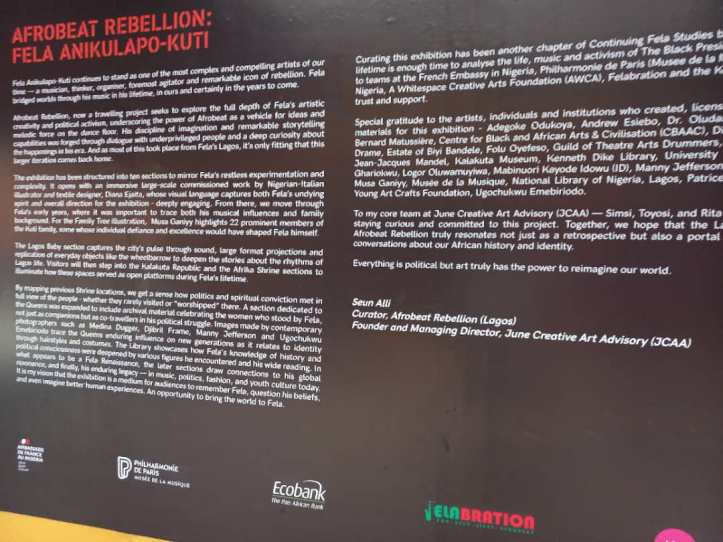
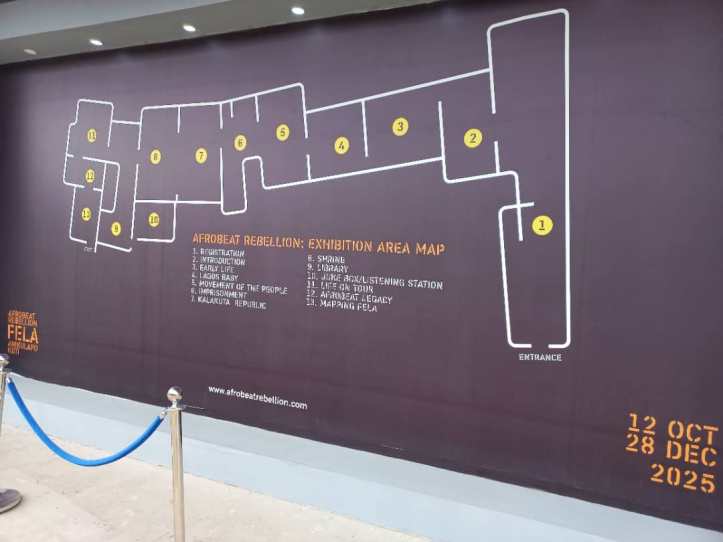
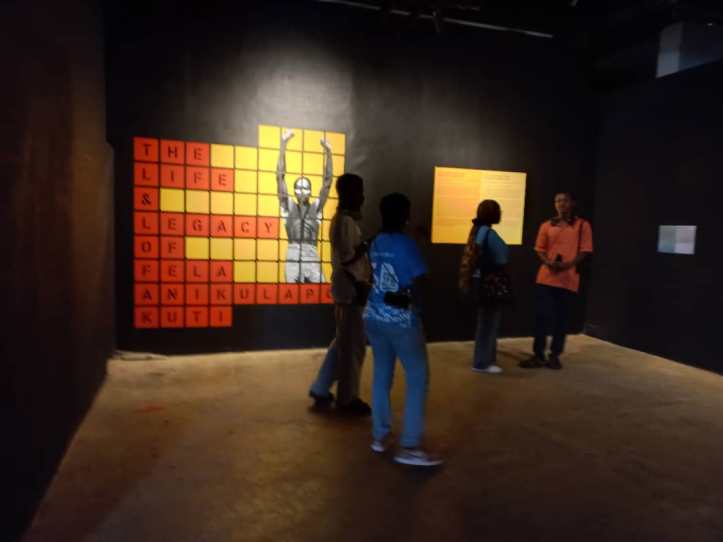
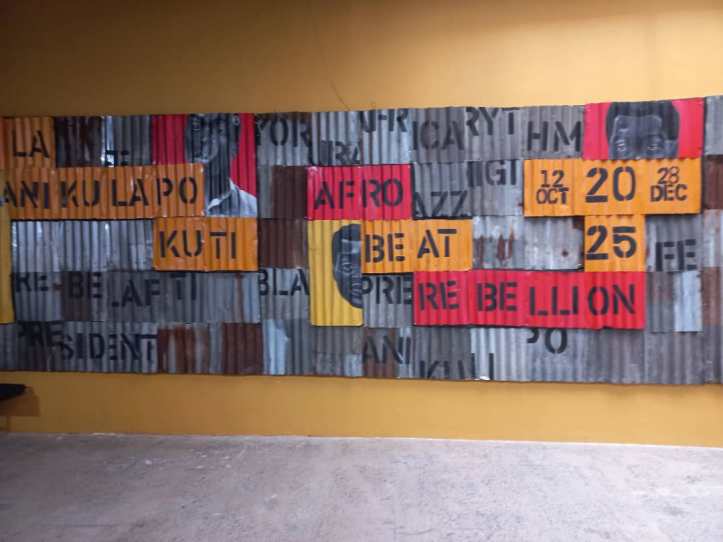
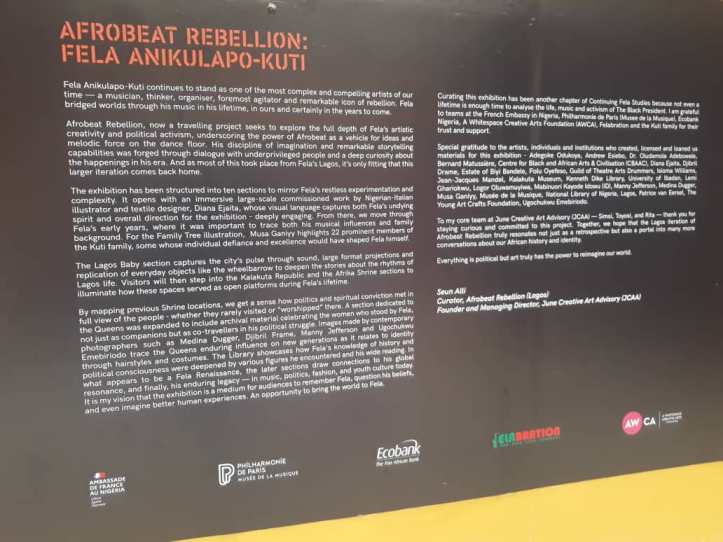
When Lagos celebrates its icons, it doesn’t do it quietly, it does it in rhythm. At Ecobank Headquarters, Victoria Island, the exhibition “Afrobeat Rebellion,Fela Anikulapo Kuti ” curated by Seun Alli, brings that rhythm to life. Running till December 28, the show takes visitors on a vivid journey through the world of Fela Anikulapo Kuti, the enigmatic musician, radical, and cultural prophet and the powerful family that shaped him.
Felabration, the one-week musical festival that celebrates Fela’s life and legacy, may have ended, but its rhythm still lingers across Lagos. The city hasn’t stopped humming his songs or echoing his defiance. This October, that spirit finds a new home inside Afrobeat Rebellion where the power of resistance takes physical form. In these rooms, Lagos resonates loudly, restlessly, and unbowed, through the story of one man whose music refused to be silenced.
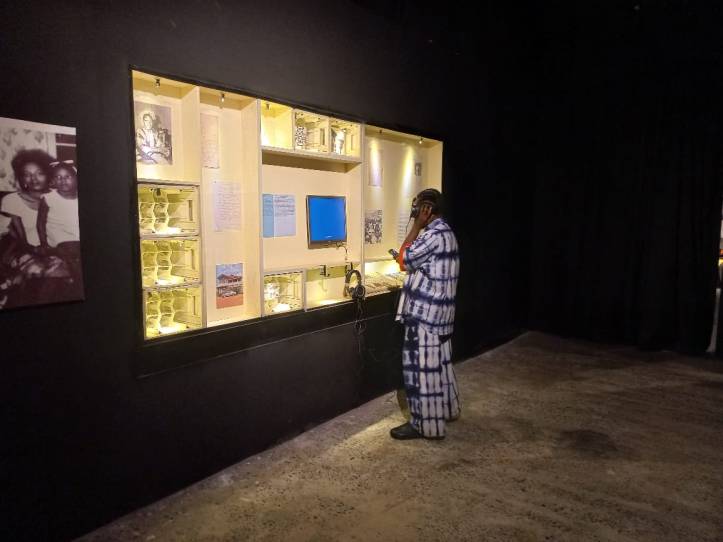
Along the fast and speedy drive on Ozumba Mbadiwe road is not just a pavilion inside the bank headquarters, rather, there is an experience going on there. Yes, it’s an experience. Visitors move through rooms alive with sound and memory, rare recordings, glowing portraits, and installations that breathe Fela’s restless energy.
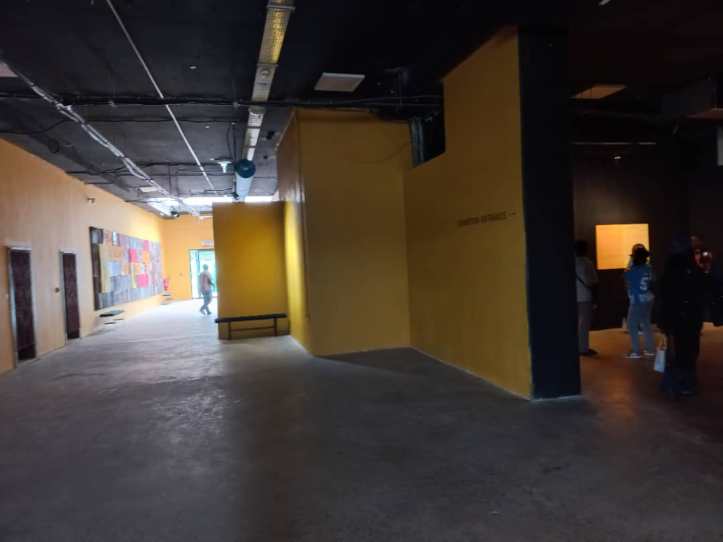
Noticeably, children wander in with wide eyes accompanied by older folks who pause, smiling softly at familiar songs and documentaries. Everyone nods with a little of that rebellion still humming inside them.
Before the music became a movement, it began from a family tree, one rooted in faith, protest, and rhythm.
Here are seven highlights from “Afrobeat Rebellion Fela Anikulapo Kuti,” the exhibition that keeps the beat going long after the stage lights fade.
The Kuti Family Tree – A Lineage of Sound and Defiance
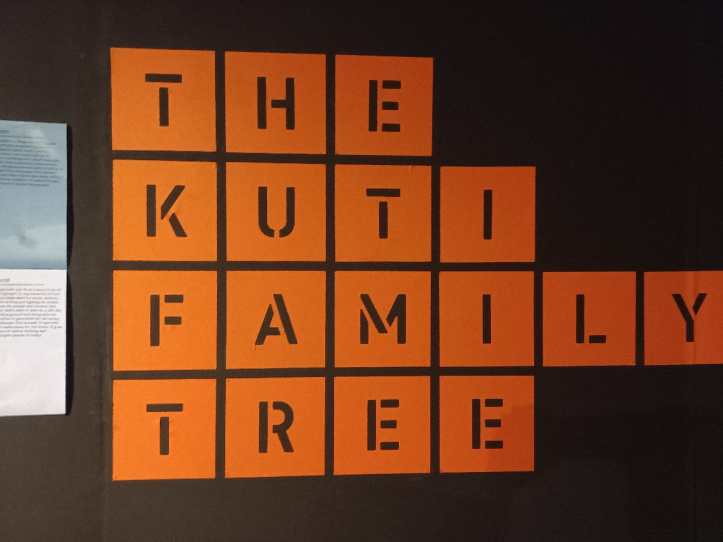
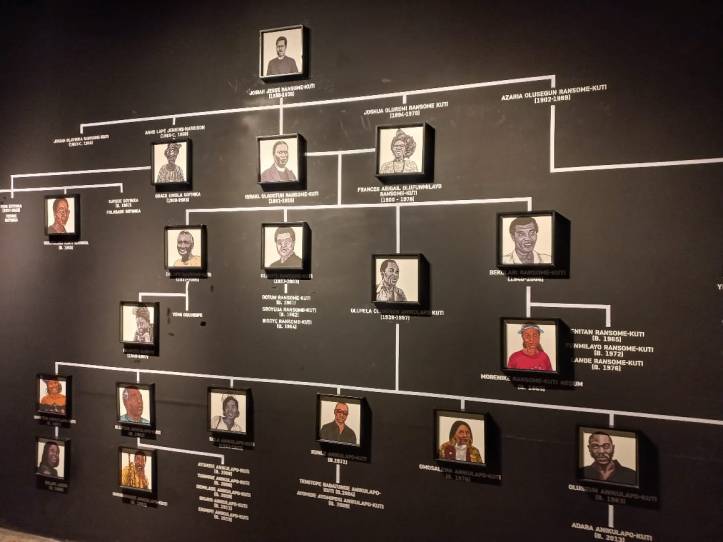
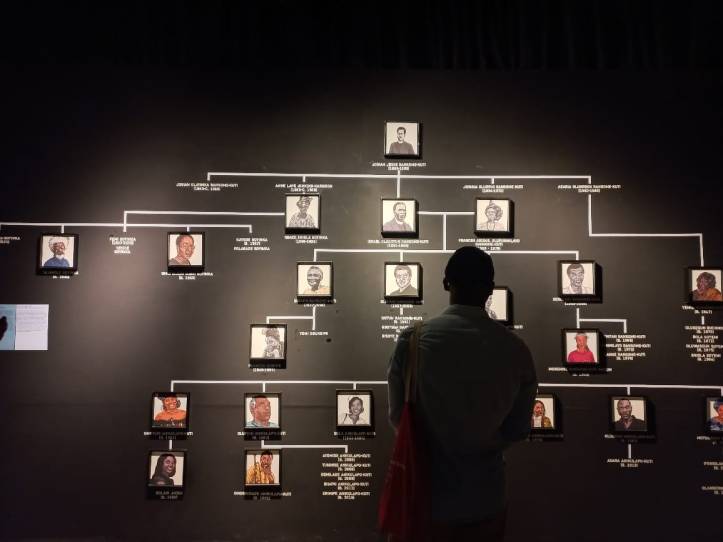
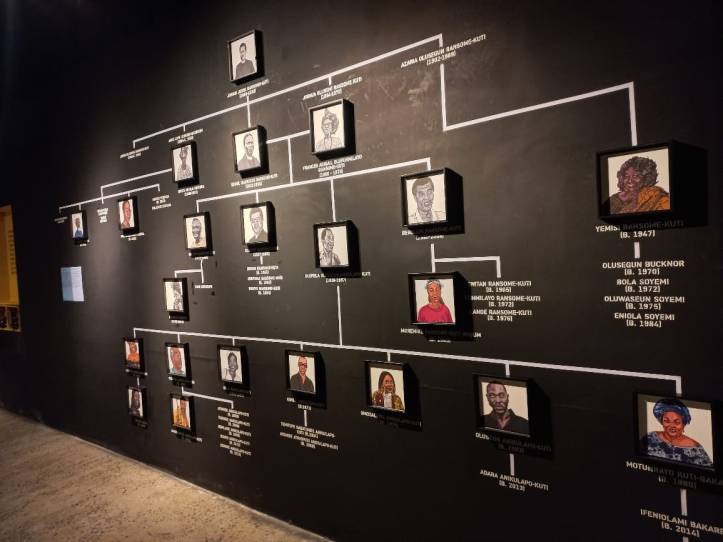
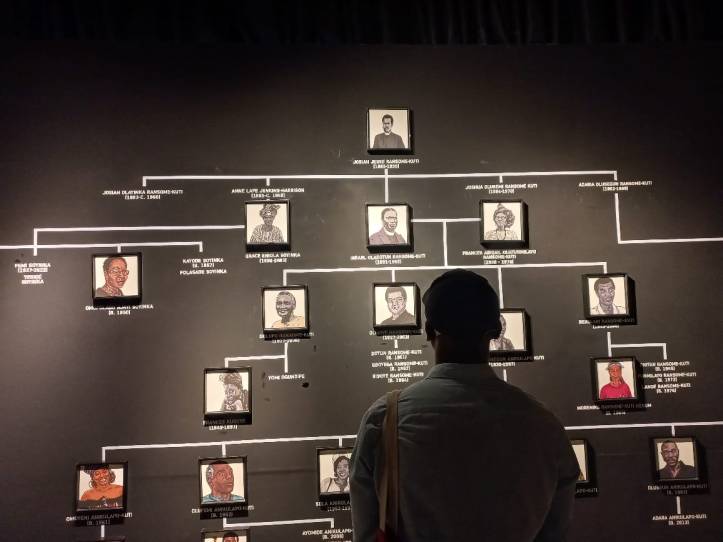
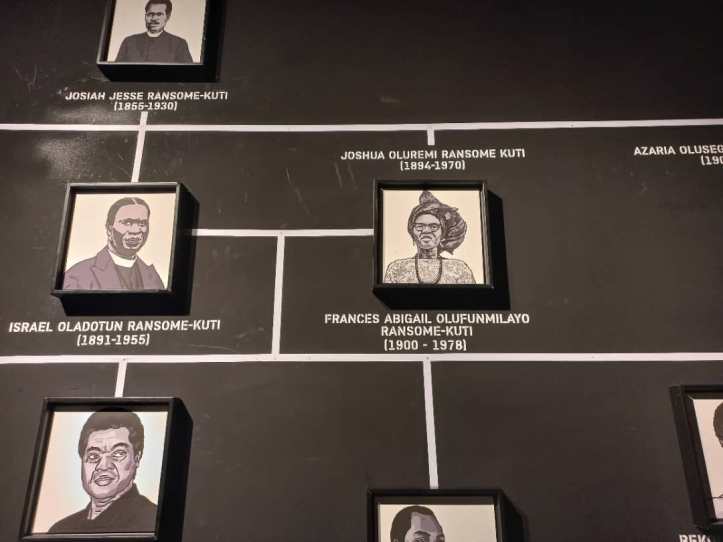
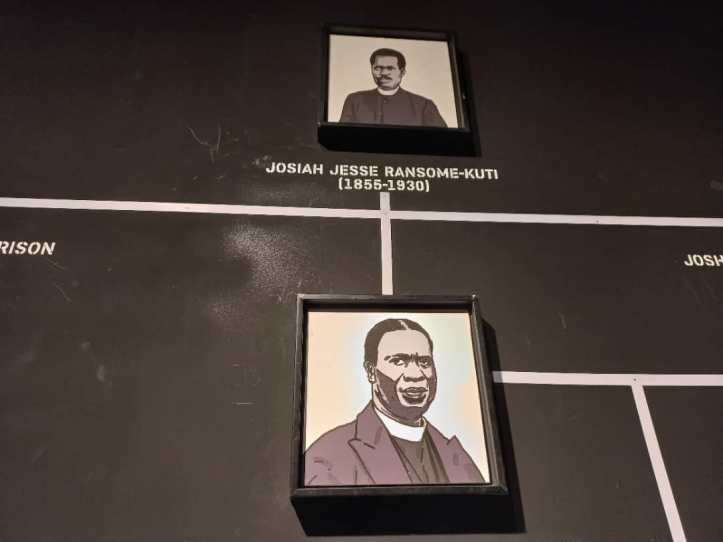
The Family Tree Wall is one of the most photographed corners of the exhibition. From Josiah Jesse Ransome-Kuti, the pioneering composer and patriarch, to his son Israel Ransome-Kuti, and onward through the generations, Fela and his siblings, the Soyinkas (with Wole Soyinka, Nigeria’s Nobel Laureate, as Fela’s cousin), down to Femi, Yeni, Seun, and Made — the wall maps a remarkable legacy.
It is more than genealogy; it is a timeline of resistance, tracing how one family’s courage and creativity helped shape Nigeria’s moral and cultural landscape. Visitors trace the lines with their fingers, pausing in reverence at each branch, a quiet acknowledgment that the rhythm of rebellion, intellect, and art truly runs in the Kuti blood.
Afrobeat Soars with Graffiti – The Wall Speaks in Rhythm
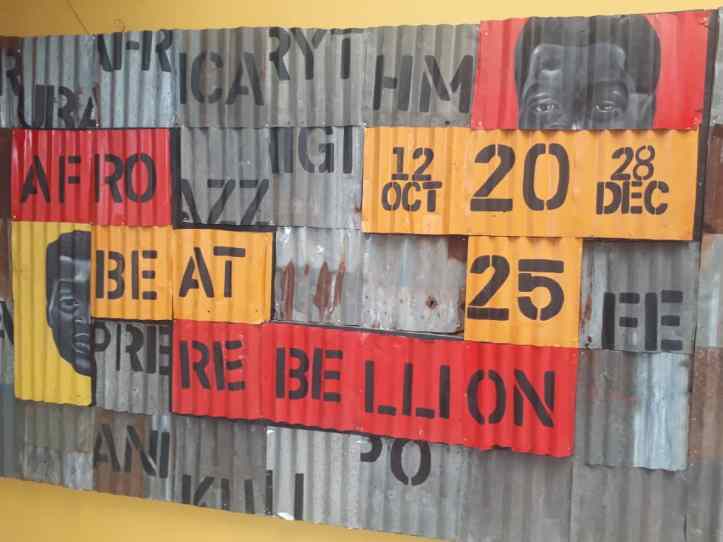
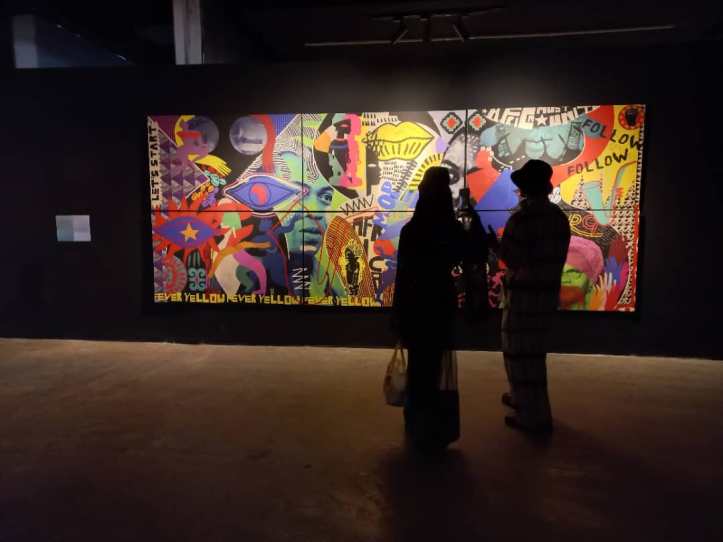
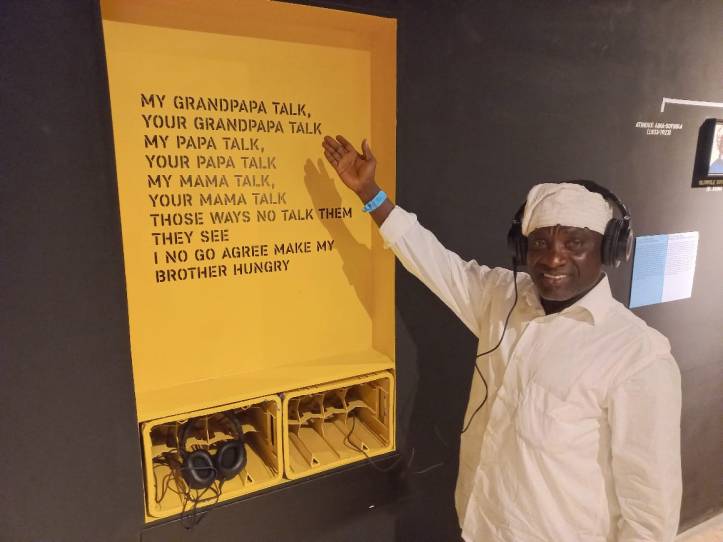
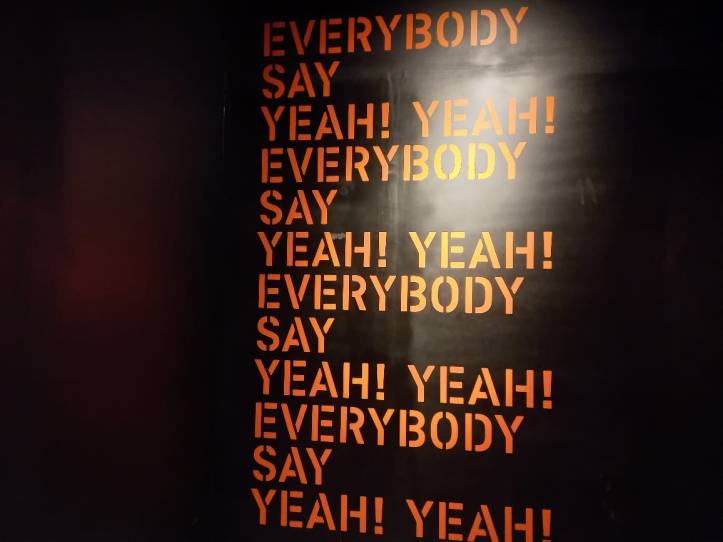
The rebellion doesn’t end with sound, it spills onto the walls. Graffiti installations at Afrobeat Rebellion throb with colour, words, and rhythm. Scrawled across large panels are Fela’s chants, song lyrics, and protest slogans, each stroke echoing the defiance that defined his music.
Phrases like “Music is the weapon” and “Everybody Say Yeah! Yeah!” leap out in bold blacks and golds, surrounded by mural portraits of the Kuti clan and fragments of Afrobeat lyrics that blur poetry and protest. Visitors stop to take photos, some mouthing the words like a prayer, others swaying slightly as the music loops in the background.

Here, graffiti becomes gospel, as a reminder that Afrobeat was never confined to sound alone. It lived in words, movement, and art that demanded to be seen as much as heard.
Fela at NBC – The Broadcast Before the Boom
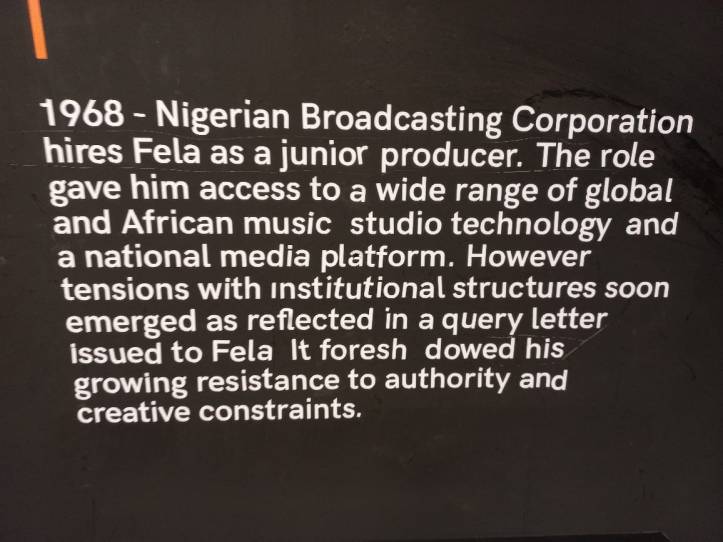
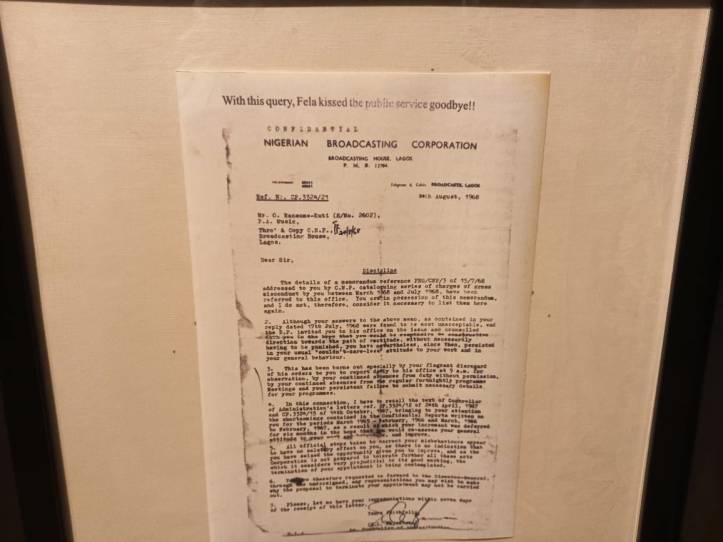
Before the stage lights, trumpets and saxophone solos, Fela Ransome-Kuti worked as a junior producer at the Nigeria Broadcasting Corporation (NBC) in 1968. Exhibits from this period reveal how a young Fela experimented with sound, storytelling, and live programming.
These quiet beginnings laid the foundation for the voice that would one day shake empires. This is a rare career chapter that many visitors discover for the first time at Afrobeat Rebellion.
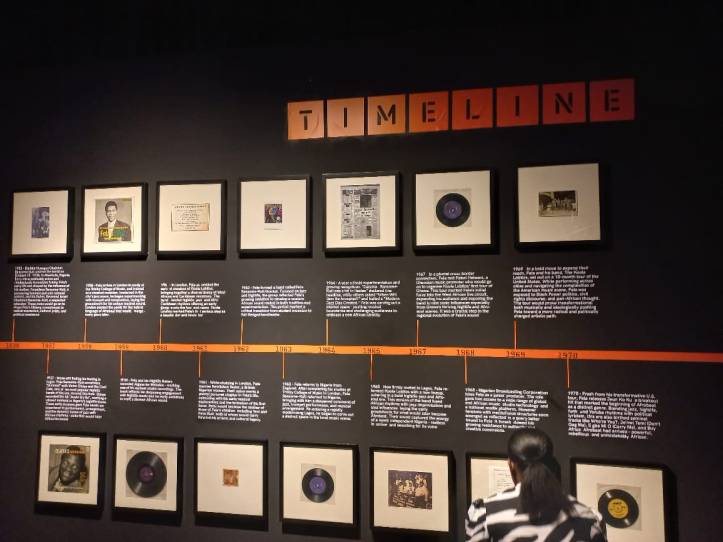
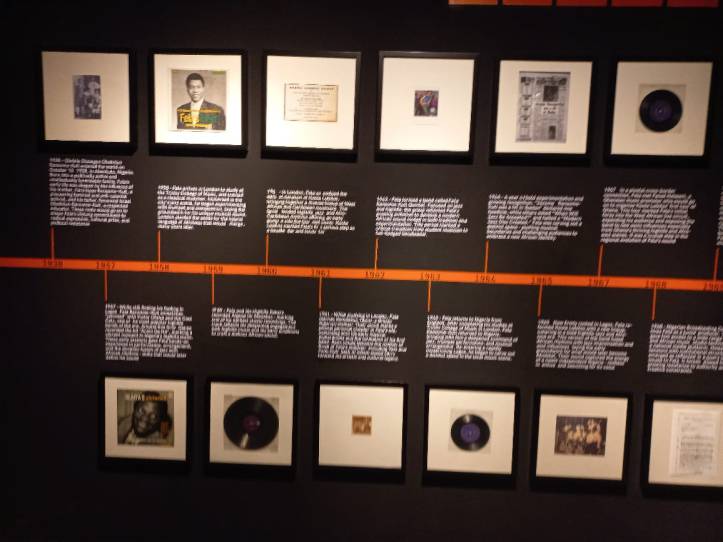
From Koola Lobitos to Rebellion in Rehearsal. A Massive Timelines
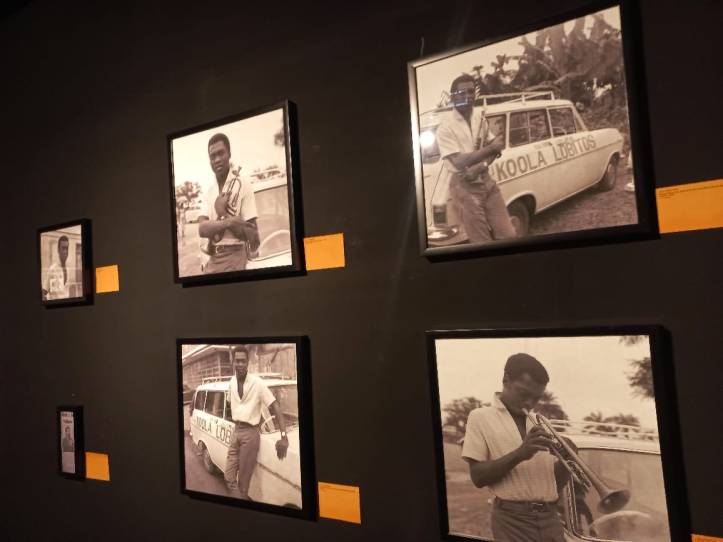
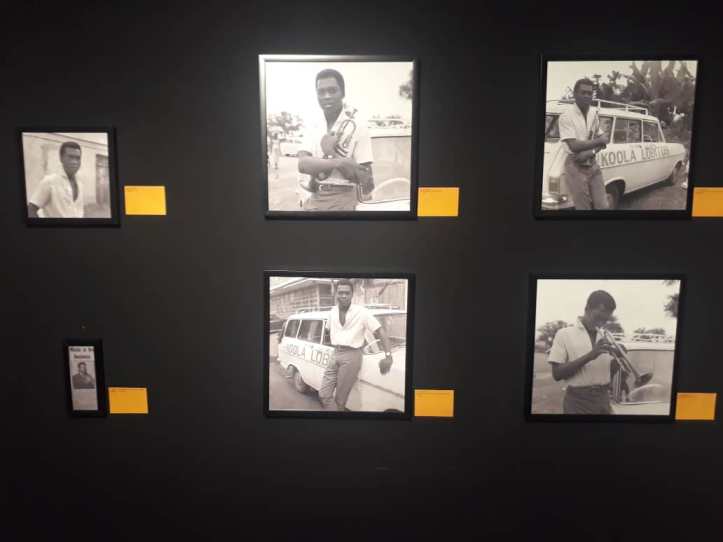
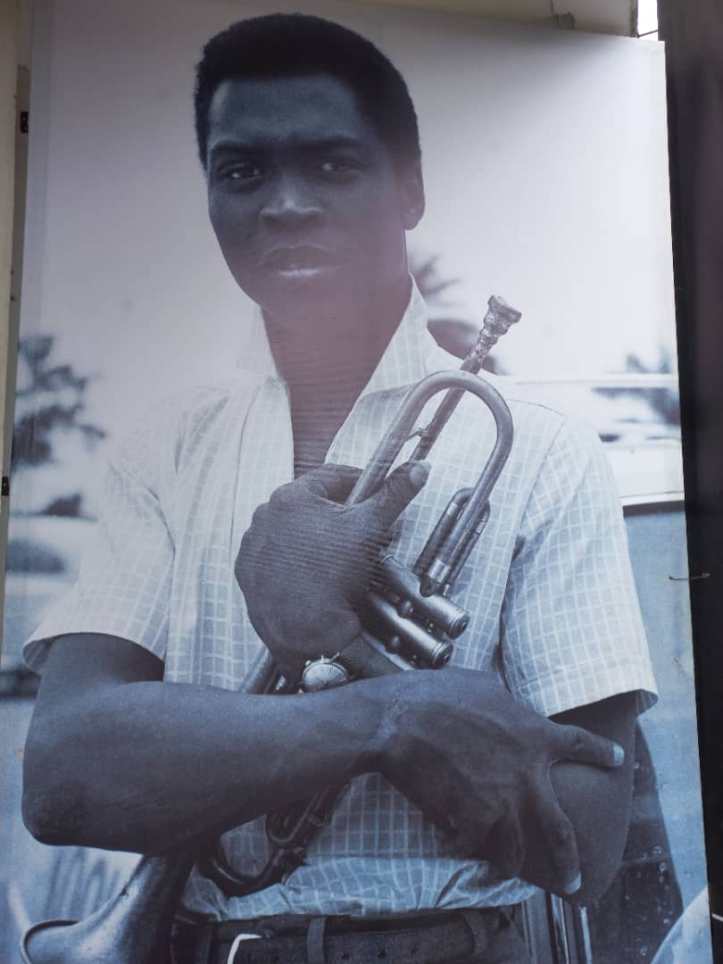
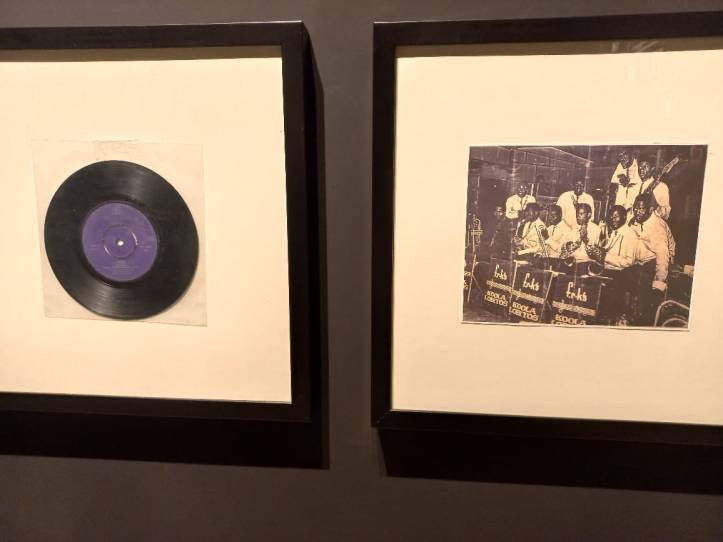
From the NBC desk to Koola Lobitos pictures, this section captures the early fire of Koola Lobitos, Fela’s first band. Black and white photographs show a young Fela flirting with his trumpet, in his neat cut and photographed alongside band vehicles, and lighting up Lagos nightlife in the 1960s.
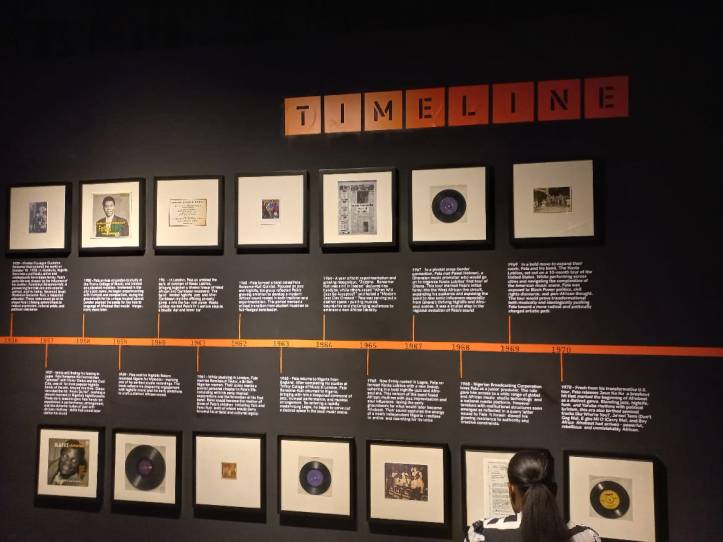
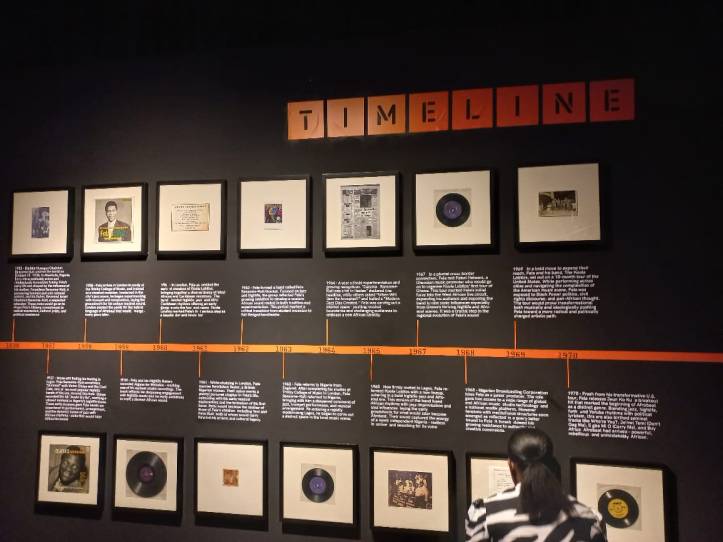
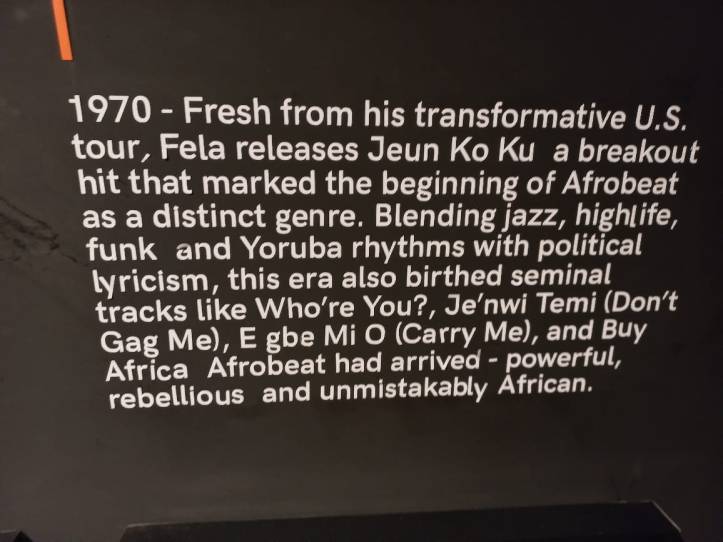
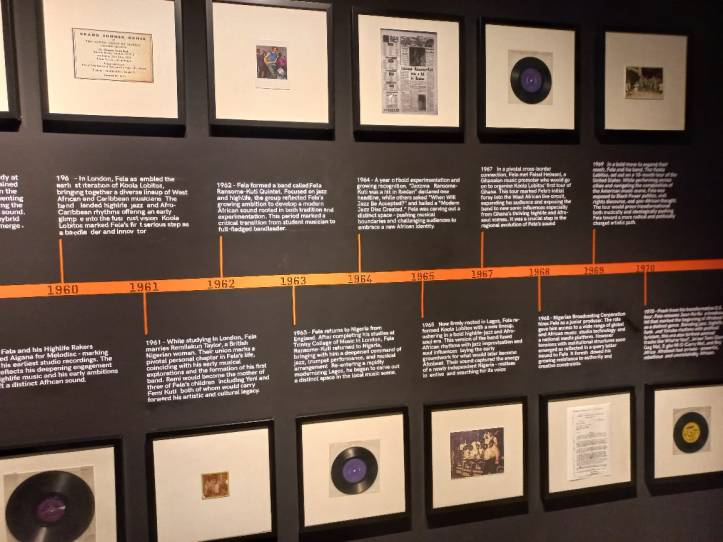
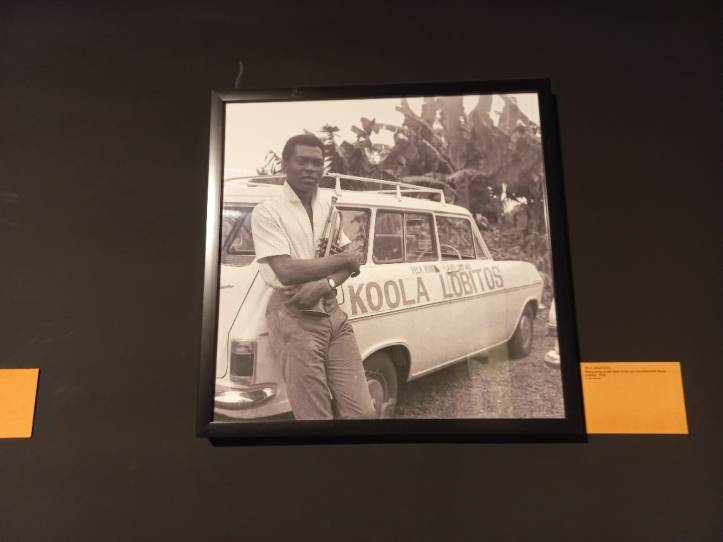

The 1970s brought transformation. After his American tour, Fela returned with new sounds and sharper convictions, turning his music into a weapon. His breakout hit “Jeun Ko Ku” (Chop and Quench) marked the beginning of Afrobeat as a distinct genre of a bold blend of Jazz, Highlife, Funk, and Yoruba rhythms, tied together by his unmistakable political lyricism.
This period also birthed classics like “Who Are You?”, “Je Nwi Temi (Don’t Gag Me)”, and “Buy Africa.” Each track pushed boundaries, announcing to the world that Afrobeat had arrived as it was unfiltered and unstoppable.
The Josiah Jesse Ransome-Kuti Installation – Roots of Rhythm
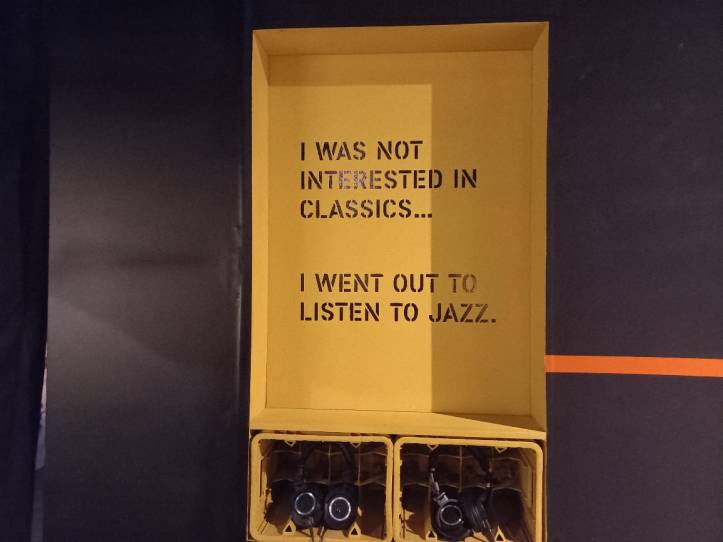
It is one of the most touching scenes at the exhibition when a young boy slipping on headphones to listen to Fela’s grandfather, Josiah Jesse Ransome-Kuti. The moment feels surreal to see a child of today connecting across a century of sound to where the rebellion truly began.
Long before Fela, there was Josiah Jesse, the patriarch of the Kuti dynasty and one of Nigeria’s earliest recording artists. His early social commentaries echo softly through the installation, filling the room with the texture of time.
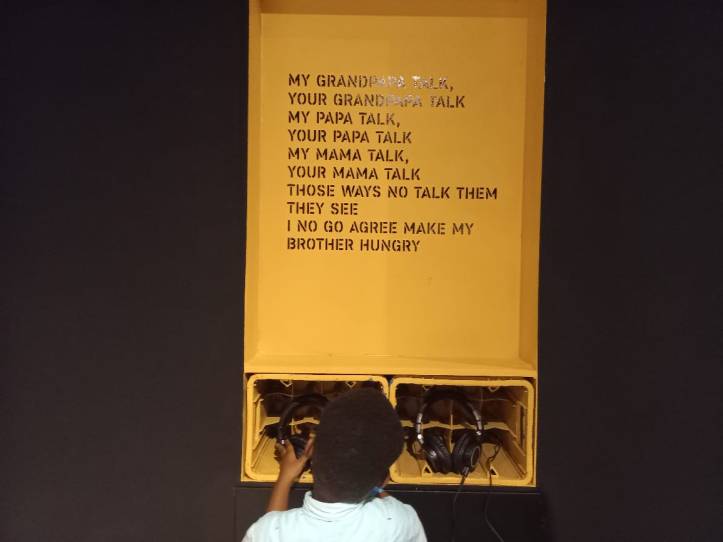
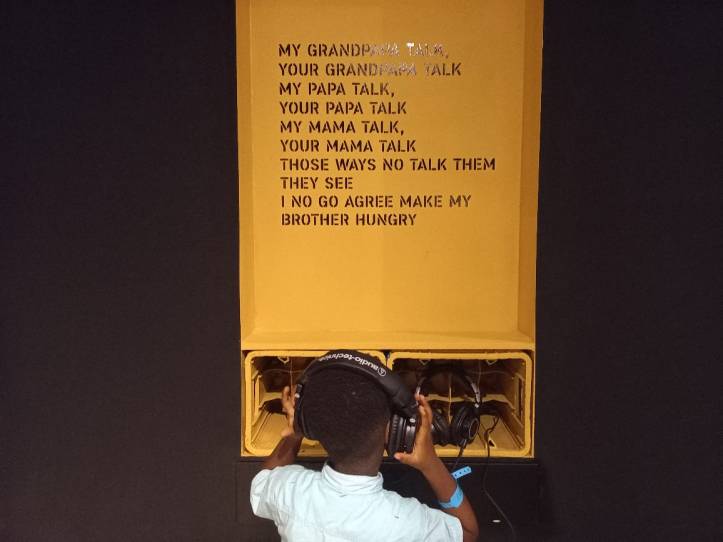
At a glance, visitors discover that Kuti resistance didn’t begin in Kalakuta, but in Abeokuta, where music was already a language of truth and protest.
Funmilayo Ransome-Kuti – The Woman Who Spoke Before the Music
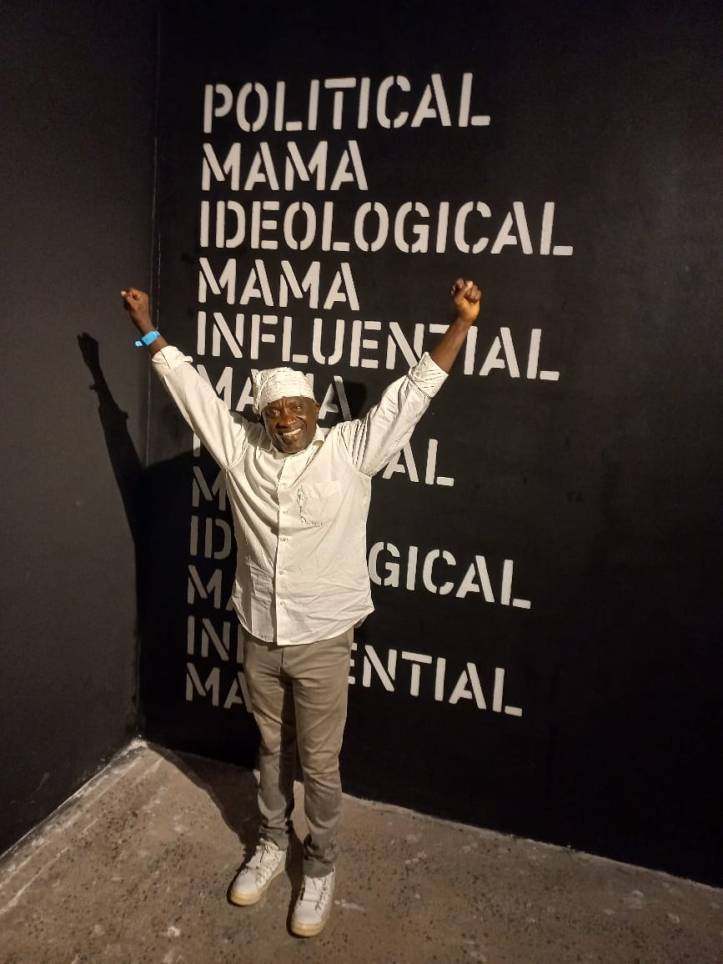
Every revolution has its mothers, and here, their stories sing. A powerful segment is devoted to Funmilayo Ransome-Kuti, a teacher, activist, and Fela’s first model of courage. Striking documentary footage traces her fearless journey through colonial-era politics, her speeches shaking the halls of power.
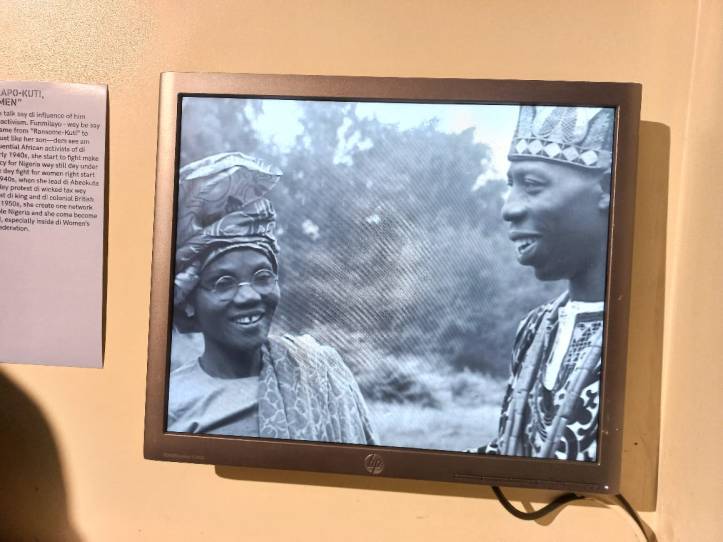
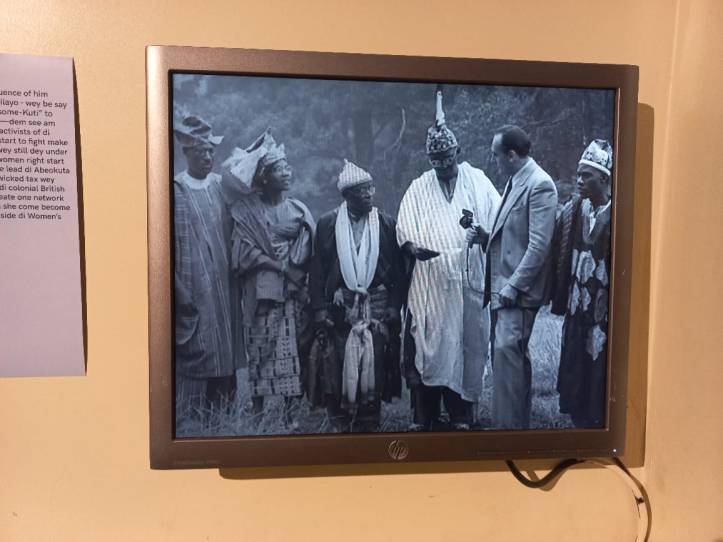
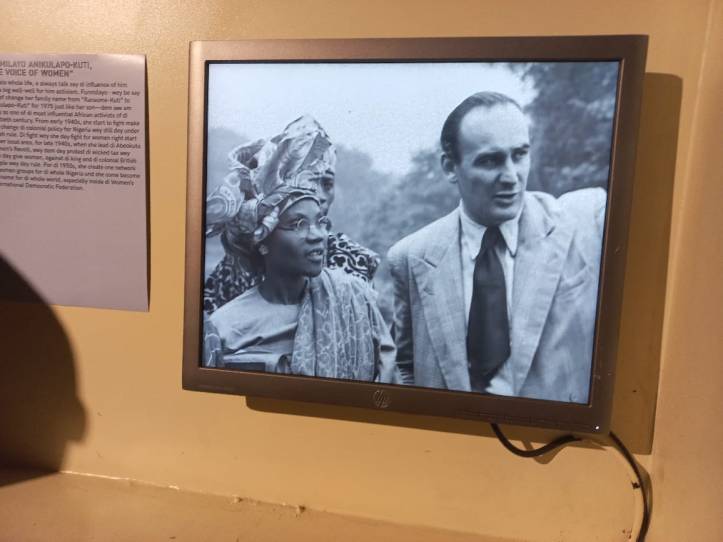
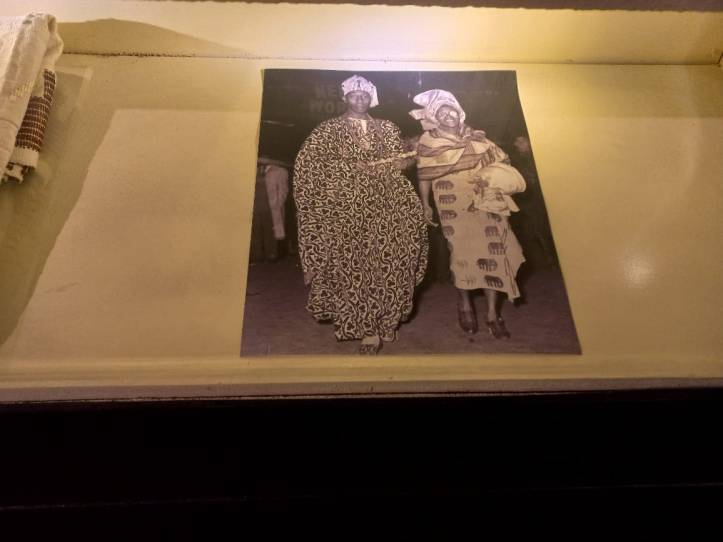
The narrative links her defiance to her son’s sonic rebellion, revealing a truth often overlooked that one of Afrobeat’s earliest instruments was a woman’s voice. Her echoes remain fierce, melodic, and unafraid.
Afrobeat in Documentary Films – The Rebellion on Screen
In another wing, the rebellion lives on through documentaries, interviews, and rare footage. Visitors relive the defining moments of Fela’s life from the burning of Kalakuta Republic to electrifying stage performances that defied regimes.
Each frame captures a man who turned pain into protest and rhythm into revolution. The cinematic journeys through sound, smoke, and spirit. Here, the screen becomes a mirror showing not just who Fela was, but why his music still burns through generations.
The Curator’s Enigmatic Baton
At the heart of Afrobeat Rebellion is Seun Alli, the curator whose quiet confidence holds the exhibition together. Her approach is calm yet powerful, more storyteller than showman. She doesn’t glorify Fela; Seun and her team revives his essence making it look like an orchestra.
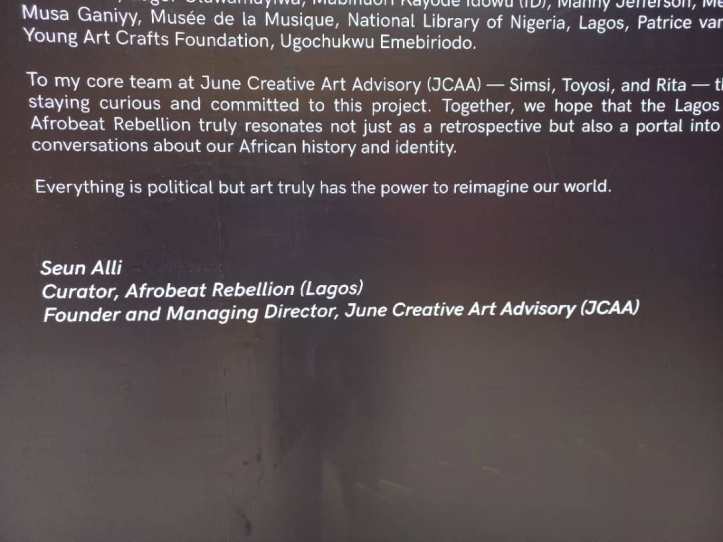
From the gentle chants of Josiah Jesse’s gramophone to the fiery chaos of Kalakuta Republic, every section feels intentional and deeply felt. Visitors often describe her as “a conductor without a baton,” letting the rebellion speak while she shapes the rhythm behind it.
The Beat Lives On
Afrobeat Rebellion isn’t just an exhibition but a living dialogue between past and present, family and freedom, rhythm and resistance.
As visitors, enthusiasts and tourists step out, the rhythm follows them in their steps, and their thoughts. It is even evident in the Lagos air itself. The show may close on December 28, but its pulse won’t fade. Lagos keeps dancing as the city birthed Afrobeat

