Heritage, Power, and the Turning Point at MOWAA
By Dr. Mudiare Onobrakpeya
10 November 2025
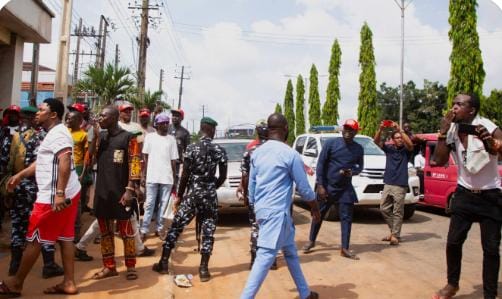
On 9 November 2025, in Benin City, what was meant to be a soft opening of the Museum of West African Art (MOWAA) — an occasion designed to signal progress was unexpectedly halted by a protest that forced guests to leave before the event could begin. Collectors, diplomats, and cultural leaders were quietly ushered out, but the message left behind was anything but quiet.
What occurred was more than an interruption; it was a revelation, a moment that exposed the deeper conversation waiting to happen.
In Benin, heritage is not material.
It is ancestral authority, lineage, and collective identity.
The arts that emanate from Benin are rooted in centuries of custodianship that are protected by the Oba, sustained by hereditary guilds, and carried in the consciousness of the people. When an institution seeks to care for that heritage, the first requirement is not curatorial expertise or international acclaim, it is consent. Without the explicit and respected involvement of those who hold the history, physical structures, no matter how modern, remain spiritually unanchored.
A museum can house artifacts.
Only a community can authenticate meaning.
For years, Nigeria and Benin City have championed the call for the return of royal artworks taken during colonial incursions. The world listened; objects began to return. Yet the MOWAA incident offers a timely reminder: demanding repatriation is only one part of the journey. The greater task lies in building unity and shared responsibility over how returned heritage is governed, displayed, narrated, and woven into public consciousness.
Repatriation returns objects.
Collaboration returns dignity.
Beyond symbolism, institutions like MOWAA have the potential to reshape Benin City’s cultural and economic landscape. Museums draw visitors; visitors stimulate business. Hotels, markets, artisans, tour operators, and students all stand to benefit. But when those closest to the heritage feel excluded from decisions or opportunities, progress begins to resemble alienation. And when people feel unheard, they will find ways to speak, sometimes loudly.
A cultural renaissance cannot thrive without shared prosperity.
The path forward now requires clarity and humility:
Open, structured cooperation with the Oba’s Palace and the traditional custodians of Benin’s arts.
Representation of guilds, youth, and community stakeholders at advisory levels and not symbolically, but with meaningful input.
Transparent mechanisms ensuring that the economic benefits of cultural tourism circulate within the local economy.
Protective security that welcomes the people instead of positioning them as bystanders to their own history.
Handled with wisdom, this moment can become the pivot that transforms a museum from a mere building into a cultural covenant. Rather than a setback, the disruption of 9 November 2025 could be remembered as the day the conversation became honest, a reminder that the soul of heritage does not reside in galleries, lighting, or climate-controlled rooms, but in people.
Heritage cannot simply be presented.
It must be shared, honoured, and lived.
— Dr. Mudiare Onobrakpeya
Writer, curator, and close watcher of the visual creative sector.

