

Seasoned photographer Ademola Bamigbelu, popularly known as Origa, has built an enduring legacy through his lens, capturing some of the most iconic moments in the world of sports especially football. Once a promising footballer himself, Bamigbelu’s career on the pitch was cut short by a hip fracture. Yet, his passion for the beautiful game never dimmed. Instead, he redirected that passion into photography, turning his camera into a storytelling tool that chronicles football from an intimate, human perspective.
We all know how essential fans are to the spirit of football—they animate the game with their emotions, gestures, chants, and unfiltered reactions. Origa, however, goes beyond simply documenting these scenes; he interprets them. His latest exhibition, “The Faces of Football,” reveals football’s many emotional layers through the expressions and energies of its devoted fans. What a truly conceptual vision from this master of football photography!
Words Ireho Aito | Don’t Keep Your Art in the Finger! Photographs courtesy Ademola Bamigbelu library

He is known in the sporting circles and among friends as Origa Satiya. Ademola Bamigbelu was growing up with love for the round leather game just like every other kid on the streets of that ancient city called Ibadan before he got a fractured. Yes, the famous city that has given birth to numerous football legends such as Segun Odegbami, MON, the late Mudashiru Lawal, MON, Felix Owolabi, MON, Taiwo Ogunjobu of blessed memory, Sam Ojebode and Oladimeji Lawa to mention just a few. These iconic footballers brought joy and beautiful moments to the faces of millions of football lovers while playing for clubs like Shooting Stars Football Club of Ibadan, Water Corporation of Ibadan and others. This generation opened the floodgates of football successes recorded by Nigeria. The fans were always going over the moon in joyous moments celebrating the footballers.
On a bright November afternoon, on the 4th to be precise, at Alliance Française, Iyaganku, Ibadan, the hush before kick-off gave way to bursts of laughter, applause and the low hum of conversations but the match being played out wasn’t on grass. It was on the walls of the gallery in Ibadan. Bamigbelu Ademola Origa’s new exhibition, The Face of Football, opened to the public on 4 November 2025, presenting three decades of Nigerian football through the most intimate of angles which is the human face.




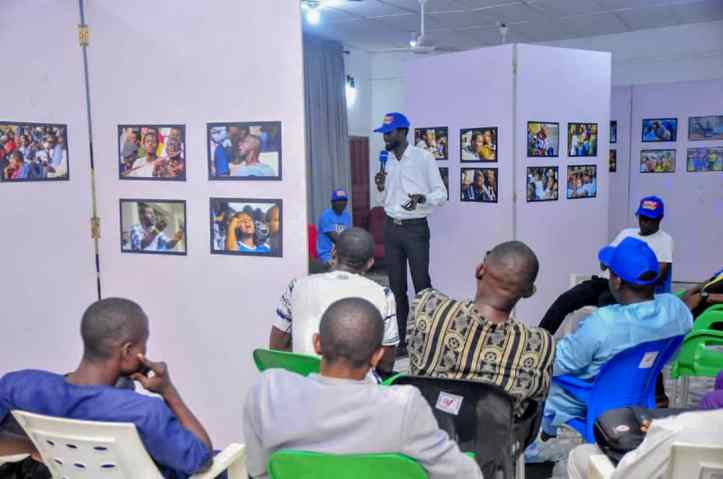
Origa’s work has long been a refusal of the obvious. Where many photographers chase the ball, he chases the trace it leaves on people, the creases of anticipation on a fan’s brow, the private rituals of a goalkeeper before a penalty, the laughter lines earned after a season of small triumphs. In this collection those traces are given centre stage. The frames do not demand you to know names or read scores, instead they ask you to recognise feeling.
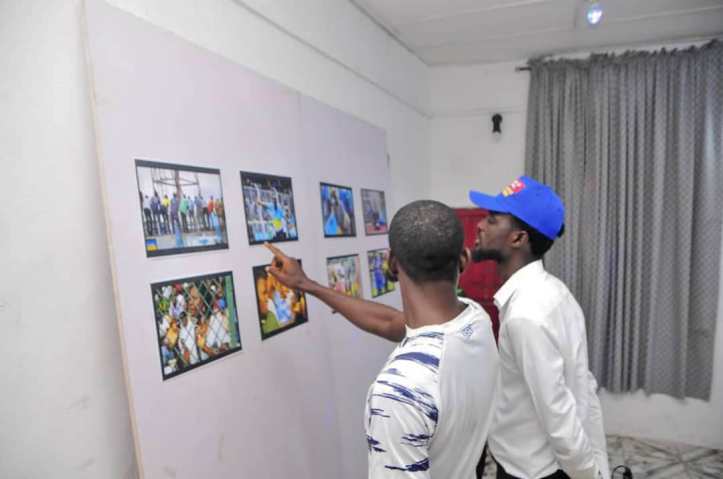
“The story of every football fan is written on their face,” Origa said during the opening. “It’s joy, disappointment, hope, and unity all in one frame.” That sentence might serve as the exhibition’s thesis as each portrait is less a record of an event than a short essay in patience, resilience and communal memory.
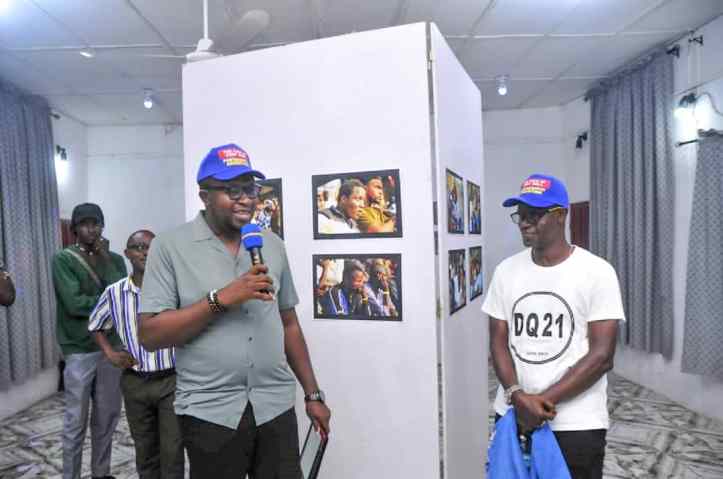
The opening programme mixed conversation with ceremony. A panel of voices from sport and media sector with enthusiasm burning through their minds. Roll call includes Mutiu Adepoju, former Super Eagles player with a moniker headmaster in his playing days, Tunde Olawunwo, the General Manager, Splash FM 105.5, Tobi Samuel Adepoju (3SC Sporting Director) and Idris Animasaun (Creative Director, 3SCFAN TV) all reflected on photography’s role in shaping football narratives. They considered how image-making can preserve histories that official scorelines and highlight reels often overlook: rituals in the stands, makeshift shrines to local heroes, the economy of coaching gestures, and the domestic myths fans carry from childhood.
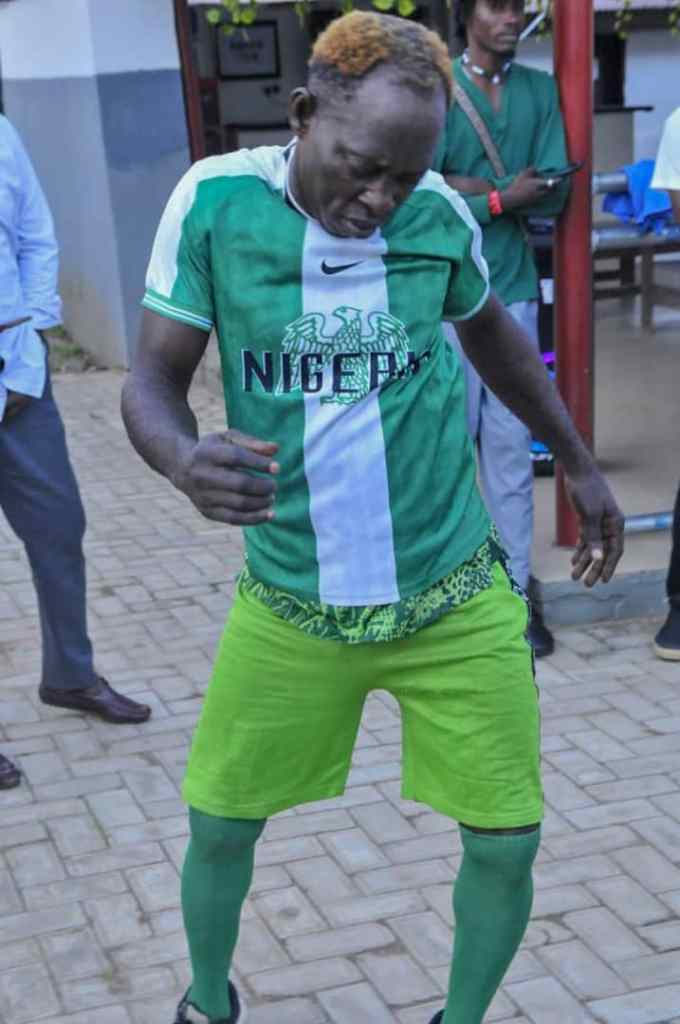

A recurring theme in the discussion was the democratic power of documentary photography. Bamgbelu’s frames, the speakers argued, act as communal archives that is accessible, portable, and capable of preserving an emotional truth that statistics cannot. Mutiu Adepoju noted how portraits of supporters not just players that, help explain why football matters in towns and neighbourhoods where the sport functions as a social glue.

Beyond the panel, the exhibition itself is a lesson in the economy. Photo prints hang with generous breathing space; smaller contact prints are mounted in intimate clusters. The art direction sequencing guides visitors from the ecstatic to the contemplative. Crowd eruptions and open-mouthed cheers segue into studies of exhaustion, prayer, and the quiet focus of coaching staff. A section titled Metaphysics in Football revisits Origa’s earlier work that interrogated superstition and ritual, reminding viewers that belief in talismans, chants, priests, or coaches is an undeniable current in Nigerian football culture.
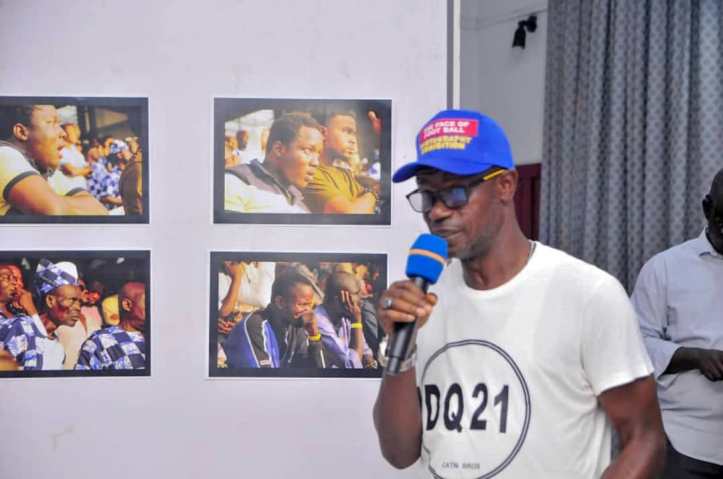
Workshops and short masterclasses were scheduled alongside the exhibition, encouraging emerging photographers to look beyond action shots. Origa, who has threaded journalism and photography throughout his career, used the opening to mentor younger photographers on how to listen with a lens, how to wait, how to respect a subject, how to make the face speak without words.

The enthusiasts at Alliance Française was as diverse as the images on the wall. Former players and local coaches, students and longtime fans, photographers, and critics. Conversations repeatedly returned to one observation that the photographs are not celebratory in the easy sense, rather, they are affectionate, exacting, and at times unflinching. They hold tenderness for their subjects while refusing sentimental flattening. This is an archive that treats football as a social text. One written in sweat, gestures, and the slow accumulation of small, human dramas.


The Face of Football exhibition remind us that sport in Nigeria is simultaneously a spectacle. It entertains, but it also builds identities, sustains rituals, and maps communal histories.

