

In this Cover issue, we turn our attention to clay as both memory and medium through the work of Cameroonian ceramist Tchabong Madeleine. Moving beyond the utilitarian label often attached to ceramics in Africa, her practice reshapes earth into narrative, exploring identity, displacement and belonging. Her journey reminds us that some of the most powerful contemporary art conversations are formed slowly by hand, through material, and with intention.
Words Ireho Aito | Don’t Keep Your Art in the Finger! Photographs, artworks, courtesy Tchabong Madeleine Madeto library
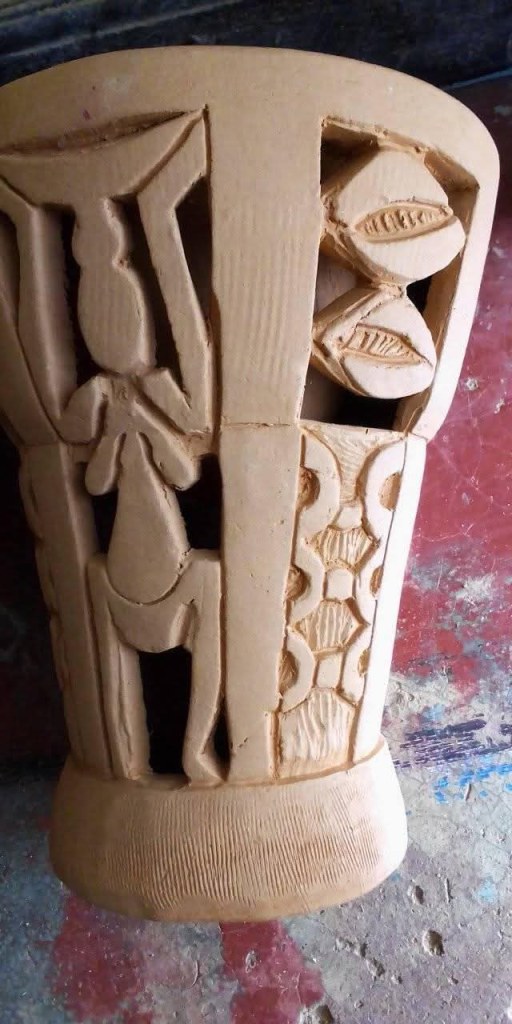
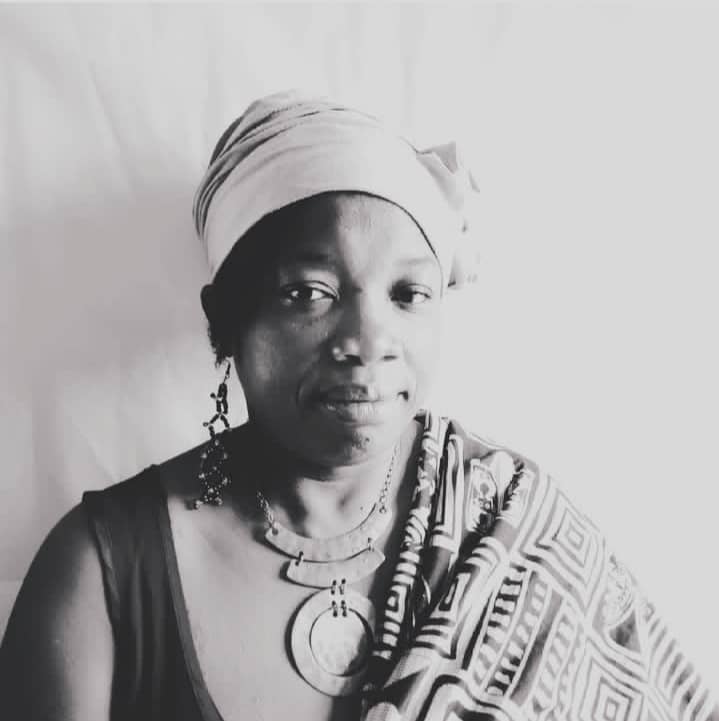
Tchabong Madeleine’s relationship with clay is rooted in memory, movement and identity. Raised in a family frequently relocated due to her father’s career as a literature lecturer, her childhood encounters with place and displacement shaped her artistic sensibility, beginning with a formative moment in 1985 when she watched a village potter at work in Yoko, Cameroon. After entering the country’s only art school in 1992, she embraced ceramics under the guidance of Italian, Congolese and Cameroonian mentors, later discovering an artisan lineage within her own family. Trained between 1992 and 1996 and soon after appointed a teacher, her practice matured into an exploration of hybrid identity, that is the experience of growing up away from one’s native land. Working within a context where ceramics is still marginalised as utilitarian craft, she insists on clay as contemporary narrative, a conviction strengthened by international exhibitions and sustained through teaching, mentorship and a belief that African ceramics deserves a central place in today’s art conversations.
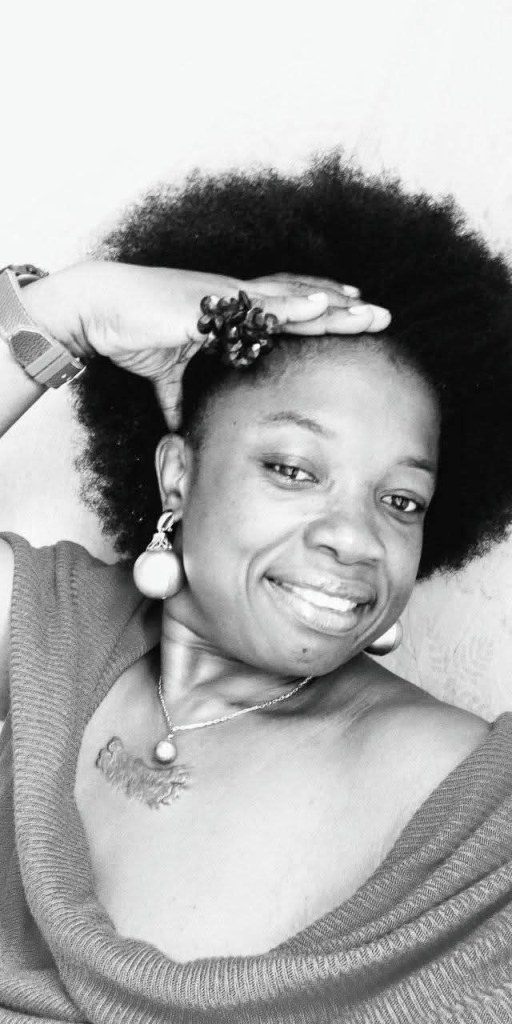
A Conversation with Tchabong Madeleine
Tell us about your early years. What was your childhood like, and how did your environment shape your relationship with clay, earth and creation?
My childhood was turbulent, mainly due to the many postings linked to my father’s job, he was a senior lecturer in literature. In 1985, we arrived in Yoko, a small isolated village, where I saw a potter for the first time. That village potter left a deep impression on me.
In 1986, we moved again, this time to Mbalmayo. By 1992, I expressed a strong desire to learn how to use my hands. I discovered the art school after being rejected by a technical high school where I had applied to study marketing. I joined the ceramics workshop without hesitation.
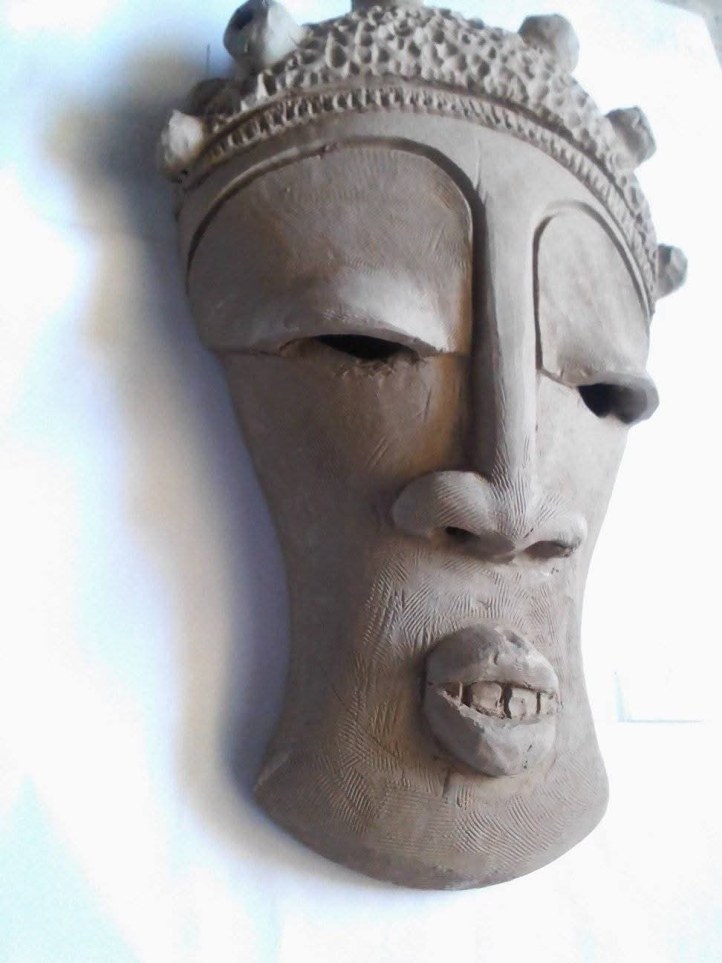
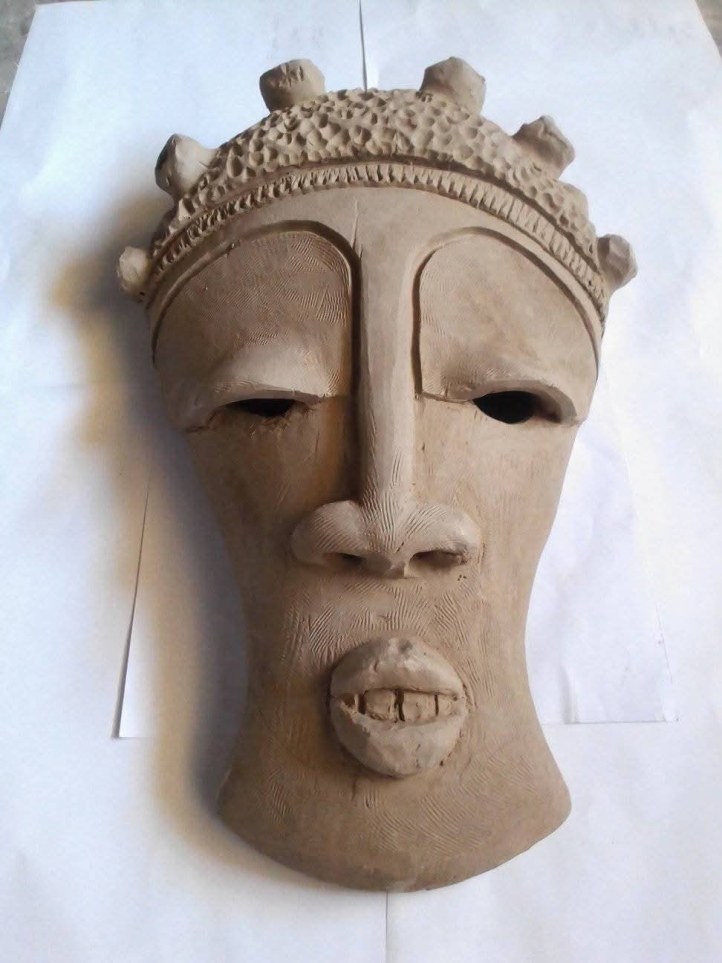
I was very well supported by Italian, Congolese and Cameroonian experts. I was curious, determined, enthusiastic and motivated. I have now been embracing clay and the creative process for four years.
The family often plays a discreet but decisive role in an artist’s career. Are there any family traditions, crafts or philosophies that influenced your decision to work with ceramics?
My desire to search my past to understand where this talent came from led me to discover that my paternal grandparents were artisans, as were my maternal grandparents, who were embroiderers.
My father, a great handyman, would often make small objects using locally available materials such as bamboo or wood.
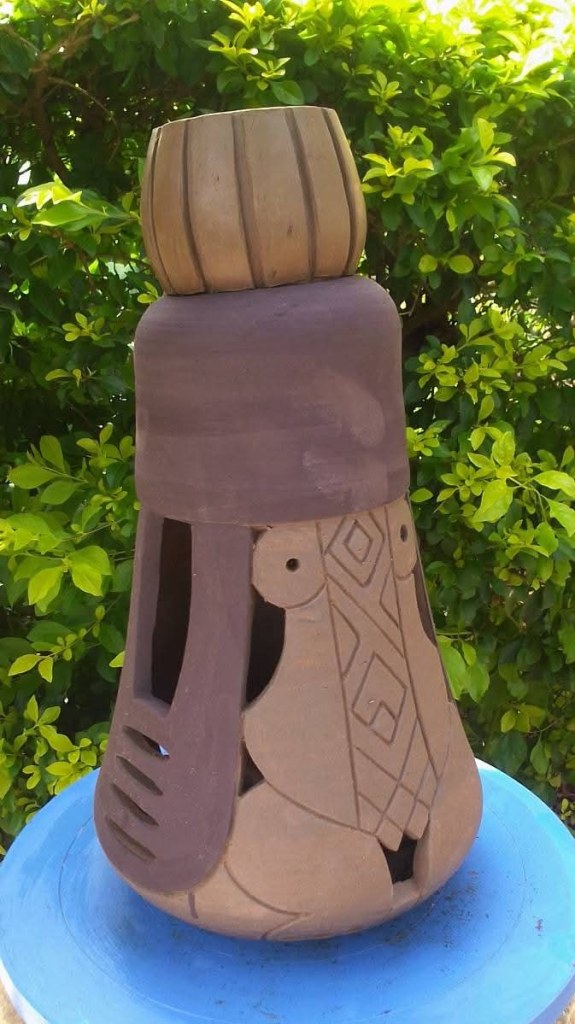
However, my decision to work with ceramics was primarily based on the material itself, its flexibility, malleability and expressive potential. I enjoy giving shape to words and ideas.
Where did you receive your formal artistic training, and how did this training refine or challenge your natural creative instincts?
I completed a four-year secondary school programme at what was then the only art school in Cameroon, from 1992 to 1996. Immediately after graduating, I became an art teacher at the same school. I was among the first Cameroonian teachers asked to replace the Italian and Congolese instructors at the end of their stay.
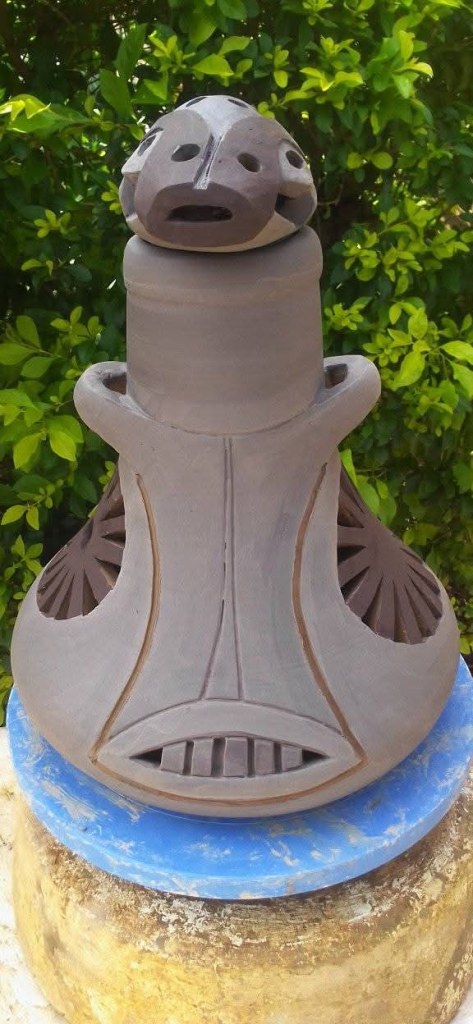
My creative instinct truly exploded in 2018, when I began working part-time to search for a style and theme that completely consumed me which is hybrid identity.
Growing up in Cameroon, what cultural rituals, landscapes or events had a particular impact on you?
The Cameroonian art scene has not yet fully accepted ceramics as “art.” Many trained ceramists do not invest in the medium after graduating.
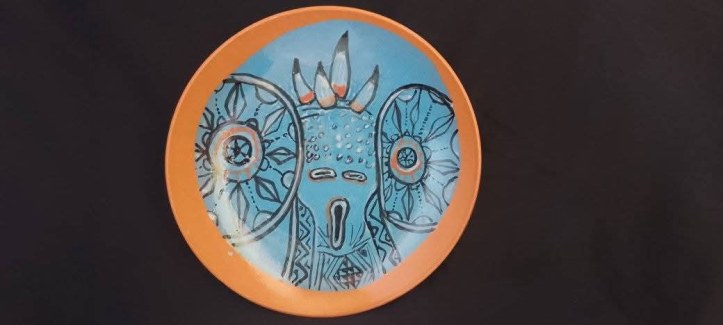
Alongside my sister, Djakou Kassi Nathalie, I find the strength to continue. I visit village museums in the western region and remain deeply motivated to propose a style that contrasts with clichéd pottery, which is the most recognised form.
Festivals and fairs rarely showcase ceramics. It was during the festival in my native village, Nzoup Bigouh, that I truly felt ready to offer more.
Was there a decisive moment or mentor that made you realise ceramics was your artistic calling?
Yes. I remember my Congolese teachers, Nkenda Kitemoko Mvuya Antoine, Diningama Mugenga Benjamin, Kutu André and the Italian ceramist Pasqui Walter.
My three workshop teachers recognised this vocation in me at a very young age, a calling shared between teaching and research.
Clay is often described as a living material. In an age of digital art and rapid production, what continues to draw you to ceramics?
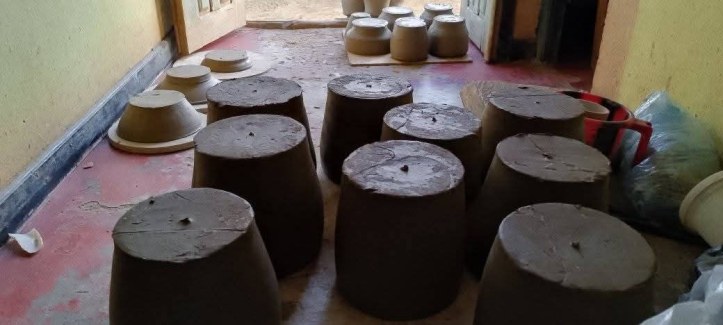
The uniqueness of a handmade piece fascinates me. Transforming words and ideas into material, communicating with clay, shaping, reforming and modifying with my fingers, it is deeply engaging and meaningful.

Many of your works evoke themes of identity, land and resilience. What narratives are currently influencing your creative process?
Because I did not grow up in my native land, I experience the gaze of others daily regarding my history and identity. I grew up far from my roots.
I call this hybrid identity. This is an experience shared by many who received a cultural education far from their original heritage.
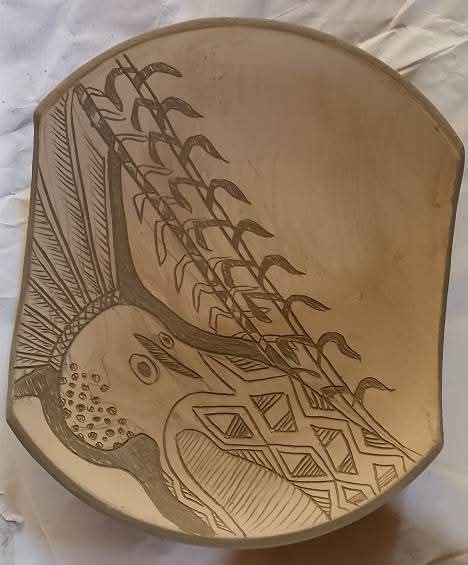
African ceramics has long existed outside mainstream art conversations. What changes are needed for stronger institutional recognition?
In Cameroon, ceramics is often confused with tiles or reduced to pottery. When people hear “pottery,” they think of kitchen utensils.
While utilitarian, cultural and ritual ceramics are deeply rooted in certain regions, second-hand goods have contributed to the neglect of local skills.
We need to intensify awareness and educate the public about what ceramics truly is. Quality of clay and mastery of firing temperatures are central to my work. Ceramics has been a means of expression since the dawn of humanity and our production highlights its narrative power.
The Ministry of Arts and the Ministry of Secondary Education have begun integrating ceramics as an option, with official exams and calls for applications, which is encouraging.
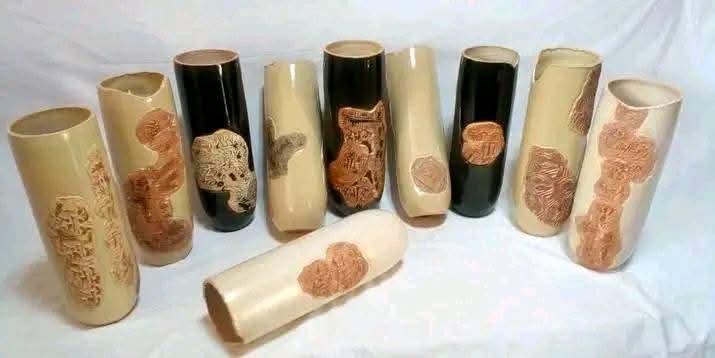
Tell us about your exhibitions. How has exhibiting abroad influenced your perception of your cultural roots?
It is often said that it is when you are far from home that you realise what you have. Exhibiting ceramics in my country is a struggle where spaces find it fragile, heavy, and difficult to display.
Exhibiting abroad has paradoxically made my work more visible in Cameroon, especially because my narrative approach moves away from the utilitarian.
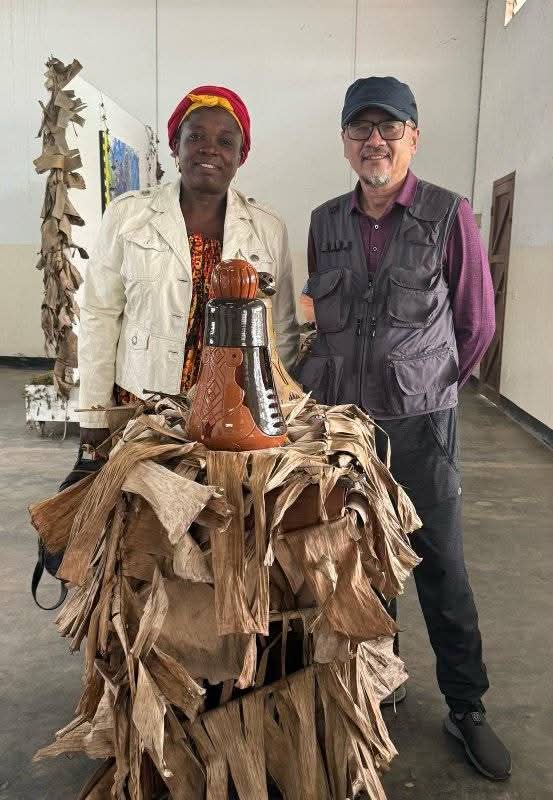
Has international exposure changed the way you present African stories through clay?
Enormously. Narrative ceramics is all about process and methodology. I have travelled to villages where sculptors tell stories with great ease. The difference lies mainly in the medium.
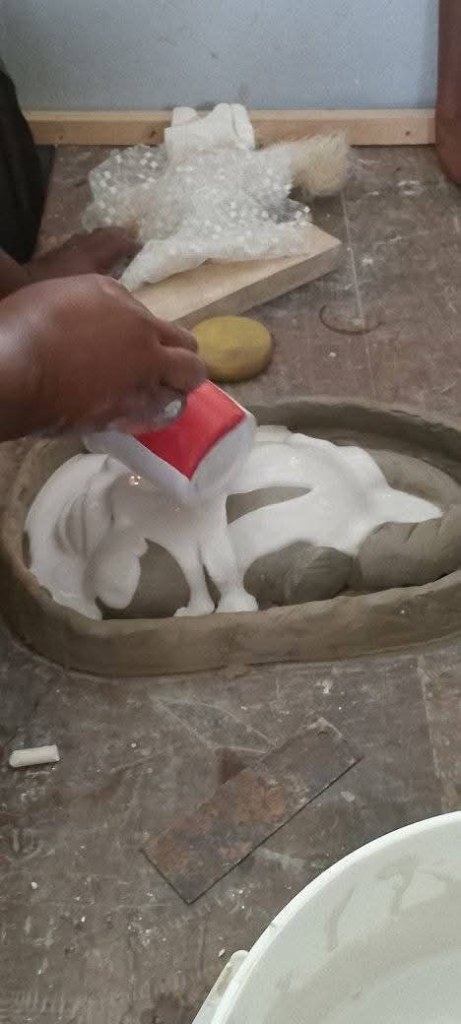
Mentorship is vital to sustaining artistic legacies. What role do you see yourself playing for the next generation?
Alongside my studio practice, I teach visual art and ceramics to young pupils. I feel very comfortable in that role. Mentoring is often a joy for me.
I want to pass on talent mixed with passion for ceramics to the next generation.

Looking ahead, what conversations or risks are you eager to explore?
There is an urgent need for equipment and collaboration with people willing to invest. Thirty years ago, there were barely three ceramic kilns.
Today, former students are opening studios and producing ceramics. The real risk is believing in it and investing in ceramics.
Encouragingly, we now have some university lecturers showing interest. Collaboration is urgent.
iBAND Magazine, Celebrating Visual Arts from the Original.
Africa | Visual Art | Lifestyle | Culture

