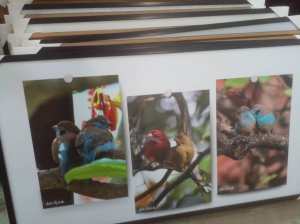
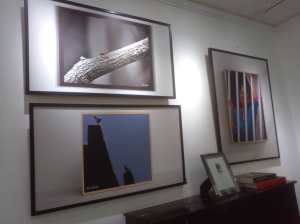
There was something quietly arresting about Wild Meets Urban, the recent solo exhibition by Aako Ugbabe staged at Didi Museum in Victoria Island, Lagos. The exhibition which opened officially on the 2nd of May after a private viewing on the 1st of May, did not merely present photographic references, it indeed opened a contemplative space where wildlife, urban appreciation, science and environmental consciousness intersected.
Here are some of the highlights of the exhibition
Words Ireho Aito | Don’t Keep Your Art in the Finger!
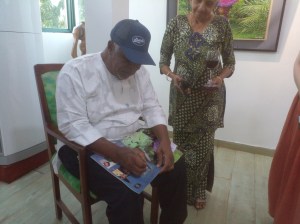
The legacy of Newton Jibunoh and environmental consciousness
The exhibition carried even deeper symbolism because of its venue. Newton Jibunoh founded Didi Museum and remains widely celebrated for his desert expeditions and ecological advocacy across Africa. That enduring legacy of environmental awareness gave “Wild Meets Urban” a fitting cultural and philosophical home.
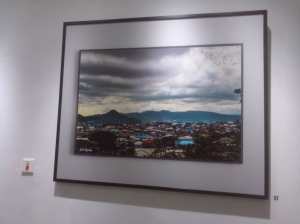
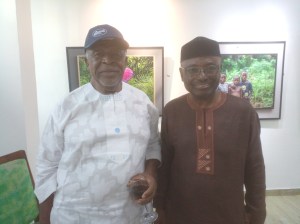
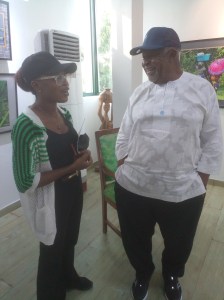
This is also one of the opinions shared by renowned curator Moses Ohiomokhare in his curatorial experience working with Aako Ugbabe
Curating the quiet relationship between wild and the urban by Moses Ohiomokhare
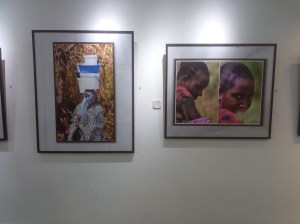
Curated by Moses Ohiomokhare, the exhibition unfolded like a visual essay on coexistence. Rather than separating the natural world from the modern city, the works explored the tension and fragile harmony between both realities. Birds, humans, landscapes and urban textures appeared not as opposites, but as participants in a shared environment increasingly shaped by human activity.
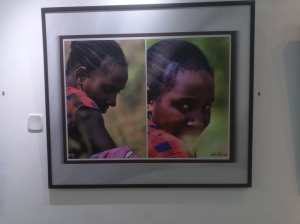
“There are 65 works but we are only able to showcase 40 of the works,” Moses Ohiomokhare states. “Every part of his art is well represented in this exhibition,” he mentions.
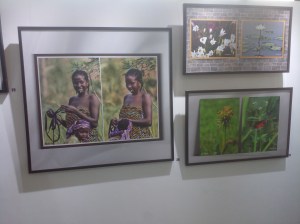
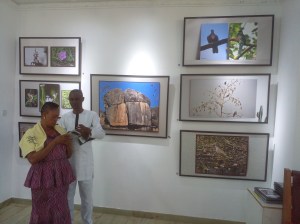
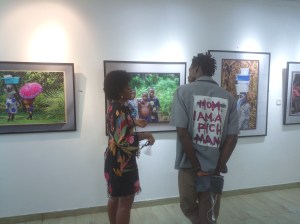
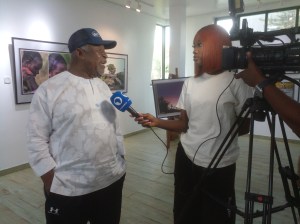
When science meets artistic observation at Wild Meets Urban.
One of the exhibition’s strongest talking points was the background of the exhibiting artist himself Aako Ugbabe. Trained as both an engineer and physicist, he approached visual storytelling with remarkable precision and observational depth. His scientific training could be sensed in the structural balance of the works, the attention to detail and the disciplined documentation of wildlife behaviour. He explains,
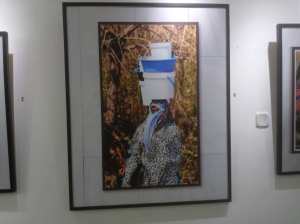
“I like studying the aerodynamics of birds. I have over 1,000 collections of photographs on birds alone. It is just a passion that I developed. I didn’t even know it would go this far,” he says.
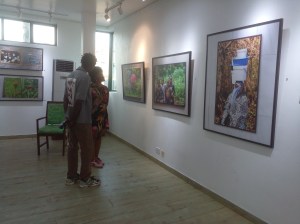
An archive of over 1,000 bird photographs
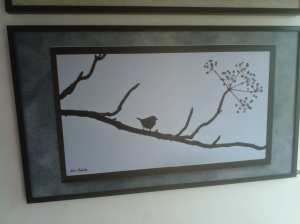
Perhaps most astonishing was the revelation that the artist possesses an archive of over 1,000 photographs of birds alone. That extraordinary collection transformed the exhibition from simple artistic interpretation into something closer to long-term environmental documentation. The birds within the exhibition became symbols of migration, survival, adaptation and freedom within rapidly changing urban landscapes.
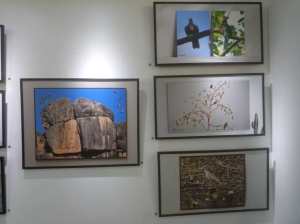
“You can imagine seeing some of these birds flying for months without breaking or stopping, neither losing their wings. This is scientific magic,” he confessed.
Even when COVID – 19 comes into the picture
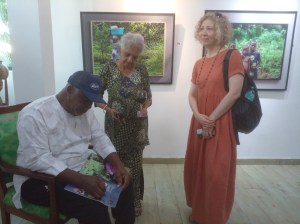
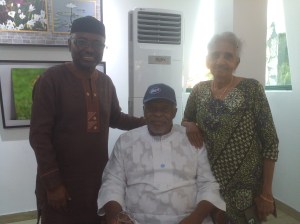
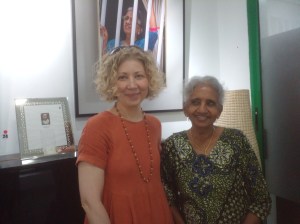
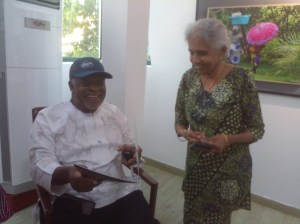
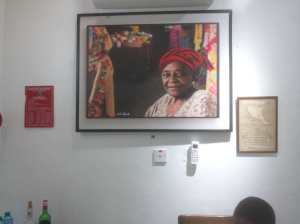
The exhibition also carried an understated cosmopolitan dimension. The artist’s wife, Mrs. Kanchana Ugbabe, Indian-born and a retired Professor of English Language from the University of Jos, introduced yet another layer of intellectual cultural memory and socio – cultural exchange surrounding the artist’s life and creative practice. Her presence subtly deepened the reflective atmosphere that lingered throughout the exhibition space.
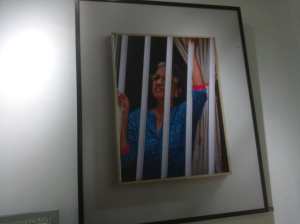
In one striking photograph, she appeared framed by a window, gazing quietly into the outside world. Reflecting on the moment, she explains that the image emerged during the COVID-19 lockdown period, when uncertainty and curiosity shaped daily life across continents.
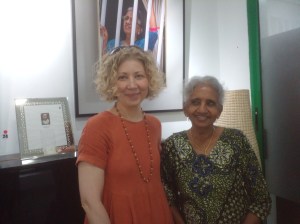
“I wanted to know what was happening in the world,” she says. “In countries like India, people were dying in large numbers. But here in Nigeria, many people were more concerned about feeling confined indoors. People misunderstood the meaning of lockdown and were eager to go out. I was simply inquisitive. I wanted to understand what was happening beyond our immediate environment.”
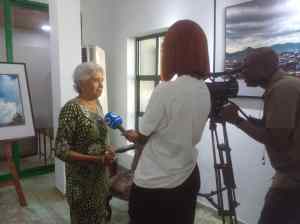
Her reflection added a deeply human layer to the exhibition, one that connected personal memory, global crisis, and cultural observation within the quiet language of photography.

Collectors respond to the emotional depth of the works
Collectors responded warmly to the body of work, with notable pieces reportedly acquired during the exhibition. Beyond commercial success, those acquisitions reflected the emotional and intellectual resonance the exhibition achieved among viewers and collectors alike.
Beyond art we are experiencing a meditation on survival and coexistence
In the end, Wild Meets Urban by Aako Ugbabe stood out precisely because it refused to be confined to a single category. The exhibition existed simultaneously as art, science, ecology and philosophy, drawing viewers into a thoughtful meditation on humanity’s evolving relationship with nature. Through carefully observed imagery and layered visual narratives, it became a reminder that even within crowded modern cities, the wild continues to watch, survive and speak.
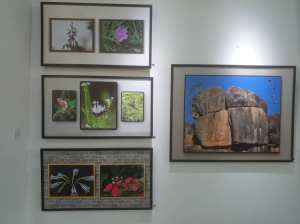
The journey of the exhibition itself, moving from Jos to Lagos, mirrored that conversation between stillness and expansion, nature and urbanisation. In many ways, the relocation reflected the very tension the works sought to explore: how natural memory persists amid the speed, density and restless rhythm of contemporary urban life.
iBAND Magazine, Celebrating Visual Arts from the Original.
Africa | Visual Art | Lifestyle | Culture

