
JCAA’s exhibitions have consistently found new ways to connect art with history, memory and lived experience. With Director’s Commentary, Seun Alli and June Creative Art Advisory turn their attention to the creative process itself, beginning with Kagho Idhebor’s My Jebba Story.
Words Ireho Aito | Don’t Keep Your Art in the Finger! Photographs courtesy June Creative Art Advisory
June Creative Art Advisory has continued to expand the possibilities of exhibition-making in Lagos, moving between contemporary art, history, photography, music and cultural memory. Founded by curator and cultural strategist Seun Alli, JCAA has become increasingly recognised for creating programmes that do more than place works in exhibition spaces; they build contexts around the stories being told.
From Afrobeat Rebellion: Fela Anikulapo-Kuti, presented at the Ecobank Pan African Centre and curated by Seun Alli, to the Murtala Mohammed commemorative exhibition at the Nigerian Institute of International Affairs, and more recently Tunde Owolabi’s Without Rest: The Crown We Gain at No Parking Lagos, JCAA’s projects have demonstrated a consistent interest in bringing history, people and contemporary creative practice into closer conversation.

It is within this evolving curatorial practice that Director’s Commentary, JCAA’s renewed programme exploring the ideas, processes and visual worlds behind moving-image practices, takes shape.

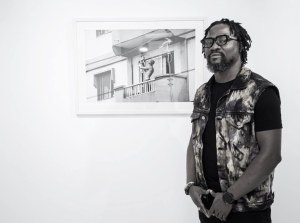
The programme opened on Saturday, August 8, 2026, at No Parking Lagos with filmmaker and cinematographer Kagho Idhebor’s My Jebba Story, bringing together a 16-minute film, a photography exhibition and a conversation around the making of the work.
For Idhebor, Jebba Street is more than a location. It is a place connected to his early relationship with photography, making the project a return to a significant part of his visual journey. After almost two decades working as a cinematographer, filmmaker and visual storyteller, My Jebba Story also marks his first photography exhibition.

The photographs take the story beyond the screen, drawing attention to the streets, people and details of Jebba Street. They offer a slower, more intimate encounter with a place that Idhebor once knew and has now chosen to see again through a different lens.

That movement between film and photography is central to Director’s Commentary. The programme is interested not only in what audiences eventually see on screen, but in the thinking, processes and personal experiences that make the work possible.

It also reflects the broader direction of JCAA under Seun Alli. Her curatorial work has increasingly demonstrated an ability to bring different audiences into stories that might otherwise remain within specialist or historical circles. With Afrobeat Rebellion, for instance, she approached Fela Kuti’s legacy as something larger than familiar songs and well-worn anecdotes, using the exhibition to encourage audiences to engage with his music, activism, family, collaborators and political ideas.
With Without Rest: The Crown We Gain, JCAA turned its attention to another kind of story, using Tunde Owolabi’s sculptures, photographs and prints to examine the dignity and resilience embedded in everyday labour. iBAND Magazine described the project as evidence that Seun Alli and the JCAA team were “not merely curating shows” but reframing how we see, feel and ultimately value everyday lives.
My Jebba Story brings that sensibility into a much more personal space.

There is no grand historical figure at its centre. Instead, there is a filmmaker returning to a street that helped shape his way of seeing. Through the film and photographs, Jebba becomes both subject and memory, while Idhebor’s return gives audiences an opportunity to consider how places change and how the people who leave them change too.
For JCAA, it is another example of how a cultural programme can open a door into a story without prescribing how audiences should experience it.

At No Parking Lagos, My Jebba Story brings cinema, photography and conversation together, allowing Kagho Idhebor to revisit where part of his visual journey began and, in the process, invite others to look at Jebba Street through his eyes.
The photography exhibition remains on view at No Parking Lagos, 15 Military Street, Onikan, through August 16, 2026.
iBAND Magazine, Celebrating Visual Art from the Original.
Africa | Visual Art | Lifestyle | Culture

