
Ola Balogun’s infectious charm and supporting spirit could effortlessly win over hearts. As he navigated the art scene, he found himself drawn to a handful of kindred spirits who would become his closest confidants. Words Ireho Aito

Ola Balogun stands out as a true son of the city. Born and bred in Lagos, Ola embodies the quintessential Lagos spirit – cosmopolitan, charismatic, and confident. His classmates, the highly celebrated Klass of ’99 from the renowned School of Art and Design, Federal Polytechnic Auchi, fondly remember him as the “show boy from Lagos” who always had a solution to every problem.
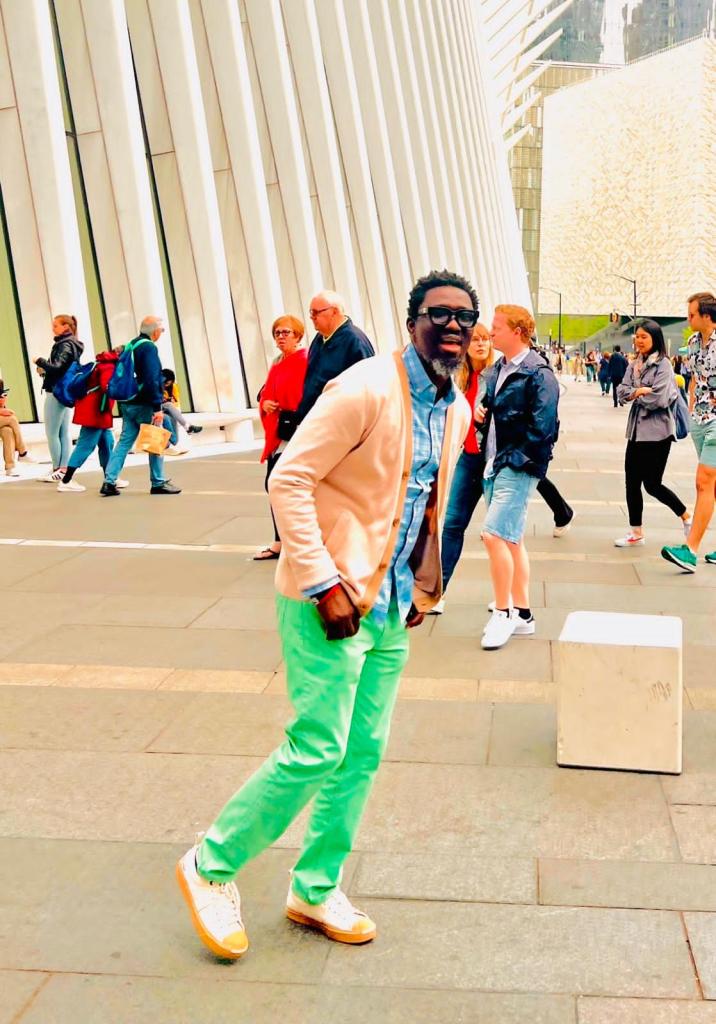
But there’s more to Ola than meets the eye. Beneath his charming exterior lies a passion for art, fashion, and shoes. Yes, shoes! Ola’s love for shoes is legendary, and his collection is a proof to his impeccable taste. From sleek loafers to bold sneakers, Ola’s shoe rack is a treasure trove of style and sophistication. As he admits from his base in the United States, “My number one collection is shoes. I love picking a pair of good shoes.”
Ola’s artistic journey began in Lagos, where he attended elementary school and later gained admission to study Fine Art at the School of Art and Design, Federal Polytechnic Auchi in the 90s. His late father, who encouraged his artistic pursuits, played a significant role in shaping his creative path. Ola’s stint with a Sign Writer and stints at Universal Art Studio, where he interned under the guidance of the great and renowned masters, further honed his skills and deepened his passion for art.
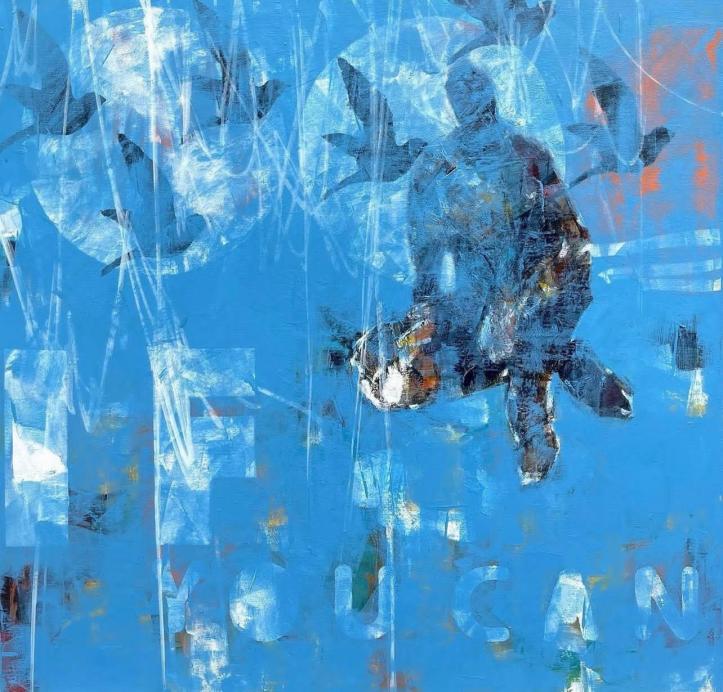
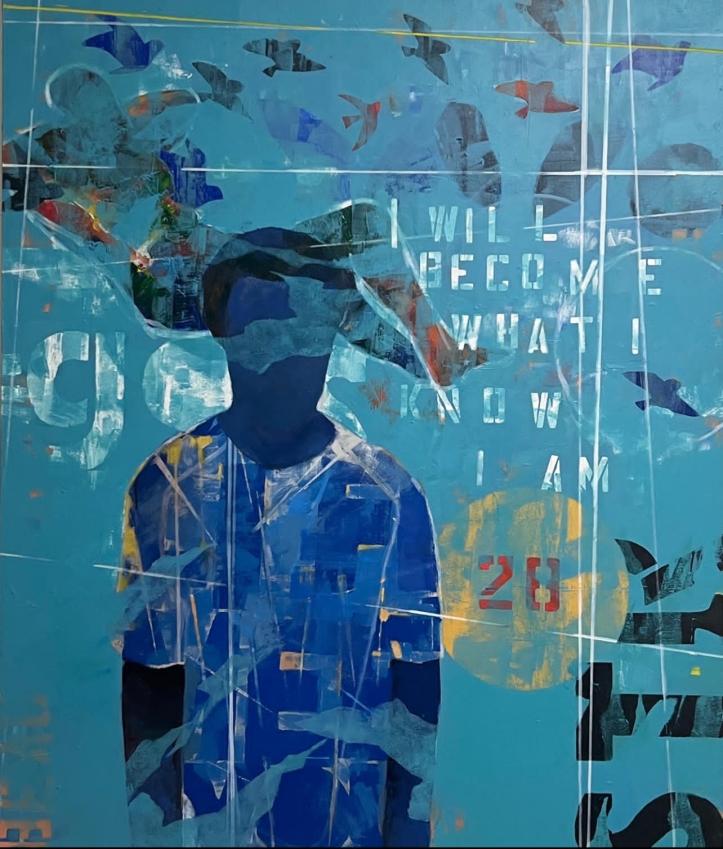
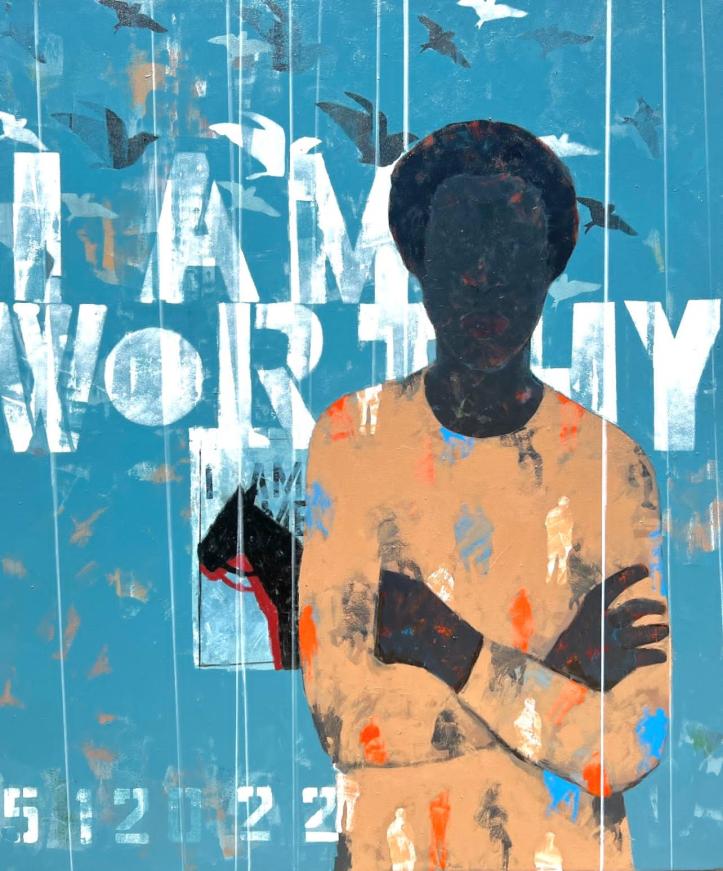
Today, Ola Balogun is a celebrated artist, creating stunning pieces for collectors around the world. But he remains true to his Lagos roots, proudly embracing his identity as a Lagos boy. As he continues to soar in the art world, Ola’s love for shoes remains a constant, a testament to his unique personality and style.
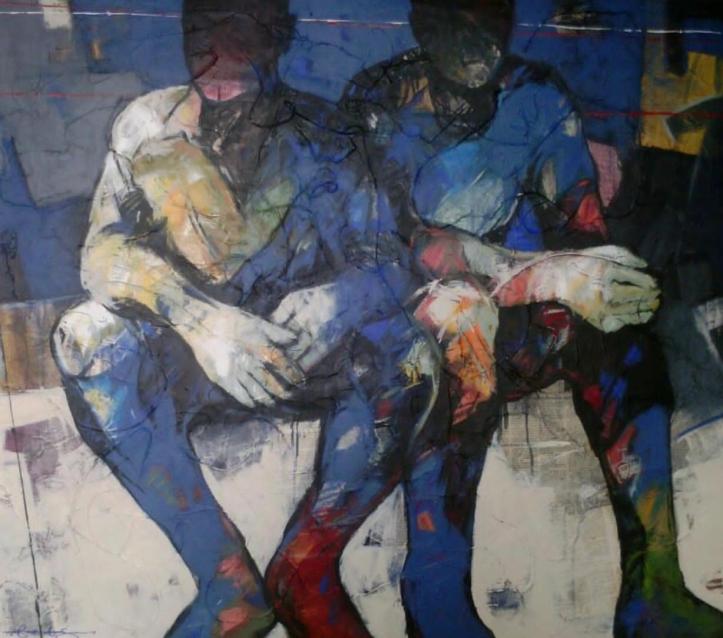
To the discerning, Ola Balogun’s art stands as a powerful approval to the human experience. This visionary artist, truly made in Lagos, weaves a visual story that echoes the intricacies of migration, race, and identity, set against the vibrant backdrop of urban life.
For Ola, the city is more than just a physical space, rather, it’s a universe teeming with diverse voices, energies, and stories. His art is a love letter to this universe, a celebration of the resilience and strength that defines the human spirit. Through his work, Ola aims to amplify the voices of the anonymous, to reflect the everyday expressions and emotions that make us human.
With over forty group exhibitions, including Constellation exhibition, held last year August by the prestigious Auchi Klass of ’99 at Iwalewa Gallery of Art, Lekki – Lagos. The prodigiously talented 14 – member Auchi Klass of ’99 have been having global acclaim with their collective dimension in projecting visual arts from Auchi school to the global world. What sets the Auchi Klass of ’99 apart is their unique bond, forged during their formative years at the School of Art and Design, Federal Polytechnic Auchi. This camaraderie has enabled them to present a unified vision, showcasing the richness and diversity of Auchi’s artistic heritage to a global audience.
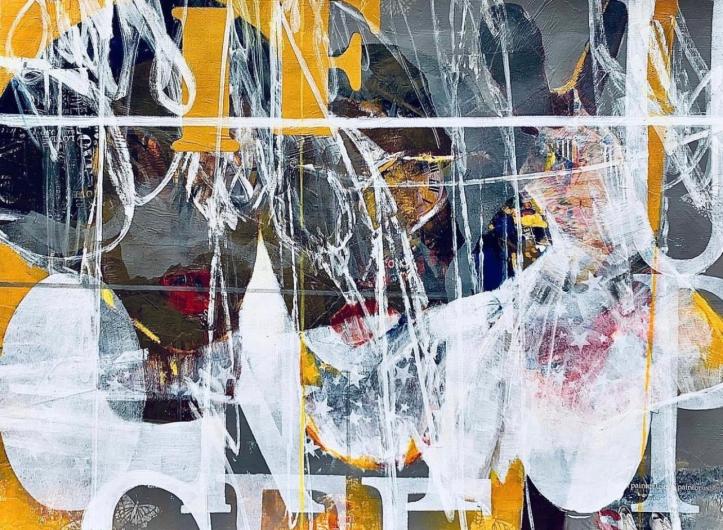
At the heart of Ola’s art lies a profound message of hope, love, peace, unity, and conviction. These words, which populate our daily lives, are more than just ideals, to be candid, they are the very fabric that holds us together. Ola’s art reminds us that even in the face of adversity, the human spirit remains unbroken, a beacon of strength and resilience that inspires us to strive for a better world.
His work challenges us to confront the complexities of our world, to listen to the voices that often go unheard, and to celebrate the beauty that arises from our diversity.
In Ola Balogun, we find an artist who is more than just a creator – he’s a visionary, a storyteller, and a champion of the human spirit. His art is a testament to the transformative power of creativity, a reminder that even in the darkest of times, there is always hope, always love, and always a chance for redemption and renewal.
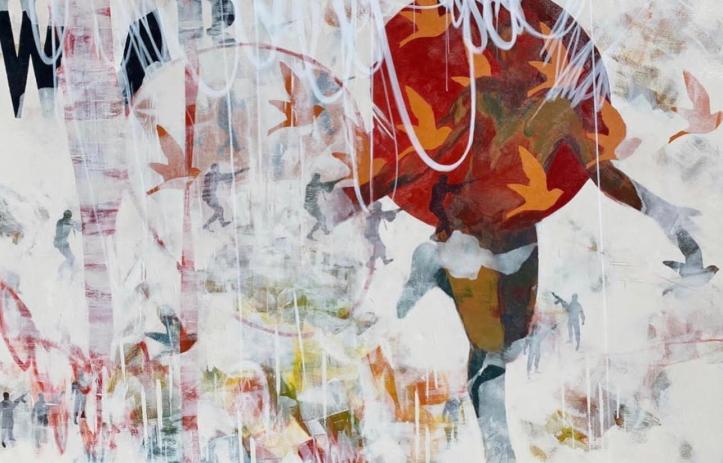
Even as a student at the School of Art and Design, Federal Polytechnic Auchi, Ola Balogun was already making waves in the Nigerian art scene. His colleagues and fellow students knew him as a talented artist who was well ahead of the curve. While many of his peers were still finding their footing, Ola was already an established presence in the Lagos art market.
He had built a reputation for himself, selling his works to discerning collectors and receiving glowing reviews from art critics. Ola’s strategic positioning had paid off, and he was now a rising star in the Nigerian art scene. His confidence and creativity were evident in every piece he created, and it was clear that he was destined for greatness. Even in his early days as a student, Ola Balogun was a force to be reckoned with in the art ecosystem in Nigeria.
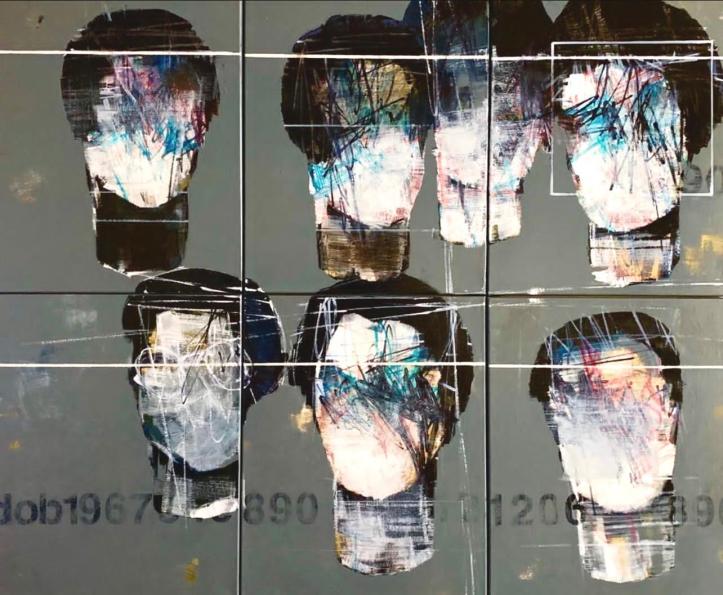
They say when the student is prepared, a master would emerge. Ola Balogun was groomed for greatness. Under the tutelage of some of the most revered names in the art world, Ola’s creative genius was carefully nurtured. The likes of Abiodun Olaku, Olu Ajayi, Sam Ovraiti, Duke Asidere and the late Ben Osaghae, who would later become Head of Department, imparted their wisdom and expertise on him, like a stamp of blessings, shaping him into a force to be reckoned with.
As Ola navigated the challenges of art school, he began to forge his own unique path. Refusing to be bound by convention, he dared to be different, to challenge the status quo, and to push the boundaries of what was possible. This nonconformist spirit would become a hallmark of Ola’s artistic style, setting him apart from his peers and paving the way for his future success.
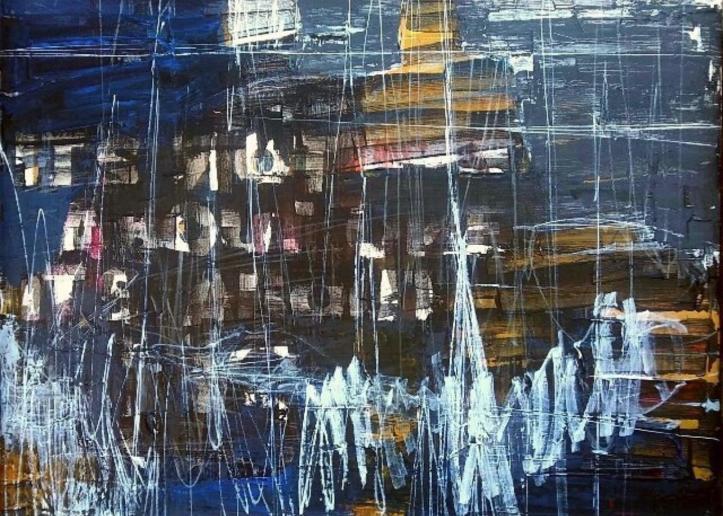
The Rise and Fall of Defactori Studio
Ola Balogun returned to Lagos in 2000 and 2001 became a full time studio artist, right from his abode in Surulere before relocating to Ebute – Meta where Defactori Studio was born. The traffic was huge. Art gallery owners like Peter Areh of Pendulum Gallery would come and patronise him at his Surulere home with a lot of commissions. He never worked under anyone. He paid his dues and later paid on. The more you do it, the more you get established. The more people start accepting what you are doing. Focus is key. Before his service year, Ola Balogun was a public person in visual art community, his name was ringing bell steadily. He had started selling to patrons like Juwon Olukoya, Dozie Igwuebe, now of Hourglass gallery, Chuks Onwudiwe, now based in the United Kingdom, in fact, it was a roller coaster journey for him.
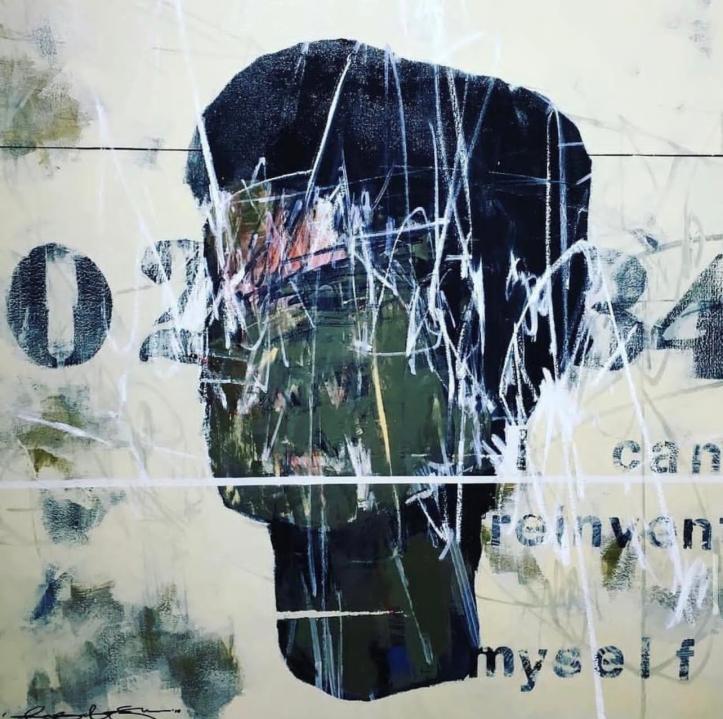
As Ola’s artistic horizons continued to expand, he received an invitation from Akintunde O’John to join him at his big studio in Ebute-Meta. The promise of a larger, more dynamic space was too enticing to resist, and Ola eagerly accepted. It was here that he met Taiwo George-Taylor, another prominent figure in the studio, and together, they formed a creative triumvirate.
The studio itself was an affirmation to the power of transformation. Once an abandoned factory, left to gather dust by a construction company, it had been reborn as a vibrant artistic hub. Ola, never one to shy away from opportunity, seized the moment, inviting other friends to join the studio. As the space grew, so did the sense of community, and Defactori Studio began to take shape.

The Power of Community
Earlier mentoring at Universal Art Studio and Curio Studio opened Ola Balogun’s and being a Lagos brought up, street’s parlance as ‘Lagos boy’ helped him to navigate the market which was an asset for Defactori Studio.
At Universal Art Studio situated at National Art Theatre, Iganmu, Lagos, Ola Balogun, Akintunde O’John, Jibade Awoyemi, Yemi Oladipo and Taiwo George – Taylor were frequent mentees at the studio, sharpening their arts skills under the tutelage of masters like Ola Olaku before they gained admission at different schools to study art. During schools break and holidays, the young and ambitious lads would frequent Universal Art Studio to gain more Knowledge. This movement played a massive role in Ola Balogun’s career odyssey. It sharpened his eyes and gave him a good outlook of what the industry entails. He found himself being there at the right time. His relationship with older colleagues in the industry was like a ladder for him to excel.
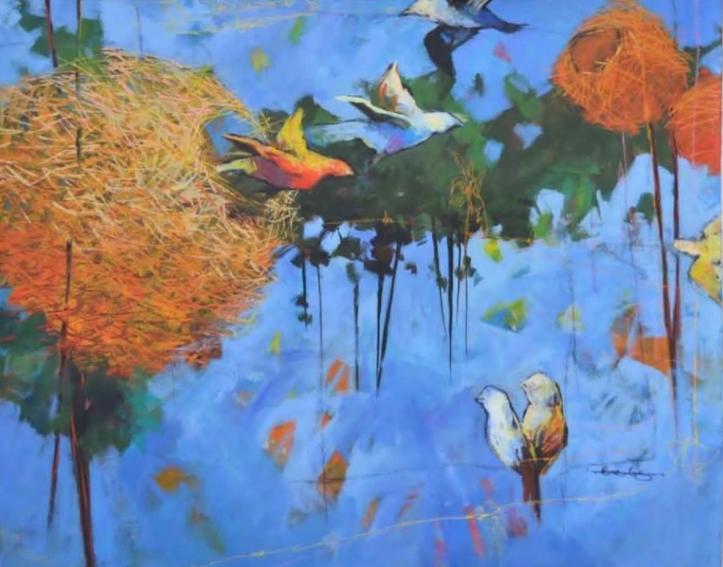
Studying from the Masters, after his Industrial Attachment, Ola Balogun worked with a great art impresario, a master of the game, legendary Olu Ajayi. Ola Balogun assessed him as a detailed, brilliant and very articulate artist. He is a good and well dressed artist, also a rounded artist. His appearance was an inspiration. Olu Ajayi was always looking debonair which Ola Balogun learned from him.
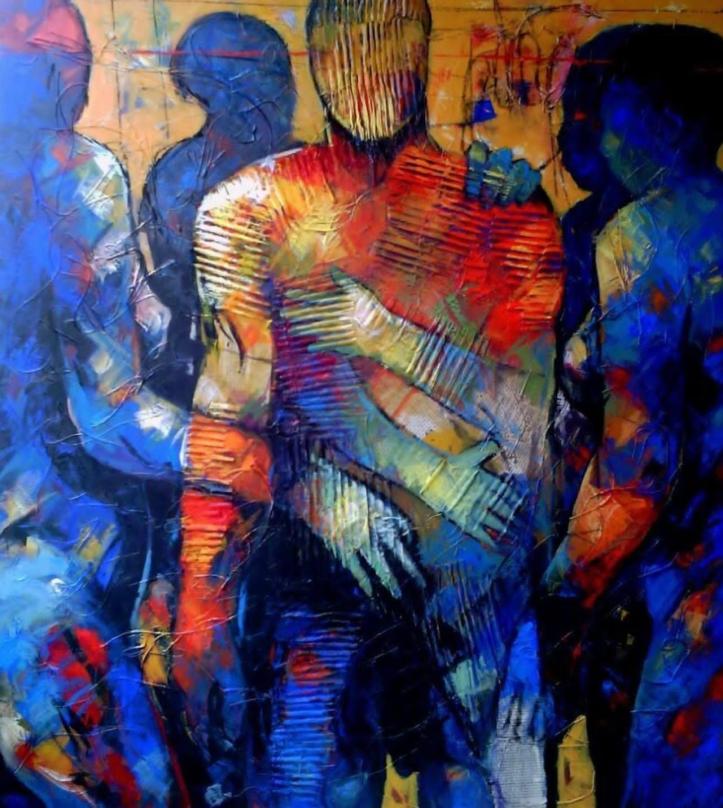
Ola Balogun’s infectious charm and supporting spirit could effortlessly win over hearts. As he navigated the art scene, he found himself drawn to a handful of kindred spirits who would become his closest confidants.
There was Jibade Awoyemi, the dynamic duo’s partnership transcending mere friendship to forge a lasting business bond. Together, they cooked up innovative ideas and schemes, their synergy sparking a creative fusion that would leave an indelible mark.
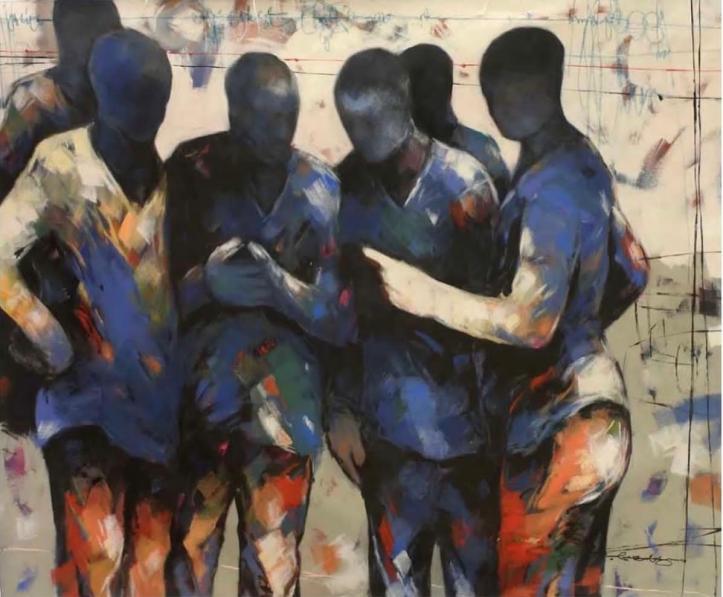
Then, of course, there was the inimitable Sina Adelana, whose untimely passing would leave a gaping void in Ola’s life. Anthony Olumide Ayare, another cherished friend, would often join the merry band, sharing laughter and adventures that would be etched in their memories forever.
Through life’s triumphs and tribulations, these bonds would endure, a proof to the power of true connection and camaraderie
Defactori Studio was more than just a physical space – it was the breath for like-minded artists, a haven where creativity and purpose could thrive. As the studio’s reputation grew, so did its appeal, drawing collectors and art enthusiasts from far and wide. The benefits were mutual: artists gained exposure and sustenance, while collectors discovered fresh talent and innovative works. The camaraderie of artists at Defactori was from different schools such as Federal Polytechnic, Yaba, School of Art and Design, Federal Polytechnic Auchi, Lagos State Polytechnic, Isolo and others converged at Defactori to build an empire that gave the visual community in Nigeria a run for their money.
Success stories recorded everywhere from in – house members with heavy client based portfolios to be proud of at Defactori with five group exhibitions that made history in annals of Nigerian exhibitions. The first exhibition saw Defactori members being able to do everything from conceptualization to reality without any sponsorship. Every aspect of the exhibition was done in – house through members contributions. The success recorded from the first exhibition gave birth to a lot of networking within Defactori. Jika Idu, a member of Defactori and lecturer at Alliance Française, situated on Alfred Rewane Road, Ikoyi, midwifed one of the exhibitions through his close relationship with Alliance Française. Nimbus Gallery also played host to Defactori in one of the exhibitions. Ola Balogun was able to propose the essence and goals of the exhibition by the group to Chike Nwagbogu, the founder of Nimbus Gallery. While Peter Areh’s Pendulum Gallery played host as well in one of the now iconic Defactori exhibitions.
In this fertile ground, many artists found the nourishment they needed to grow and flourish. Defactori Studio became a catalyst for artistic expression, it affirmed to the transformative power of collaboration and community. It grew to become one of the most vibrant, thriving art – ecosystem in Nigeria. It was a renaissance that would continue to inspire and uplift artists for years to come.
As the group flourish in their new found studio, a lady joined – Ngozi that came to do her internship program from Yabatech. She later joined full time after graduation. Presently, Ngozi is married to a German and both of them lives in Germany. Defactori lost a member Dina Adelana who passed away.
Ola Balogun was the connecting tissue for Defactori. Then, as time goes on, members started having mini – studios at homes were not regular at Defactori. A camaraderie of artists operating in one big studio, started breeding cliques such as drinking partners and others. People grew into prominence at Defactori and felt the need to engage career and business alone without being in a hub.
The Fall of Defactori – A Golden Fleece Era’s Unintended Consequences
The dawn of the new millennium brought with it an era of unprecedented opportunity, dubbed the ‘Golden Fleece’ era. However, this period of prosperity also had an unexpected consequence: the downfall of Defactori, the revered art studio that had once been the epicenter of Nigeria’s vibrant art scene.
As the allure of foreign shores beckoned, some of Defactori’s key members, including Anthony Olumide Ayanu and Ola Balogun, bid farewell to Nigeria, setting sail for America. This exodus of talent dealt a devastating blow to Defactori, leaving the once-thriving studio to slowly unravel.
Meanwhile, other artists began to invest in home studios, equipped with state-of-the-art facilities and direct access to private collectors. This shift marked the beginning of the end for Defactori, as the studio’s relevance and influence gradually waned.
And so, the curtain fell on the Defactori era, a testament to the transience of creative empires and the unpredictable tides of artistic fortune.
Words Ireho Aito/ Don’t Keep Your Art in the Finger!/ Artwork/Ola Balogun/Pictures/Ola Balogun

