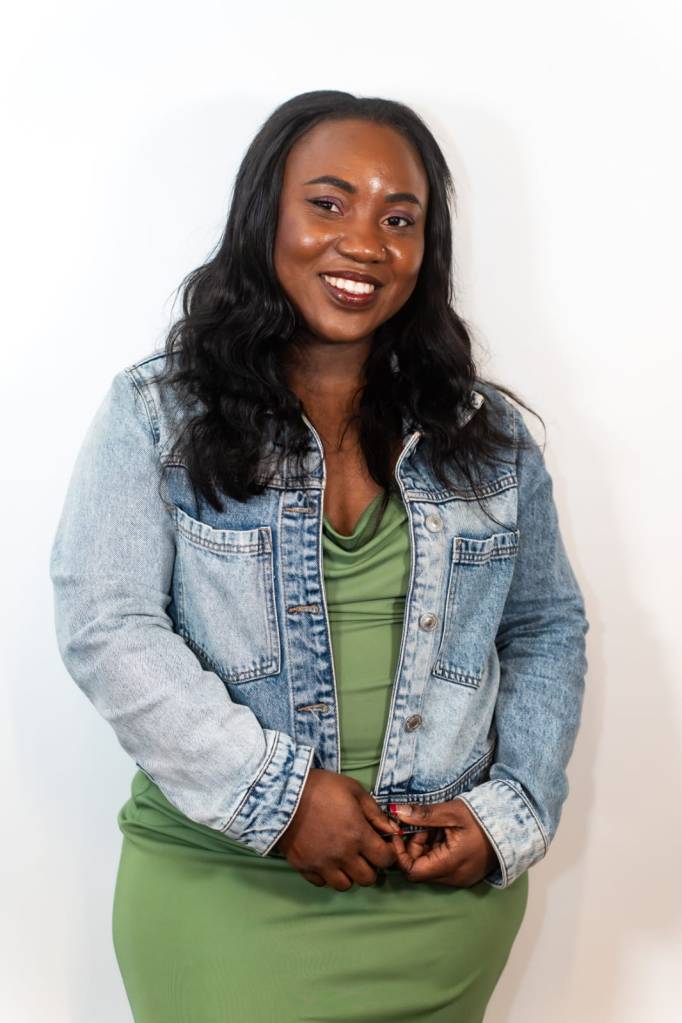
In every generation, there are artists who choose the harder road. Instead of working with paint tubes fresh from the shop or marble blocks brought from quarries, they pick up what others throw away. They bend, reshape, and reimagine waste into objects of meaning. In Nigeria today, one such artist is Oluwaseun Mojisola Ademefun, the creative mind and director of the Rethinking Rubbish project. Writes Ireho Aito
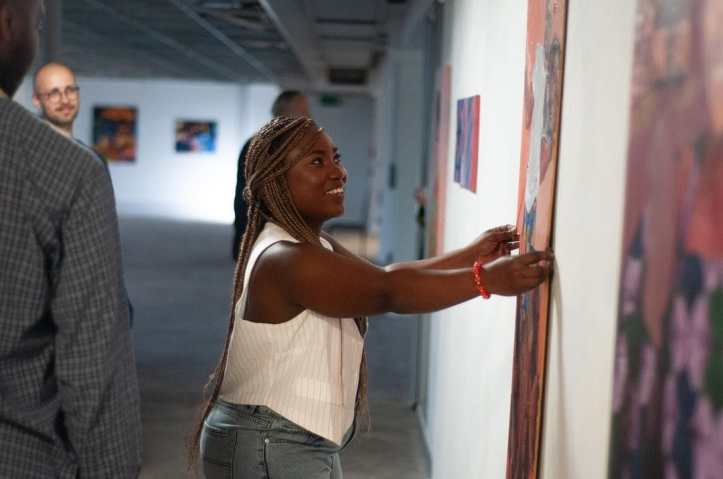
Her work stretches beyond Lagos to London and even Tijuana in Mexico. This wide reach shows not only her ambition but also her strong belief that environmental issues cannot be limited to one country or society. Waste is everywhere, and so must be the voices that speak against it. This review takes a close look at her projects, especially delving into some of the works such as Inhale, Steep, Repeat and The False Contaminant. It will explore her choice of materials, her techniques, her style, her place in Nigerian art, and her conversation with global movements.
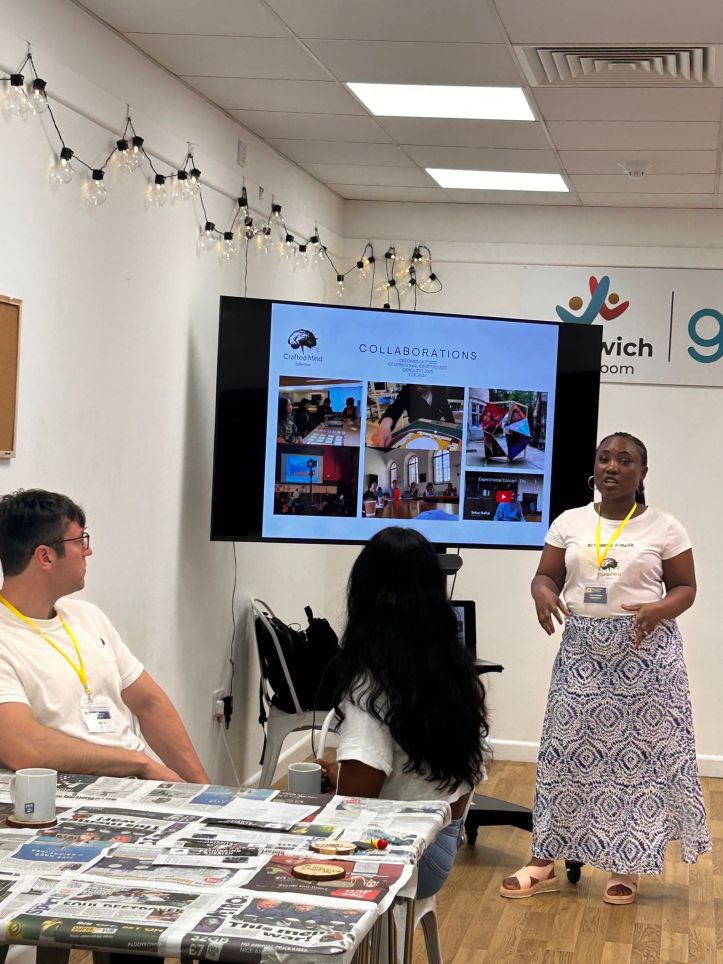
The Rethinking Rubbish project is both simple and bold. At its heart is a question: what if rubbish is not the end of an object’s life but the beginning of another? Dead curious!
In Lagos, the project connects with the daily reality of waste on the streets, in markets, and near water channels. Today in Lagos, waste have been commercialised. Just as we have big companies investing in waste management by buying scraps, rubbish and more, the city is now being inhabited by scavengers of different types who search for rubbish that can be sold for cash. Waste disposal trucks have them in abundance and it is not a scene to be surprised at that scavengers now inhabit recognised and designated dump sites in Lagos as residents. One of the reasons apart from seeking for shelter, is to have easy access to the refuse and rubbish that are being dumped on daily basis by registered waste disposals companies.
In London, Rethinking Rubbish project connects with recycling debates, the culture of fast fashion, and consumerism. In Tijuana, it meets border culture, migration, and discarded goods from two worlds. By tying these three cities together, Oluwaseun reminds viewers that waste is not just local. It travels. It speaks about trade, inequality, and habits of human beings across the globe.
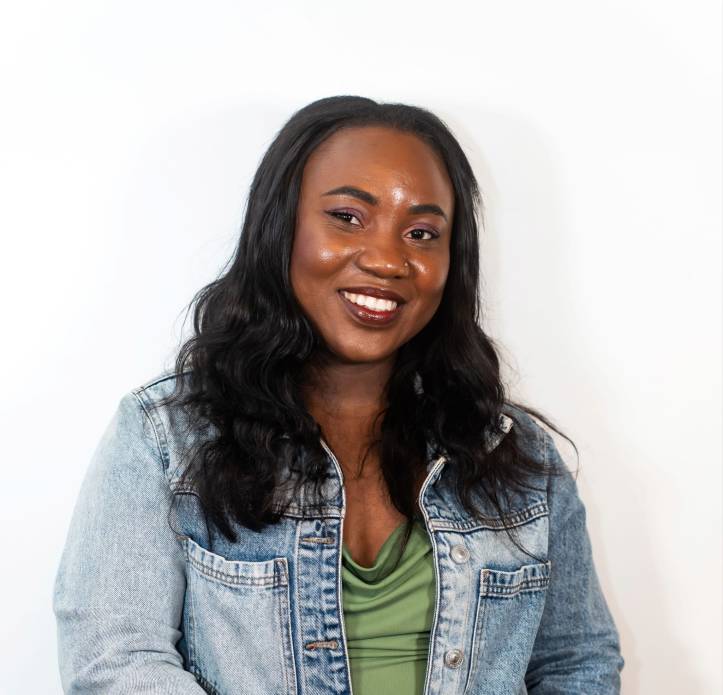
One important note to take, is that Oluwaseun does not simply recycle. She rethinks. Her artistic vision is about turning rubbish into reflection. When you walk into her exhibitions, you do not only see objects, you also see questions. Why do we produce so much waste? Why do we ignore it until it chokes us? Why is what we call “dirt” often a result of beauty and comfort we enjoyed only for a short time?
She wants her audience to stop, to pause, and to think deeply. She wants art to disturb just enough so that conversations about waste and environment become urgent, not delayed. This graduate of painting from the prestigious Yaba College of Technology, surely knows her onions.
Among the works displayed at Rethinking Rubbish exhibition was Inhale, Steep, Repeat. The name itself suggests a cycle, a habit that continues without pause. In this work, she collected materials that many of us see daily: discarded plastic and discarded textiles.
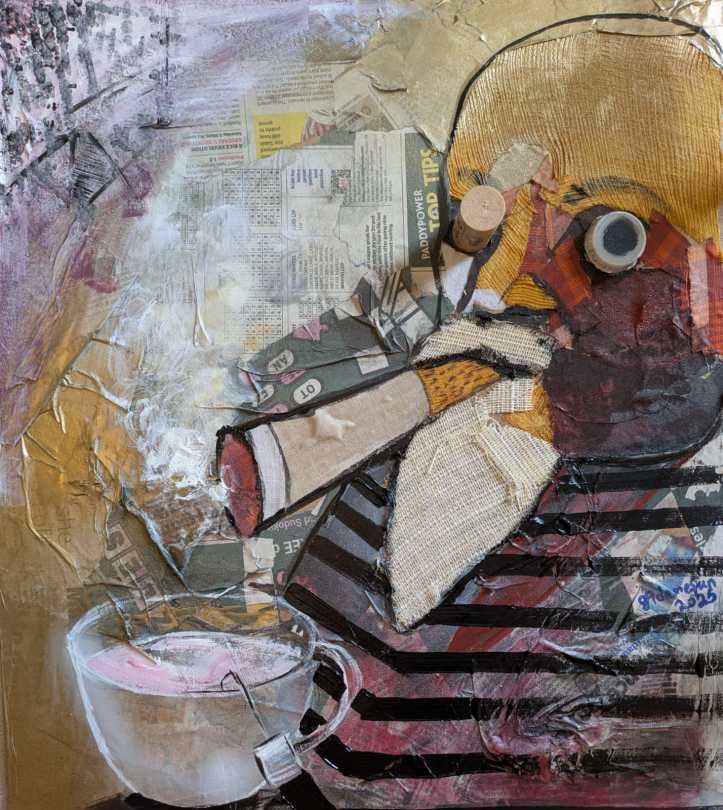
Oluwaseun Ademefun’s Inhale, steep, repeat (2025) is a hauntingly eloquent work that turns the ordinary into an urgent meditation on waste, memory, and survival. At first glance, the portrait of a man smoking and sipping tea feels intimate, almost domestic. But the closer one looks, the more disruptive the material truth becomes: cigarette and teacup fashioned from discarded fabrics and plastic, the background layered with the stubborn textures of non-biodegradable remnants.
This juxtaposition between ritual and refuse is where the painting’s power resides. The quiet repetition of daily habits such as lighting a cigarette and steeping a tea bag becomes a metaphor for humanity’s unconscious complicity in environmental degradation. The work reframes consumption not as fleeting pleasure but as residue, waste that outlives its maker and user.
Ademefun’s choice of wood as the base intensifies the dialogue: a natural surface bearing the scars of artificial, manufactured leftovers. What would have been rubbish becomes both aesthetic and accusatory, beautiful yet uncomfortable. The portrait does not shame its subject but implicates the viewer, suggesting that every puff, every sip, every convenience carries a hidden permanence.
Inhale, steep, repeat is not merely an artwork but a quiet protest that is measured, deliberate, and insistent. It reminds us that the ordinary is never neutral, and that the fabric of our lives, like the fabrics and plastics embedded in this piece, will leave marks we cannot easily erase.
Another important work is The False Contaminant. Here, Oluwaseun pushes her ideas further. The piece questions what society calls “clean” and “dirty.” Many times, what we throw away as useless is still full of value, while what we admire as luxury is harmful to the planet.
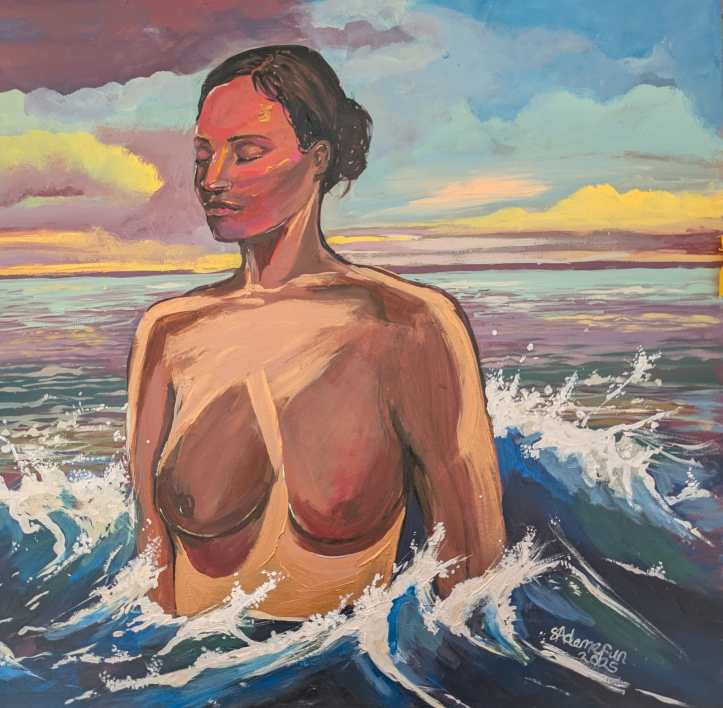
In False Containment (2025), Oluwaseun Ademefun offers a striking meditation on bodies, memory, and the futility of sealing away histories that resist silence. Measuring 45.7cm by 45.7cm, this acrylic-and-cork-on-board composition balances intimacy and unease, inviting the viewer to wrestle with what it means for knowledge, fluid, polluted, and inherited to dwell within us.
The work’s most immediate gesture is the presence of a wine cork, an object usually tied to preservation and celebration. Here, however, it is displaced, pressed against the body in a way that unsettles rather than reassures. One breast remains exposed, an emblem of vulnerability, nourishment, and unfiltered memory. The other, corked, reads as an uneasy act of containment: an attempt to purify, suppress, or rewrite histories that seep despite resistance.
Ademefun’s exploration of what she frames as “Contaminant Epistemology” turns the body into both vessel and archive. Like water carrying sediments of pollution and story across generations, the body absorbs trauma and knowledge whether spoken or silenced, visible or invisible. The contrast between exposed and concealed forms suggests the tension between disclosure and erasure, between survival through memory and survival through forgetting.
The use of cork is especially potent. This is a material meant to preserve wine at its peak instead becomes a metaphor for the impossibility of sealing away human histories. Preservation here feels closer to suffocation, a denial of the body’s natural capacity to breathe, leak, and testify.
False Containment is not only visually striking but conceptually layered. Ademefun compels us to confront how we carry contamination not only environmental but historical and psychological and how futile it is to imagine that these can ever be fully contained. The body insists on remembering.
The title suggests that contamination is not always about the object itself but about our perception. Who decides what is dirty? Who labels an item as rubbish?
The strength of this work lies in its philosophical question: maybe what we call contaminant is false, and the real contamination is our careless attitude.
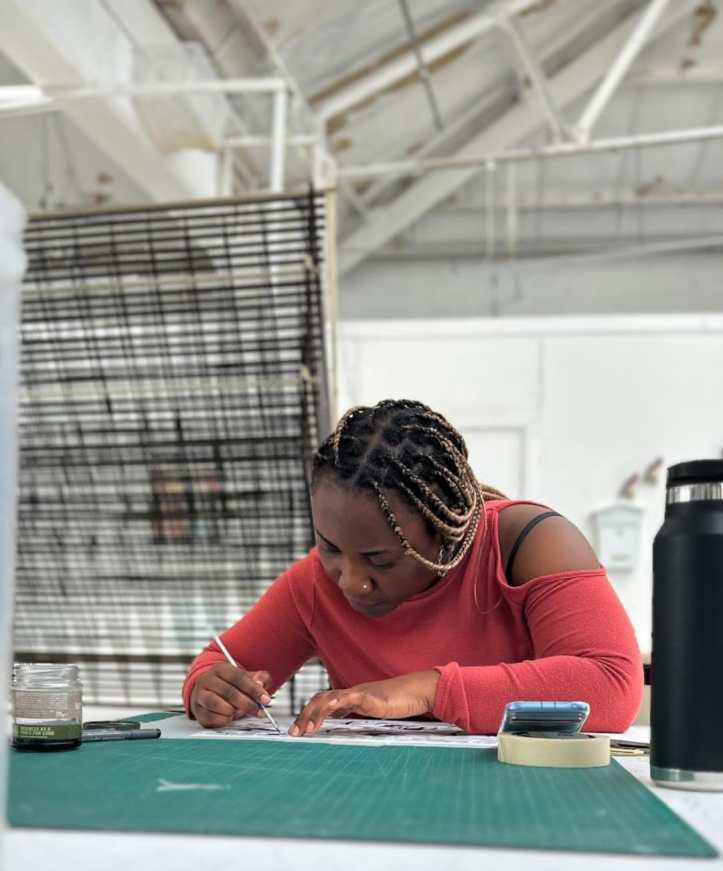
In the crowded streets of Lagos, discarded plastics, textiles, glass bottles, and paper are part of the daily scenery. In London, the same materials overflow in recycling bins. For Oluwaseun Mojisola Ademefun, these remnants are not waste, they are raw material, testimony, and voice. She does not buy supplies from glossy art stores; instead, she collects, gathers, and rescues what society throws away.
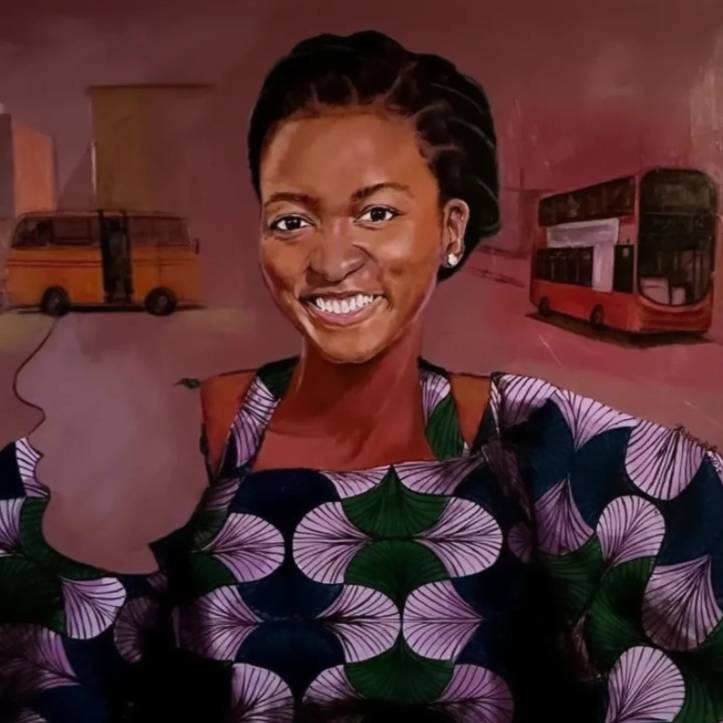
This choice is both practical and symbolic. By working with what others abandon, Oluwaseun insists that rubbish is not the end of a story but the beginning of a conversation. If art can uncover beauty in waste, perhaps society too can uncover solutions within its problems. Every bottle top, every plastic strip, every thread is more than an object, it is a witness of consumption.
An Experimental Hand
Stylistically, Oluwaseun occupies the space between realism and abstraction. She does not romanticise waste by painting pictures of it, she allows the waste itself to become the picture. This honesty gives her work its raw, unsettling power.
Every artwork carries a story. The central theme is always the environment, but beneath it lies a sharper question: human behaviour. Her works do not shout but whisper, inviting the viewer to pause and reflect.
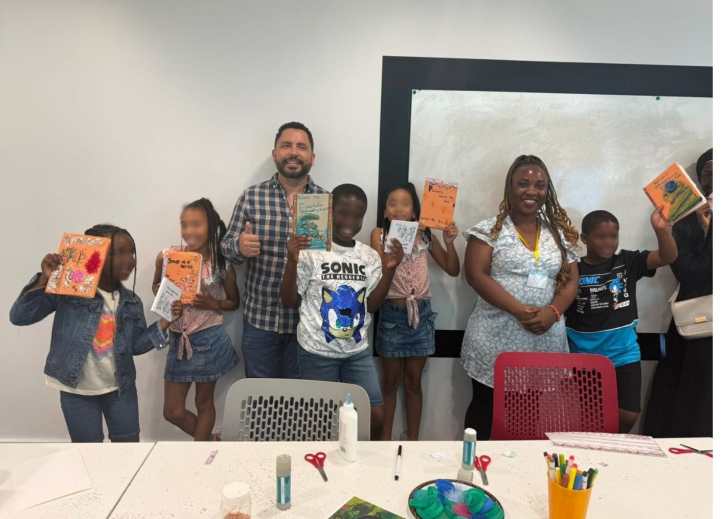
For Oluwaseun, these are not only Nigerian stories but global ones. Western consumerism fuels excess waste that often travels to Africa. Developing nations grapple with recycling infrastructures. Individuals everywhere contribute, knowingly or unknowingly, to this cycle. Her art insists that we are all part of the chain.
In Lagos, audiences often approach her exhibitions with curiosity, surprised that rubbish can be transformed into art. In London, viewers, more familiar with eco-art traditions, value her fresh African voice. In Tijuana, her work took on yet another meaning at the border, waste became a metaphor for migration, exclusion, and resilience.
Despite these different contexts, one response cuts across all cities: reflection. Visitors leave with questions, sometimes even guilt, but also with awe at how waste can be turned into beauty.
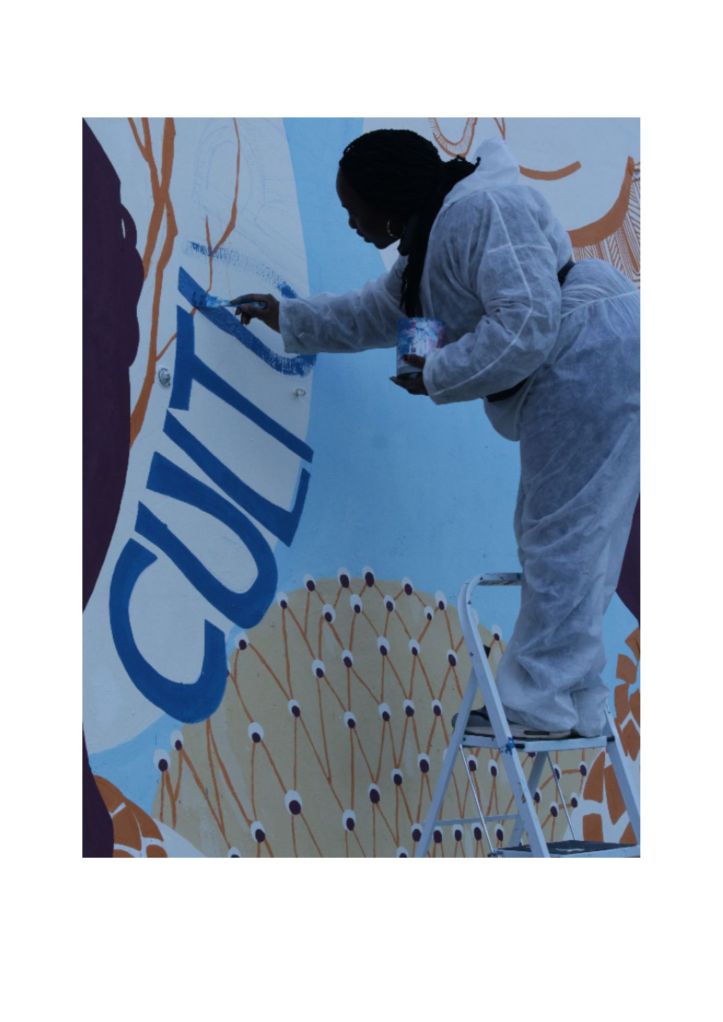
Back home in Nigeria, relatively few artists focus deeply on waste. Notably is Olu Amoda, the renowned metal artist who was a lecturer at Yaba College of Technology at a time. Olu Amoda was revered in recycling waste into profound meaning.
Found objects appear in some practices, but rarely with the urgency that drives Oluwaseun. She stands out because she weds activism with aesthetics. She is not decorating, Oluwaseun is debating. Her art belongs in the same tradition as Nigeria’s great cultural voices where Fela used music to confront corruption and Ben Enwonwu sculpted identity, Oluwaseun confronts the environment with rubbish.
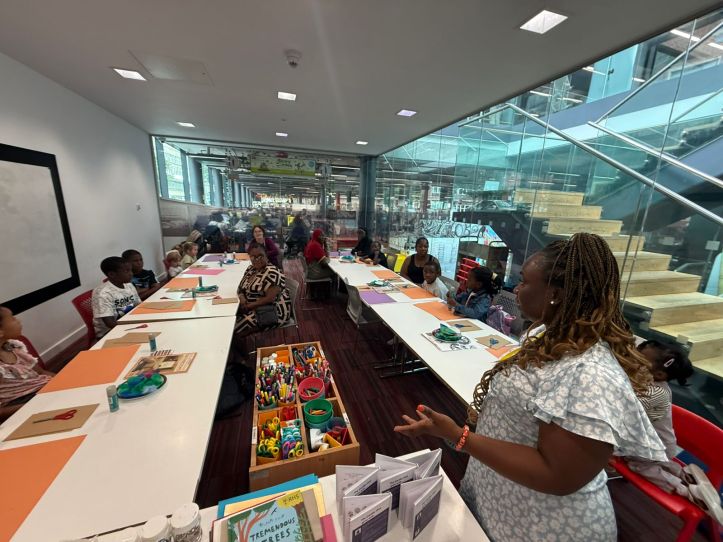
Globally, her work finds kinship with artists like El Anatsui, who transforms bottle tops into monumental cloth-like forms, or Brazil’s Vik Muniz, who crafts portraits from garbage. Yet Oluwaseun’s focus remains distinct. While Anatsui meditates on history and culture, and Muniz on human dignity, Oluwaseun sharpens her lens on environmental survival.
Her Lagos-London-Tijuana trajectory makes her voice truly global, situating Nigerian eco-art in new conversations across continents.
Her originality, courage, and consistent vision are undeniable. She turns the language of waste into art that speaks across borders. Still, her work could gain even greater reach through stronger documentation in catalogues, photography, and digital platforms. Collaborations with scientists or environmental groups could also bridge her art more directly to policy and practice.
What emerges clearly is that Oluwaseun is not simply a visual artist, she is a voice of conscience. In works such as Inhale, Steep, Repeat and False Containment, she shows that rubbish is never silent but holds stories, memories, and warnings.
Her place in Nigerian and global art is still unfolding, but the foundation is firm. At a time when the world is drowning in waste, her practice reminds us that the role of the artist is not only to capture beauty but also to ignite awareness.
Oluwaseun does both rethinking rubbish and reclaiming stories, while asking us all to do the same.
Review by Ireho Aito. Artworks and Photographs courtesy of Oluwaseun Mojisola Ademefun

