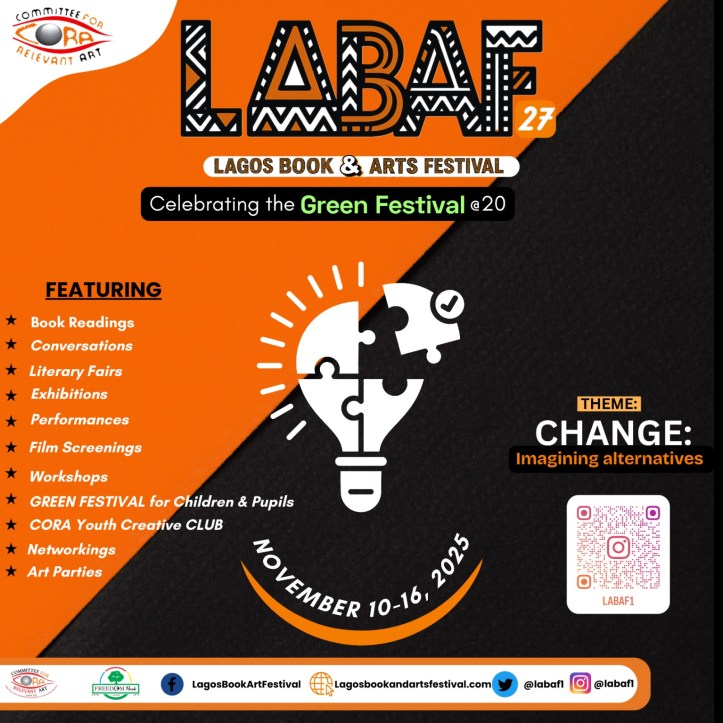
The city of Lagos has once again become a playground for readers, thinkers, and creators. Beneath the trees and open tents of Freedom Park, voices rise in debate, laughter, and performance. Pages flutter in the breeze; children paint under colourful canopies; a poet recites lines that hush the crowd into reflection. The Lagos Book and Art Festival (LABAF) has returned — not just as a cultural event, but as a living testament to the power of ideas.
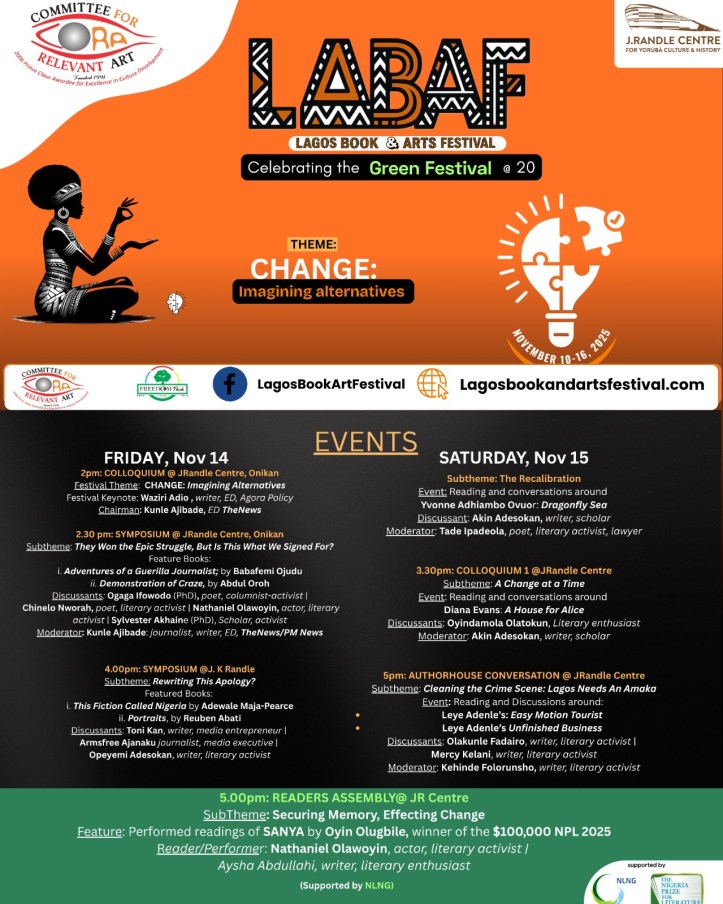
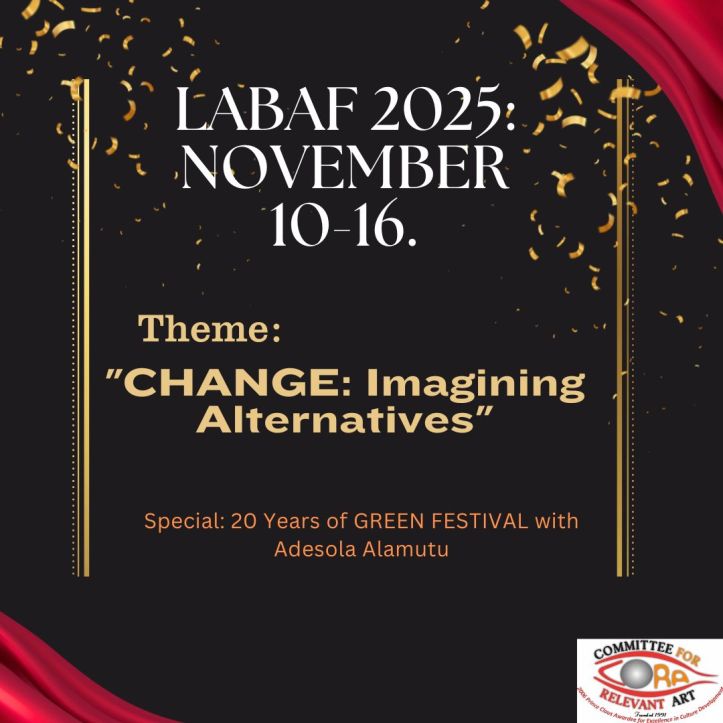
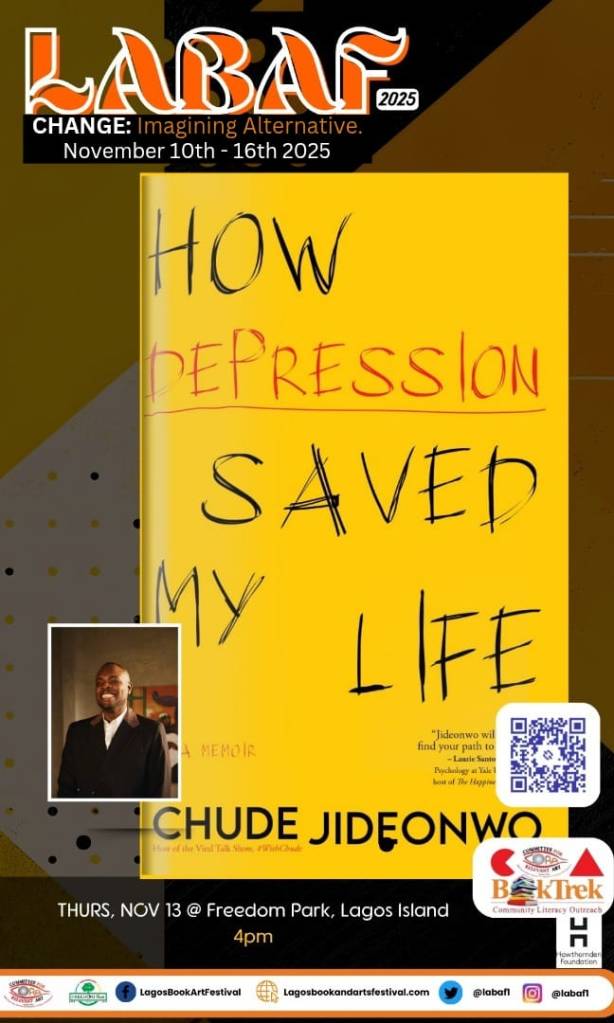
This year’s edition, LABAF 2025, comes under the theme “Change: Imagining Alternatives.” It challenges citizens, artists, and dreamers to rethink their realities — to reimagine how society might function if creativity and conscience guided public life.
Words iBAND Editorial team | Don’t Keep Your Art in the Finger! | Images and photographs, LABAF, Jahman Anikulapo, BookArtVille
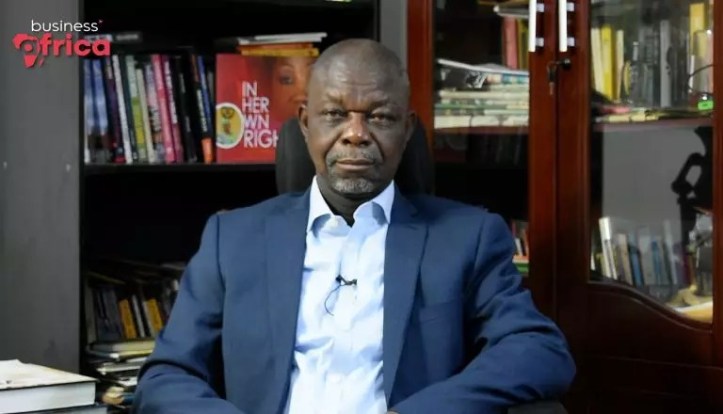
In the cultural heartbeat of Lagos, where words and ideas collide with rhythm and art, the Committee for Relevant Art (CORA) once again proves why it remains one of Nigeria’s most enduring creative institutions. Founded by two veteran journalists and culture advocates, Toyin Akinosho and Jahman Anikulapo, CORA has, since 1991, embodied a vision that goes beyond art for art’s sake. It is about using creativity as a social instrument: to provoke thought, inspire civic engagement, and celebrate the imagination of the African mind.
Among CORA’s most visible contributions to Nigeria’s intellectual and cultural life is the Lagos Book and Art Festival, famously called LABAF festival a week-long “book picnic” that has, since 1999, gathered readers, writers, artists, filmmakers, and dreamers under one open sky to celebrate the written word. What began as a modest literary gathering in the garden of National Museum Onikan in Lagos with a keg of palmwine to herald the first edition, has blossomed into one of Africa’s most consistent cultural feasts. It is now a festival that combines books, performance, visual arts, conversations, and music into one compelling public experience.
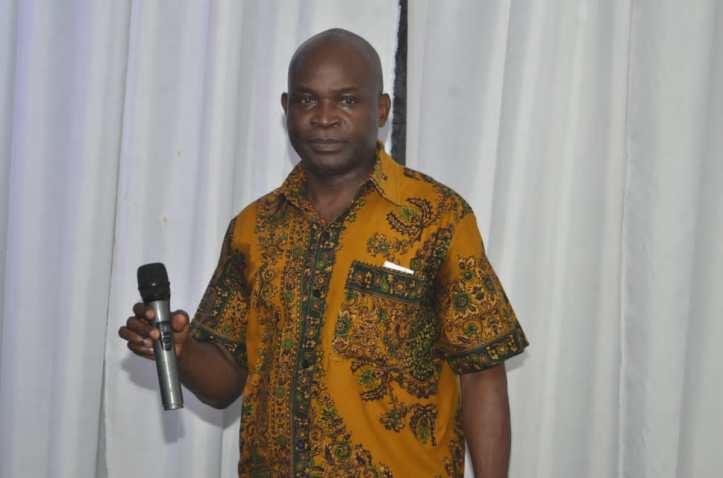
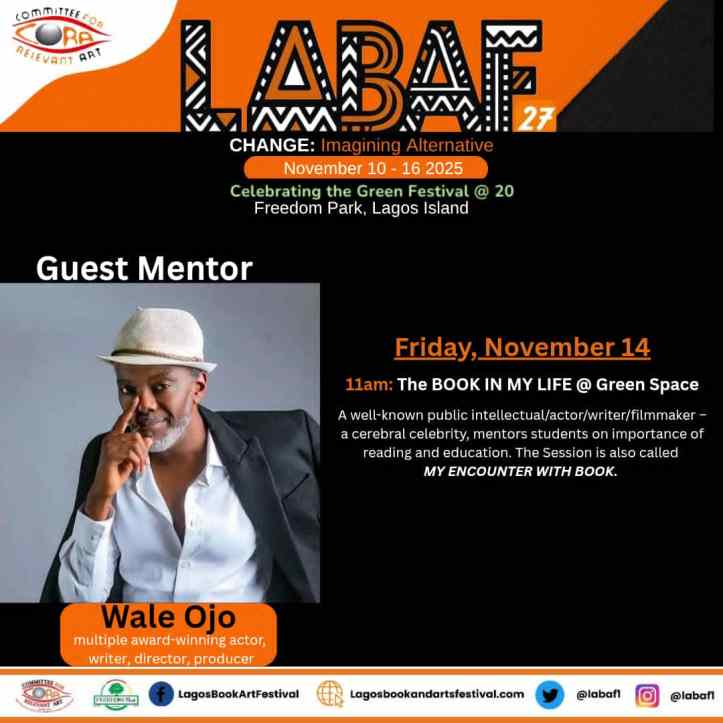
Over the years, the event has welcomed literary giants such as Professor Wole Soyinka, renowned actor Richard Mofe – Damijo and comedian Julius Agwu and other iconic figures to mentor the young ones and share with them the books that shape them.
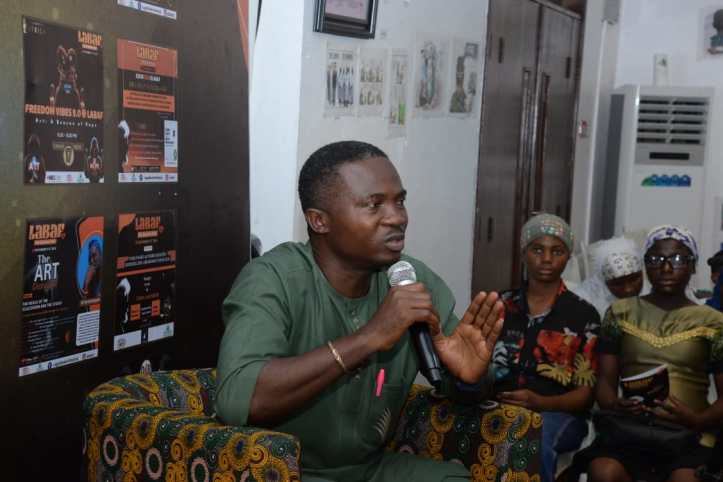
One of the events for the last day is CORA Stampede which has commanded an international appeal. This year CORA Stampede comes, as usual, on Sunday which is the last day of the book fiesta.
LABAF 2025: A Festival in Full Bloom
This year’s edition, LABAF 2025, continues CORA’s long-standing mission of linking literature to everyday living. But it comes with a renewed energy and that is a creative expansion that elevates its form and purpose. With the world still grappling with questions of justice, freedom, environment, and the place of technology in our lives, LABAF 2025 has chosen to mirror these anxieties while also amplifying hope.
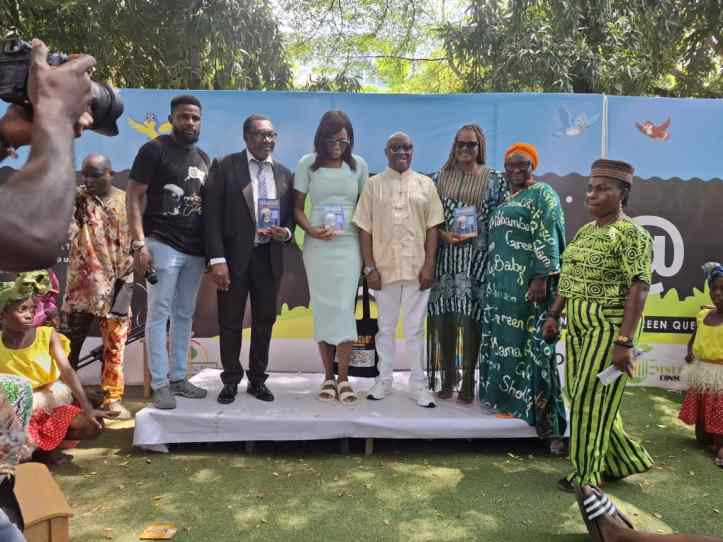
The festival’s theme this year, “Change Imagining Alternatives,” captures the urgency of our times. It calls for an intellectual reawakening which is a reminder that books and the arts are not mere luxuries but essential tools for rebuilding the mind and society.
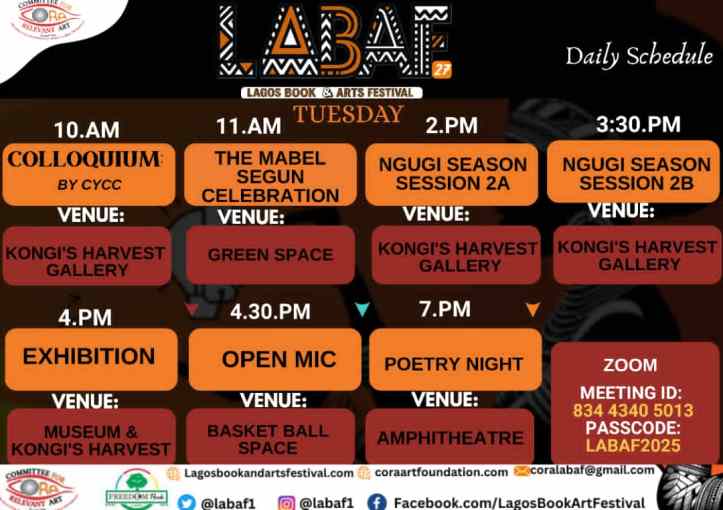
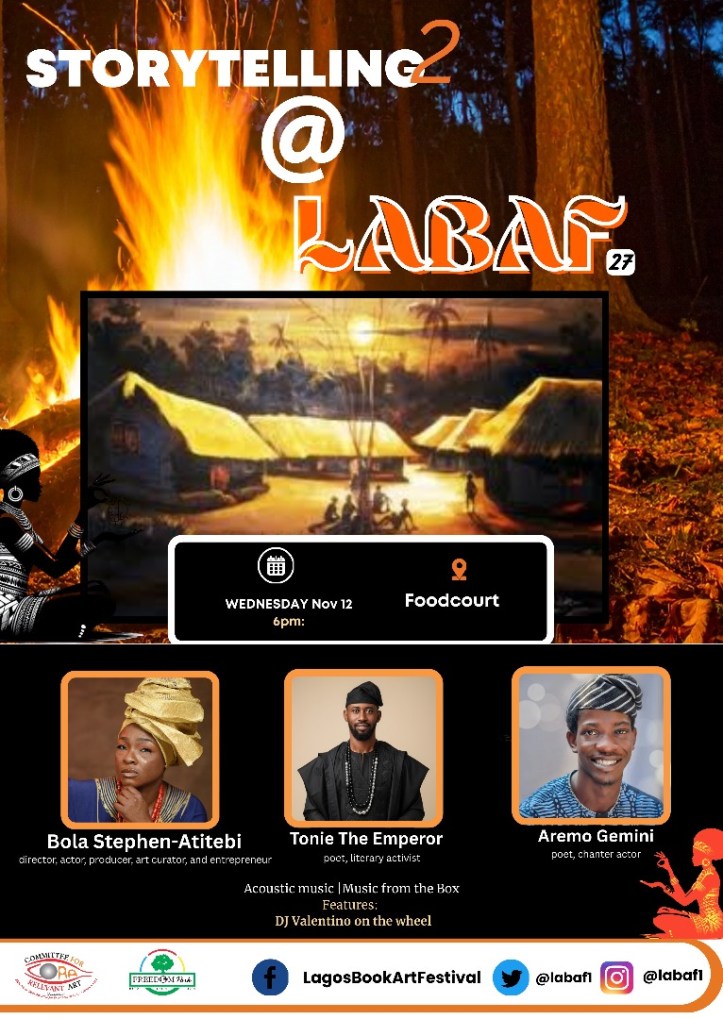
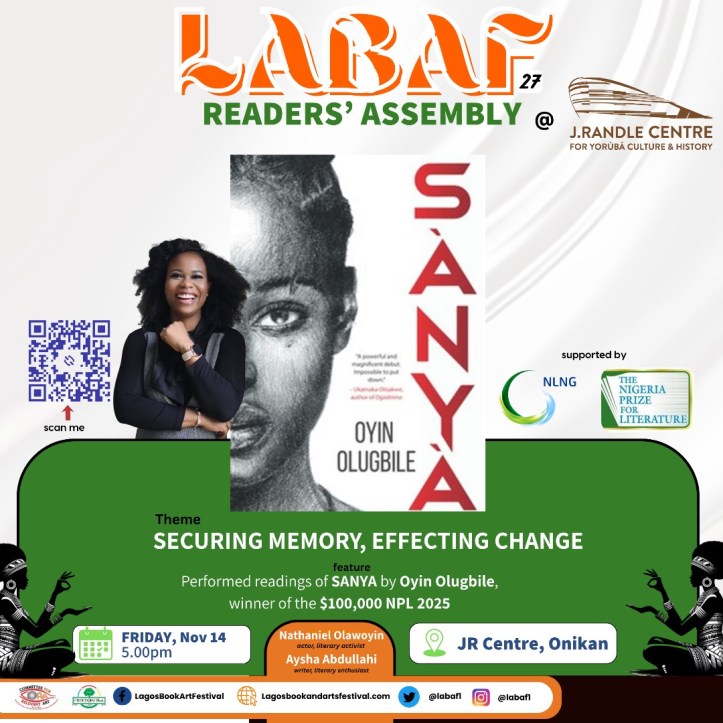
For seven days, the Freedom Park in Lagos Island, the festival’s traditional home, transforms into a vibrant public square. The air is filled with poetry readings, book signings, panel discussions, film screenings, stage plays, art exhibitions, children’s workshops, and live music sessions that stretch into the night.
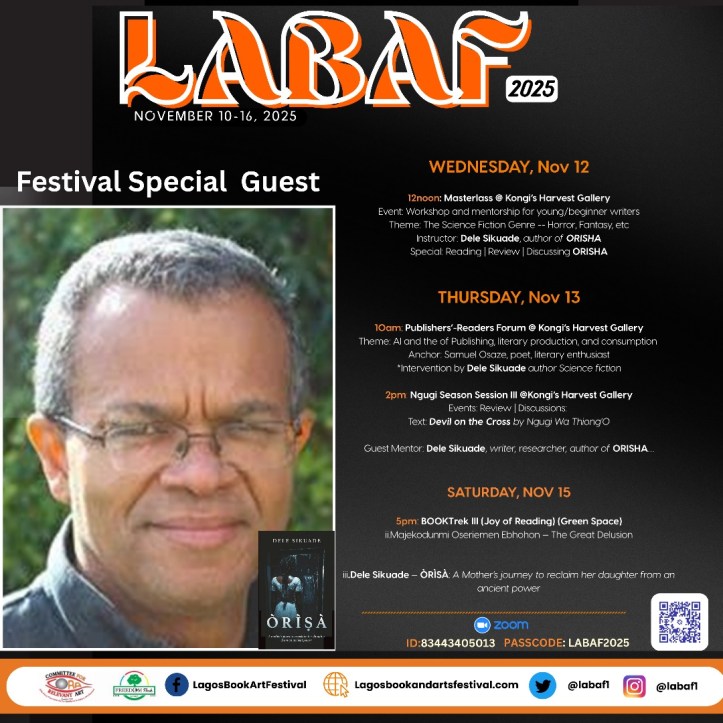
Writers from across Nigeria and the African continent mingle with students, teachers, researchers, and everyday Lagosians, breaking the walls that often separate art from the people it seeks to serve. The festival’s relaxed, picnic-like atmosphere invites not only reflection but participation. It is a celebration of literature as a living and breathing force.

CORA’s Cultural Philosophy
What makes CORA’s work with LABAF distinctive is its deep social consciousness over the years. It recognises that reading is not merely an academic act but a cultural ritual that can nurture citizenship. Each edition is carefully curated around a central idea, creating an ecosystem of conversations that encourage civic thought and social empathy.
Through its festivals, art salons, film screenings, and public forums, CORA continues to demonstrate that Nigeria’s creative energy can be both aesthetic and activist in nature. It also remarks that art can illuminate, entertain, and reform.
And it is worthwhile to announce to the world that the CORA Library stucked inside Kongi’s hall is one of the most visited library in the country. It was set by book donations from different people from all walks of life. An idea that was well applauded by Prof. Wole Soyinka, one of Africa’s literary giants. This is a giant stride achieved by CORA
Both Akinosho and Anikulapo, now cultural elders of a sort, have successfully built a platform that connects generations, also mentoring young writers, encouraging independent publishers, and ensuring that art remains central to national dialogue.
A People’s Festival
Beyond its intellectual rigour, LABAF’s charm lies in its accessibility. It is not fenced off for elites or scholars. From open-air poetry sessions to impromptu performances, from schoolchildren’s art corners to thought-provoking panel debates, every moment at LABAF celebrates inclusion. One of the reasons, one could hear within Freedom Park, the chatter of ideas that eventually fades into melodies of jazz, spoken word, Afrobeat and the night becomes another canvas. This is the essence of LABAF: a festival that reminds us that literature does not live in isolation; it dances with sound, image, and movement.
A beautiful standing ovation for Toyin Akinosho and Jahman Anikulapo, the two self – confessed literary and culture apostles who have continued to push everyone to read on. In the words of Toyin Akinosho, one of its founders, “We did not create LABAF to entertain; we created it to awaken.”
And in 2025, that awakening continues brighter, bolder, and more necessary than ever.

