
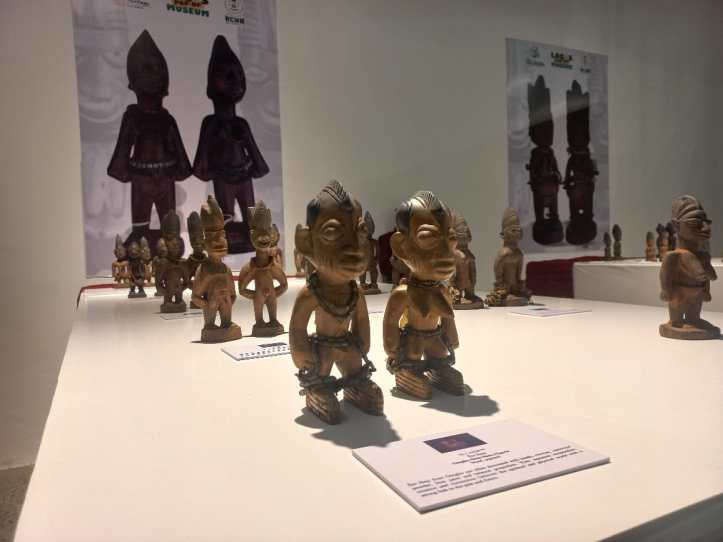
What if the world’s greatest museums got African stories wrong? From the courtyards of Ọ̀yọ́ Palace to the Smithsonian archives, this feature follows a Nigerian museologist’s quest to reclaim the true meaning of Èrè Ìbejì, not as “wooden objects,” but as living symbols of memory and belief. Fittingly, this vital conversation unfolds within Ecobank, an institution describes not merely as a banking institution, but as a custodian of legacy, safeguarding cultural value for generations to come at the ongoing Lagos Pop Up Museum.
Words Ireho Aito | Don’t Keep Your Art in the Finger! Photographs permission by Yaba Art Museum.
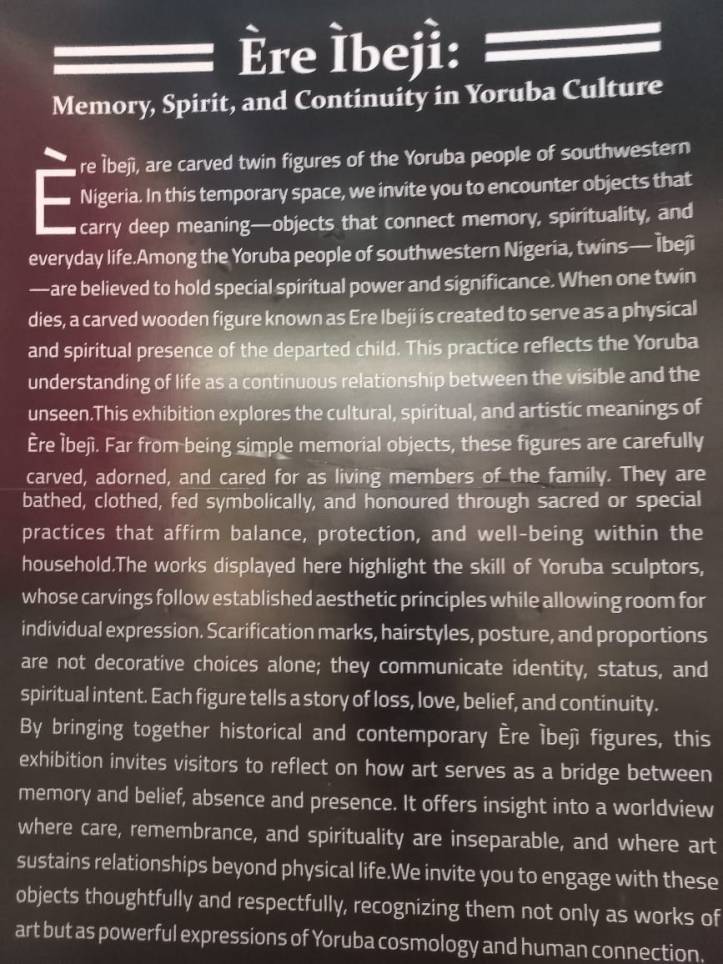
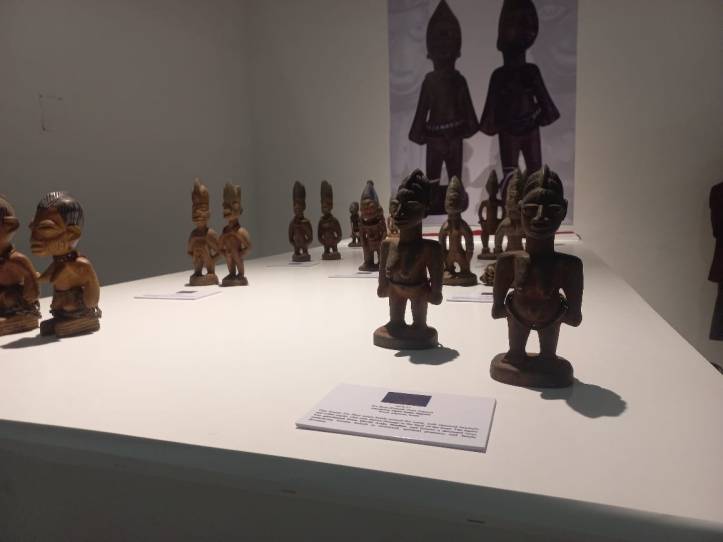
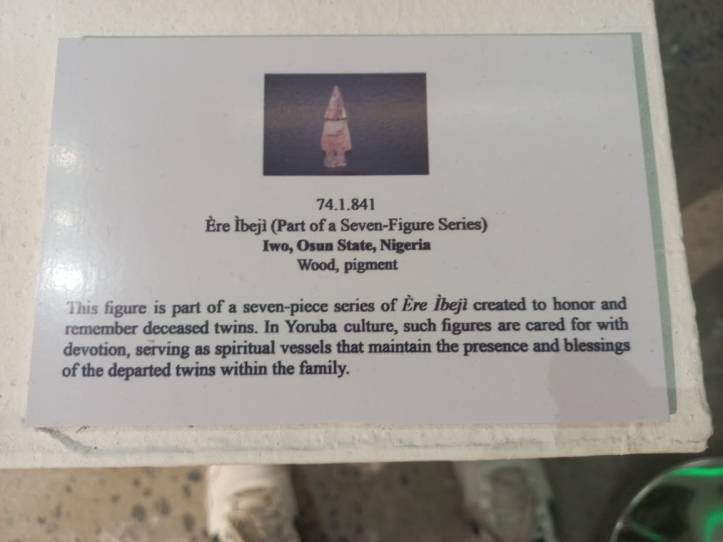
In Yoruba cosmology, twins are not an accident of biology; they are a sacred arrival. They come bearing abundance, balance, and spiritual depth. And when one departs too soon, the bond is not broken, it is carved, named, fed, honoured, and remembered. This belief finds its most intimate expression in Èrè Ìbejì, the twin memorial figures that stand at the crossroads of art, spirituality, memory, and identity.
But what happens when such sacred objects are reduced to labels like “male wooden figure” and “female wooden figure” in some of the world’s most prestigious museum databases?
That question sits at the heart of a three-year, cross-continental project led by Dr.Oluwatoyin Zainab Sogbesan, an architect, culture consultant, museologist, and founder of Asa Heritage Africa Foundation, who, in 2023, became the first Nigerian Smithsonian Fellow on a diplomacy-driven initiative known as the African Museological Exchange.
I quickly reached out to two of my childhood friends that were twins by birth and who had both lost their partners, to ask about Ere Ibeji: whether they still keep the figurines, and what kind of relationship they now maintain with their surviving twin.
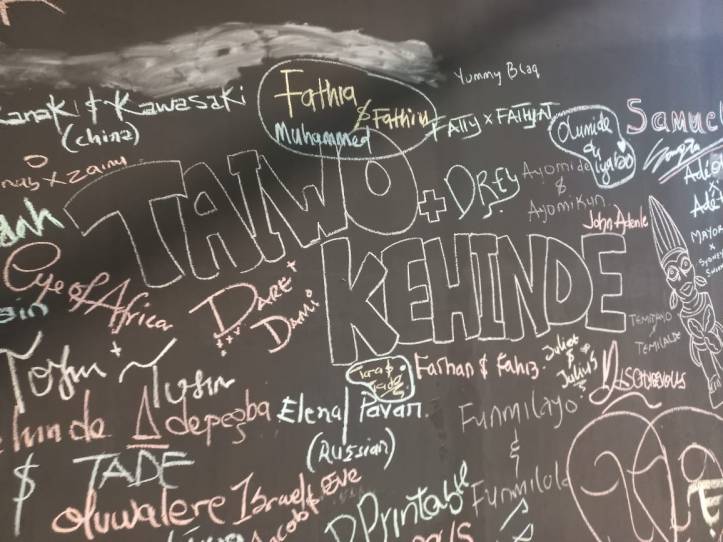
Kehinde, a friend whom we simply call Kenny, now lives and works in Doha, Qatar. He confessed that he once had an Ere Ibeji figurine for his twin, Taiye. Today, however, he is ‘born again,’ yet still keeps the figurine as a decoration in his apartment in Ibadan, Oyo State. He revealed, half-jokingly, that he no longer communicates with it.
Olu T, another twin, just like his older brother whom we have always called “Councillor” since childhood due to his rapid growth and imposing height could barely place the subject matter. Olu T now lives in Canada. Both he and his older brother lost their Kehinde very early, and they seem never to have dwelled on the mysteries surrounding life and death. Interestingly, both of these friends were born in Ibadan.
I still remember Nelson and Nath, identical twins of Igbo descent, whom I met in Lagos. Both are devout Catholics and served as altar boys in their younger days. They shared how good luck and fortune have always seemed to follow them, citing notable experiences to support their claims. The twins also revealed their curious quest to find identical twins as wives, but the search proved fruitless, as no suitable matches appeared. Today, Nelson and Nath work in the oil and gas sector. They confessed that whenever they even dabble in wrongdoing, they face consequences, as if their destinies were designed to punish any attempt to perpetuate evil.
Nath and Nelson also currently run a community-based organization dedicated to rescuing twins from the streets, where street begging has become all too common in Lagos.
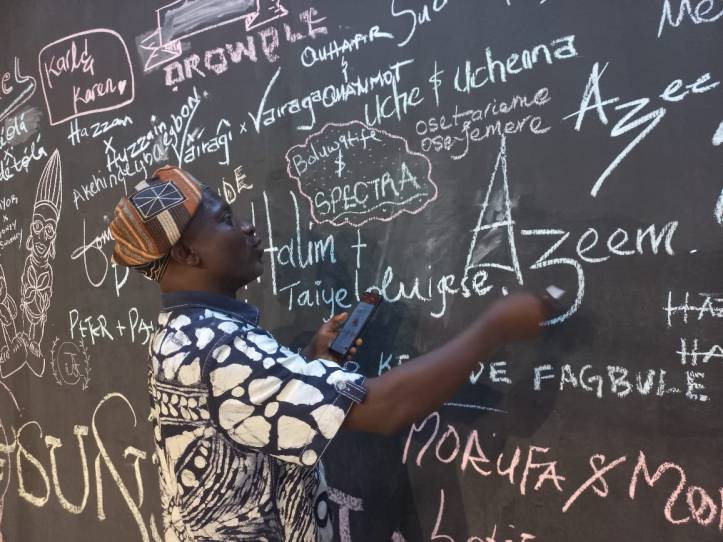
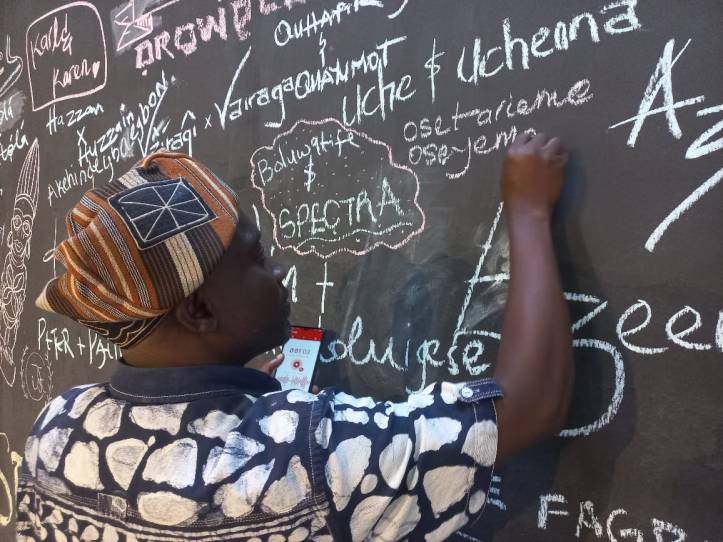
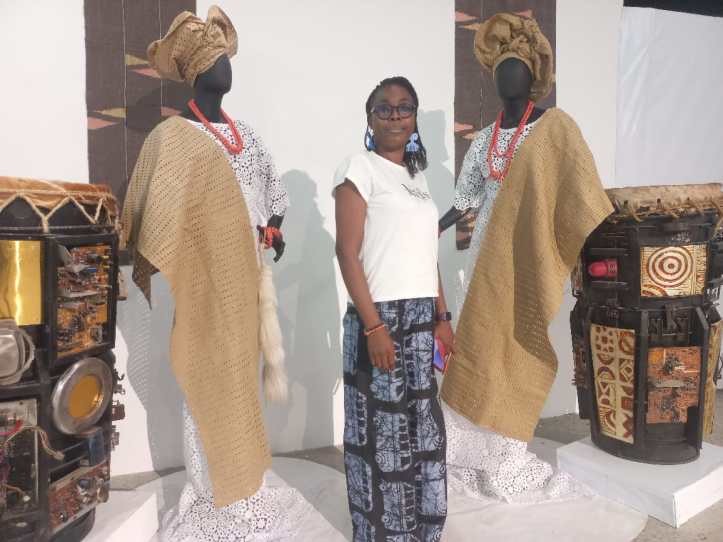
The atmosphere inside Ecobank Headquarters, Pan African Centre on Victoria Island, was a blend of cool ambience and the weight of lineage, despite the scorching Lagos sun. While the one-in-a-million metal sculptor and teacher, Dr. Adeola Balogun, guided visitors through stage-by-stage exhibits at the Pop Up Museum which has been running since November 2025 students from Tunwase High School in Surulere were also on an excursion, part of a brilliant initiative by Yaba Art Museum and Ecobank to immerse Lagos State students in the three-month-long Pop Up Museum experience.
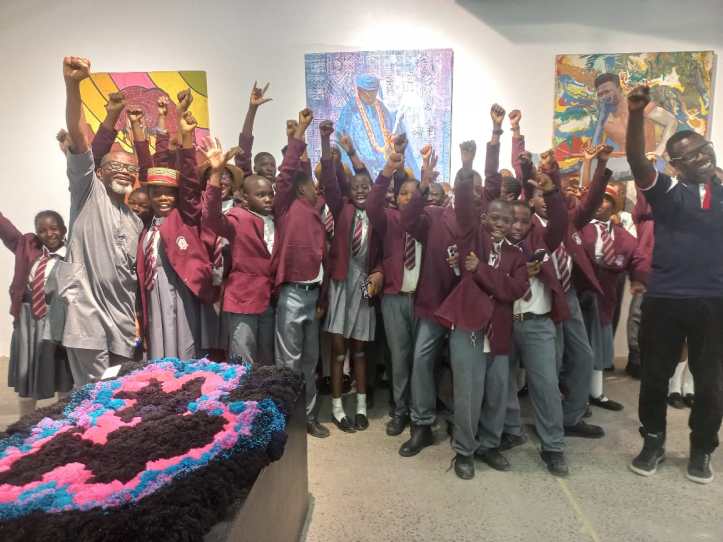
Yet, what struck Oluwatoyin Sogbesan as unsettling was how many students and even some teachers seemed disconnected from their culture and identity. It revealed a gradual erosion of African heritage, unlike in Brazil, where spiritual relationships with twins are still preserved.
When Sogbesan introduced the students to Ere Ibeji, the sacred twin figurines, a mixture of curiosity and surprise rippled through the group, highlighting how little some young Africans know about their own traditions.
The students’ reactions underscored a larger truth that Sogbesan had been confronting in her own research that is the fragile threads of African knowledge and the ways in which our traditions are often overlooked, misunderstood, or even lost. It was this awareness that would guide her next journey one that explored how naming, representation, and power intersect in preserving African heritage.
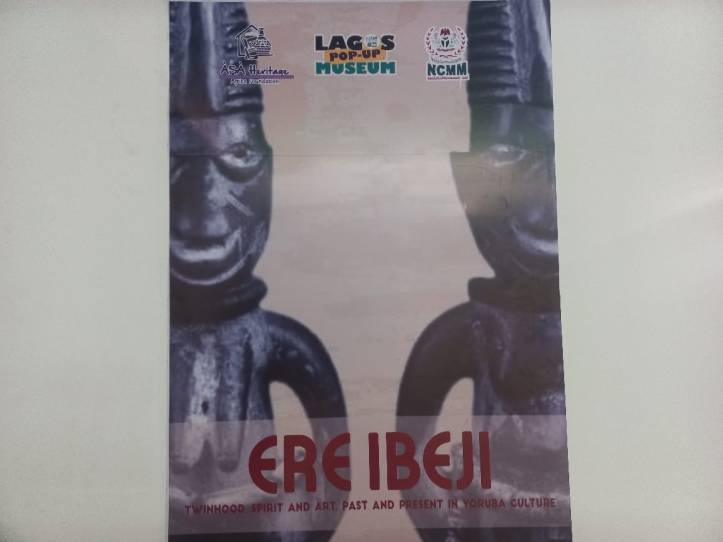
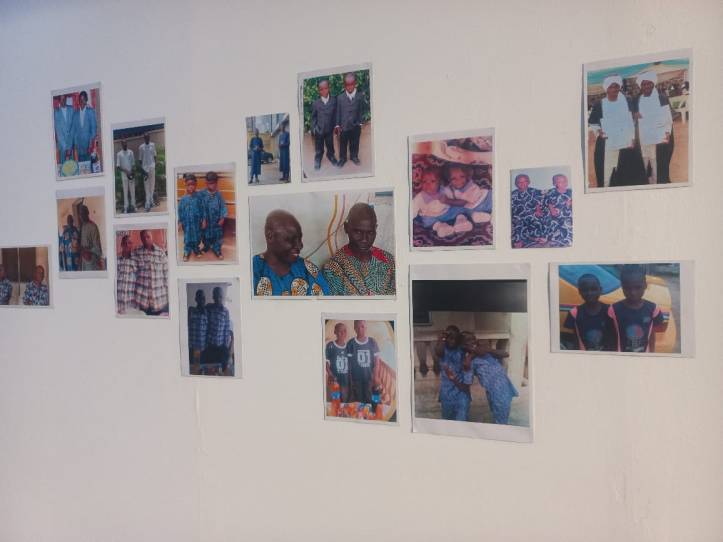
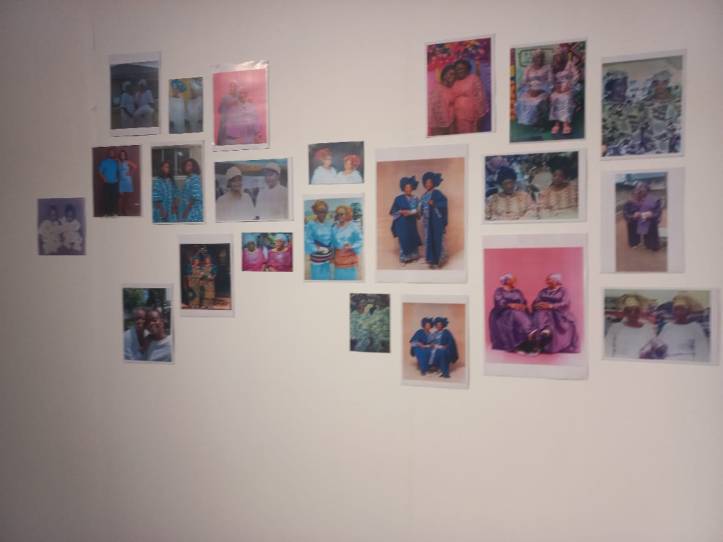
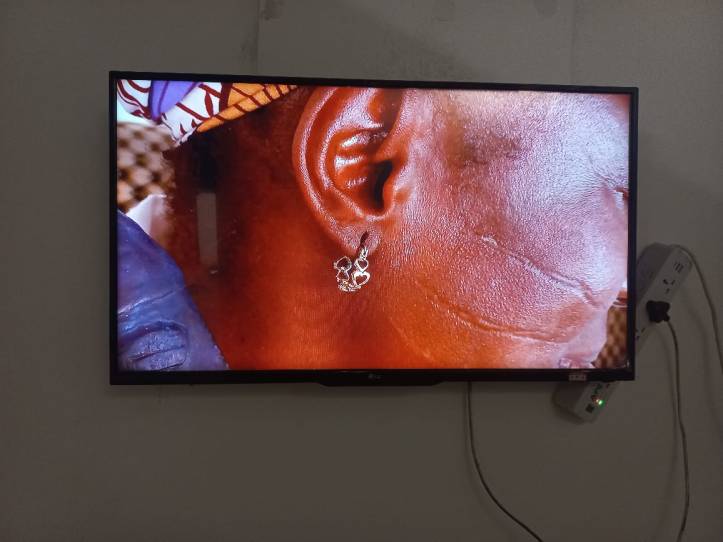
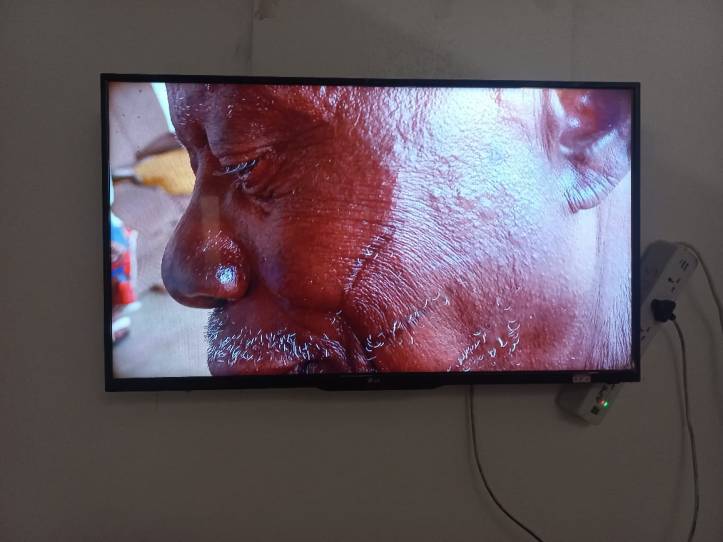
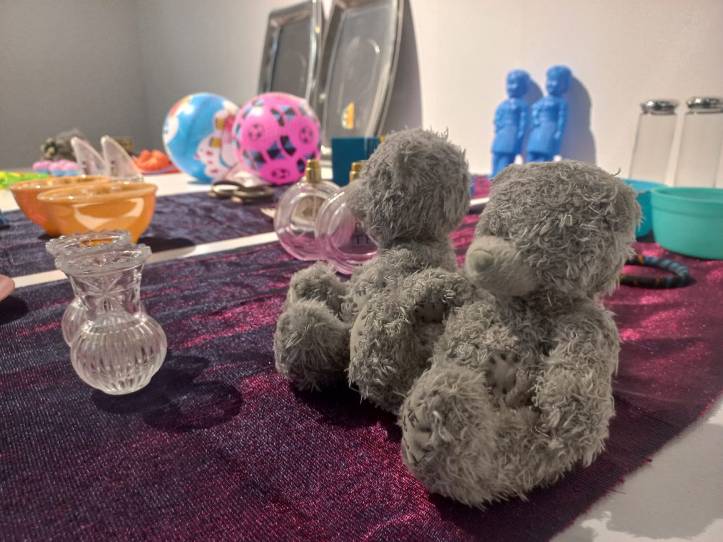
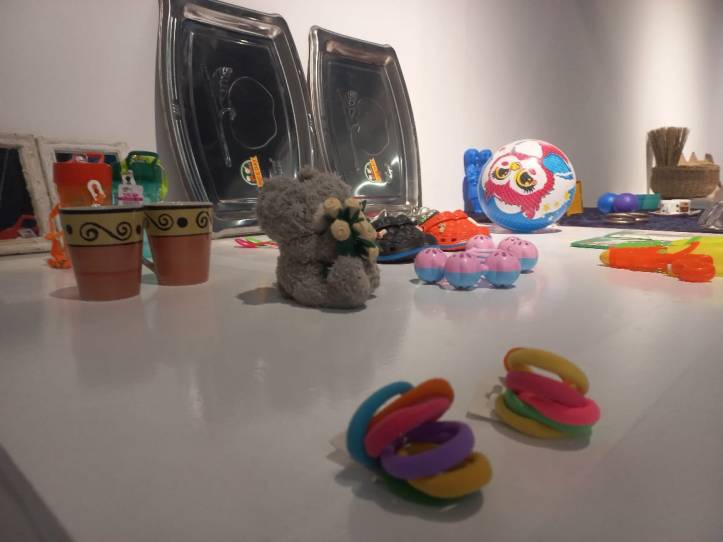
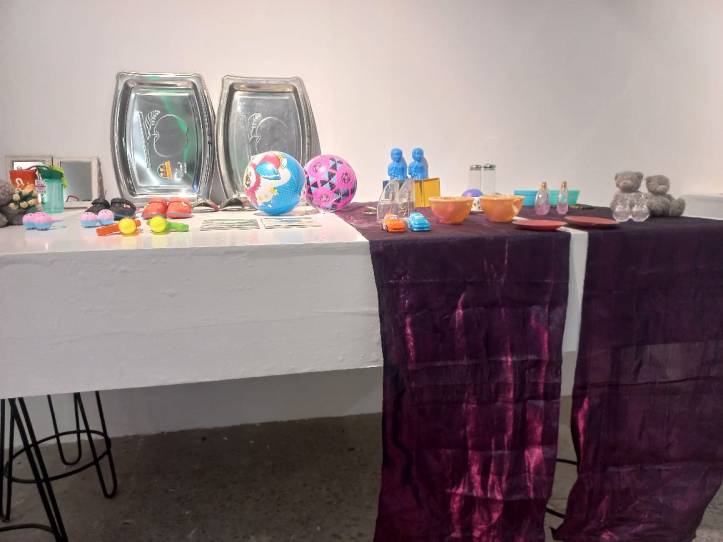
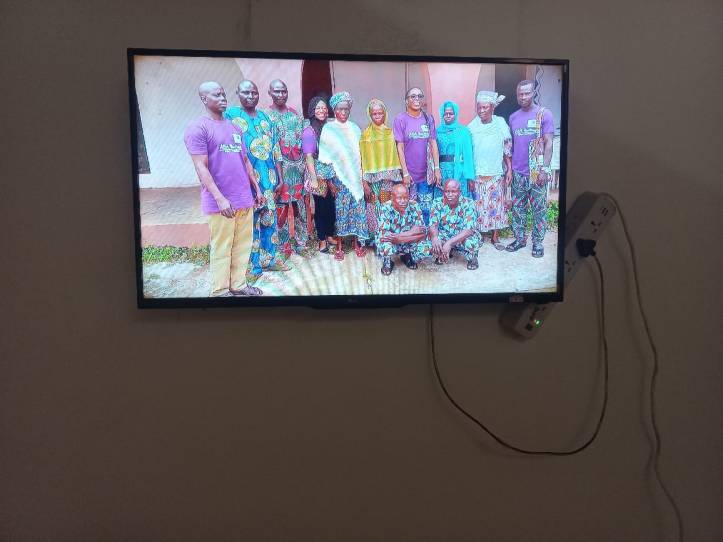
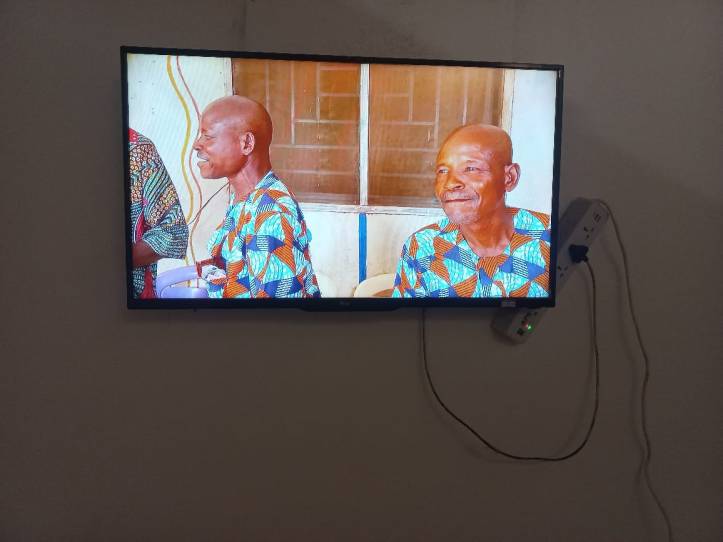
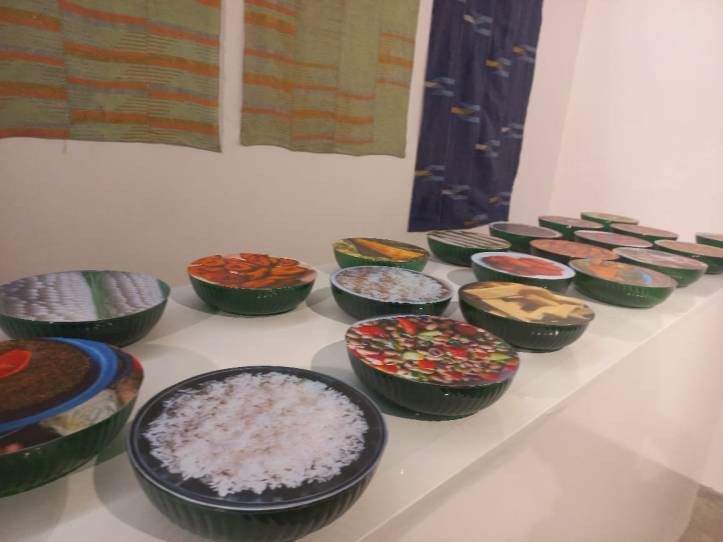
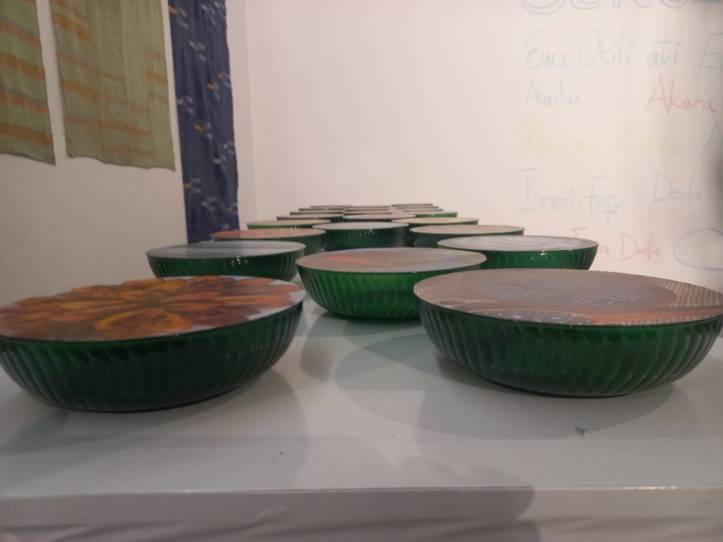
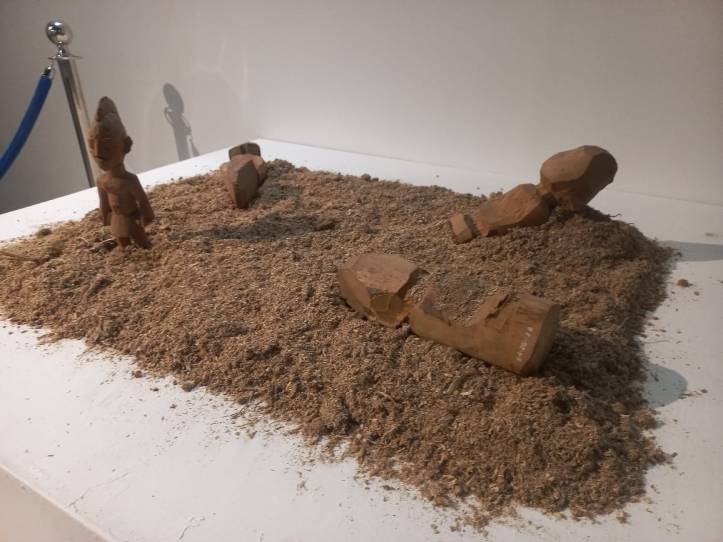
Her exhibition is titled Ere Ibeji: Memory, Spirit, and Continuity in Yoruba Culture which is made of an exhibition, documentary film and video installation.
When Naming Becomes Power
To embark on the fellowship, Oluwatoyin had to work through the Smithsonian National Museum of African Art, navigating its vast databases to identify gaps, misrepresentations, and unresolved questions within African collections. What she encountered was unsettling.
Despite the Smithsonian holding a plethora of Èrè Ìbejì, many were broadly catalogued as “Yoruba male and female wooden figures.” To Oluwatoyin, this was not a neutral curatorial error, it was a cultural erasure.
“These are not just wooden figures,” she insisted. “They are named, gendered, spiritually charged beings with origins, lineages, and histories.”
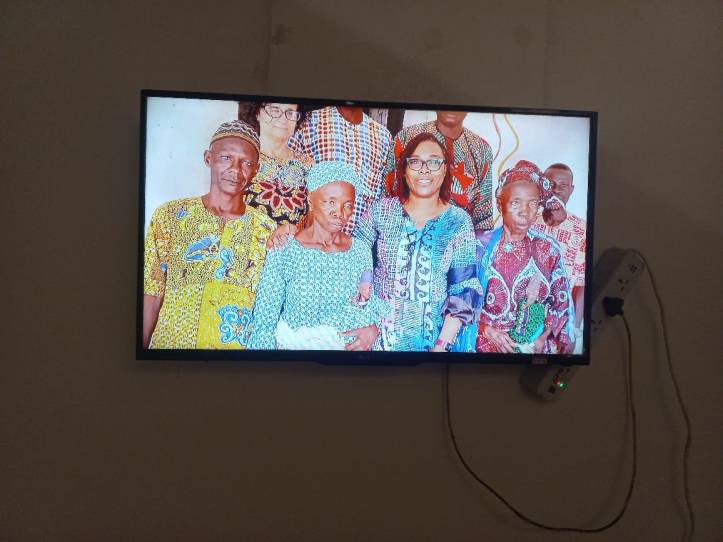
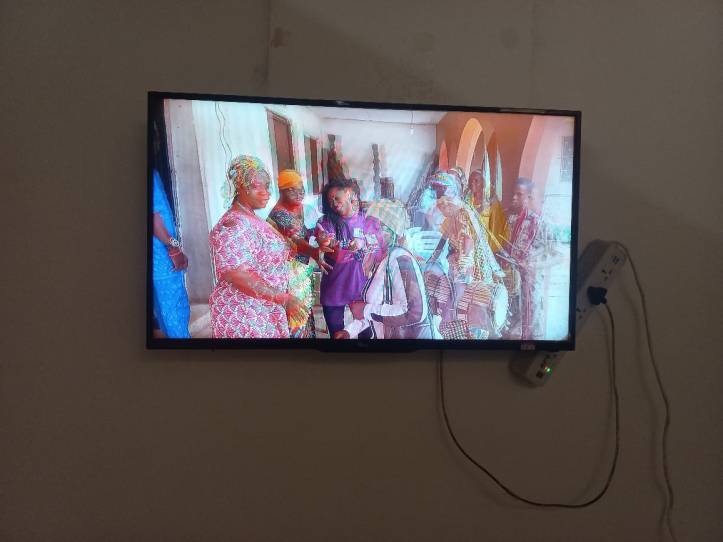
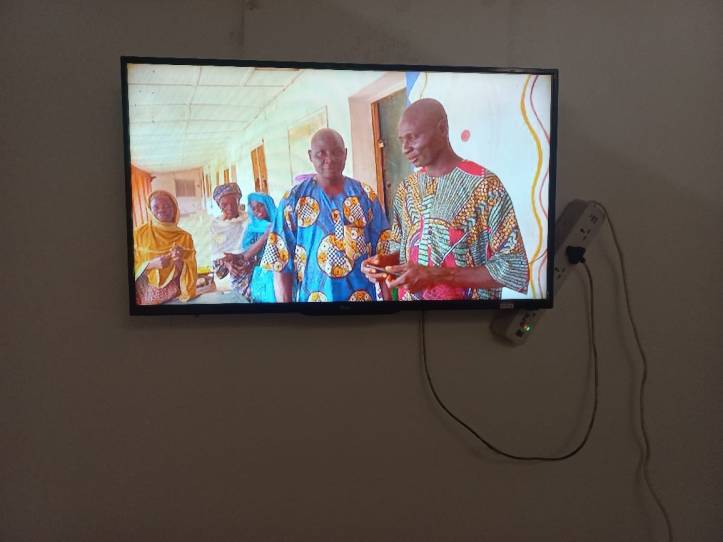
Drawing from over eight years of fieldwork in Oyo, she could identify the origins of many figures at a glance. Scarification patterns, the three distinct types common in Oyo were visible on the carvings. Some figures wore beads, signalling that they were children of high-ranking chiefs. Each mark told a story. Each figure knew where it came from. That realisation became the seed of a much larger journey.
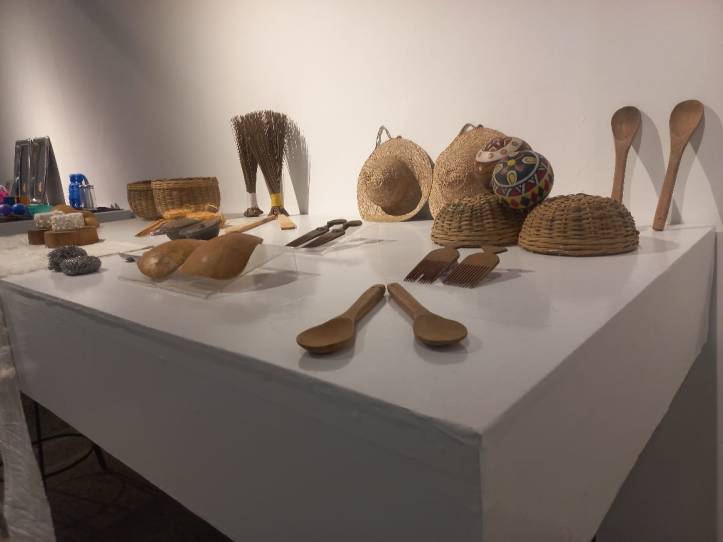
From Museum Drawers to Palace Courtyards
Since 2023, Oluwatoyin took the research back home, to Oyo, where the traditions that birthed Èrè Ìbejì still breathe quietly within families, shrines, and palace spaces. And for the first six months, research and reconnaissance were everything. The work had to be careful, respectful, and grounded in trust. Many families were hesitant. Some flatly refused.
“These are not museum objects,” several said. “They are not meant to be seen.”
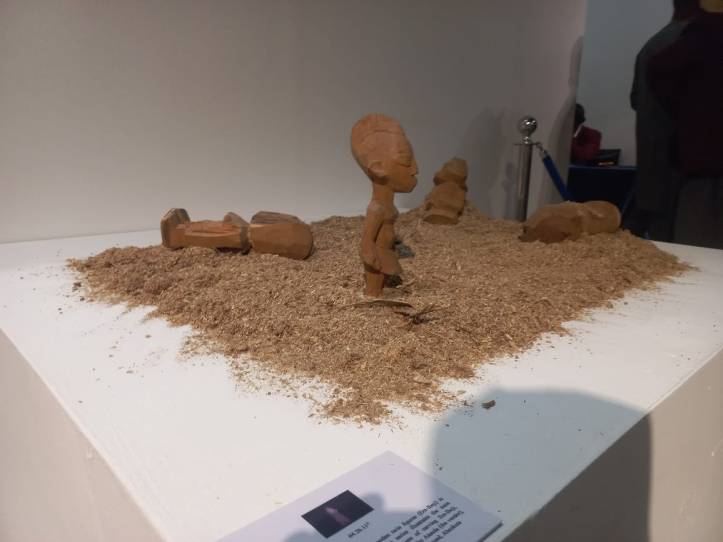
So the palace became the research anchor, designed as a neutral, familiar space where fear could dissolve into conversation. Slowly, families who still held Èrè Ìbejì, representing either Taiyé or Kẹ́hìndé, depending on which twin survived began to come forward. Consent forms were signed. Stories were shared. Some brought figurines passed down from parents, along with instructions on how to bathe, clothe, feed, and speak to them.
One of the most poignant voices was Baba Oyo, one of the oldest men in the community, who explained that everything seen on an Èrè Ìbejì, starting from markings to adornment comes from the paternal lineage. The figures, though spiritual, are deeply rooted in family history.
Faith, Fear, and the Thin Line Between Myth and Fact
Contrary to assumptions, reverence for Èrè Ìbejì does not exclude modern faith. Some custodians attend churches or mosques, yet still care for their twin figures. For many, neglect came at a cost.
Some families recounted unexplained misfortunes, illness, loss, repeated setbacks only to later discover, through divination or reflection, that the neglect of the twin figure lay at the root.
One man narrated how his motorcycle was stolen. In desperation, he invoked Òrìṣà Ìbejì, seeking justice. The very next day, he was summoned to the palace with the good news that his bike had been returned. The thief had quietly brought it back. Separating myth from fact became part of the project but never dismissing belief.
Even Oluwatoyin herself was not untouched.
During honorarium distribution, an elderly woman, herself a twin, remarked sharply that while she had been paid, her deceased twin had received nothing. The moment left Oluwatoyin shaken. Out of respect and perhaps caution she returned to offer honorarium to the figurine as well.
“I found myself in somehow discomfort ,” she admitted. “You cannot enter this world casually.”
From Wood to Spirit
Within the Elebute family chambers, renowned carvers shape the figures though not yet sacred, just wood. It is only later, when families arrive with bottles of schnapps, prayers, and rituals are done that the spirit of Taiyé or Kẹ́hìndé is invoked. Only then does the figure become Èrè Ìbejì.
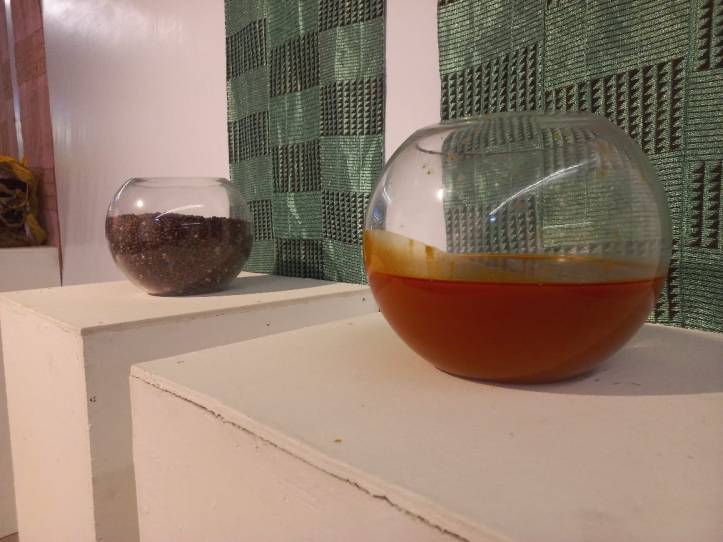
Oluwatoyin also shared her experience in getting some of the delicacies for twins in Yoruba tradition. One she sweated to get out was the Otili beans. It is noted that Ọ̀tìlì beans, specially prepared for twins is six times more expensive than regular beans and must be sourced.
Oluwatoyin herself searched markets from Mile 12 to Mushin before finding an elderly woman who finally sold her the beans.
“They are very healthy beans,” she noted, smiling. Even food carries meaning. “It was a whirlwind drive for us from Mile 12 to Mushin and back to Mile 12 again to get the beans at a very expensive rate.”
More Than an Exhibition
What began as a correction of museum nomenclature has unfolded into a multi-layered cultural intervention, spanning exhibition, documentary film, video installation, and a forthcoming book. Ere Ibeji: Memory, Spirit, and Continuity in Yoruba Culture at its core, the exhibition insists on one truth and that is to name correctly is to respect correctly. Èrè Ìbejì are not anonymous artefacts. They are memory made visible, they are grief transformed into care, and belief carved into form. They remind us that African objects do not merely belong to history but they belong to families, spirits, and ongoing relationships.
The exhibition Ere Ibeji: Memory, Spirit, and Continuity in Yoruba Culture is still ongoing alongside other exhibitions inside Ecobank Headquarters Pan African Centre, Victoria Island Lagos.
iBAND Magazine, Celebrating Visual Arts from the Original.
Africa | Visual Art | Lifestyle | Culture

